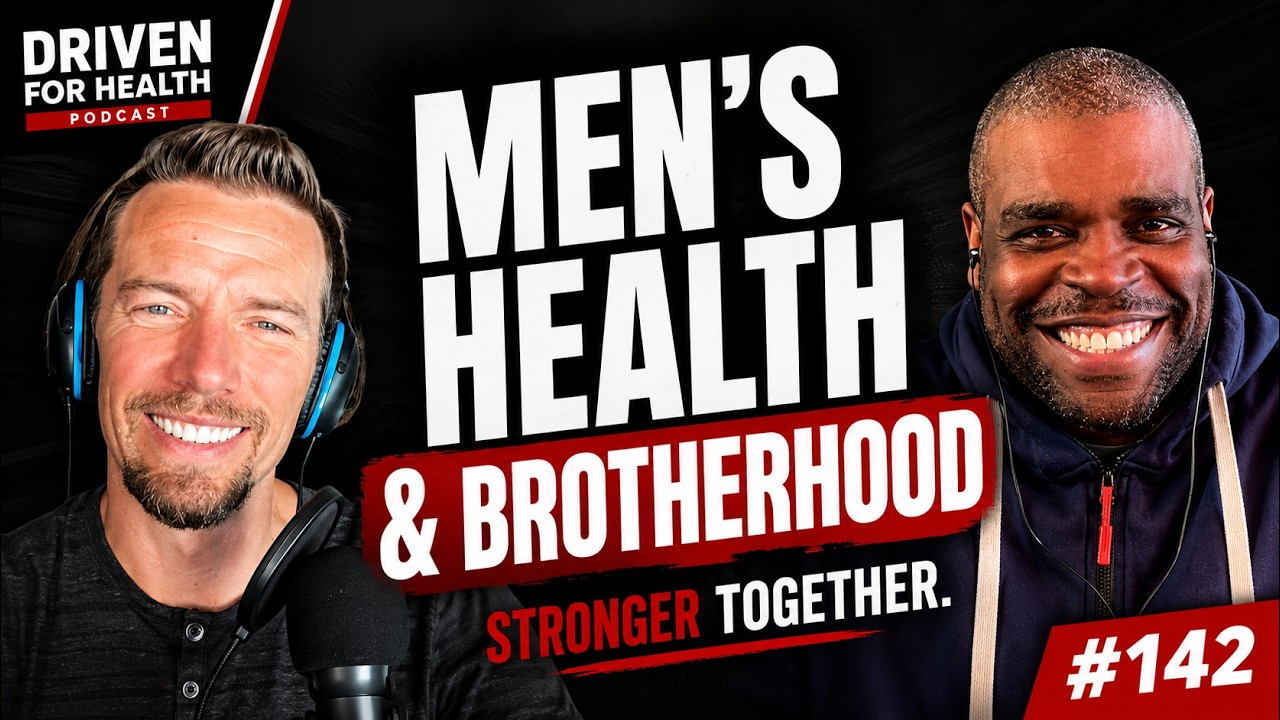
Why Men Over 40 Need Brotherhood More Than They Admit
The strongest man in the room is often the one running on empty. Mista Yu has coached men for 30 years and puts one problem above all the others. Men believe they can do it alone and it has disastrous results every time.
Men over 40 collect acquaintances and lose friendships. Mista Yu and Coach Brian Parana name the fix in this conversation. A man needs a small group of men who can call him out, and he has to go first by opening up before anyone earns that seat. Listen to Episode 142 for the full conversation.
Mista Yu is Yusef Marshall, founder of the Men's Roundtable Series. He is in year 30 of coaching. Coach Brian is a coach and not a doctor. Nothing here is medical advice.
Men Think They Can Do This Alone
Mista Yu ranks one problem above every other one he sees in men. Men think they can do it by themselves. They believe they do not need help and they do not need anyone to lean on. He says it has disastrous results every time.
Coach Brian calls that the blind leading the blind. You lead yourself, and you have no outside view of where you are headed. Without a man who can pause you and make you look at your own behavior, you wander down the same path for years. The damage lands on the people around you long before you name it.
Brian owns the pattern himself. Business partners have called him a lone wolf. His wife tells him to go do something with a real person. He attaches hard to the provider role and he grinds.
Four men in his life get the real version of him. Dan, Chris, Leo, and Andy. Dan has been a friend since Brian was 13. The four of them center on a shared interest and they work out together. Everyone else is an acquaintance. Brian can be social and friendly in those rooms. None of them have depth, so nobody there can call him out.
Shedding the Narrative You Inherited
Mista Yu's first answer for what men are up against is the intentional shedding of the narrative. He describes an invisible playbook that men run without ever reading it.
The provider role is his example. It sounds good out loud. Two cool words. His question is what sits attached to them. How does the role hit your household? How does it hit your spouse? How does it affect your ability to be there for your family in the ways they will care about years from now?
His answer is blunt. Kids will not remember that dad worked 60 hours a week. They remember what he did with them. Whether he was at the games. Whether he was at the recitals.
Some men have run the same playbook five generations deep and cannot see it. Naming the narrative comes before dropping it.
The Vulnerability Piece Most Men Skip
Mista Yu's second answer is vulnerability. Men know the right way to go. They know there is safety in a multitude of counsel. They do not take the actions that get them there.
He tells his men they can call him at two or three in the morning and he will pick up, because he said he would. He does not want one of them to end up as the man on the bridge or the man alone at night with a bottle of pills. He has been in the place where that bottle looked better than his own reality.
Brian brings the same theme from his side. His father has not been an active part of his life for 20 years, and Brian is 43. His grandfathers passed in the nineties. He got coached on those father wounds by Coach Jon Sheldon on an earlier episode of this show. His question since then is a fair one. If a man has no connection with his own father, how open can he be with any other man?
The Trusted Board of Directors You Do Not Have
Mista Yu's phrase for what is missing is a trusted board of directors. Men you can call no matter what happened or how long it has been.
Most men know this in their head. In application they leave it on the shelf. The roundtable talks about it at the end of most shows. Then the broadcast ends and the week hits and the phone stays face down on the desk.
The safe space is what changes that. Mista Yu does not let anyone come on and insult the men. He does not allow attacks. The men took to it faster than he planned for. He gave it a year before men would open up and it took a week. Men were sobbing on air and sharing things they had never told anyone.
He started with ten or eleven men on at a time and it took an hour and a half to get through a few thoughts. The format changed. The chat carries as much weight as the panel now, and the questions in it steer where the show goes.
What Isolation Costs the People Around Him
Mista Yu puts the figure at 80 to 85 percent of the men on his panel. Their wives and their children tell them straight out that they are "drifting." He is careful to say that is their word and not his.
Another 10 to 15 percent report something heavier. Their spouses have gotten used to it. There is no fight left in the house because the pattern became the expectation.
Brian's read on that is human behavior doing what it does. You send signals over years and people default to what you keep showing them. Come home tired and short at five o'clock every night and that becomes the version of you your family plans around.
Mista Yu also watches isolation slide into depression. He thought depression meant white coats and padded rooms. He learned a man can carry it without ever landing at that end of the spectrum. One man on his panel could not sit down and take a day off. Rest filled him with fear and guilt. He would find a project instead and fall asleep at his desk most nights.
The John Wayne Guy Who Changed
Mista Yu tells the story of a man from what he calls the John Wayne era of manhood. Staunch as you can imagine. Everyone in the man's life had accepted that as the thing.
Every week Mista Yu had to push back on most of what he said. He would not let it stand as the accepted practice for the men watching and listening. That went on for six or seven months while the roundtable was still a monthly show.
At the end the man sat on screen with his eyes sweating and said he could not keep doing what he had been doing. He had to pivot. He told the group he looked forward to Thursday nights at 7 PM and that he needed it. Mista Yu calls him a poster child for what the roundtable can do.
How Mista Yu Starts the Work
He built a multi-step pathway and a framework behind it. The front end is questions and a lot of them.
His example is a kid asking why. Three whys, five whys, ten whys. By the eighth or tenth why a parent lands on "because I said so." Underneath those whys sits the real reason.
What a man hands you at the start is a symptom. Mista Yu wants the root cause. He wants identity and habits before anything else. He will turn a man down when it is not a fit rather than spend nine or twelve months away from his family on someone who does not want to move.
Brian runs the same friction on his end. Go listen to a couple of episodes. Go read through the site. Go through the testimonial conversations. Then a call that runs 30 minutes or more where he asks a lot of questions to find out where a man is starting from.
The Question to Ask Yourself Tonight
Mista Yu closes with one question. If you changed nothing, what would this look like in five, 10, or 15 years?
How would your marriage look? How would your relationship with your kids look? How would your view of your own self-esteem look?
If the honest answer is that it would not look good, send someone a message. He says to stop waiting on a website or a follower count. Email, private message, text, phone call. In his words, send the carrier pigeon. That one message can be a lifeline.
Where Health Fits Into This
A man joined Call To Rise the Monday before this recording. He has been up and down the scale for about 30 years. Brian asked him for a gross estimate of how much weight he has lost across all of it, and the answer was roughly a thousand pounds. He has been as low as 175 and as high as two sixty.
He is still unhappy with where he is at. He has lost the weight plenty of times over those decades. Brian's work with him starts with who this man believes he is. That question only gets answered out loud in a room where he feels safe enough to say it.
Most of the men Brian works with have no other Brian in their life. No health-driven man nearby who says out loud that taking care of yourself is the right call and that it pays back to everyone around you. Without a man like that in reach it is easy to get lost in the shuffle of an ordinary week.
Health is a catalyst here and not a side quest. A man who gets his body handled gets energy back, and that energy is what he needs at home and to open up with other men.
Common Mistakes Men Make Here
Waiting for a crisis to reach out. Mista Yu tells his men to call at two in the morning. The men who call before it gets there are the ones who move.
Confusing shared activity with real friendship. Brian works out with his guys and that checks a real box. Proximity and time are what turn it into depth.
Treating the provider role as the whole job. Kids do not remember the hours. They remember the games and the recitals.
Knowing the answer and skipping the action. Men on the panel know there is safety in a multitude of counsel. Most of them still leave the phone face down.
Calling low energy a personality trait. Brian names low energy and workaholic behavior as signs worth looking at rather than facts about who you are.
Who This Is For and Who It Is Not For
This is for the man over 40 who is doing big things at work and running on empty underneath it. His career or his finances look solid from the outside. His health and his time and his mental health tell a different story. Everyone in his life is an acquaintance and no one has permission to call him out.
It is not for the man who wants a program that skips the part where he opens his mouth. Nothing in this conversation works without that first message.
Cross-episode links
- Episode 135: Why Men Need a Strong Brotherhood Around Them
- Episode 130: The Energy Debt Every Successful Man Is Paying
- Episode 126: Your Self-Talk Is Ruining Your Health with Pat Smith
Call to Action
If you want a first step that asks nothing of you socially, the free Lose 3 lbs in 3 Days plan gives you three days of food and training structure to get moving. Get it at thecalltorise.com/lose3lbsin3days.
When you want the brotherhood and the structure together, The Call To Rise is Coach Brian's 100 day program for driven men who want to get their health up to the level their career is already at. What is included:
- An individualized meal plan
- An individualized training plan
- Weekly round table calls with the group
- 1:1 calls with Brian
- A client site holding every resource in one place
The average man who works with Coach Brian for the full 100 days loses 20 or more pounds. The guarantee is one sentence. Lose 20 or more pounds in the 100 days, or Brian keeps working with you until you do. Apply at thecalltorise.com.
Frequently Asked Questions
Why is it hard for men over 40 to make real friends?
Mista Yu says men believe they can handle life by themselves and do not need anyone to lean on. Coach Brian describes the result in his own life. He has four men he shares real things with and everyone else is an acquaintance. Those relationships are friendly and they have no depth, so nobody in them can call him out.
What is the Men's Roundtable Series?
It is a weekly panel show hosted by Mista Yu on YouTube and Facebook, running Thursday nights at 7 PM. He also records one on one spotlight conversations every Thursday that run 15 to 20 minutes. The roundtable covers father wounds, mental health, blended families, and relationships between men.
What does shedding the narrative mean?
Mista Yu uses it for the intentional work of naming an inherited role and then dropping it. The provider role is his example. It sounds good out loud, and his question is what it costs at home. His answer is that kids will not remember dad working 60 hours a week. They remember whether he was at the games and the recitals.
Why is vulnerability so hard for men?
Mista Yu says men are taught it is taboo and that shame follows anyone who does it. The men on his panel know there is safety in a multitude of counsel and still skip the action. He gave them a year before he expected anyone to open up and it took a week.
What is a trusted board of directors for a man?
It is Mista Yu's phrase for the handful of men you can call no matter what happened or how long it has been since you last spoke. Most men know they need one and never build it. The gap he sees is between knowing it and picking up the phone.
How does a man's isolation affect his wife and kids?
Mista Yu puts it at 80 to 85 percent of the men on his panel whose wives and children tell them directly that they are "drifting," and he notes that is their word and not his. Another 10 to 15 percent describe spouses who have gotten used to it and stopped fighting about it. Coach Brian calls that a pattern the family learns to plan around.
Can a man change after decades of the John Wayne mindset?
Mista Yu describes a man who came in as staunch as you can imagine and pushed back every week for six or seven months. At the end he sat on screen with his eyes sweating and said he could not keep doing what he had been doing. He told the group he needed Thursday nights.
What is the first step out of isolation?
Mista Yu says to ask yourself what your life looks like in five, 10, or 15 years if you change nothing. Look at your marriage and your kids and your own self-esteem. If the answer is that it would not look good, send someone a message that day by email or text or phone call.

CEO l Head Body Tranformer
Brian Parana is a men’s health coach with 23+ years of experience helping busy professionals improve their body, energy, and day-to-day habits while still leading at work and at home. His coaching is built around practical nutrition, training, sleep, and accountability, with a plan tailored to the person in front of him.
Over the years, Brian has helped thousands of clients through his work as a personal trainer, CrossFit gym owner, and online coach. He has also coached an Olympic silver medalist, a 2-time Olympian, and a CrossFit World Champion.
Brian is the host of the Driven For Health Podcast, where he shares real-world strategies for men who want to feel strong again and stay consistent without making health a second job.
He’s also the creator of The Call To Rise, a 100-day fat loss experience for driven men who want to drop 20–30 pounds, boost energy, and rebuild confidence through strength training, personalized nutrition, and high-accountability coaching. Many men join because their blood pressure, cholesterol, or blood sugar is heading the wrong direction, and they want a clear plan that fits real life.
Brian is married to his high school sweetheart, Amber, and they have four kids. Their family has traveled to all 50 states and 4 continents, with a goal to reach all seven.

What To Order At Dessert Restaurants For Fat Loss



 YouTube