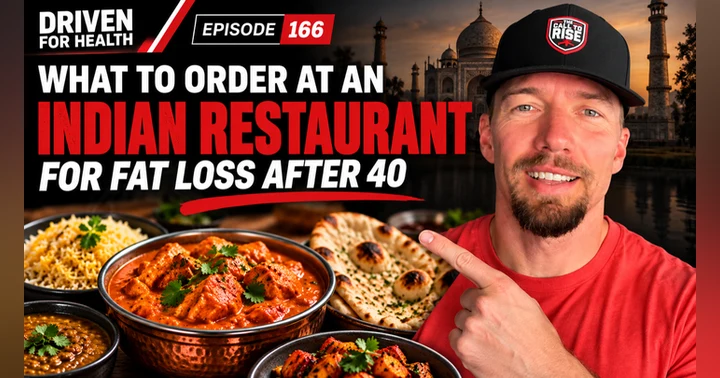
Coach Brian Parana (0:20) You sit down at an Indian cuisine restaurant and you open the menu. Korma. Makhani. Vindaloo. Tikka. Tandoori. You read the whole page and just nod along. The server comes and asks you how spicy you want it, mild, medium, or hot. You need some medium, just go over it with the middle. Rice or naan, you say both. Coach Brian Parana (0:49) They both are delicious, so why not? And then you get down to the chicken. Chicken tikka. Chicken tikka masala. The names are just one word apart, so it should be basically the same, right? 20 minutes later your food comes out. The chicken tikka is pieces of chicken cooked on a skewer in a clay oven. The chicken tikka masala arrives in a bowl under sauce. Coach Brian Parana (1:19) That one word changed how the whole plate was going to show up. And we're going to dive into understanding Indian cuisine today. Welcome back to Driven for Health. I'm Coach Brian Parana. This is episode 166. We're starting to wrap up this series. We got at least two more, a buffet style. We also have desserts to wrap it up. That's the cherry on top. Dessert-like restaurants and places, ice cream. Coach Brian Parana (1:47) Cookies, donuts, things like that. But today we're doing another different culture that I have had some experience with, not tons, so you'll have to excuse any mispronunciations. I'm doing my best. Indian food works for if you're trying to lose weight, if you're looking to lose fat. I've worked with people in every single culture: American Standard, Asian, Indian, African. Coach Brian Parana (2:16) European, it doesn't matter. We're all human beings, and we all abide by the same laws of human dynamics on food and burning calories and eating food every day. We have grilled meats, lentils, vegetables on almost every menu. And the words are how you're going to figure out which appetizer or main entree or even dessert that you're going to end up. Coach Brian Parana (2:46) Getting. And when you show up, you're not going to read a food blog trying to figure out what to order. What you want is good food, a good conversation, and no regrets at nine o'clock tonight with either heartburn, or because you ordered too hot and spicy, or with managing too many calories, because that's a big thing. So the next, hopefully 15 minutes, I talk a lot, as you know. Coach Brian Parana (3:16) I'll be able to teach you five menu words, how to pick out your entrees to align with fat loss, and help you whether you want to choose the rice or the naan and what ends up being the best. When you finish, we'll also end with three exact orders. You can say right as you order, one grilled, one curry, and one vegetarian that align with this. As a reference, we're using Tiffin Indian Cuisine, and we're going to round the numbers because. Coach Brian Parana (3:44) Regardless of however accurate a nutrition label is on the internet, the nutrition facts, they're going to serve you however much in a portion, and that is what it is. Tiffin. Quickly here, we'll throw out what does this word actually mean? It's an Indian English word for meal. Different parts of India, South India, tiffin means a light breakfast, a snack between meals. Coach Brian Parana (4:15) In Mumbai or other cities, tiffin means a packed lunch. Kids carry a tiffin box to school. Grown men get tiffin delivered to their office at midday. So lunch. One word with two meanings, it just depends on where you're at. The same thing in America. Pop, soda, as an example, Coke. Those are three words for a Coca-Cola or a pop like bubbly substance that. Coach Brian Parana (4:44) Usually has sugar in it, carbonated water, and you get the point. All right, round one, we're gonna go through five different menu decoders on how to pick out what it is. So chicken tikka or chicken tikka masala. This is one of the most popular ones that I would see coming across. So tikka means pieces of meat. Coach Brian Parana (5:13) Chicken tikka is obviously chicken marinated in yogurt, spices, then cooked on skewers in a tandoor. Now that is a clay oven that runs hot and really hot and cooks very fast. When you see tandoor, a tandoori on a menu, that dish means that it came out of that oven. And now the oven is important because it sits on skewers over dry heat. Coach Brian Parana (5:42) So the fat drips off instead of pooling on a plate. No sauce comes with the plate unless you order it. Big difference here, so you can understand what you're getting. Adding the masala means a mix of spices. So chicken tikka masala takes that same chicken and serves it in sauce. Depending on the kitchen, the sauce varies from tomato to cream, yogurt, butter, oil. Just news flash here. Indian cuisine does have. Coach Brian Parana (6:12) A trend toward higher carb, higher fat amounts in the food. So you just want to know that when you're ordering as you go. At Tiffin, a skewered chicken dish called lasooni tikka runs about 600 calories with 60 grams of protein. That's a slam dunk for a lunch for the guys here. And since it's chicken, it's not going to have a lot of fat. Having the chicken tikka masala is going to be about 80. Coach Brian Parana (6:42) 800, excuse me, 800 calories and only 40 grams of protein. So a little bit of a difference there, right? And so if you're just going for chicken or high protein, the skewered option is going to be the win. The masala one will be a lot more flavorful and enjoyable, obviously, because of the carbs there. Coach Brian Parana (7:6) The grilled side of the menu, it will come out in a large plate. Their full tandoori chicken plate can run over eleven hundred calories. So you gotta ask if it's a full chicken or half a chicken, that'll help you clarify how much calories is showing up on your plate and whether you should skip the appetizer or not. Number two, we have dal tadka or dal. Coach Brian Parana (7:36) Makhani. Dal means lentils. So pretty simple, a lentil dish. Obviously, lentils are amazing, plant-based protein source, mainly carbs, but have a reasonably good amount of protein, like eight, ten grams in a serving, and lots of fiber. Eight ish grams per cup. That is a slam dunk when it comes to getting protein in in a plant-based form. So the tadka. Coach Brian Parana (8:5) means spices cooked in a hot hot fat and poured over the dish. So that sounds pretty good. It could be oil, butter. It depends on one kitchen to the next, how much of that gets in there. The makhani means buttery. Tiffin, again the resource that we're referring to, that restaurant, describes theirs as a buttery tomato cream sauce, so that the word. Coach Brian Parana (8:34) Does tell you exactly what is in it. Buttery. Now, the dal tadka runs about 400 calories, the dal makhani runs about 600. So there's a bit of a difference, a similar protein between those because lentils are lentils, it just depends on what else comes in it, right? Because it gets added with the butter. Either one, you got lots of fiber. Coach Brian Parana (9:5) And lots of protein in that plant-based source. And we want to watch out for the amount of bread that might be coming on the side. For Indian culture, it's naan. Greek, as we went over the last episode, is pita. In Mexican, it's tortilla. In American, it's bread, like the bread basket at a place, right? So. Coach Brian Parana (9:35) Makhani is butter. Plain and simple. Round three. Do we get naan or stuffed naan? Naan comes out the same way, from the tandoor. It's soft and chewy and usually is brushed with butter. The butter is definitely gonna add calories. As we've talked about, a tab of butter. Coach Brian Parana (10:2) Is about 100 calories. It adds up pretty quick and can multiply calories. That's one difference here. Now, classic naan runs about 400 calories apiece. The stuffed can be 700. The difference in Tiffin's stuffed version is peshawari naan, that's the peshawari naan filled with almond, pistachio, coconut, and cashew. There's the stuffing that. Coach Brian Parana (10:31) Definitely adds those extra 300 calories. They're all fat sources. Nuts, coconut, are fat sources, and it adds up. So two pieces of naan can add up to 800 calories in your meal. And you haven't really eaten anything else except the bread and the fat if it was a stuffed one. So be very careful and conscious of how you order these. We'd probably want the chicken tikka with a piece of naan. Coach Brian Parana (11:0) And leave the rice off the order so that you just don't get too many added up. Round four, basmati rice or the chicken biryani. Now, basmati obviously is just rice. We talked about that. It's about 200 calories, 40 carbs. The biryani is a full meal. It's one dish, and it cooks the meat and the vegetables into rice with oil and butter. Coach Brian Parana (11:29) Told you there's a lot of fat and carbs in here and it's delicious for a reason. Tiffin's chicken biryani runs about 1100 calories with 55 grams of protein. You'll get plenty of protein in there, but it's gonna come at a high calorie cost. If we just do basic math again, 55 times 4 is 220 calories out of the 1100. Coach Brian Parana (11:59) That's what, roughly 20% of the calories are coming from protein, meaning the rest is coming from carbs and fats. Rice, butter, you get the gist. So you have to be careful. So when you order the biryani on its own, you need to make sure that you portion it out, maybe 50%. Ask also, does it come with anything else? Some kitchens will have a yogurt sauce, some a side of curry. Coach Brian Parana (12:30) But if you order it, just make sure that you plan on splitting it up into two or maybe even three meals. Round five, mild, medium, or hot. This is the basic question that they're looking for. What spices or chili do they use in it? And how much heat it's going to be. So your mouth might be a little hot. Mild doesn't mean the lightest. Coach Brian Parana (12:58) Korma is a mild braise built on cream, yogurt, ground nuts, and it can be one of the richest dishes on the page. A vindaloo. A vindaloo is a hot curry made of vinegar and chili, and it can carry plenty of oil in it. So answer the spice question however you like. Hot, medium, mild. Coach Brian Parana (13:28) A side note, I remember going to my father-in-law's and we went to a Thai restaurant, which is near India, but regardless, they have different heat levels as we're going through for their curry. Thai food is one of my favorites. The first time I went with them, I got medium and they were making fun of me for not going Thai hot. So the next time I went with him, we did Thai hot. It was a year later, but I still remembered it. I said, I'm going all in, we're going Thai hot. Coach Brian Parana (13:58) And it was manageable. I wasn't dying. I do like a little bit of heat, jalapenos, maybe habaneros after that. Whew, it gets a bit hot. So here's some of the three orders that we can go with when ordering. We have chicken tikka with dal or one naan, that'll work okay. You don't need the rice. If you don't have the naan, maybe you could have the rice, that'll help keep. Coach Brian Parana (14:25) it a little bit more balanced, but also remember dal is lentils and has carbs in it. The curry order, chicken tikka masala with rice, but you don't need the naan, to help keep the carbs and overall calories in check. The vegetarian order, I'll have a chana masala. It's a vegetarian dish. And then make sure you understand if it's coming with the rice. Coach Brian Parana (14:53) Can I get it on the side? Chana means chickpeas. So that gives you fiber and some protein in the plant-based protein source, just like any bean or lentils. Again, the bread is going to be the biggest thing. Now, if we see paneer on it, this is a cheese and it does have protein, but it is more of a whole fat type cheese. So it will have a lot more fat calories and. Coach Brian Parana (15:23) Not as much protein as you would like. Now, one more thing we have to just pay attention to is a beverage. The mango lassi is a sweetened yogurt drink. It's pretty darn good, but it does count as part of the meal. Mango meaning fruit, and yogurt, it's gonna have carbs and sugar in it. So that could easily be two, three hundred calories if you're not careful. So you could. Coach Brian Parana (15:52) Quickly, easily get to a thousand calories of a lot of carbs and fats in these type of meals. Biggest thing, if you remember makhani, it means buttery. That means calories. So next time you sit down in an Indian restaurant, start with cooking words, pick your entree, then pick rice or naan. Can't do both. Coach Brian Parana (16:17) If you're watching your weight, or you're just not going to eat any carbs the rest of the day, just vegetables only. Indian food is delicious, crazy amounts of seasoning that makes it so good. And then people want it. So I hope that picking out these five different types and understanding the different ways to order is helpful. Now, inside my Eating On-The-Go Guide, I have this as well put in there. You can check it out at go.brianparana. Coach Brian Parana (16:45) com slash eatingonthego, one word. It has restaurants, fast food, airports, fine dining, casual, all the things that you need to be successful when you're not eating at home, cooking your own food. So go download that now. I've been going over it since episode 145, and this is episode 166. If you're looking for accountability, support, coaching to actually get real sustainable results. Coach Brian Parana (17:13) Thecalltorise.com. That's my men's 100-day fat loss challenge. Your goal is to lose 20 plus pounds. Going over who you are as a person, identity of showing up as your best self for you, most importantly, the people around you. Working out to build muscle and burn belly fat. We want to eat the right foods at the right times in the right amounts. Coach Brian Parana (17:41) We want to think differently, have different perceptions and understanding of the choices that you're making in the context of your very busy day and lifestyle. And do it in a brotherhood of accountability where you can be around other men that are supportive, engaging, and also on their own health journey, and they realize in their 40s and 50s, health is actually wealth. Thecalltorise.com, check it out and. Coach Brian Parana (18:5) The next episode is buffet style restaurants. I'll show you how to pack that plate with the right foods, and you're not leaving with 10 pounds on your waistline when you go out and they have to roll you to the car and you're ready for a carb coma, a nice nap afterwards. That's it for this episode of Driven For Health. Train hard, eat smart, and I'll catch you in the next episode.




 YouTube