What to Order at a Steakhouse When You Want to Lose Fat
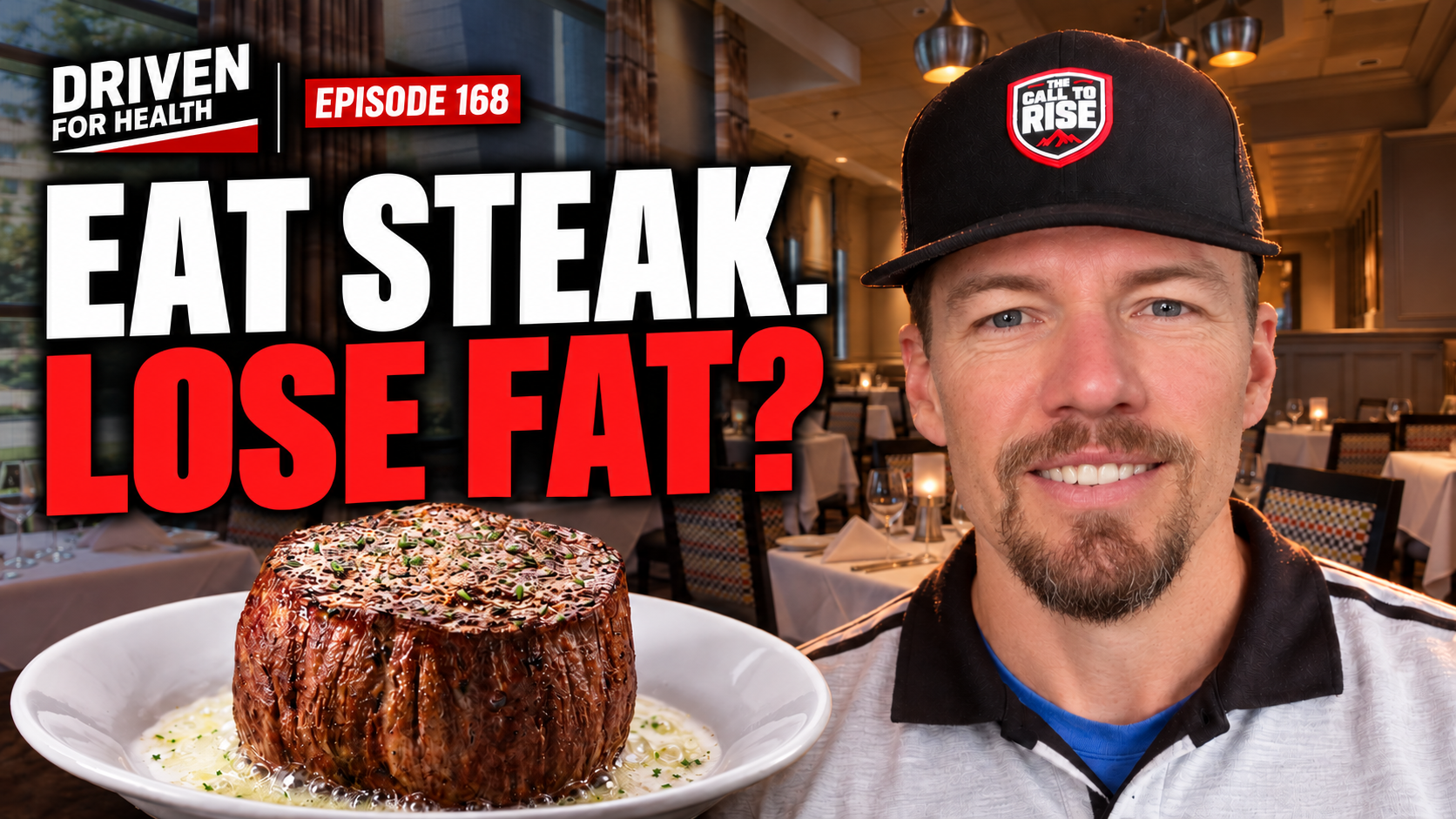
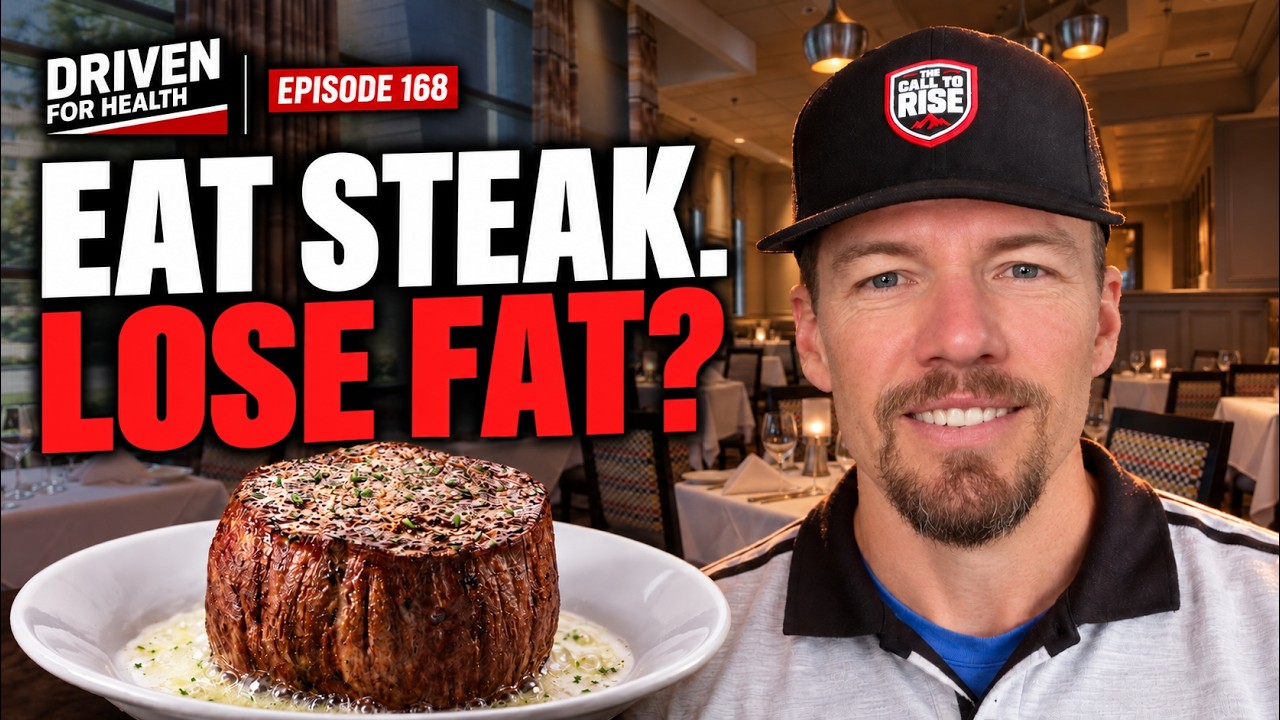
A steakhouse dinner can fit into a week of planned meals. In episode 168 of Driven For Health, I walk through choosing the steak and sides before the table starts adding extras.
Quick Answer
You can plan a steakhouse meal around your fat loss goals. Choose the steak and vegetables first, then decide which sides or drinks you want with dinner. Ask how the food is cooked and put your share of each shared dish on your plate.
A dinner reservation may be on your calendar long before you think about the food. It could be an anniversary with your wife. It could be a client dinner after a long day at work. You want to enjoy the meal and give the person across the table your attention.
In episode 168 of Driven For Health, I start with a $300 steakhouse check. That is the scene in the episode, not a quote for dinner at every steakhouse. The steaks take up two lines on the bill. Bread and drinks arrive along the way. A few shared dishes sound good when someone suggests them.
By the end of dinner you have a useful question to ask: would you order every item again?
Use that question before the meal too. It helps you choose the food you came to enjoy. You can spend less time weighing each offer from the server and more time talking with your wife or client.
Check the menu before you leave
Open the menu for the restaurant you booked. Check the location as well as the name. Prices and dishes can vary between restaurants in the same chain.
Start with the main dish you want. Then look at what comes with it. The amount beside a steak may cover the meat alone. The vegetable and potato may each add to the bill. A set menu may include several courses for one amount.
If you are going for an anniversary, ask your wife what she wants to try. She may have seen a dessert on the menu weeks ago. Knowing that gives you room to plan the meal around something you will enjoy together.
For a client dinner you may want an order you can place with little fuss. Check the preparation before you sit down. If you have a question the menu cannot answer, call the restaurant ahead of time. You can ask about butter or sauce without making food the main topic at the table.
Keep your usual meals in the day. If dinner is late, think about how hungry you will be when the bread arrives. In the episode I mention Greek yogurt or a protein shake as options before a late meal. An extra snack is optional. It needs to fit your food plan and your hunger.
Ask how the steak and vegetables are cooked
My first food questions are plain: where is the protein? Where is the fiber?
A steak gives you protein. Vegetables can add fiber to the meal. The next question is what the kitchen adds during cooking.
Butter on a steak adds to the meal. So does oil used on vegetables. A plate of broccoli with a rich sauce is a different order from plain steamed broccoli. You can ask for the preparation you want without claiming every kitchen will make the same change.
My Ruth's Chris example starts with a petite filet and broccoli. Ask whether the kitchen can prepare the steak without butter. Ask for steamed broccoli without added oil or butter if that option is available.
For a potato, request the toppings on the side. You can choose how much butter or sour cream to use once the food arrives. You can also leave part of the potato for later.
Keep the request short. You do not need to explain your weight goal to the server. Name the food and ask for the change. If the kitchen cannot make that change, ask what preparation it can offer.
There is no honest calorie saving I can promise for removing butter from an unknown plate. The amount depends on the restaurant's recipe and what the kitchen serves. Asking for less added butter can reduce the amount you eat without needing a made-up number.
Compare the full steak orders
At The Capital Grille, the menu orders I compare are different sizes. Comparing the 10-ounce filet with the 22-ounce bone-in ribeye is not an equal-weight test of two cuts. The ribeye's listed weight also includes a bone.
The restaurant's official nutrition guide lists the 10-ounce filet at 490 calories. It has 54 grams of protein and 29 grams of fat. The 22-ounce bone-in ribeye is listed at 990 calories with 80 grams of protein and 72 grams of fat.
Choosing that ribeye order adds 500 calories and 26 grams of protein. It also adds 43 grams of fat. Those numbers compare the two listed orders with their standard preparation.
The filet with one listed serving of grilled asparagus totals 570 calories and 57 grams of protein. That calculation includes the steak and asparagus only. Bread or drinks would add to the meal.
The official nutrition guide is dated August 24, 2026. I checked it for this article on October 13. The restaurant notes that preparation and ingredient changes can affect the values.
You may prefer the ribeye. If that is the dish you came for, plan the rest of dinner with that choice in mind. Ask about splitting it if another person wants the same steak. Check any extra charge before you agree. You can also eat part of your portion and take the rest home.
Glossary: marbling means the visible fat within the meat. The size of a steak order and its preparation also matter when you compare meals.
Put shared food on your own plate
A bowl in the middle of the table makes it easy to lose track of your portion. Someone passes the spoon while the conversation keeps going. You take another serving without looking at how much you ate before it.
Ask how many people the dish is meant to serve. Put the amount you want on your plate. Eat that portion before deciding whether you want more.
The same step works for a shared appetizer. It also works for dessert. An extra plate lets you see the amount you chose instead of taking bites from a large dish through the rest of the conversation.
Sharing does not give every person a set portion. Two people may share a dish and eat different amounts. The food on your own plate is a better starting point for judging your portion than the word “shared” on the menu.
For a sauce or dressing, ask for it on the side. My dip-and-stab method means touching the fork tips to the sauce before picking up a bite. You can taste the sauce and choose how much to use. That is a portion tool, not a fixed calorie saving.
Choose bread and drinks before refills arrive
Decide whether you want bread before the basket reaches the table. You may want one piece with dinner. You may prefer to leave room for another part of the meal.
Make the same decision about drinks. A refill can feel like a small choice when the glass is near empty. It still adds to what you consume and what appears on the bill.
Still or sparkling water can be part of dinner. Check whether the restaurant charges for bottled water before ordering it. Water alongside alcohol does not make you safe to drive. Arrange a sober ride if you drink.
You can order water without turning the choice into a speech. The goal is to place the order you chose and return to the people at the table.
Plan a meal with several courses
Le Bernardin is the fine-dining example in this episode. A meal with several courses needs a different plan from a steak with separately ordered sides.
The restaurant's dinner menu lists a four-course prix fixe at $225 per person when checked on October 13, 2026. A prix fixe menu groups a set number of courses under one listed amount. Check the current menu before booking.
For two people, $225 each makes a $450 food subtotal. Drinks and tax add to that amount. So does your tip. A 20 percent tip on the $450 subtotal alone would add $90. That makes $540 before tax or drinks.
I do not have verified calorie counts for the dishes in that menu. A small-looking course is not enough evidence to assign it a number. Sauce and preparation can change what is in a dish.
Read through the courses before the meal. Choose the dishes you want and enjoy the time with your partner. You can plan your return to usual meals without pretending to know the exact nutrition of every course.
Common Mistakes
Ordering extras before choosing the main dish. Pick the food you came for first. Then decide which other dishes you want with it.
Treating every vegetable side as the same order. Ask about oil and sauces. Request a preparation that fits your plan where the kitchen can offer it.
Comparing steak sizes as if the portions match. Check the listed size and whether it includes a bone. Use the nutrition values for the order you plan to eat.
Assuming shared food means a small serving. Put your portion on your own plate. Decide about seconds after you have eaten it.
Guessing exact savings from a custom request. Use published numbers for the listed preparation. Treat a custom order as an estimate unless the restaurant provides its nutrition.
Who this is for and not for
This plan is for men who want to manage restaurant meals while working toward fat loss. It fits a client dinner or a date night where choosing your order ahead of time would help.
The article gives general food-planning ideas. I am a health coach. A menu comparison cannot replace care from your clinician or a plan built for your medical needs. If you need specific food or fluid limits, use the guidance your care team gave you.
You also do not need a restaurant meal to become a test you can fail. Choose what you want to eat. Pay attention to the portion and enjoy the person across the table.
What to do at your next meal
The first change you can make is how you place the order. You can use that at your next reservation. It does not promise a certain amount of fat loss by a certain date.
After dinner, return to your usual meal plan. In the episode I bring the next day back to planned meals with lean protein and vegetables. Avoid turning one large dinner into several days of eating without a plan.
Take one useful note from the evening. You might order fewer shared dishes next time. You might keep the same steak and ask for a different side. Choose a change that fits what you enjoyed and how much you wanted to eat.
More From Driven For Health
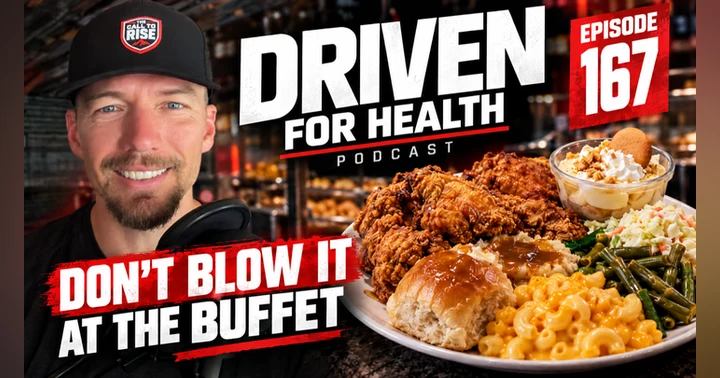
The same habit applies when you face a buffet. Episode 167 covers looking at the full spread before building your plate.
For help choosing meals away from home, get The Eating On-the-Go guide. It gives you restaurant orders and portion ideas to check before you sit down.
Frequently Asked Questions
Can I eat steak while working toward fat loss?
A steak dinner can fit into a food plan. Choose the portion you want and count the sides and drinks as part of the meal. One order does not promise a weight-loss result.
What does Coach Brian suggest ordering at Ruth's Chris?
Brian's example starts with a petite filet and broccoli. Ask whether the kitchen can make the steak without butter and steam the broccoli without added oil or butter. Availability depends on the restaurant.
Why compare a filet with a ribeye?
The comparison shows what comes with choosing one full menu order over another. The filet and bone-in ribeye in this episode are different sizes. Their listed numbers are not an equal-weight comparison of two cuts.
How should I portion a shared side?
Ask how the dish is served. Put the amount you want on your own plate and eat it before deciding about seconds. Sharing a dish does not mean every person eats the same amount.
Does asking for no butter give me an exact calorie saving?
No. The saving depends on the amount used in the restaurant's standard preparation. Requesting less added butter can reduce what you eat, but the request alone does not supply an exact number.
How can I plan a fine-dining meal without calorie counts?
Read the menu and check how many courses it includes. Choose the dishes you want without assigning calorie numbers from portion size alone. Return to your usual meal plan afterward.
What should I do the day after a large restaurant dinner?
Return to your planned meals. Use lean protein and vegetables as part of that plan. Note one ordering choice you would change next time without treating one dinner as a reason to abandon the week.
Will water make it safe to drive after alcohol?
No. Water does not make you safe to drive after drinking. Arrange a sober ride before dinner if you plan to drink alcohol.

CEO l Head Body Tranformer
Brian Parana is a men’s health coach with 23+ years of experience helping busy professionals improve their body, energy, and day-to-day habits while still leading at work and at home. His coaching is built around practical nutrition, training, sleep, and accountability, with a plan tailored to the person in front of him.
Over the years, Brian has helped thousands of clients through his work as a personal trainer, CrossFit gym owner, and online coach. He has also coached an Olympic silver medalist, a 2-time Olympian, and a CrossFit World Champion.
Brian is the host of the Driven For Health Podcast, where he shares real-world strategies for men who want to feel strong again and stay consistent without making health a second job.
He’s also the creator of The Call To Rise, a 100-day fat loss experience for driven men who want to drop 20–30 pounds, boost energy, and rebuild confidence through strength training, personalized nutrition, and high-accountability coaching. Many men join because their blood pressure, cholesterol, or blood sugar is heading the wrong direction, and they want a clear plan that fits real life.
Brian is married to his high school sweetheart, Amber, and they have four kids. Their family has traveled to all 50 states and 4 continents, with a goal to reach all seven.
What To Order At Dessert Restaurants For Fat Loss


 YouTube