Type 2 Diabetes, 374 Blood Sugar, 40 Pounds Overweight: What Finally Made Him Change
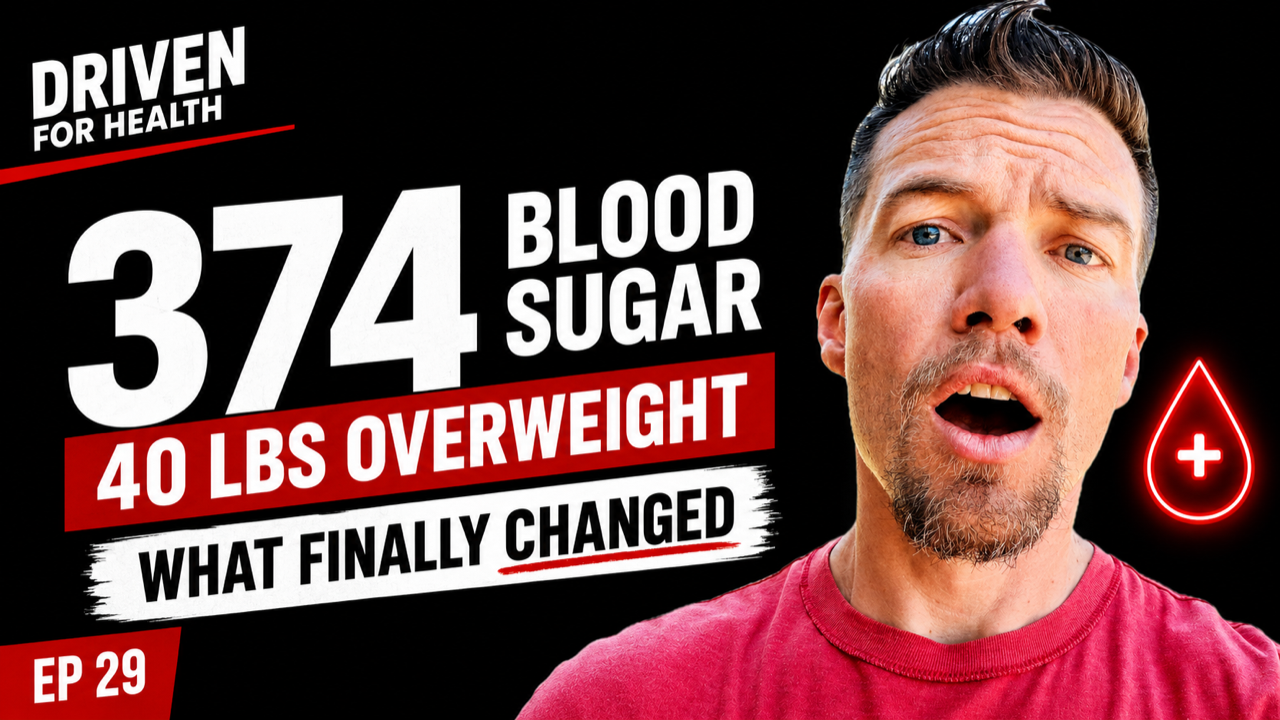
Brian Nase had a blood sugar reading of 374 and 40 pounds he had carried for 20 years. In this episode of Driven For Health, he walks Coach Brian Parana through the wakeup call and the first approach that worked fast and then reversed. He covers the insulin resistance research and the three habits that have kept him medication-free for eight years.
Summary: Brian Nase spent two decades carrying 40 extra pounds before a blood sugar reading of 374 and a Type 2 diabetes diagnosis forced a change. He reversed his numbers fast with extreme cardio and a near-vegan diet, then watched his blood sugar climb back after a life insurance denial revealed he had not fixed insulin resistance at all. This episode covers the whole-foods and resistance-training approach that has kept him medication-free for eight years, and the warning signs that men over 40 are most likely to dismiss.
The Numbers That Changed His Life
Brian's blood sugar came back at 374. Normal falls between 80 and 110. A reading of 150 is elevated even after a recent meal. His A1C was 11. A healthy A1C sits between 5 and 6. The doctor prescribed Metformin and a blood pressure medication. Brian refused statin drugs and left with two prescriptions and instructions to lose some weight.
The First Attempt: 40 Pounds Gone in 120 Days
Over the next 120 days, Brian dropped from 230 pounds to around 190. He biked 100 miles per week. He cut all animal products and dairy. His calories fell to about 800 per day. His A1C dropped to 5.2 and his doctor took him off all medication.
Two years passed. He regained 20 pounds. A life insurance application was denied. His A1C had climbed back to 8.2. The extreme calorie deficit had slowed his basal metabolic rate. When he reduced the cycling, his body needed fewer calories than before. He had lowered the number. He had not fixed the underlying condition.
Insulin Resistance: The Condition Behind the Number
High blood sugar is a symptom. The underlying condition is insulin resistance. Insulin is the hormone that signals your cells to absorb glucose from the bloodstream. When you eat poorly and avoid exercise over many years, those cells become damaged and less responsive. Glucose stays elevated in the blood because it cannot get into the cells where it belongs.
Why Muscle Is the Key to Long-Term Control
Muscles are the primary storage site for glucose. A man with more muscle mass has a larger tank. A larger meal produces a smaller blood sugar spike because the muscles can absorb more of it. The demand on the insulin system drops. Over time, as this cycle repeats, the cells begin to recover their sensitivity.
Brian went from biking 100 miles per week to lifting three times per week and biking twice. Resistance training became the primary tool for addressing insulin resistance at its source.
Three Strategies That Have Kept Him Medication-Free for Eight Years
Whole Foods 90 Percent of the Time: If something walks the earth or grows from the earth, Brian eats it. The 90/10 approach is sustainable. He does not skip Thanksgiving. He eats with his family at the holidays.
A Defined Eating Window: Brian eats within a 10-hour window each day. If his last meal is at 6 p.m. and breakfast is at 8 a.m., his body has a 14-hour recovery period overnight. The body cannot repair damaged cells while it is constantly processing food.
Sleep Treated Like a Prescription: Brian aims for seven to eight hours of sleep each night. The phone goes off before bed. Poor sleep raises cortisol, which drives blood sugar up and makes cells less responsive to insulin.
Warning Signs That Are Easy to Dismiss
Brian woke up repeatedly at night to urinate. He had a thirst that no amount of drinking relieved. He had been carrying significant extra weight for two decades. Fatigue was a constant presence. These symptoms develop slowly and are easy to attribute to age. If you recognize more than one of these signs, get your blood sugar and A1C tested without delay.
Listen to the full conversation: Type 2 Diabetes, 374 Blood Sugar, 40 Pounds Overweight
Related Episodes
- Episode 66: Diabetic and Only 20 Pounds Overweight: Listen here
- Episode 95: If You Have Type 2 Diabetes Your Liver Is Sabotaging Your Blood Sugar: Listen here
- Episode 98: What a CGM Can Teach You About Type 2 Diabetes: Listen here
Take the Next Step
Direct CTA: Call To Rise
Call To Rise is a 100-day group coaching program for men between 40 and 60. 12 men have completed the 100 days and averaged 25 or more pounds lost. The guarantee: lose 20 or more pounds in the 100 days, or Brian keeps working with you until you do. Apply at brianparana.com.
Blood Panels Scorecard
Get the free Blood Panels Scorecard at go.brianparana.com/scorecard.
Frequently Asked Questions
What blood sugar level indicates Type 2 diabetes?
A healthy blood sugar reading falls between 80 and 110. A reading near 150 is elevated even after a meal. Brian Nase's reading came back at 374. An A1C between 5 and 6 is normal. An A1C above 6 indicates pre-diabetes or diabetes. Brian's A1C was 11 at diagnosis.
What is insulin resistance and how does it lead to high blood sugar?
Insulin is the hormone that signals your cells to absorb glucose from the bloodstream for energy. When you eat poorly and avoid exercise over years, those cells become less responsive. Glucose stays elevated in the blood because it cannot get into the cells where it belongs.
Can Type 2 diabetes be reversed through lifestyle changes alone?
Brian Nase has been medication-free for eight years through whole-foods eating, resistance training, a defined eating window, and consistent sleep. The underlying tendency toward insulin resistance does not disappear, but the symptoms can be fully controlled without medication.
Why did Brian Nase regain weight after losing 40 pounds?
The first approach relied on extreme cardio and very low calories. When he reduced the cycling, his body needed fewer calories than before and he regained 20 pounds without returning to his old eating habits. Extreme restriction does not fix insulin resistance and often sets up a rebound.
How does building muscle help manage blood sugar in men over 40?
Muscles store glucose. Men with more muscle mass have a larger storage capacity, so each meal produces a smaller blood sugar spike. Building and training muscle regularly helps cells recover their sensitivity to insulin.
What is time-restricted eating and how does it help with insulin resistance?
Time-restricted eating means limiting food intake to a defined window each day. Brian uses a 10-hour window with 14 hours overnight to rest from digestion. The body cannot repair damaged cells while constantly processing food.
What are the early warning signs of Type 2 diabetes in men over 40?
Waking up repeatedly at night to urinate, unquenchable thirst, carrying significant extra weight for years, and persistent fatigue. These symptoms build slowly and are easy to dismiss as aging. Recognizing more than one is reason enough to get tested.
How does sleep affect blood sugar and insulin sensitivity?
Poor sleep raises cortisol levels, which drives blood sugar up and makes cells less responsive to insulin. Brian Nase treats seven to eight hours of sleep as non-negotiable. Consistent sleep is part of the treatment for insulin resistance.

CEO l Head Body Tranformer
Brian Parana is a men’s health coach with 23+ years of experience helping busy professionals improve their body, energy, and day-to-day habits while still leading at work and at home. His coaching is built around practical nutrition, training, sleep, and accountability, with a plan tailored to the person in front of him.
Over the years, Brian has helped thousands of clients through his work as a personal trainer, CrossFit gym owner, and online coach. He has also coached an Olympic silver medalist, a 2-time Olympian, and a CrossFit World Champion.
Brian is the host of the Driven For Health Podcast, where he shares real-world strategies for men who want to feel strong again and stay consistent without making health a second job.
He’s also the creator of The Call To Rise, a 100-day fat loss experience for driven men who want to drop 20–30 pounds, boost energy, and rebuild confidence through strength training, personalized nutrition, and high-accountability coaching. Many men join because their blood pressure, cholesterol, or blood sugar is heading the wrong direction, and they want a clear plan that fits real life.
Brian is married to his high school sweetheart, Amber, and they have four kids. Their family has traveled to all 50 states and 4 continents, with a goal to reach all seven.

What To Order At Dessert Restaurants For Fat Loss



 YouTube