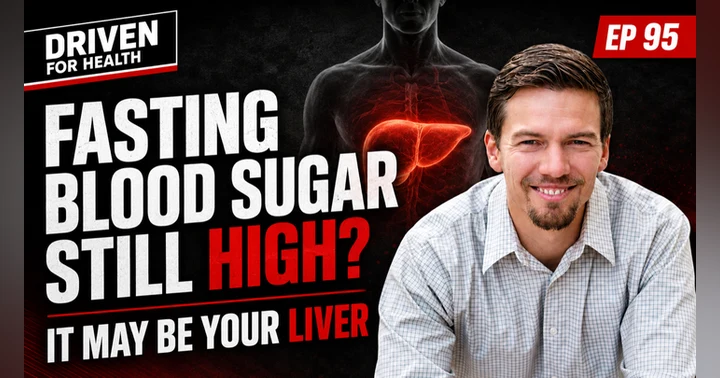
If You Have Type 2 Diabetes Your Liver Is Sabotaging Your Blood Sugar - 95

You cut the sugar and watched the carbs, and your morning blood sugar number is still stuck. Coach Brian explains why your liver keeps releasing sugar into blood that already has too much. He covers the fasting insulin test most doctors never order. You leave with five actions to start fixing insulin resistance this week.


 YouTube
 By the time most men get a type 2 diabetes diagnosis, they have already lost 30 to 60 percent of their insulin producing beta cells. The disease was building for 10 to 15 years before the appointment that gave it a name. Cutting carbs and watching sugar only ever solves half the problem.
(Have you cut the sugar and watched the carbs, only to watch your morning number stay stuck? Grab the free Blood Panels Scorecard below to see what your labs are really telling you.)
Coach Brian breaks down the real mechanics behind type 2 diabetes. He explains why your liver keeps dumping sugar into blood that already has too much. He covers the fasting insulin test most doctors never order. He also shows why your waist measurement predicts organ fat better than your bathroom scale.
By the end you will know the three things breaking down inside your body and the five specific actions that start fixing them.
Main Topics:
- Why most men carry insulin resistance for 10 to 15 years before diagnosis
- How your liver keeps releasing sugar into blood that is already too high
- Why beta cells wear out and lose 30 to 60 percent of their function by diagnosis
- The fasting insulin test that catches the problem before blood sugar looks abnormal
- Why a 40 inch waist signals dangerous fat around your liver and pancreas
- How strength training and short walks pull sugar out of your blood directly
- Why sleep and stress control your morning blood sugar number
- Five actions to start reversing insulin resistance this week
Free resource: grab the Improve Your Blood Panels Scorecard. It breaks down your A1C, cholesterol, and blood pressure numbers in plain language.
https://brianparana.short.gy/improveyourbloodpanels
If your labs are in a bad place and you want a clear starting point, book a free private lab review.
brianparana.short.gy/privatelab
Want help applying this to your own health, weight, energy, or lab numbers?
Coach Brian Parana offers Health Hot Seat coaching segments for men who want a clear next step with nutrition, fitness, weight loss, blood pressure, cholesterol, A1C, or daily consistency.
Learn more about The Call To Rise, a 100-day coaching program for driven men over 40 who want to lose weight, improve their health, and rebuild confidence:
To connect with Coach Brian:
brian@brianparana.com
Disclaimer: This podcast is for education and coaching support only. It is not medical advice. Always work with your physician before changing medication, treatment, or medical care.
- You cut the sugar, you watch the carbs, the numbers moved a little bit downward, but then you plateaued. There's a reason for that. Most men think type 2 diabetes is a sugar problem. After this episode, you're going to understand what it actually is and why that changes everything you think about it and how to fix it.
- This is a continuation off of some of the other diabetes recent episodes. So, you can definitely check those out back at episode 91, and this is episode 95 of Driven for health. Let me ask you something, guys. When your doctor told you your blood sugar was elevated or that you have type 2 diabetes, did anyone ever explain what was actually happening inside your body? Did anyone walk you through the what the impact of diabetes was inside? And the advice that they gave you to make it make sense? For most men, the answer is no.
- You get told that your numbers are high, that you need to cut carbs, cut out sugar, and lose weight. And maybe you've tried that. A lot of people have, but when you do not understand what is actually causing the problems in the first place, the advice just doesn't take the impact that you want it to or that you need it to.
- This is Coach Brian Perrona, and I've spent the last 23 years coaching men through metabolic health, through weight loss, through lifestyle improvements. And today, I'm going to give you the mental model that you need to get and understand about diabetes. And by the end of the episode, every habit you've been told to create and build and process and get in your day-to-day routines, we're going to make it make sense.
- This started long before the diagnosis. Before we get into the mechanics, I want to put a number on the table. The average man diagnosed with type 2 diabetes today started developing the underlying problem somewhere between 10 and 15 years before the actual appointment of getting diagnosed. His labs look normal for the most part, most of the time.
- The doctor told him there had no reason to do anything different, and he felt you were roughly okay from one visit to the next. Maybe tell you to lose some weight. Stop eating out, things like that. I have worked with men who were completely blindsided after their their diagnosis. They felt fine for 6 months earlier, but when they looked back, and the story that is undertold is that it was actually diabetes was there.
- It was knocking on the back door, and you just didn't realize it. As we go through the mid-30s, the weight starts piling on. That's completely correlated with the growth of a family, getting a house, getting cars, developing responsibilities in your day-to-day life. And by the time you get to 40s, you are either locked into your career to and maybe making good money, but then also, you might be in a challenging place with the career of realizing you don't really like what you do.
- But either way, your body is in an unhealthy spot because of you used to be fit and active in high school, and then as you continued to age, it got less and less and less. This brings us to where the fasting glucose is technically normal, but it's closer to 120 or more rather than 100. The diagnosis was just the day that all of the numbers came together and put it into an actual result and a number on the paper for you to get actually diagnosed.
- The timeline matters for two reasons. Number one is it removes the story that this happened just because of one bad year. It wasn't the last 3 months that caused you to have diabetes. It's been an overall decade of a system that is not working well for you. Secondly, it's also us why fixing it takes real sustained effort over a real timeline.
- I'm not here to BS you that you're going to lose 30 lb in 30 days or you're going to magically reverse your type 2 diabetes. It's going to take a little bit of time. If you've been building this lifestyle for 10 years, why is 3 months going to give you the solution that you want? And it can make a significant difference, but as soon as we understand the right expectations around the situation in the first place, then we are actually able to make a real difference.
- One of the first things that starts to break in your body is the cells stop listening. And every time you eat, your blood sugar level rises, right? I put food in my mouth, carbohydrates uh specifically, and my blood sugar level goes up. Just eating calories in general can raise your blood sugar. Your pancreas then releases the hormone called insulin.
- Insulin travels through your blood and tells your cells to open up and absorb the sugar so that your body can use it as fuel. Insulin is a storing hormone. Blood sugar rises, insulin gets released from the pancreas into the blood cells. The cells soak it up. Uh and even say best times to utilize this is around a workout.
- Your insulin will shuttle the blood sugars into muscle to replenish the used gasoline tank in a sense of a car. And that's your body. It's a stored fuel tank. It is the muscle. Then the blood sugar comes back down after it gets stored into your body. We don't want it stored in belly fat, but it can work out that way.
- Insulin resistance is what happens when your cells stop responding to that signal properly. Insulin shows up, the cell is slow to answer. Uh they absorb less than they should, and it just compounds where we have to keep adding more insulin to be able to get the cells to work the way it is. Think of it like this.
- You manage a warehouse. Every morning, you radio your crew and tell them the shipment is coming. They need to clear room to on the floor to make more room for the added supplies that are coming in. So, they need to clear the floor to make that room and generate it. For years, they responded just like that.
- Radioed in, clear the floor, new stuff comes in, and we are good. No problems. Over time, the the crew starts taking longer to respond. You radio them twice. Hey, Roger. Roger, Roger. Did you get me the the first time that I told you to do this? Uh then eventually, it's three times or four, and you eventually have to send someone walking down in person to get the message there.
- The floor still gets cleared, but it's it's only because you have to keep working harder. You have to keep sending more signals. You have to send someone down to actually talk to you. This is your pancreas during insulin resistance. Your cells are slow to respond, so your pancreas pumps out more and more insulin to force the signals through to the proper cells to absorb the blood sugar levels.
- Your blood sugar levels will stay somewhat controlled, but only because your pancreas is pumping out two to three times more effort and insulin to get you to the same response. If this goes on for years, your your labs might look normal in the first part, and your doctor doesn't necessarily see anything alarming except your belly uh hanging over your belt, or maybe some fatigue, but what we don't see is that the pancreas is working double time.
- And it's hard to sustain, and it's actually not going to sustain it. A test called the fasting insulin test can pick up this problem years before blood sugar ever becomes abnormal. Research shows that elevated fasting insulin is one of the earliest measurable signs that your cells are losing their ability to respond.
- A fasting glucose test shows you the results. Fasting insulin test shows you how hard the engine or the work crew is working to produce that result. Most standard blood tests do not include it. Ask your doctor for it by name at your next appointment, a fasting insulin test, so that you can understand if you are at risk for insulin resistance, which is a precursor for type 2 diabetes.
- This is a really simple add-on to the test that gives you a lot of variable information so that you can be really successful with navigating and managing type 2 diabetes and not let it go on and on and on. Making matters significantly worse. Here's a frustration a lot of men hit about a month or two in trying to fix this.
- You did what you're supposed to do. You You're eating clean in quotations. You're not You gave up all the sugar. You're not doing alcohol. You're moving your body more. You're working out at the gym. And then you check your fasting blood sugar one morning and it's still 118. Maybe higher than the next day, but it it generally goes up and down and you thought what is the point of all this? This frustration makes complete sense when you do not know what is driving that number.
- The morning fasting number has a different driver than what you ate for dinner the night before. There's a second mechanism running in the background that nobody shared with you and that's something that we want to cover next. This is the second thing that breaks. Your liver Your liver stops doing what it's supposed to do.
- It stops taking the direction. Your liver does something useful every night while you sleep. When you are fasting overnight, you don't eat from say dinner or even maybe the late-night crash food binge thing, but you end up going 6-8 hours without food, preferably longer, so your body can just have a natural long time.
- I'm a big fan of 12 hours between your last meal and your first meal. I think that just makes sense. I hope you manage and control your food intake. So, when you're sleeping and you're fasting overnight and your blood sugar drops, your liver will release stored sugar into your blood to keep your brain and your body operating.
- We don't want the blood sugar levels crashing down to zero overnight. That means death. That's not good. The liver's doing its job here. It's completely normal. In a healthy system, when blood sugar rises after a meal, insulin tells the liver to stop releasing sugar. The liver gets the message and it stops.
- The blood sugar level comes back down to baseline. All right? It's just this test It'll send it out and then your body says, "Nope, we're good." And it stops. In a man with insulin resistance, the liver stops responding to that signal properly. Insulin shows up and says, "Stop." The liver keeps going anyways. It's going to keep sending out more blood sugar levels and going in.
- Let's go back to the sup- that picturing that supply warehouse that keeps shipping product to a store that is already over capacity. The store manager keeps calling, "Hey, we're good here. Stop sending inventory. Please stop. There's no space here and we can't clear out the product fast enough." The warehouse never gets the message. The trucks keep arriving.
- The store floor over- fills. The whole operation stops working not because the store did anything wrong, but because the communication was broken down from the liver not stopping releasing the blood sugars to keep you alive. That is a liver in type 2 diabetes that keeps releasing sugar into the blood that already has too much.
- The cells are slow to absorb. The liver keeps adding to the load. That combination is what drives fasting blood sugar level numbers through the roof, even if you ate clean the night before and you had multiple hours of fasting without food when you wake up. When I explain this to a new client who has been blaming his night his evening night meals for his morning numbers, I watch the whole framework shift.
- It starts to make more sense. If that's you, if you have been focusing on dinner while the morning number stays stubbornly high, you've been trying to fix the right problem in the wrong place. Adjusting dinner is like calling the store manager and asking him to order less when the warehouse is the one ignoring the phone and just keeps shipping out as regularly scheduled.
- The morning fasting number is a liver score as much as it is a diet score. All right? When we get that number, ideally we want it to be 100 and we're good, but if it's above it, like 120 or more, then we're in trouble with what your liver's doing or what your nutritionist doing. These habits that move, change over time and and of course reducing visceral belly fat, consistent movement, sustained blood sugar controls through proper portions, meal design, all things that we've talked about ad nauseam throughout the last What? This is
- episode 95. So, go back and listen to a bunch of them and and I'm telling you exactly what to do all the time. And even in episode 91, we go over some very specific protocols. It was labeled I just got diagnosed with type 2 diabetes, now what? Now we cut carbs at dinner helps in small amount in fixing the communication is what we need to actually change.
- Where fat goes when it has nowhere left to go. Let's talk about fat storage here. Your body has a primary storage system for excess energy and the fat layer around your skin, subcutaneous fat, is what that is called. When you're taking in more fuel than you burn, this is where most of it gets stored. The system works fine to a point, but when that storage fills up, that space is gone, then we move the fat cells themselves stop accepting more there and the excess fat has to go somewhere else.
- And it ends up in places it's not supposed to be at. The two locations that matter the most for especially disease are the liver and pancreas. See fatty liver, right? We've heard that before. Think of a body like a house with a dedicated storage room. Everything extra goes in there. All right? We have that one room in the house that's just packed full of stuff.
- In my house, it's the attic or there's a downstairs basement. Now, in my house, we have six people and there's just more stuff than there should be. Uh compliments of capitalism and consumerism and today's modern climate. And just having lots of kids with lots of extra clothes. I mean, literally, that's some of the main stuff in my house is lots of extra clothes that nobody fits in and we haven't gotten rid of them yet.
- So, when the room fills up, they start ending up in the hallway, the kitchen, getting placed on counter tops. That drives my wife crazy. Amber she just does not like that. It's definitely a sign of an unkempt house, of course, and we don't want that to be the case, right? We want to make sure that the everything is where it's supposed to be.
- And yes, we do need to get rid of more stuff that we don't need. A box in the hallway is inconvenient, sure. A box sitting on top of the stove where someone's trying to cook shuts down your kitchen entirely. It moves into the working spaces and interferes with how your day-to-day operations at your house work.
- The fat depositing in the liver makes the communication break down way worse. So, the warehouse definitely isn't listening at all and it's feel like they got to go in overdrive to keep shipping because they think that the store needs more product. So, we have this loop and it adds inflammation directly into the organ, the liver and pancreas, and that is supposed to respond to the insulin stop signal.
- That's what the liver does. It's supposed to The insulin comes in and says, "Stop." And if we're in insulin resistance, we have to keep putting out more because of inflammation and fat depositing. Now, when fat does deposit in the pancreas, is where the most serious damage happens. Okay? We don't want things messing around with the pancreas.
- Even say pancreas cancer is pancreatitis or pancreas cancer is really really a big serious issue that you do not want. Now, research that I found from Roy Taylor's team at Newcastle University, I'll leave the the study in the notes found that even a small amount of excess fat accumulating inside the pancreas can begin interfering with the cells responsible for producing insulin.
- So, if the pancreas isn't producing insulin and the liver isn't listening to insulin when it comes in and it keeps shipping out more blood sugar levels, you are in a heap of problems. The waist measurement is the closest measurement that you have at a quick glance on how much fat is actually accumulating around the liver and the pancreas without getting going into a science lab and getting body fat scans and different things.
- Like literally, if your belly's too big, especially over 40 in guys, you are in a big challenging spot. This is not good and your health is declining. Your doctor certainly wants to pay attention to these numbers and he's going to force you to start doing things different if you don't actually take lifestyle action and you lose weight.
- So, fat ends up in the liver and the pancreas, right? It's just all these boxes and stuff stored in different areas of the house that it shouldn't be, right in the middle of the walkways and such. And what the fat is doing to the cells working inside the pancreas because this is the part of the disease most you you don't ever hear explained and so we don't want the fat in these organs, but then what is the fat actually doing to the cells inside them? And this is the third mechanism, the insulin factory wears out.
- Deep inside your pancreas, you have cells whose only job is to make insulin. They're called beta cells. They make the insulin. Beta cells make insulin. Beta cells were built to handle a normal healthy workload, just like your body is man, it's perfect to manage day-to-day life when not in a super high convenient, calorie dense, sugary laden state.
- They were built for reasonable demand over a lifetime. They were not built to run a double or triple the output for a decade straight. Beta cells will wear out and they can't produce insulin as they go if that becomes case. When insulin resistance forces the pancreas to keep producing for more insulin than normal just to manage blood sugar, these beta cells are under sustained stress.
- They're enduring and struggling to keep up in the compensatory is much harder work than they're supposed to and this it breaks down. It takes a toll on those beta cells, your pancreas, your liver and all sorts of other areas of your body. Even we talked about in the last episode of uh on ED on episode 90 four it was or 90 three it was or that was the one where we talked about it.
- So, big problems there. Now, from there uh episode 91, 89, excuse me, 89 episode 89 was I just got diagnosed with diabetes. So, 89 then we've got 91, we talked about type two diabetes and ED, erectile dysfunction and now we're talking about more on this in episode 95 here to further explain insulin, insulin resistance and some of the the byproducts here so that you understand what the heck's going on and I have some more for you coming up in the new episode here in the next two or three episodes it's going to be about
- glucose monitoring and understanding that and what it actually really is doing for your body. Now, going back to where we're at, the beta cells and producing insulin and getting worn out, over time they lose efficiency. They actually the number of working beta cells begins to decline. Research shows that by the time a man receives a type two diagnosis, he has typically already lost somewhere between 30 to 60% of his working beta cell mass.
- That's up upwards of 50% gone. Most studies will say about 40 to 50. Before you sit in the doctor's office and got labeled a diabetic up to half the insulin producing capacity was already gone. This is a big problem. Hence why insulin resistance and pre-diabetic is a really big deal. When I tell a client that number, the whole thought process conversation shifts.
- Like, this is serious. He stops treating the diagnosis as a starting line and starts understanding that it's a checkpoint on the timeline that has been running for a long time and he actually needs to about-face and start taking immediate changes to help shift his lifestyle over the next 90 days cuz it's generally about the time frame that you get your A1C measured.
- And if you're sitting around that number right now and is it with say you've been diagnosed then you're we're in trouble. What do you do in the next 90 days that matters? Now, two things accelerate the damage once blood sugar stays elevate elevated for a long time. Chronic high blood sugar creates kind of internal chemical stress inside the beta cells.
- That slows down and reduces their ability to function. So, high blood sugar sugar creates chemical stress inside beta cells. So, they're they're not working the way they're supposed to. It's the high sugars actively wearing down your cells, even wearing down your blood vessels, the inner lining like we talked about in episode 91 with the ED.
- Hence why the the pump isn't working so well because uh it's it's worn down or it's blocked. At the same time, the excess fat we talked about earlier, the the fat showing up in the hallways so to speak, the around the pancreas, the liver, the visceral fat it starts to compound in the blood and are harmful to the beta cells as well.
- Fat in the wrong places is releasing material into the bloodstream that wears down the whole insulin factory itself and wears it down faster than you want. You do not want excess stored body fat. We know this. A lot of people in our world are dying from metabolic disease, from cardiovascular disease, from heart disease, from being overweight and having poor diets and not moving their body.
- And all these things compound. Here's an analogy. Picture a backup generator for for a building. It kicks on when the main power fails. Even yesterday, oddly enough, we had no power in our house for maybe 20 minutes. It wasn't very long, but inconvenient always lose power cuz that's what we're used to. What do you do without power? I wouldn't be doing this podcast without power.
- So, the we don't have a generator cuz we have never experienced power loss for that long. I know certain areas of the USA experience a lot more power outages, especially in say the West Coast. They might want a backup generator to be able to manage turning having accessible power for things like food so it doesn't go bad.
- So, when the generator kicks on and handles the load for short such time before it starts to wear out, right? The battery runs down or the fuel runs out. And they're rated for temporary use. Run one at full output for years on years and the parts are going to overwork, overheat, they're going to be less effective, it's going to take a lot more effort things are going to fail.
- Some components can be repaired. You can swap starters out as an example. And if you catch those things early enough, you can keep the the generator operating, but as soon as things start burning out at a circuit tree level, you're not going to be able to get the power back or the battery saving or the power output the way you want it to be.
- The beta cells are that generator. Insulin resistance is the power outage that put them on backup power. So, we have insulin resistance building, it's causing your body to work harder and your beta cells are double-timing it. Every year, the elevated blood sugar levels run through that system and just wear out that generator and there's never any reparation.
- The good news is that research shows surviving beta cells can recover some other functionality when the pressure on them is removed. You have to lose weight. Meaningful weight loss, specifically visceral fat loss, has been shown to allow the pancreas to begin working more effectively again. The window to make this happen is is small and narrow.
- We can't just keep building pressure on the system. It will break. The body can heal itself if you give it opportunity, time, and specific energy to do so. Here's a number avoiding So, a lot of guys avoid their waist measurement. And I mentioned earlier 40 in is it. I want you to take a pause and stop and and look at this because this is directly related to visceral fat.
- Fat around your pancreas, fat around your liver. Pause now. Go find a measuring tape or even just a a measuring the the metal ones and just wrap it around your body, around your belly button, or even just the biggest part of your belly and see. Are you above 40 in or not? And 40 in is where the visceral fat starts creating really big problems for those two organs, liver and pancreas and then your whole insulin resistance and the process of working on it and the beta cells and all these things start to just wear out.
- This is a very easy baseline to wake you up to do something different. Moving into why every habit you have been given makes mechanical sense. Why are are these these habits How do we get them to work inside these mechanisms that we're explaining? Every habit is a toolkit for managing type 2 diabetes and it connects directly to one of the three mechanism we talked about.
- When you understand the connection, the habit stops feeling like a device and it starts to be more logical. Things such as strength training. When your muscles contract during exercise, you pull sugar out of your blood directly. They pull sugar through muscle contraction alone without waiting for insulin to signal.
- So, strength training is important. Which means more muscle means more tissue doing its job correctly around the clock. This is why you want to strength train to help manage blood sugar levels and move your body, too. So, moving by your body around, especially around meal time, can help you to circulate the blood sugar levels and have your body actually use them.
- Your leg muscles contract and pull sugar directly out of your blood. And a 10 to 15-minute walk can make a meaningful difference in your overall blood sugar levels after you get done eating. And you can test this with a blood test or with a continuous glucose monitor. All right. Walking can help you manage this and make you feel a lot better.
- Reducing belly fat. Getting rid of the visceral fat. Now, that's a process. It's going to take 1 to 2 lb a week. And you're going to have to lose If you're at 30 40 lb overweight and you're you're at a 44, it's going to take a minute to decrease the stored belly fat. That is important, okay? Now, every pound of visceral fat loss around your midsection reduces the likelihood that it's going to end up and continuing to wear down your liver and your pancreas.
- As that fat clears out, the liver stops responding to not listening or hearing insulin coming and it'll start to work. So, it won't pump out more blood sugar levels. So, remember the liver will send out blood sugar levels to move your body, to awaken it, to do a lot of things. They're called the dawn effect.
- In the morning, is your blood sugar level rise from your liver because your body's preparing for activity. All right. When we have the pressure on the beta cells, the actual insulin-producing cells themselves, your morning blood sugar levels can start to return to normal. Sleep. Getting ideally six but seven or eight hours can really help your body repair.
- If you want to improve anything and and get a fast return on all the effort that you're making, sleep is going to be a huge one that is going to solve a lot of problems if you're definitely underslept. The fasting number after bad night is a direct effect impact of not sleeping enough. So, if you don't sleep enough, your body's under more stress and cortisol, which then can affect the amount of blood sugar level your liver releases and now we have high inconsistent morning fasted blood sugar levels.
- Nutrition. Eating protein and lots of fibrous foods throughout the day or even in the first meal can help blunt blood sugar responses in your body and and keep the levels down even. That is a huge thing. In in my Call to Rise program, pillar number three is the fuel. It's the main mechanism that I spend so much time working with people helping them understand that we want balanced meals, that we want to have a more regularity around their their food, their nutrition, and episodes 5 through 11 go through the nutrition pyramid and there's a lot of
- different ones talking about nutrition throughout this course of these podcasts. The timeline looks like this. So, the the fat has less reason to end up in and around the liver and pancreas and reduces the challenges that those organs are sending out and receiving insulin and all. And when blood sugar responds from post-meal walking blunts that as well over next couple weeks and we have a much more balanced, managed, sustainable process here.
- This helps impact your A1C. A1C takes about 90 days to start reflecting meaningful change in your day-to-day. So, the first 30 days might feel slow or a lot of effort, but biology is biology and it is moving in the direction in these early weeks to make it matter the farther off you go. Now, walk with me through the next year if nothing changes after you listen to this. The cells keep resisting insulin.
- The liver keeps releasing sugar into the blood that's already has too much in it. The beta cells that send out the insulin, they keep running overtime on a workload that is shortening your functional life, literally. The generator keeps running on emergency power with no break, no maintenance plan. Components that could be replaced or repaired cuz your body does that with natural sleep, don't and we start to have even more breakdown and things aren't going to start coming back when you actually finally decide to take action.
- The window that exists right now is where lifestyle actually changes surviving beta cells to recover and get back to more regular functionality. This is important where we get visceral fat to get away from the liver, the pancreas, and inside around your organs. The morning fasted blood sugar levels actually improve and get back to a more normal level.
- The research is clear that men with shorter duration of disease and earlier intervention, meaning that you get notified that you're prediabetic or insulin resistant or you are type 2 diabetic with a high A1C, as soon as we can get those numbers back, your biology, your body will respond and start to repair itself and you don't just run out of life.
- Okay? It's just so important. If you tell your body to to get healthier and you follow through, then this is going to be really good. So, here are seven things to do even before the weekend. Next appointment at the doctor's, number one is ask for a fasting insulin test at your next lab appointment to help understand if you have insulin resistance or not.
- This is the earliest available signal for the communication breakdown we covered. All right. Super important. It's rarely included in standard panels and you ask for by name, a fasting insulin test. It tells you how hard your pancreas is working right now for you before overtime kicks in and you end up with abnormal blood sugar levels.
- Number two is the waist. We talked about it. Measure it and make sure that it's under 40 and it gets down to like a 36 or 34. That's reasonable for an adult male. Number three is walk around your meals. Work out consistently throughout the week. Make your muscles work. The next one is pick one early bedtime this week.
- You don't have to just go to bed earlier every day per se, but we do need to consistently start improving that as we go. That's really, really important to get more quality sleep under your belt. So, those are the things that we need for you to be successful. If you need help, that's what I do. I have two really good options.
- Number one is a private lab review. If you share your lab results with me, I've looked at hundreds and more this point, then I can have a 15-minute call with you. It's free, and we're going to go over what you're doing, why you're doing it. And I'll have something in the show notes for you. And for free private lab review with actionable game plan and strategies to walk out of that phone call with clear things to do.
- Uh number two is Actually, I'll do three things. Number two is to improve your blood panel scorecard. This has easy to understand what your blood panel's numbers are, and it explains exactly what it is. There's also a 3-day nutrition protocol that you can use as well to help to get back on the right side of this thing, to lower insulin resistance, to lower blood sugar levels, to lower belly fat.
- 3-day protocol that you can rinse and repeat, and I have a lot of success with guys starting there. The third one is The Call to Rise. It's a 100-day fat loss program, and it helps with guys that are juggling all things. They know what to do, but they aren't doing it. They need that support, that accountability, that direction, and that's what The Call to Rise is about.
- On episode 60, I talk about three guys that I worked with through the holidays, Lucas, Mike, and Andy. They lost 98 lb through the year effort and the guidance and the structure and the things that we did and talked about for them to be successful. So, if you want to hear about what we did, listen there. Then you can check out the calltorise.com. So, there's three ways.
- A private lab result, there's a a improve your blood panel scorecard with the 3-day fat loss and metabolic reset for your for your nutrition, and the actual getting to work with me one-on-one in this process. Three things break down in type 2 diabetes. Just cells stop responding to insulin signals.
- Your liver stops taking direction from the insulin, and it keeps releasing blood sugar up and up and up when it already has too much. And your beta cells that produce insulin have been running overtime for years, you are slowly dying a sad death because diabetes you can lose limbs and poor circulation and eyesight and taste and life experience.
- The opportunity cost is significant more than even just the financial cost of this. You know why the morning fasting number is where it's at, and it is a reflection of your liver function. If you have a high morning fasting blood sugar, your liver's pumping out more and more sugar in the morning. Now, the waistline is a reflection of visceral fat.
- 40 inches or more, you do not have that big of abdominal muscles. It's impossible. And these are things that you have to pay attention to if you want to live a happier, healthier life. I hope that this episode has helped you understand it a little bit more. I tried to break it down into simple, easy context so that you can understand and start to actually take action on it.
- This is super important. Taking action and doing something, guys, change your life now. Don't wait for it to in quotations get better cuz it's not going to unless you take direct action. That's it for this episode Driven for Health. I hope that this has been informative, and listen to episode 89, which is titled I just got diagnosed with type 2 diabetes, now what? Listen to type uh nine episode 91, type 2 diabetes and then erectile dysfunction.
- This is episode 95, and talk about this, and then there'll be episode 98 in the near future that talks about your A1C, your blood sugar levels, and how to manage those. I hope that we'll catch you in the next one. Thank you.