How John Lost 50 Pounds at 60: From 231 to 181 lbs (Ep. 21)
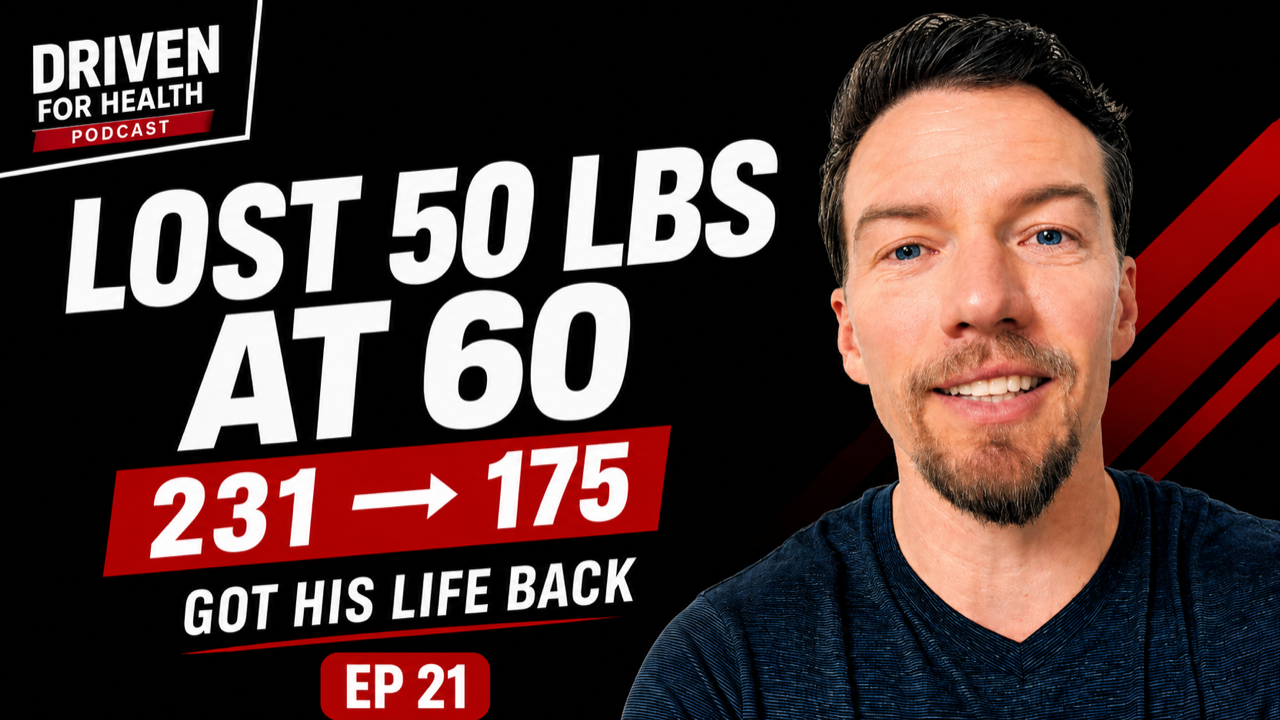
John Meyer is 60 years old and owns a marine business in Florida. He has more energy today than he had at 40. Over close to a year working with Coach Brian Parana, he went from 231 pounds to 181 pounds by tracking his food and hitting the right protein targets.
Summary: John Meyer is a 60-year-old business owner who dropped from 231 pounds to 181 pounds working with Coach Brian Parana on Driven For Health. His turning point was learning to track calories and protein, which gave him clarity on fueling his body and broke a pattern of inconsistent results after six months of trying on his own. Today he has more energy than he had at 40, stays active with his grandchild, and competes in fitness challenges.
John's results at a glance: Starting weight: 231 lbs. Current weight: 181 lbs. Time frame: close to a year. Shirt size: XL to L. Waist: 38 to 34 inches. Energy at 60: more than he had at 40.
Listen to the full episode: How John Lost 50 Pounds at 60 | Driven For Health Episode 21
A Man Who Put Everything Into the Business
John Meyer is 60 years old. He owns a marine business in Florida. He has three kids and a grandchild. He runs a company and manages a full personal life every day.
For about 10 years, the health side kept falling behind. He put his energy into the business and the family. His weight climbed slowly. By 2021 and 2022, he was in the 230s and the scale kept moving in the wrong direction.
He wanted to be present for the years ahead and to have energy for his grandchild. He wanted weekends that felt alive rather than like recovery from the week. He wanted to stop the slow decline and take control of where his health was heading.
Six Months of Trying Alone
Before he worked with Brian, John spent about six months trying to get things on track himself. He worked out with his son-in-law and made different food choices at the grocery store. He tried prepackaged meals to remove some of the guesswork from food.
The prepackaged meals were an improvement but came with problems. They were high in sodium. He was not getting the right types of carbohydrates. Without a real understanding of what his body needed in terms of protein and calories, his choices were better but not structured around a clear goal.
He described those months as stumbling around. He was building discipline and learning new habits. He was not making progress efficiently because he did not have the guidance to make each step count.
He put in effort and had consistency. What he lacked was a professional who could assess his situation and build a system around it.
Calorie Tracking and the Protein Insight
When John started working with Brian, they built a calorie and macronutrient tracking system together. John is analytical by background. His work in marine software and electronics means he thinks in data. Treating food as measurable numbers clicked for him quickly.
The biggest insight was protein. John had not understood how much protein his body needed each day. He had not connected protein intake to muscle retention during a calorie deficit. Once he learned his daily protein target and started hitting it consistently, his results shifted.
They spent time in a calorie deficit to drive fat loss. As the weight dropped, Brian monitored for signs of metabolic adaptation. After John had dropped about 30 to 40 pounds, those signs appeared. The metabolism was adjusting to the lower intake and beginning to slow its rate of fat burning.
Brian introduced a planned diet break. Calories went up to between 2,500 and 2,900 per day during that phase. John's weight either stayed the same or continued to drop. It never went up.
That experience gave John a clearer picture of how metabolism responds to sustained low intake. The body adapts to a calorie deficit over time. A planned period of higher calories resets that adaptation. After the diet break, the fat loss phase continued at a better rate.
John described it the same way he approaches his business: assess the situation and adjust when the numbers signal that change is needed.
Food Becomes a Lifestyle
Something shifted in how John thought about food over the course of the program. He stopped thinking of it as a temporary plan and started thinking of it as a set of choices about what to eat and what value each choice offered his body.
He approached each meal as a question: what does this food offer me in terms of fuel and performance? That reframe changed his relationship with food for the long term.
A calorie tracking system is a short-term education tool. The longer-term outcome is a relationship with food that does not require tracking every meal forever. It comes from understanding what good choices look like and why they work. John reached the point where healthy eating became part of how he naturally operated. It is his new standard, not a phase he plans to stop.
The Shift From Scale to Performance
At some point in the program, John stopped watching the scale so closely. He shifted focus to how he felt and how he looked.
His waist dropped from 38 to 36 to 34. His shirts went from extra-large to large. He started buying new clothes because his old ones no longer fit.
When he saw those changes, his motivation grew. He pushed harder in training. He paid closer attention to hitting his nutrition targets. Progress started building on itself.
He described a light switching on. He had more energy. He was capable of more in the gym. He could eat more than before and still see his body changing in the right direction.
Energy for the Life He Had Been Missing
He has more energy at 60 than he had at 40. He picks up his grandchild without hesitation and handles yard work with energy to spare. He walks with his wife every evening.
On weekends he bikes and swims in his backyard pool. He goes out with friends and travels. He spends his time off doing things rather than recovering from the work week.
He no longer finishes the week and collapses onto the couch. He is present for the people around him and active in the ways he wants to be.
Morning Routines That Hold Through a Busy Life
John built a consistent morning training habit. Getting the workout done before the day starts removes the risk of the day crowding it out.
Business owners understand this pattern well. A task without a fixed place in the morning gets pushed. A workout left for the evening disappears when work runs long or family needs arise. Making training the first commitment of the day turns it into a fixed part of the schedule rather than something optional.
John described reaching the point where a missed workout felt like something was off. That is the marker of a real habit. The activity is no longer something to check off. It is part of how he lives.
The Business Owner Mindset Applied to Health
John's story reflects a pattern Brian sees often. Men who are high performers at work tend to apply their existing strengths effectively once they have a framework built around their actual life.
Business owners know how to follow a plan and stay accountable. They understand data and know how to adjust a strategy when the numbers call for change. A 100-day commitment is not unfamiliar territory for men who run companies.
Those skills transfer directly to a fat loss program when the program is structured around their actual body and schedule.
The gap is not usually motivation or discipline. The gap is finding the right system for the body they have at the stage of life they are in. Generic advice built for someone in their 20s does not translate for a 60-year-old running a company. The hormonal picture is different. The accumulated habits of two decades need different handling.
John put it directly: in business, you do not rely on yourself for every area of expertise. You bring in professionals and build a support structure. Health deserves the same approach.
Once he had a coach who could assess his situation, his results accelerated past anything he had managed on his own. A coach could explain what his body needed and hold him accountable in ways he could not do for himself.
What John Is Going After Now
At the time of this episode, John was hitting new all-time lows in his weight. The focus has shifted from losing pounds to building performance.
He is working toward unassisted pull-ups and currently trains with 40 pounds of counterweight assist. He competes in Orange Theory challenges and has signed up for swim-run-row events. He is eyeing a Frogman event and longer bike races.
His advice to anyone in a similar spot:
Start with nutrition. Get on a structured plan that helps you understand your protein target and your daily calorie range. Make training the first commitment of your morning so the rest of the day cannot push it out. Commit to the process rather than chasing a specific number on the scale.
And work with a coach. Find someone who can assess your situation and explain what your body needs. A good coach holds you accountable and catches the patterns you cannot see from the inside.
In business, you lean on real expertise. Your health deserves the same standard.
Related Episodes
- Andy also lost 38 lbs working with Brian in the 100-day program: Episode 53: Andy Lost 38 lbs in 100 Days
- Mike's body composition transformation in the program: Episode 113: Mike Dropped 17 lbs and 12% Body Fat
Take the Next Step
The Call To Rise: 100-Day Fat Loss Program
John's result is what The Call To Rise is built for. It is a 100-day group coaching program for men who want to drop fat and build strength. The program is designed around the life you already have.
Twelve men who have completed the 100 days averaged 25 or more pounds lost. Andy lost 38 lbs in 100 days (episode 53). Jamie lost 38 lbs in the program. Mike lost 17 lbs and 12% body fat (episode 113).
The guarantee: lose 20 or more pounds in the 100 days, or Brian keeps working with you until you do.
The program runs for 100 days on a rolling start, usually on Sundays.
Apply at www.thecalltorise.com.
Start Here: Free Guide
If you want a concrete starting point before committing to a full program, download the free Lose 3 lbs in 3 Days guide. It shows you the exact approach Brian uses with clients at the start of a fat loss phase.
Get it free at brianparana.com.
Frequently Asked Questions
How did John lose 50 pounds at 60 years old?
John worked with Coach Brian Parana for close to a year, tracking calories and protein while following a structured training plan. The biggest shift was learning how to fuel his body with the right amount of protein and understanding how many calories he could eat while still losing fat. He also went through a planned diet break to reset his metabolism after dropping the first 30 to 40 pounds.
How many calories did John eat while losing weight?
John ate between 2,500 and 2,900 calories per day during a planned diet break period mid-program. His weight stayed the same or continued to drop at that calorie level. The approach prevents metabolic adaptation by raising calories temporarily before returning to a calorie deficit.
How long did it take John to lose the weight?
John worked with Brian for close to a year. He had spent about six months trying on his own before that, with limited results. The 10 years of gradual weight gain took time to reverse, but progress accelerated once he had the right nutrition system in place.
What was the turning point in John's fat loss?
Nutrition was the turning point. John had been exercising but was not eating in a way that supported fat loss. Once he started tracking calories and hitting his protein target, progress accelerated. He described it as turning food into numbers, which worked well for him as an analytical business owner.
Can a 60-year-old man realistically lose 50 pounds?
John's result shows it is possible with the right structure. He lost over 50 pounds going from 231 pounds to 181 pounds. He has more energy at 60 than he had at 40. He fits into size 34 pants and competes in fitness challenges. Age affects how you build the plan, but it does not set a ceiling on what you can achieve.
What is the Call To Rise program and how does it work?
The Call To Rise is a 100-day group coaching program for men 40 to 60. It includes weekly group calls and 1:1 calls with Brian. Every client gets an individualized meal plan and a training plan, along with a client site where all resources are in one place. The program runs for 100 days with a rolling start. The guarantee is losing 20 or more pounds in 100 days or Brian continues working with you until you do.
What should a busy business owner do first to get his health back?
Start with nutrition. Working out without fixing food produces limited results, as John's first six months showed. Get clear on your protein target and daily calorie number. Do your training in the morning so work cannot push it out of the day. A coach who understands your schedule can accelerate progress and catch the patterns you cannot see yourself.
How does tracking macros help men over 40 lose fat?
Tracking macros turns food into measurable data. For men over 40, protein intake is especially important because it helps preserve muscle during a calorie deficit. Knowing your numbers removes guesswork and shows you exactly where your eating is supporting your goal. John described the tracking system as the shift that made everything click after months of inconsistent results on his own.

CEO l Head Body Tranformer
Brian Parana is a men’s health coach with 23+ years of experience helping busy professionals improve their body, energy, and day-to-day habits while still leading at work and at home. His coaching is built around practical nutrition, training, sleep, and accountability, with a plan tailored to the person in front of him.
Over the years, Brian has helped thousands of clients through his work as a personal trainer, CrossFit gym owner, and online coach. He has also coached an Olympic silver medalist, a 2-time Olympian, and a CrossFit World Champion.
Brian is the host of the Driven For Health Podcast, where he shares real-world strategies for men who want to feel strong again and stay consistent without making health a second job.
He’s also the creator of The Call To Rise, a 100-day fat loss experience for driven men who want to drop 20–30 pounds, boost energy, and rebuild confidence through strength training, personalized nutrition, and high-accountability coaching. Many men join because their blood pressure, cholesterol, or blood sugar is heading the wrong direction, and they want a clear plan that fits real life.
Brian is married to his high school sweetheart, Amber, and they have four kids. Their family has traveled to all 50 states and 4 continents, with a goal to reach all seven.
What To Order At Dessert Restaurants For Fat Loss



 YouTube