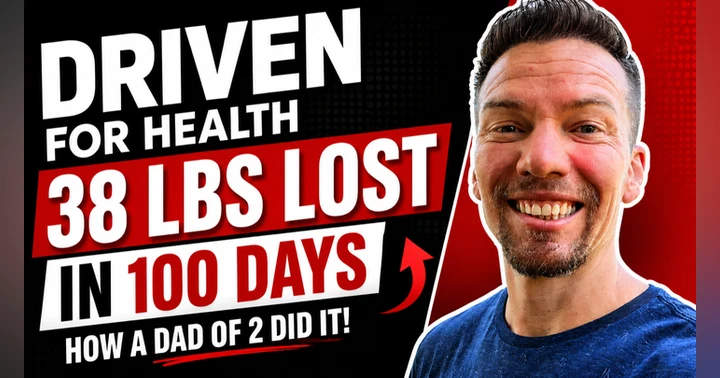
38 lbs Lost in 100 Day Challenge, How Husband & Father of 2 Did It and You Can Do It Too! - 53
Andy started at 212 pounds with low energy and a dad body. Coach Brian talks with Andy about how he lost 38 pounds in 100 days inside The Call To Rise. Andy travels for work. He explains why Google searches and AI plans never worked for him and what changed once he moved every day and made better food choices on the road.


 YouTube
 Andy started at 212 pounds with the classic dad body and low energy. His real wake-up call came when his blood sugar started trending the wrong way and diabetes felt like a real threat.
(Have you Googled your way through fitness plans that never stick? See what finally worked for Andy.)
Coach Brian sits down with Andy, a busy family man and frequent traveler who dropped 38 pounds in 100 days inside The Call To Rise. They talk through what his daily life actually looked like, why Googling and AI generated plans never solved the problem, and what changed once he committed to a simple system built around consistent daily movement and smarter food choices. Andy's story shows what structure built for real life looks like when work and family demands stay high.
By the end you will know what a plan built for a busy, traveling schedule actually looks like, and why it worked when nothing else did.
Main Topics:
- Andy's wake-up call when his blood sugar started trending the wrong way
- Why Googling and AI generated plans never solved the problem
- Building a system around consistent daily movement
- Making smarter food choices while traveling for work
- Staying consistent through long workdays and stress
- How fat loss carried over into better focus and confidence
The Call To Rise is a 100-day fat loss challenge for driven men ready to take their body back. It combines strength training, personalized nutrition and real accountability. Most men drop 20 to 30 pounds and rebuild the confidence that comes with it.
This program also works if you are dealing with high blood pressure, high cholesterol or Type 2 diabetes. It was built for those men too. Many men see those numbers move in the right direction alongside their weight loss.
Inside the program you also join a Brotherhood of men doing the same work. Together you build a body you're proud of and start leading like the man you already are at work.
This is your wake-up call to rise. Learn more and apply at www.thecalltorise.com
Want help applying this to your own health, weight, energy, or lab numbers?
Coach Brian Parana offers Health Hot Seat coaching segments for men who want a clear next step with nutrition, fitness, weight loss, blood pressure, cholesterol, A1C, or daily consistency.
Learn more about The Call To Rise, a 100-day coaching program for driven men over 40 who want to lose weight, improve their health, and rebuild confidence:
To connect with Coach Brian:
brian@brianparana.com
Disclaimer: This podcast is for education and coaching support only. It is not medical advice. Always work with your physician before changing medication, treatment, or medical care.
- Welcome in to episode 53. Coach Brian bringing driven for health and Andy. He lost 38 pounds in 100 day my the call to rise program, the fat loss challenge, the things that I've talked about on all my what we call CTAs, called actions, the podcast. And in this episode, he's going to talk about how he did it.
- And it's going to be mindblowing at how Andy took a super busy life. He's a family man with two kids that are teenagers. He travels a lot for his work. And he was eating fast food and garbage and and diabetes was starting to be a threat. He was 212 pounds when he started. and I'm going to save the rest for you here in a moment. Please enjoy our conversation.
- I hope that it inspires you, motivates you, and gets you to take the next best step for you. Whether that's working with me, whether that's finding a friend, whether that's getting into your local boot camp class or personal trainer or whatever, do something for yourself to better your health because if not, ultimately you're going to die young. That's the takeaway here.
- This whole thing that I'm doing is you're going to end up dying sooner than you want to and then it's no good to any of us. All right, over and out. Catch you in the episode. We're talking with Andy. He lost 38 lbs in 100 days. I mean, this guy is a grand slam results client. I had to bring him on here to talk about what the heck he did.
- And then you get to hear and understand the situations that challenges and and the obstacles that he had to overcome to get such an amazing outcome. Andy is super easy to work with on my end. He just did the things that we talked about and he had wild success. So we're sharing that. He is the guy if most of the US right now it's it's January 20th.
- It's in the single digits here. It feels like neg5 when I woke up. This guy puts the down feathers in your jackets to keep you warm. All right. So, this guy travels all over the place, overseas, domestically to make sure that we stay warm, but and also he's a family man. He's got two kids and he absolutely loves prime rib and tomahawk steaks.
- Welcome, welcome Andy to our conversation today. Let's jump in real quick. What were you able to accomplish as far as results go? >> Uh, like you mentioned, you know, I went from a 212 to 174. Uh, and I feel great. >> That's amazing. That's so good. I'm I'm I'm blown away. And let's let's jump into a little bit of who you are.
- Tell the audience, the people listening in, watching this, who is Andy and why did it matter that you made a change in your life? Um, I'm one of those people that's actually responsible for down and feathers that's in all of your guys' outerwear jackets. Uh, that's what I do for a living.
- Uh, but I'm also a father and a and a husband um that actually, you know, cares about his uh health and thought it was time to actually do something about it. >> Yes, absolutely. Had to do something about it. And what what were the issues and things that you were starting to see show up in your body, in your shape, in your health, things like that? >> Well, you know, you always have the classic dad b thing going on, but I actually have something more serious, something that I I actually I took it to heart. Um, you know, I went to the
- doctor. I go every year or every two every half a year. And then, uh, I saw that, uh, my cholesterol was very close. I mean, I'm sorry, my blood sugar was very high. uh compared to where it's supposed to be. Uh so and then I started getting uh getting a little bit nervous about it.
- So that's when I actually made the chance to pull the trigger and and actually get in touch with Brian. >> Yeah, definitely. I I see so many people especially a huge focus and shift that I have is men in their 40s and 50s. I'm 43. It makes a lot of sense to talk to myself in a sense. And the problems and challenges are, sure, we're we're over a lot of men are overweight, but then we're starting to see these other actual chronic health issues show up.
- Blood pressure is up, cholesterol's up, your A1C and blood sugar levels are going up. These are big problems that will end your life faster than you want to. Me being 43, I think, am I 40% done? 50 60 80% done with this life. I'm not I'm not ready to go. I just feel like I'm still going. And I have four kids. So, it's really really important.
- And I imagine that's a big reason why that you didn't want disease coming into your body and into your household in a sense and it ultimately being your fault. >> Yeah. you know, and you know, like you like I said, you know, I have two kids and you know, they're already in teenage years and they're getting and they're two boys, so you know, they're getting to that age where they're trying to, you know, get to this the same uh weight and, you know, and try to challenge certain things even in little things like sports, basketball, and things like
- that, >> you know, and still as me as the father, I still don't want to let it go, but it's, you know, it's one of those things that father time is one of those things that always wins. So, >> yeah. >> Yeah. Just trying to trying now I'm just trying to keep up with them. >> Yeah. Yeah. the same old my older two are now faster runners than I am. It's sad and by a lot.
- They're not stronger than me though. Not yet. >> Oh, I got to keep >> No, no. Well, not these guys either, but still they're they're close. >> Yeah. Yeah. Soon enough, unfortunately. All right. So, we got to keep up with the kids and keep up with the family and all the responsibilities because you have a a couple of them, right? We've got longer work days.
- Sometimes you have to travel a bunch. How do some of those situations impact daily life? Like how long are you gone traveling on occasion and and things like that? Client meetings. >> Yeah. So sometimes, you know, I have when I do go out of the country, let's say I go to China or something for uh the week, you know, during those times, you know, I don't necessarily even eat too much because, you know, like how you may know, you know, I'm not really much of a vegetarian or or anything when it comes to vegetables >> and that's a lot of the diet out there.
- So, I just stick to kind of just the chicken and rice type of diet and and uh bottled water because you're not supposed to drink the water out there either if you're not from there. >> So, you know, that kind of that kind of helps with the keeping the diet intact when I go out there. >> Um when I do go uh you know, in domestic, you know, I do try to keep it light, you know, by knowing what to eat when, you know, what we practiced, you know, and try to eat how eat the eat the good protein stuff and just the good
- amount of it. >> Yep. Yep. I do want to point something out here, everyone listening in. Now, this is an exception to the rule, but we tried really hard to work vegetables into this man's life. And we we he still does to just amuse me occasionally, but he was able to do this not necessarily eating a lot of vegetables and very select ones because one of the principles that I have for every person I ever work with is it has to be a lifestyle.
- It has to be something that we do. This phrase of what we do in two weeks, we do in two months, we do in two years, so on and so forth. And andy just doesn't enjoy them. And we tried dino time, right? Just stuffing a bunch of greens in your mouth before you eat and blending them in smoothies and and we had a valiant oper.
- But you do get your fiber and nutrition through fruit, right? >> Yes. Yes, I do eat plenty of uh apples, oranges, grapes, bananas, >> you know, a lot of different kind of fruits. Um, and I do eat them every day. Uh, just, you know, after I do eat the protein or whatever and carbs that I do need to get in.
- Um and yeah, you know, and and like you mentioned right now, you know, it's it's really important for that, you know, to keep that in mind, which is, you know, be realistic, you know, don't don't try to don't try to like put cheese on some on vegetables or butter on something and and or salt or something and make it and and stuff yourself with it or force yourself.
- Like, that's not realistic. You're not going to do that. I'm never going to do that. I'm never going to bake Brussels sprouts. I'm never gonna I'm never going to do that. You know, there's no amount of cheese that you can put on that stuff that I'm going to want it. So yeah. >> So what also let's here he eats fruit and he was able to do but what about sugar and let's let's not we're not doing like 1990s fat diet rules or something.
- We're using nutrition, sciencebacked nutrition, and educating Andy and all my clients around what to eat, why they're eating it, how to eat it better, and how to be more prepared and planned out for the situations that have. So, let's talk about some of those situations beforehand, before all these results and changes.
- Where were you at and what did you try on your own before we came together? Um, so you know, I was I was consistently from, you know, around 205 to 2:15, you know, um, you know, going back and forth throughout because I was just not really taking care of myself. I was just eating, you know, fast food more than maybe three or four times a week.
- Um, you know, and going on maybe just on just on that one time that I would eat during that day of fast food, I would eat maybe the 2,000 calories in that one meal. And then probably dinner later on. And then the main thing was also not even hit 5 to 7,000 steps, you know, now the whole difference is, you know, just opposite, you know, it's totally night and day. Um, right.
- >> And yeah. Yeah, it's just it's crazy. >> And now, had you tried anything other programs before what we did? >> So, no, I didn't try anything actually. what I would do was I would just be like uh looking at Google looking trying to see if any AI would kind of you know come into play here and just you know answer all these questions that I have but you know and it's one thing to do that um but it's it's one thing to actually have somebody to actually kind of walk you through those answers because it's not as simple as black and
- white you know there's a lot of gray area when it comes to this kind of thing if you really want to get real results at least >> right totally I see AI and GLP1s are major changes in the last 12 to 15 months and I I see it a lot of people come and ask me about those things. I have a lot of people even on GLP1s while we are working together to help and get them results.
- So we have to work with them. I am not necessarily a proponent of doing it. I think the way that we did it is the best way but if someone chooses to use a GOP one then we need to honor that and and work in that situation. But say the AI, so many people are, you could literally just have it write a meal plan and a macros. But guess what? That just goes back to any other meal plan situation or something that a lot of people have failed on.
- And you have to find a different approach that actually works in your everyday. So, we know that the the blood sugars, the A1C, diabetes was starting to show up. It just a fatigue and you just didn't feel that great back then, >> right? >> And so, you said, "Hey, I'm going to actually work with someone." And what were some of the things that we did that actually made huge impact? This is with the meat and potatoes. People, listen up.
- bust out a pen and pencil to listen in to what we did with Andy and you might be shocked at what you hear. >> Yeah. So, it was very easy actually, very simple. It's just, you know, stay active. That was the the main thing, you know, stay active. Minimum 10,000 steps a day, which I'm happy to report I'm still at uh continuing to do as of this now, you know, over 100 days.
- Um, I'm also, you know, just keeping the portions down and eating regular regular meals, you know, and and yeah, and just and just staying in touch with Brian and just having, you know, that kind of consistent uh help to kind of understand what's the right thing to do, you know, and and uh cuz like I said, you know, we can read all we want of what's the right thing to do, but it's another thing to actually have somebody telling you how to do it and and walking you through it and if you have and if you do it wrong and if you
- have any questions to like bring it up and and actually ask them and get the right answers. >> Yes. And the right answers specifically for your situation. you join the call to rise. It's a 100 day fat loss challenge in which we have weekly calls. You have daily touch points with me. There's a community of other like-minded men.
- There's a lot of specific information I give you at dripped out throughout the time in there so that it's this is the next step of what is going on. And then the camaraderie knowing that you literally say, "Hey, I'm at 89 days of 10k steps. I'm about to take a million steps." And it blew my mind because I never shifted that to consider what that actually meant.
- 100 days of,000 steps a day is 1 million steps. >> That million step challenge is born with Andy saying that in my mind racing, oh my gosh, this is such a a cool thing to do. But that that was a huge momentum builder for you. What what about the program made it different and easy besides just Brian helping guide you? >> Well, I mean all all the steps were there already.
- You know, it's like if like you like if you said like you said, you've done this before. You know, you've been doing this for a long time. Uh you got all of the the fat, I guess you can say, out of it. You cut the fat out of it. I don't know. I got to take the pun there. >> Yep. >> You know, uh you know, it's all very simple.
- Like I said, you know, it was really easy to follow. It's not hard. Um, you know, and it's for somebody like me that's, you know, has doesn't have too much time. It's really easy and it's and it's uh it's fun actually. Keep it gives it gives you just another thing to do and it gives you peace of mind that you're actually taking care of yourself.
- >> Yep. Yep. I know that you inspired and motivated a lot of guys when you're posting all the all your steps consistently. Well, if Andy's doing, then I should do it, too. you know, Danny is is is really pushing because of you. And that's one of the cool things is you don't have to do this alone. And you can find support and ways to help create these environments in which we're able to establish really good behavior changes and get them to stick.
- And as Andy says, we boil it down to simplicity. Guys, you're busy. I'm busy. I My day is so full. I'm choosing this or I'm choosing that. That is that's it. And that's yours, too, right? Am I gonna do this thing or that thing right now? And we don't want to spend all this time, you know, grocery shopping and meal prepping and and all these things.
- We just want the easiest outcome. And your outcome was I want to lose weight, get my blood sugars A1, and I want to do it in the easiest way possible that's sustainable. And that's where I was able to meet you and laying out some really simple things. pink stats. We kept our calories under 1,800 most of the time.
- You were able to enjoy this was through the holiday season as well that we did all this and which is even more mind-blowing. So people, if you're listening, it can be done. You have to have some intention, a big reason why, and some maybe some support, accountability to be able to do that. Now, if someone was listening in, uh what was the biggest challenge that you had to overcome in the first place getting signed up? >> Uh just getting the time to actually do it.
- >> That that was the big thing because I never thought that I would have the time to do it. I didn't think it would be this easy that I would be able to have communication with somebody still every day, but at the same time, you know, get get stuff done, >> right? So many people say, "Why now?" or "It's not a good time.
- " And I I've heard that so many times. And I I'll be honest, if someone has intention to take action and they don't actually take action in that moment of time and energy and effort that they're putting forth to do it, it's unlikely 80 90% of the time that they're actually going to do anything about it. And then months or even years go by, literally years.
- I've had people follow up with me three years later, Brian, I'm in a worse spot than when I first met you and talked to you. Yeah, that's because life is super busy and it's going to run away with you. And you don't need time. You need priorities and structure and strategizing, right? >> What are the most important things to do >> to then do those things.
- So we have a minimum viable dose and effective progress that we get and then we tweak and adjust as we go to get the results. So if someone was listening into this and they oh my gosh he lost almost 40 pounds in 100 days and they were in a similar situation to where you were at when you were beginning A1C's going up. Maybe cholesterol could have been too.
- Your waistline was not in a good spot. your your down jacket was a what? Going toward an XL instead of a a medium. >> I was at an XL. Yeah. >> Yeah. And and so what would you tell that person if they're watching in thinking what should they do now? What's what's advice that you would tell them? >> Um actually, you know, and tell yourself it's time.
- >> No, and actually uh go through with it, you know, just realize that it's not that hard. It's um and you know once once once you put yourself in that mindset that you actually want to get it done it I wish I would have done it. I wish I would have done it. >> Right. Right. Ryan, where were we at when I was 35 or something? Right.
- >> Yeah. I probably would have >> Yeah. Do you know what I would have said? I was right here, man. I've been doing the same thing. >> Yeah. Yeah. Yeah. And that's the thing, you know. I just I just didn't think I had the time to do it. I didn't think it was going to be this easy to work with somebody that's across across the country.
- You know, I'm in LA you're on Ohio, you know. So, >> you know, and even in the first time we spoke, you know, I thought, hey, I'm not going to be able to make the uh the the the weekly meets or something, which I thought we were going to like meet at a park or something and work out or something, you know, [clears throat] and and Yeah.
- But I mean, this worked out even better. >> Right. Right. I I met you where you're at literally in everyday life, which is so different from a personal train. I I did personal training. I have been a gym owner. I have worked out. I get significantly better results for people talking to them than I do staring at them as they do push-ups.
- >> It's mental. >> It's literally not even night and day difference. It's like the gap is crazy huge on the amount of impact I've had in the last 10 years, not being in person with someone, but having actual real conversations about who they are, what they are, what's going on. How do we have actual real solutions for the real situations that they experience in their everyday life? And then soon as we start equipping them with that skill sets, they're like, "Oh, I can actually do this." are building their confidence or
- giving them energy or giving figuring out what those motivational things are or the things that they actually like with you. Going back to the vetual thing, yes, we tried a couple more than a couple times, but we settled into the appropriate pace and you were still losing weight, which is the ultimate goal of what we did in the 100 days.
- But now you're in weight maintenance, which is way easier. Wouldn't you agree? It's a lot easier to maintain your weight where you're at. So, well, I appreciate you so much for joining my program, having wild success, coming on here and sharing your story with other people, other guys that are in a situation where their health is not good.
- their blood panels, their cholesterol, hypertension, diabetes, they're a walking heart attack. We don't need that. You don't need that for you. You don't need that for your family. You don't need that for your friends. And it it's it's devastating the impact that that has in someone's life. So, take action.
- Do something with yourself, whether it's with me or someone else or a buddy or whatever. But you have to make sure that you find the right help to help you reach what your long-term goals are. And if the call to rise 100 day fat loss challenge makes sense to you, you can visit the calltorise.com and check that out. You will literally be working with me oneon-one and in our group setting to have be with like-minded men that are working literally, right? I told you in the beginning, you're going to come in with a bunch of other Andes, right? you a
- bunch of guys dealing with the same problems, right? >> Yep. >> Different stages. Everybody's at different stages, but everybody's >> similar results, right? Everyone needs to lose weight. They have a time strap. There's responsibilities. They've got kids. They've got other objectives in their life. It's all the same, though.
- It's It's not even different levels. It's all the same challenges. So, again, one more time, I appreciate you for for just knocking it out of the park. And from here on out, we we get to start building muscle. So that's the next phase, Andy and I, as we go into the the next portion of our work together to then build a lasting body that this guy is is healthier at age 50 than he is at how how many years younger are you now? 41. Yep.
- So we want him to be the same literally as he is now when he's 50. And the same thing with me, 43. I want to look and feel the way I do now when I'm 50. All right, over and out. I appreciate you. Thanks so much for joining us. And uh this is I'm going to wrap up the the the podcast episode here, too. So, thank you for listening to Driven for Health.
- And off we go, man.