Why This Business Owner Treats Health Like A Performance Tool
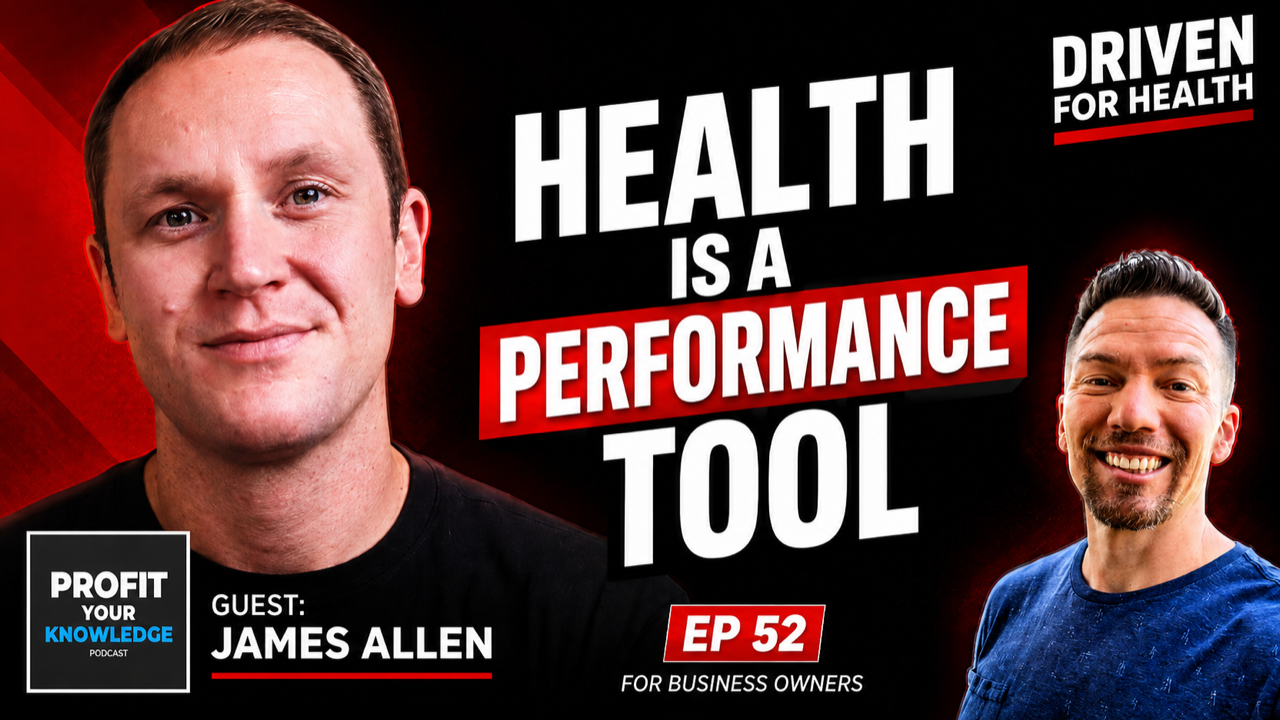
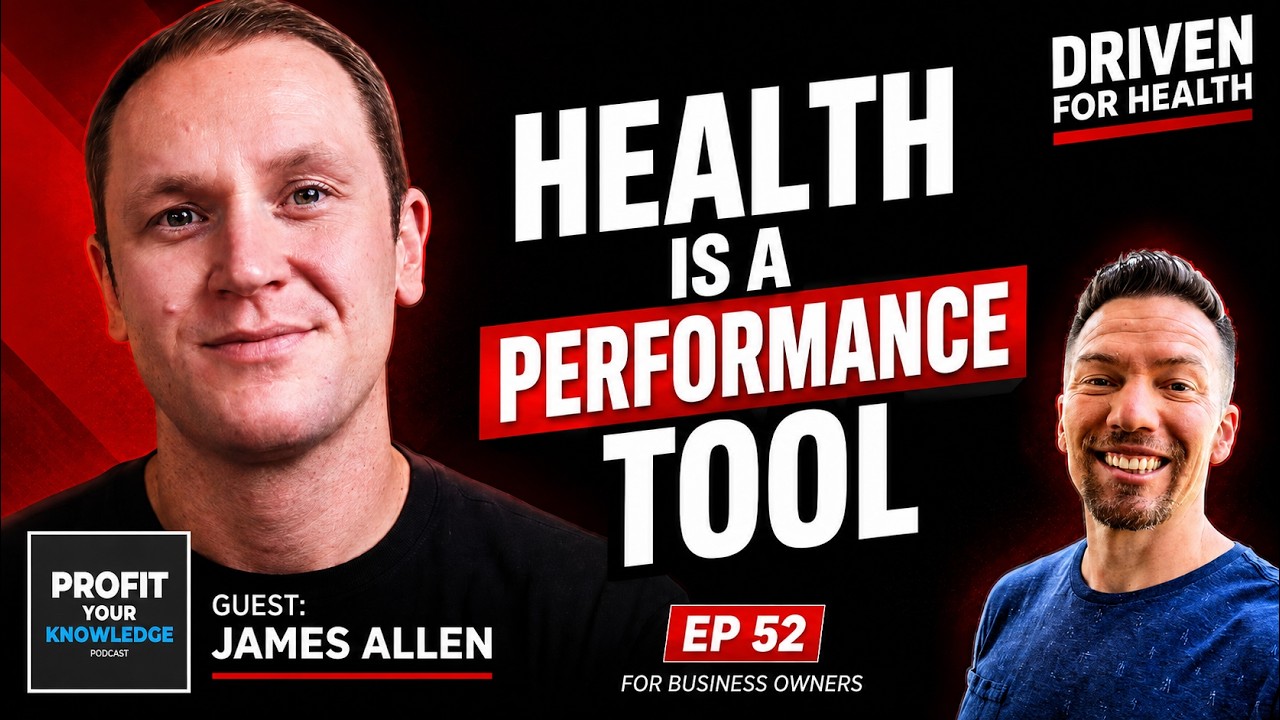
Coach Brian was the guest on this one. James Allen hosts a show for business owners, and he opened by saying that nobody builds anything without energy and focus. The conversation moves from identity to steps to how a day of food gets built.
Energy and focus decide how a work day goes. Coach Brian joined James Allen on his show to talk about what moves both for a man who runs something. The conversation covers steps, meal timing, portions, and the identity work that comes before any of it.
The Setup For This Conversation
Coach Brian was the guest on this one. James Allen hosts a show for business owners and creators, and he opened with a claim that lands hard for anyone building something: "if you do not have good energy and are able to maintain your focus or know what to focus on throughout your day, you will never build a successful business."
Brian agreed and took it further. One health event can take a whole life sideways. He has been through back pain from his athletic years and knows what it does to a week. A man who wakes up with no knee pain and no back pain is starting from a place he rarely notices.
James runs Profit Your Knowledge. He helps coaches and creators turn what they already know into digital products that earn on their own, so they can work less and earn more instead of trading hours for money. He came at it from productivity first. He wanted a way to work fewer hours while his income kept growing, and that search is what led him to digital products.
The two men started in similar places. Brian took a job at the local YMCA at 19 sweeping floors and folding towels to get the gym membership. James coached CrossFit at 5 in the morning on Mondays in exchange for a free membership, because he was starting a business and had no money to pay for one. He pays for his own membership now and prefers it that way.
Identity Comes Before The Food
Brian's first move with a new client is a look at how the man sees himself.
Most of the men he works with lead something. They run a company or a team and they are certain of themselves there. Then Brian looks at their health and finds the gap. In his words, "if you're a leader in business, why are you 40 pounds overweight, where's the disconnect?"
The exercise he gives is short. Write down why you feel confident in your career and in the problems you solve for other people. Then pick one or two items off that list and move them into your health.
He puts it plainly: "it's all between the ears. What does this person believe they can achieve?" Once a man borrows the belief he already holds about his work, the food and the training get easier to hold onto.
Steps Come Before Any Gym Plan
When a man tells Brian he hates the gym, the first ask is a walk. Brian's version of it sounds like this: "Hey, can we go outside, get some sun and fresh air, do 2 or 3 laps around the block today?"
He calls these micro commitments. A small ask gets a yes, and a yes gets repeated. Proof is a photo of a watch or a photo of the man standing outside.
If a man does not own a tracker, Brian does not send him shopping for an Apple Watch. A $20 watch off Amazon does the job. The phone already in his pocket is a pedometer too.
One client named Donna was working straight through lunch and trying to finish her day before dark. Brian gave her two things. Stop accepting meetings over lunch. Move the walk into the middle of the day rather than the end of it. His reason was direct: "movement is energy, it's going to boost your ability to be productive and have more energy." A man who walks at midday comes back to the second half of his day ahead of everyone who sat through a fast-food lunch.
James did the arithmetic out loud. A man who moves 5,000 steps instead of 10,000 is 35,000 steps short by the end of the week. That gap is energy the body never spent, and it shows at bedtime.
A client named Javester told Brian the steps ended his sleep problem. His line was "15K a day, man, my head hits the pillow, I am out like a light." His body was tired enough to overrule whatever was running in his head.
A client named Matt could not reach 10,000 steps until 10 p.m. with a newborn at home. He put a walking pad under his desk and hit 10,000 by noon. He moved at a slow pace while he typed, slow enough that nobody on camera could tell. His pants size and his energy both moved with it.
James runs the same setup himself. He and his girlfriend bought a walking pad off Amazon for about $150. He had bought a standing desk years before that so he was not sitting through every long working day. Treadmills can get expensive and this one did not. It goes up to almost 4 miles an hour and he walks at a little under 3, cruising while he writes emails to his list or plans content. He looks down and he is already at 5,000 steps.
He averages around 7,000 steps a day on top of CrossFit four or five mornings a week. Half of those steps come from a walk outside, since 3,000 to 5,000 of them land inside a 30 to 40 minute walk. The walking pad finishes the rest.
The ramp matters as much as the target. Brian's warning is blunt: "if you go to 10,000 and you've only been doing 3000, you're going to break in 2 to 4 weeks." He adds one or two thousand a week instead.
How Coach Brian Builds The Food
Brian works the food in a fixed order:
- Calories for the day
- The times the meals land
- Portions
- How the plate gets built
Calories come first because every day has a number attached to it. Someone training for a marathon needs a lot more, somewhere past 3,000. A man trying to lose fat needs less. Either way the number gets set before anything else moves.
Timing comes next, and Brian keeps the question plain: "when in the day does it make the most sense to put food in your mouth?" Most of the men he works with land on three or four meals. The windows sit around 8 or 9 in the morning, around noon, and around three, give or take an hour.
One line holds the whole thing together. Eat enough food to get you to the next time you eat.
That line also solves the problem most busy men create for themselves. They read that they should wait until noon, then open a calendar stacked with meetings from late morning onward. Dinner becomes the only real meal of the day. Brian's answer to that: "That lack of food is going to kill your blood sugar, which is going to kill your ability to maintain energy."
Portions come third. A career-focused man eats out often, and ordering hands the plate to someone else. Brian said it this way: "as soon as you order out, you're giving someone else the power to put whatever they want and the portions they want on your plate." The work after that is deciding how much of it to eat.
Meal design is last and it runs on two questions. Where is the protein. Where is the fiber. Those two push a plate toward high volume foods that fill a man up without carrying many calories.
He made the point with a fast-food burger. Build the same burger at home with leaner beef and a smaller bun, skip the butter, load the vegetables, and go light on the mayo-based sauce. That version lands about 400 calories lower than the one handed through a window.
Fueling A Hard Training Session
James eats two bananas before he trains. Brian offered him a swap. Two rice cakes with honey about 30 minutes out, because honey is glucose and glucose reaches the muscle fast. His words on the difference: "it's like gasoline, not diesel."
The banana still has a job. Brian moves it to a busy afternoon next to a small serving of protein, or into oatmeal with Greek yogurt after the session.
He ran the same setup with a client at 47 who loved CrossFit. That man went from 240 to 206. Around 800 to 1,000 calories placed before and after training fueled the work and carried him through the rest of the day rather than leaving him fading by noon.
Where Men Lose The Thread
Four patterns come up over and over in Brian's coaching.
- Waiting to eat because someone online said to. The calendar does not care about the rule, and the man ends up with one meal at dinner.
- Pushing movement to the end of the day, where it gets dropped first whenever work runs long.
- Jumping the step count. A man at 3,000 who tries for 10,000 tomorrow breaks inside a month.
- Going it alone. Brian has coached remotely for 12 years and still hired his own coach, because he had to do something different or get left behind.
James Bought Back His Own Time
Brian's answer about hiring help got James talking about his own version of it. He hired a video editor this year. The man comes online as James goes offline. While James sleeps his video gets cut and turned into a blog post and repurposed across his channels.
James has the skill to do every piece of that himself. Doing it was burning him out.
That is the same argument he makes to his own audience about digital products. Build the thing once and let it earn while you are away from the desk. He is candid that he still runs most of his business himself. The systems are better now and he has a tighter sense of what needs doing. The next stage is putting more of it in the background.
Start This Week
- Write down why you are confident at work. Pick one item and point it at your health.
- Check your phone's step count for three days. Add one to two thousand a week from there.
- Move your walk into the middle of the day.
- Open tomorrow's calendar and mark the points where a meal fits. Eat enough at each one to reach the next.
- Ask two questions of every plate. Where is the protein. Where is the fiber.
- Eat before a hard session and eat again after it.
- Send your questions to brian@brianparana.com.
Where To Find James
James runs Profit Your Knowledge at profityourknowledge.com, where he teaches coaches and creators to sell digital products with automation behind them. He runs a free masterclass on that system at profityourknowledge.com/masterclass. He is on YouTube and Instagram at @profityourknowledge.
More From Driven For Health
Episode 53 has Andy walking through the 38 pounds he lost in his 100 days. Episode 79 covers eating on the road, which is where most portion problems live. Episode 50 follows a man who took his health back while running a business.
The Call To Rise
The free Lose 3 lbs in 3 Days plan is a three-day reset for a man who wants to restart fast. Get it at thecalltorise.com/lose3lbsin3days.
The Call To Rise is a 100-day Fat Loss Challenge designed for driven men ready to get back to a healthy body, boost their energy, and lead as a powerful man.
If you are struggling with some form of chronic illness such as high blood pressure, cholesterol or even Type 2 Diabetes - this program is designed for you too.
Through a proven system of strength training, personalized nutrition, and real accountability, most men lose 20 plus pounds and rebuild the confidence that comes with it and even improve chronic illness issues. It's more than a fitness program, it's a body transformation experience with a Brotherhood of like-minded men committed to showing up, leveling up, and leading in a body they are excited about.
This is your wake-up call to rise.
www.thecalltorise.com
Frequently Asked Questions
What did Coach Brian and James Allen cover in episode 52?
They covered energy and focus for men who run a business. Coach Brian was the guest on James Allen's show, and the conversation moves from identity to steps to food.
What does Coach Brian work on before nutrition?
He works on identity alignment first. He asks a man to write down why he feels confident at work, then pulls one or two of those reasons over into his health.
How many steps a day should a busy man aim for?
Coach Brian points men toward 10,000 steps a day as a clear target. He adds one to two thousand a week rather than jumping there from 3,000.
What is the simplest way to time meals around a full calendar?
Look at the calendar and pick the points where a meal fits. Then eat enough at each meal to reach the next one.
What two questions does Coach Brian ask about every meal?
Where is the protein and where is the fiber. Those two questions push a plate toward filling foods that carry fewer calories.
What should a man eat before a hard workout?
Coach Brian suggests rice cakes with honey about 30 minutes out, since honey is glucose and glucose reaches the muscle fast. A banana works better later in the day or after training.
Can walking more fix a sleep problem?
One client told Coach Brian that 15K steps a day ended his. In his words, "my head hits the pillow, I am out like a light."
What is the Call To Rise program?
The Call To Rise is a 100-day fat loss challenge for men over 40, built on strength training, personalized nutrition, and real accountability. Most men lose 20 plus pounds.

CEO l Head Body Tranformer
Brian Parana is a men’s health coach with 23+ years of experience helping busy professionals improve their body, energy, and day-to-day habits while still leading at work and at home. His coaching is built around practical nutrition, training, sleep, and accountability, with a plan tailored to the person in front of him.
Over the years, Brian has helped thousands of clients through his work as a personal trainer, CrossFit gym owner, and online coach. He has also coached an Olympic silver medalist, a 2-time Olympian, and a CrossFit World Champion.
Brian is the host of the Driven For Health Podcast, where he shares real-world strategies for men who want to feel strong again and stay consistent without making health a second job.
He’s also the creator of The Call To Rise, a 100-day fat loss experience for driven men who want to drop 20–30 pounds, boost energy, and rebuild confidence through strength training, personalized nutrition, and high-accountability coaching. Many men join because their blood pressure, cholesterol, or blood sugar is heading the wrong direction, and they want a clear plan that fits real life.
Brian is married to his high school sweetheart, Amber, and they have four kids. Their family has traveled to all 50 states and 4 continents, with a goal to reach all seven.

What To Order At Dessert Restaurants For Fat Loss



 YouTube