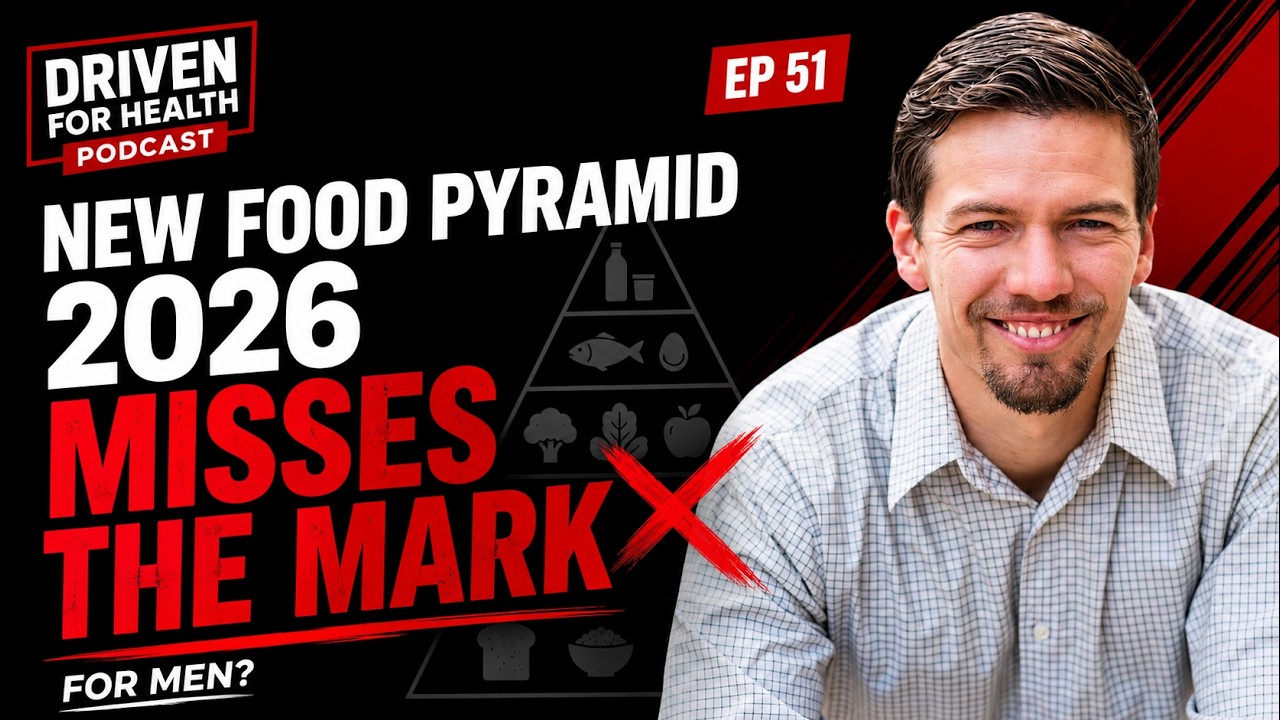
New Food Pyramid 2026 and Why It Still Misses the Mark for Men
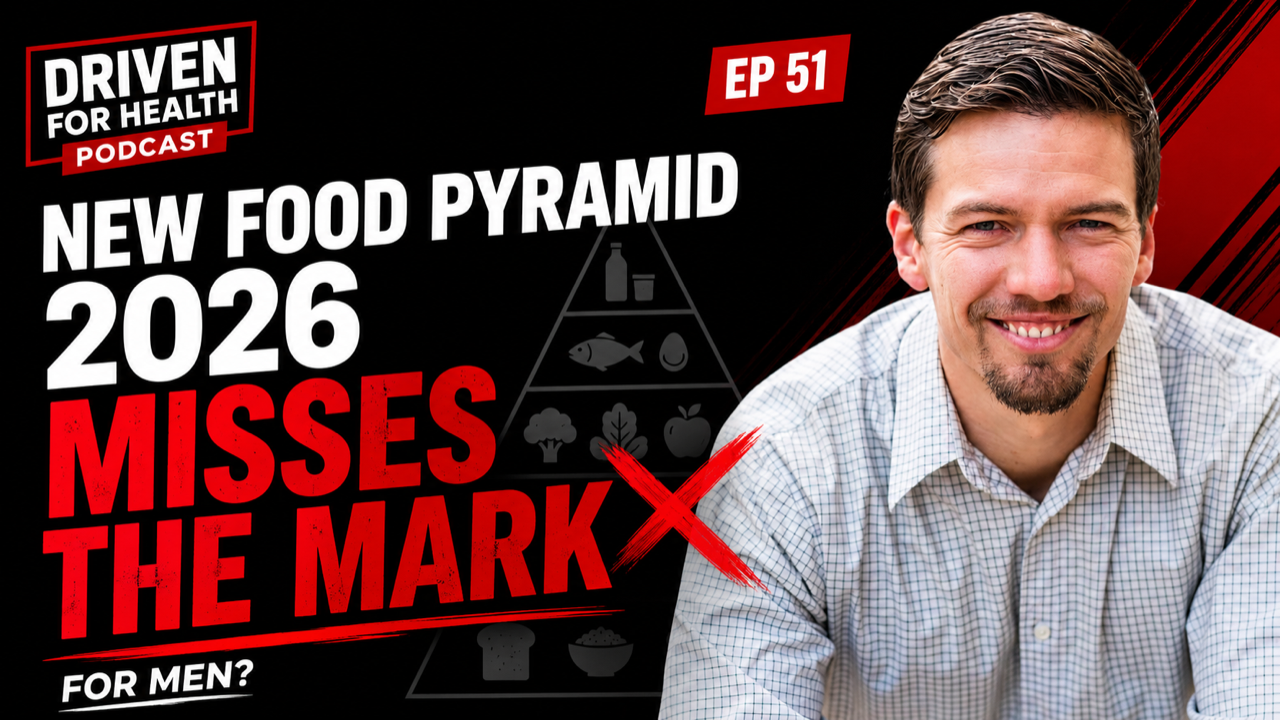
The United States called its new food pyramid the biggest reset in nutrition policy in decades. Episode 51 sorts the good from the bad from the ugly and lands on the part no graphic can fix. Coach Brian reviews it for the man who has already tried to eat better and is still stuck.
The United States released a new food pyramid for 2026 and called it the biggest reset in nutrition policy in decades. Episode 51 walks through the good and the bad and the ugly of it, then asks the only question that matters for a man with a full calendar. Will this chart change what lands on your plate on a Tuesday night? Listen to Episode 51 for the full review.
Coach Brian is a coach and not a doctor. Nothing here is medical advice.
Why a Federal Food Chart Ends Up on Your Plate
These guidelines were never written to settle an argument on the internet. They set the menu for school lunches and hospital trays and military meals and federal nutrition programs. You can ignore the graphic for the rest of your life and still eat what it shaped.
Here is the backdrop. Right now 129 million Americans live with at least one chronic disease. High blood pressure. Type 2 diabetes. Heart disease. Obesity. Those conditions account for roughly 70 percent of all deaths in the United States each year.
More than half of the calories American adults eat now come from ultra-processed food. For teenagers the figure sits closer to 62 percent. That is not steak and potatoes and it is not eggs and vegetables. It is packaged food engineered to override the signal that tells a man he has had enough.
Any chart that does not deal with that has missed the real enemy.
The Good: What the 2026 Pyramid Gets Right
Protein finally got respect. The updated recommendations point to protein intakes closer to 1.2 to 1.6 grams per kilogram of body weight. Protein supports lean muscle and satiety and blood sugar control, and decades of research back higher protein intakes for body composition. For a man over 40 that change is a win.
Ultra-processed food got called out by name. For the first time it was effectively removed from the visual conversation, and that matters more than most people realize. A controlled NIH study found that people eating ultra-processed food ate more total calories without noticing, even with calories and fat and sugar and fiber matched between the two menus. Your kitchen is doing more of the work than your character is.
Sugar and sugary drinks were pushed down the page. Take sugar-sweetened beverages out of the American diet and weight and insulin resistance and cardiovascular risk all move in the right direction. That is the easiest win on the board and almost nobody takes it.
The Bad: Where the Message Falls Apart
Start with saturated fat. The pyramid visually encourages butter and cheese and animal fats. The written guidelines still cap saturated fat at 10 percent of total calories. A normal day of eggs and meat and dairy and whole food can clear that limit without trying, which leaves a man reading two instructions that argue with each other.
The research adds the context the graphic leaves out. A long-term cohort study following over 220,000 adults found that people with the highest butter intake carried about a 15 percent higher risk of early death. People eating more plant-based oils carried about a 16 percent lower risk. Trading one tablespoon of butter a day for vegetable oil was associated with up to a 17 percent reduction in mortality risk. Butter is not poison. Context is the whole story.
Whole grains got pushed down in priority. Strong evidence links whole grain intake with better cardiovascular and metabolic outcomes, and whole grains were never the problem. Refined grains and ultra-processed carbohydrates are a different food wearing the same word.
The biggest miss is metabolic health. 88 percent of American adults are metabolically unhealthy by current definitions. Insulin resistance and fasting insulin and metabolic dysfunction barely get a mention. That is a conversation about engine performance with the hood still closed.
The Ugly: A Chart Has Never Changed What a Man Eats
Guidelines alone do not change behavior. The 1992 food pyramid did not cause obesity. People did not follow it perfectly and gain weight as a result. Food got more processed and more convenient and more engineered to keep you eating, and blaming a poster skips all of it.
The men who need structure the most have the least time and the least margin and the most stress. A framework beats a diagram every time, because a framework survives a travel week.
What to Run Instead of the Chart
Coach Brian's order of operations is short and it does not change with the guidance. Calories matter most. Protein comes next. Carbs and fats come after that. Get those three in the right order and most of the argument online stops mattering to you.
Then the habits no pyramid can print:
- Cut the packaged food built to be eaten past full. That one move outperforms any macro debate.
- Put protein in every meal so hunger stops running your afternoon.
- Fill the rest of the plate with fiber from vegetables and fruit and whole grains.
- Drop the sugar-sweetened drinks. Liquid sugar is the easiest thing to remove and the fastest to feel.
- Read added sugar and sodium on the label instead of chasing a target somebody printed on a chart.
- Keep portions consistent enough that your body can give you a clean answer.
Coach Brian lays his own nutrition pyramid out step by step across episodes 5 through 11, starting with calories and building from there.
Common Mistakes Men Make With Every New Guideline
Treating the graphic as a plan. A chart says what to eat in general terms. It never says how much, and how much is where most men lose the year.
Arguing macros on the internet. Carnivore and vegan and keto and plant-based have all turned into badges people wear. The average man wants energy and better labs and clothes that fit. He has no use for a tribe.
Reading only the front of the package. The claim on the front is marketing. The panel on the back is the food. Episode 74 covers the label read in full.
Swapping sugar for a sweetener and calling it solved. Episode 99 reviews the research on that trade.
Waiting for perfect information. The guidance will change again in a few years. Your habits do not have to wait for the next version.
Who This Episode Is For
This is for the man over 40 who has already tried to eat better. He took advice from his doctor and from headlines and from whichever plan a friend swore by. His energy is still flat at three in the afternoon and his blood work keeps moving the wrong way.
It is not for the man hunting a new chart to hang on the fridge. A better graphic has never been the missing piece.
More From Driven For Health
- Episode 5: How Many Calories Should I Eat for Fat Loss, the Nutrition Pyramid for Men Over 40
- Episode 6: What Should Your Macros Be to Burn Fat for Men Over 40
- Episode 11: How to Make Science Backed Nutrition Fit in Your Lifestyle
- Episode 74: How Men Need to Read Nutrition Labels to Lose Fat
- Episode 99: Artificial Sweeteners, Safe or Not for Men
Call to Action
If you want a starting point with the food already mapped out, the free Lose 3 lbs in 3 Days plan runs three days and asks for no calorie restriction and no extra workouts. Get it at thecalltorise.com/lose3lbsin3days.
The Call To Rise is a 100-day Fat Loss Challenge designed for driven men ready to get back to a healthy body, boost their energy, and lead as a powerful man.
If you are struggling with some form of chronic illness such as high blood pressure, cholesterol or even Type 2 Diabetes - this program is designed for you too.
Through a proven system of strength training, personalized nutrition, and real accountability, most men lose 20 plus pounds and rebuild the confidence that comes with it and even improve chronic illness issues. It's more than a fitness program, it's a body transformation experience with a Brotherhood of like-minded men committed to showing up, leveling up, and leading in a body they are excited about.
This is your wake-up call to rise.
www.thecalltorise.com
The guarantee is one sentence. Lose 20 or more pounds in the 100 days, or Coach Brian keeps working with you until you do. Apply at thecalltorise.com.
Frequently Asked Questions
What is the new 2026 food pyramid?
The United States released updated dietary guidelines for 2026 with a new pyramid graphic. Protein moved up, ultra-processed food was called out, and sugary drinks were pushed down the page. The guidelines shape school lunches and hospital trays and military meals, so they reach your plate whether or not you ever look at them.
What does the 2026 food pyramid get right?
Three things. Protein got respect, with recommendations pointing closer to 1.2 to 1.6 grams per kilogram of body weight. Ultra-processed food was effectively removed from the visual conversation for the first time. Sugar and sugary drinks were de-emphasized, which is the easiest available win for most men.
How much protein do the new guidelines recommend?
The updated recommendations point to protein intakes closer to 1.2 to 1.6 grams per kilogram of body weight. That is higher than older guidance and it lines up with the research on lean muscle and satiety and blood sugar control. Your own target still depends on your size and your training and your goal.
What is wrong with the saturated fat advice in the new pyramid?
The graphic encourages butter and cheese and animal fats while the written guidelines still cap saturated fat at 10 percent of total calories. A normal day of eggs and meat and dairy can clear that cap without trying. A cohort study of over 220,000 adults found about a 15 percent higher risk of early death at the highest butter intakes and about a 16 percent lower risk with more plant-based oils, so context decides how much this matters for you.
Why do dietary guidelines never seem to reduce obesity?
Guidelines alone do not change behavior. The 1992 food pyramid did not cause obesity and people never followed it perfectly. Food got more processed and more convenient and more engineered over the same decades, and that is what moved the numbers.
Are ultra-processed foods the real problem?
More than half of the calories American adults eat come from ultra-processed food, and for teenagers the figure sits closer to 62 percent. A controlled NIH study found people ate more total calories on an ultra-processed menu even when calories and fat and sugar and fiber were matched. Removing packaged food built to be eaten past full does more for a man over 40 than any macro argument.
What should a man over 40 focus on instead of the food pyramid?
Calories matter most, protein comes next, and carbs and fats come after that. Build the plate around protein and vegetables and fruit and whole grains, drop the sugar-sweetened drinks, and keep your portions consistent enough to read the results. Coach Brian lays the full order out across episodes 5 through 11 of Driven For Health.
What is the Call To Rise program?
The Call To Rise is Coach Brian Parana's 100 day fat loss and health program for driven men over 40. Most men lose 20 plus pounds. The guarantee is one sentence. Lose 20 or more pounds in the 100 days, or Coach Brian keeps working with you until you do.

CEO l Head Body Tranformer
Brian Parana is a men’s health coach with 23+ years of experience helping busy professionals improve their body, energy, and day-to-day habits while still leading at work and at home. His coaching is built around practical nutrition, training, sleep, and accountability, with a plan tailored to the person in front of him.
Over the years, Brian has helped thousands of clients through his work as a personal trainer, CrossFit gym owner, and online coach. He has also coached an Olympic silver medalist, a 2-time Olympian, and a CrossFit World Champion.
Brian is the host of the Driven For Health Podcast, where he shares real-world strategies for men who want to feel strong again and stay consistent without making health a second job.
He’s also the creator of The Call To Rise, a 100-day fat loss experience for driven men who want to drop 20–30 pounds, boost energy, and rebuild confidence through strength training, personalized nutrition, and high-accountability coaching. Many men join because their blood pressure, cholesterol, or blood sugar is heading the wrong direction, and they want a clear plan that fits real life.
Brian is married to his high school sweetheart, Amber, and they have four kids. Their family has traveled to all 50 states and 4 continents, with a goal to reach all seven.
What To Order At Dessert Restaurants For Fat Loss


 YouTube