New Food Pyramid 2026 and Why It Still Misses the Mark for Men - 51
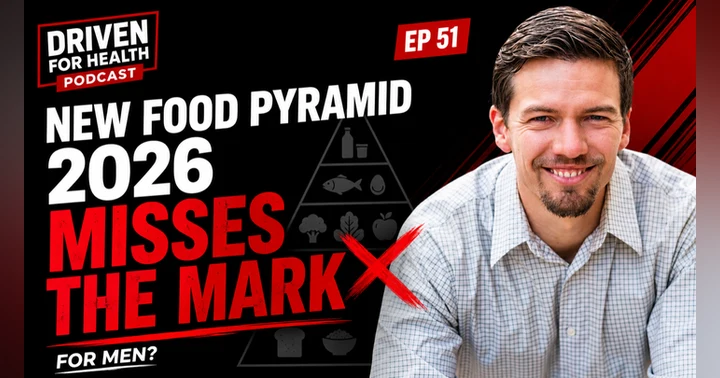
The U.S. released a new food pyramid for 2026. Coach Brian goes through what it gets right and what it gets wrong for men with long work weeks. You leave knowing which parts to keep and which parts to ignore if you want to lose fat.


 YouTube
 The U.S. just released a new food pyramid for 2026. Coach Brian breaks down what it gets right, what it gets wrong, and why public nutrition guidelines rarely translate into results for men with demanding lives.
(Have you followed every piece of nutrition advice and still felt stuck? See what the new food pyramid still misses.)
Coach Brian covers the good and the bad of the new food pyramid, and why food pyramids keep changing while obesity and chronic disease stay the same. He explains how protein, fats, and carbohydrates keep getting misrepresented, and why ultra-processed foods, calories, and compliance matter more than any diagram. He also breaks down why most nutrition plans fail the men who follow them, and what actually works instead.
By the end you will know what to take from the new food pyramid and what to ignore if you actually want results.
Main Topics:
- What the new 2026 food pyramid gets right and wrong
- Why food pyramids keep changing while chronic disease stays the same
- How protein, fats, and carbohydrates keep getting misrepresented
- Why ultra-processed foods and calories matter more than any diagram
- Why most nutrition plans fail the men who follow them
- What actually works for a man with a demanding schedule
The Call To Rise is a 100-day fat loss challenge for driven men ready to take their body back. It combines strength training, personalized nutrition and real accountability. Most men drop 20 to 30 pounds and rebuild the confidence that comes with it.
This program also works if you are dealing with high blood pressure, high cholesterol or Type 2 diabetes. It was built for those men too. Many men see those numbers move in the right direction alongside their weight loss.
Inside the program you also join a Brotherhood of men doing the same work. Together you build a body you're proud of and start leading like the man you already are at work.
This is your wake-up call to rise. Learn more and apply at www.thecalltorise.com
Want help applying this to your own health, weight, energy, or lab numbers?
Coach Brian Parana offers Health Hot Seat coaching segments for men who want a clear next step with nutrition, fitness, weight loss, blood pressure, cholesterol, A1C, or daily consistency.
Learn more about The Call To Rise, a 100-day coaching program for driven men over 40 who want to lose weight, improve their health, and rebuild confidence:
To connect with Coach Brian:
brian@brianparana.com
Disclaimer: This podcast is for education and coaching support only. It is not medical advice. Always work with your physician before changing medication, treatment, or medical care.
- Let me start with something that should stop you in your tracks. Right now, 129 million American, they are living with at least one chronic disease. That's either high blood pressure, type 2 diabetes, heart disease, obesity. This is not just a fringe group. This is over a third of the population. It's a majority of adults in our country and the condition now accounts for roughly 70% of all deaths in the United States each year.
- When the government releases a new food pyramid and calls it the biggest reset in nutritional policy in decades, this is not an academic conversation. This is about whether the average man listening to this podcast has more energy at 3 p.m. This is about whether they care that their labs are moving in the right or wrong direction.
- This is whether they care if they end up on medication or not. If they want to live a fulfilled life with their family and have the energy that they need to be able to be truly successful with who they are and how they go about their day-to-day life. Today I want to give you a more grounded, nononsense breakdown of the good, the bad, and the ugly on the new dietary guidelines.
- We're not going to ideology or politics or fear tactics or pretending one graphic will fix a decade worth of bad habits. Welcome back to Driven for Health podcast. This is episode 51. I'm coach Brian Piranha. If you're a driven guy, family man that just does great in his career, but poor health is starting to knock on the door and you're actually concerned about it, then that's what this whole podcast is about.
- That's who I'm here to serve to my best abilities today. Let's break this down. Why these guidelines matter to you and why you should pay attention. Here's the first thing most people miss. The guidelines are not written for Instagram debates. They actually shape school lunches, hospital food, military meals, and federal nutrition programs, if we have any left.
- So even if you never look at the pyramid again, the ripple effect lands on your kids, possibly your parents, and maybe even eventually you in another 20 to 30 years. Here's the uncomfortable truth that more than half of all calories consumed by adults, American adults, now comes from ultrarocessed foods.
- These are the things that are in the shiny containers that we call snacks, treats, candy, even push them off on kids. And for teenagers, it's up to 62%. A lot of people are eating out of wrappers of baked mush in a sense that comes into a food package. It's not steak and potatoes. It's not eggs and vegetable omelets.
- It's just packaged engineered food designed to override appetite control and make food hyper palatable and trigger all the brain neurons that it possibly can so that you go spend more money on it and you buy it more because capitalism because money. the guidelines that they they don't directly address the reality of the missing real enemy here.
- Again, it's ultrarocessed foods and how we should actually do something about them in our country rather than just let them be. Let's go over the good. Real progress has been made. We'll start with what actually got done right. Protein finally got some much due respect. The update recommendations now suggest protein intakes at 1.2 to 1.
- 6 gram per kilogram of body weight. What that ultimately means is that we're looking for a man to have somewhere between 120 to 150 gram as a bare minimum, possibly more. I'm always going to suggest, and I go back in episode number six, I like guys to be at about 140 all the way to 175. If you absolutely love protein, then maybe you could do yourself upwards of 200, but you really don't need more than that because you can get your nutrition and health and calories from healthy carbs and healthy fats.
- Protein supports lean muscle mass, metabolic health, keeping growing those muscles. It keeps you full and helps you manage blood sugar levels throughout the day because of its thermic effective boot. It costs a lot of energy to digest. This aligns with decades of research. I've known this all the way back from Men's Health magazines looking at those when I was in high school.
- They show results and studies have shown that high protein diets improve body composition and reduce overeating. If you're over 40, this is a win. As you continue to age, you're going to need more. To be honest, you're going to need more protein to maintain as much muscle on your body as you get older. Number two, ultrarocessed foods are finally called out.
- For the first time, they've been outed and they're in the conversation. And this matters quite a bit. A controlled study by the National Institute of Health study shows that when people eat ultrarocessed foods, even when calories, fat, sugars, fibers are matched, they eat more total calories without realizing it. It's just too easy to. It's not willpower.
- It's literally just the food environment that you are surrounded by as a result. Number three, sugar and sugary beverages are discouraged. Okay, we need to get rid of sugar sweetened beverages because they spike blood sugar level. They add extra calories quite a bit. I've recently had a guy in my program, the call to rise 100 day fat loss challenge.
- The dude lost 11 pounds by switching from Coke to Diet Coke. That just tells you how much calories and sugar he was drinking from that alone. It was dramatic. Okay, we see weight body composition improvements. We see insulin resistance start to go down and cardiovascular risk goes down as well. This is a super simple easy win to manage calories better than ever.
- Now, the bad there's some confusing messages and some of the practical problems of this. Number one is the saturated fat contradiction. Here's where some of the messaging on this topic breaks down. The pyramid visually encourages butter, cheese, animal fats, written and the guidelines still cap saturated fat at 10% of total calories.
- And it's just not practical. A normal day of eggs, meat, dairy, and whole foods can easily exceed that limit. Here's what the data actually shows around that. large long-term cohort study following a 220,000 adults found that people with the highest butter intakes had about 15% higher risk of early death while those who consume more plant-based oils had a 16% lower risk.
- That's a big significance. 15% higher or 16% lower. I'm in the 16% lower. I'd much rather go with say olive oil over butter. Just replacing one tablespoon of butter per day with vegetable oil was associated with up to 17% reduction in mortality risk. That is significant over the course of your lifetime. Butter's okay within reason, but the context of how much you use it and where you put it into your day-to-day life is super important.
- Whole grains got minimized. Whole grains have been pushed to the lower priority despite strong evidence linking whole grain intake to improve cardiovascular health and metabolic health as well. It's not about whole grains. It's the refined grains, processed carbohydrates. Those are not the same things. When someone's eating oatmeal and quinoa, rice, and grains like that, barley, they aren't at a at high of a risk as say wheat.
- Wheat can be processed and typically is in breads and in a lot of other foods that add lots of calories, add carbohydrates, and also spike blood sugar levels. Number three, no real conversation about metabolic health. Okay, this is a huge miss. 88% of Americans, adults are metabolically unhealthy by current definitions.
- This is something to do with cholesterol, blood pressure, diabetes are going to be the biggest ones that are out there that will cause you insulin resistance, fasting insulin, fasting glucose, triglycerides, metabolic dysfunction barely get mentioned. Okay? It's like discussing an engine performance without opening the hood.
- So, you don't even see what's going on in there. Now, here's the ugly. What still gets ignored? The hard truth lines alone do not change behavior. The 1992 food pyramid did not cause obesity. Okay, that was not the cause. People did not suddenly follow it perfectly and gain weight. What happened was food became cheaper, more processed, more convenient, and more addictive.
- Everyone would blame the pyramid while ignoring the reality. Let's be real. Every single one of us, unless you're in a incredibly rural area, is within minutes of a convenience store that you could go buy 100,000 calories, pretty cheap, and it's all going to be ultrarocessed. High calorie, high carb, high sugar, highfat type foods that are addictive and will give definitely give you an upset stomach and a lot more.
- Now guys and people they need more structure. They need to have guidelines. They need to manage it in their day-to-day stress. That's why frameworks matter most around how setting this up properly. It's not the graphic got flipped upside down and we'll call it good. That's not it. Now bringing this home, what this means for you.
- My honest state is if someone following the new pyramid thoughtfully focuses on real food, protein, vegetables, minimizes processed junk, their health would likely improve. But pyramids do not create results. systems, processes, habits, behaviors, lifestyles, the people around you, your access or abilities, your skill set around food has a tremendous impact more so.
- And that's why I want to point you back to episodes 5 through 11 where I break down my own nutritional pyramid in a sense and we go over calories, macronutrients, micronutrients, supplements. There's a lot of food timing. There's all sorts of different things that will really set you up for a huge amount of success. You just have to know that that's where you need to look.
- So, I'll send you there, okay? Go there and listen to those because they're at least 40 minutes long per episode and we'll give you tons of actionable advice. I do want to just take a moment u no one's paying for this episode or any of the podcasts. Just want to throw out the call to rise. It's something that I built to help give that structure, give that accountability, give that support to someone who has been struggling with their health.
- They're in their 40s and realize they don't want to die early. They don't want to live with a chronic health disease. They don't want to be overweight. They don't want to be identified as being the overweight grandpa that sits on the sidelines with their grandkids in 15 years. I don't. I'm 43. I'm going to look and feel like I do now when I am 50.
- That's what I created the call to rise 100 day fat loss challenge for. It's a transformation experience. We have five pillars from the call which is about your identity of stepping up into that leader and that the the model that you're supposed to be in your family. We have the fuel which is the nutrition part of it. Eating sciencebacked nutrition in the right way.
- The forge is about the exercise and movement that we add into to burn the fat and build the body. We have the code. The mindset, the way that you think changes your perception at which you think and feel and understand things change. And lastly is the brotherhood. One of my favorite getting around like-minded individuals.
- I absolutely love my guys in the program. Support them as they are walking right next to me in day-to-day life. So, if you need some structure, you're looking to lose 20 plus pounds that you have bad blood panels and things aren't going well, you've tried a lot of things in the past, but you actually need to work with a professional on this that has 23 years of experience, check out the call to rise.com.
- All right, we're going to move into one of my favorite parts of the episode, rolling up the new nutrition pyramid. We have the fast five. It's five simple questions. Rapid fire. And here we go. What is the single most understood part of the new food pyramid? Well, it's the biggest part. It's it's not a magic fix.
- People see a new graphic and think, "Oh, wow. Health is going to improve automatically. It looks colorful and fun and looks like a heart." That that isn't how it happens. The real issues whether protein is higher, grains are lower, the issues about most people are eating over half of their calories from processed foods. They're eating out.
- They don't have better processes at home around eating healthy whole foods. The pyramid is not going to change your daily behaviors. You probably barely even knew that the pyramid has been changed unless you were paying attention or on YouTube. Those would be the only times you would see it.
- Now, honestly, that's how I saw it is that it popped up on a bunch of YouTube and said, "Hey, this must be new. I'm gonna go watch a couple videos and and gain my own opinion of it." And here it is. Fast question number two. If you had to explain a new food pyramid in one sentence to busy people, what would you say? This is what I'd say.
- Eat more real food. Eat protein. Eat vegetables and stop pretending packaged food is normal. You don't need a protein bar. You don't need to go around drinking protein shakes. In fact, I never advise those. Those are just secondary when we are looking to get more protein in in a enjoyable convenient way. But we should be focus on whole foods.
- If we stop there and then figure out how to fit it into your everyday life then we are all good. Question three is, what do you think people get so emotional about saturated fat and carbs? Well, because nutrition has become an identity. It's up there with politics and government and and taxes. You just don't talk about them.
- People are no longer defending food choices, but it's the identity. I'm a carnivore. I'm vegan. I'm keto. I'm plant-based. I'm paleo. All these things. And it's not about the outcomes that the particular food that that person eats, but it's about humans. We have followings. We have our cultlike behavior, our beliefs, and these things are now put in and shown everywhere through social medias.
- It ends up getting a little bit more emotional than it it might need to be. Question four, what part of the new guidelines do you actually agree with the most? The focus on reducing ultrarocessed foods. Slam dog. There should be a lot more that's against those. It should be a lot more expensive than whole foods.
- It should be considered in quotations a treat to be able to get a Reesei cup and not have the a pepper be more expensive than a Reesei cup in a sense. That's the real win. And if we can get our country to pay attention to these high calorie foods, we are all winning. If we can pay attention to them and stop eating them in mass consumption, you will be that much better off.
- All right, last one is question five. If someone followed the old food food pyramid perfectly, would they actually be unhealthy? That's a strong no. No part of this pyramid is what we need to the old one is there's nothing was wrong with it per se. It wasn't the reason people were unhealthy. It's not because people just ate copious amounts of quinoa, rice, and stuff.
- It's because they ate copious amounts of poor food choices at bad times, and they just ate too many calories. And the amount of added sugar and added fats into foods is where we get into trouble. You can build a healthy diet from the old pyramid. You just have to stick to the whole food thing.
- Okay? You could also build one with the new pyramid. It's not the graphic that we should be paying attention to. It's the behavior behind it. Wrapping up here, if you made it all the way through to the end here, I appreciate you and I just want to say thanks directly for listening in. This is episode 51. I hope that you enjoyed Drake in the last one, his epic story of transformation.
- It was amazing working with the guy and the transformation we had of losing. He ended up losing over 80 pounds and radically changing his life. I've spoken to him since we recorded that episode and it's just amazing the impact that when someone pays attention to health and they prioritize it, how big of an impact it has on their overall life.
- Now, if this conversation, that one inspired you and it gets you to change your health habits, comment below. I'd love to see love to cheer on and have driven poor health people and and have just people excited about taking the information providing them and creating real change. The goal of every episode is to provide you valid factualbased sciencebacked information that you can apply into your everyday.
- It's not about graphics or pyramids or noise that's out there constantly, especially in our social media over information world. Want to wrap up with send you to episode 5 through 11. And that is where I lay out my own nutritional pyramid framework for you to visit. Just how to build a simple system that you can follow and live by every single day and execute.
- The responsibility is yours to take up but the information is provided there. That's it. And this is your call to rise.