How Zach Lost 30 Pounds by Turning Phone Calls Into Steps
Zach spent 15 years gaining a pound or two a year while he built his tech career and raised his family. He worked with Coach Brian and dropped from the high 220s to 197. Here is how a busy executive built habits simple enough to survive back-to-back client calls.
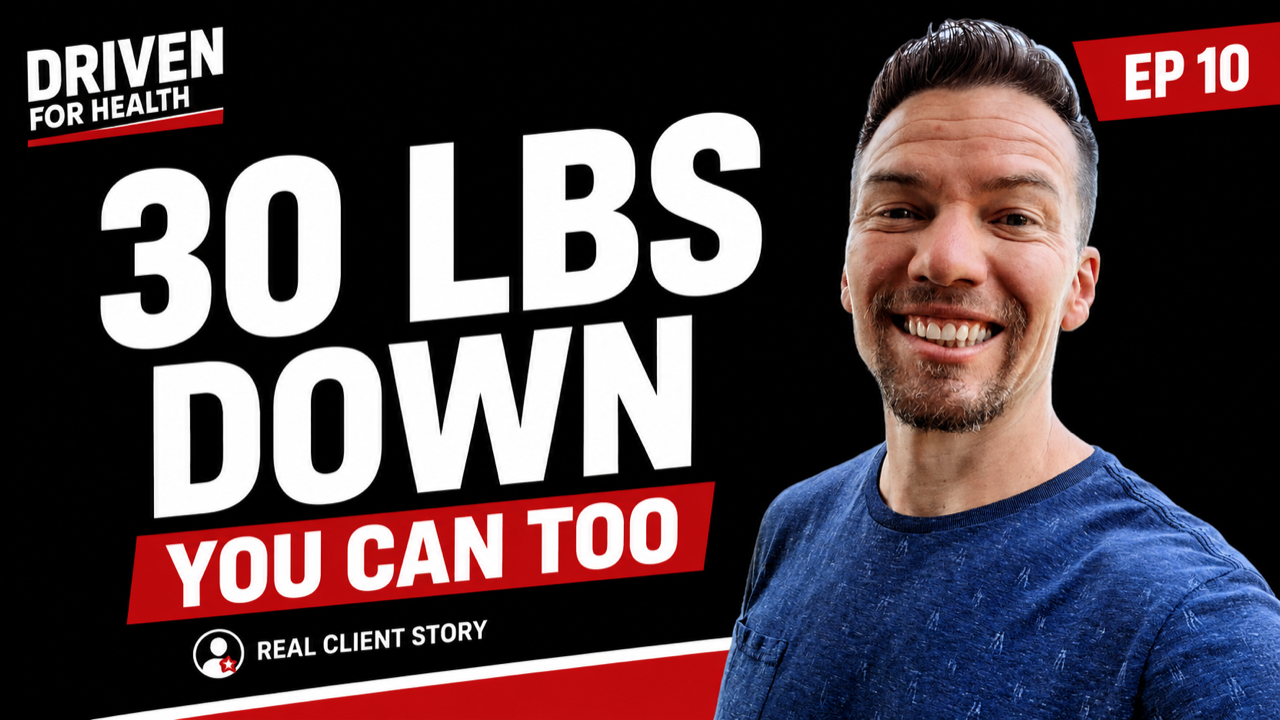
Zach was a former athlete who gained a pound or two a year for 15 years while he built his tech career and raised his family. He started around 228 to 230 pounds. By the time this episode aired he was down to 197 to 198, a loss of more than 30 pounds.
Zach's Wake-Up Call: A Pound a Year for 15 Years
Zach was a competitive athlete in his 20s. He kept running and doing HIIT workouts as he built his tech career and started a family. The workouts stayed the same. The weight still crept up.
He gained a pound or two a year without noticing it. After 15 to 16 years that added up to 30 to 40 pounds above his target weight. Each individual year felt fine. The total caught him off guard.
Brian met Zach on a train ride to Long Island. Brian asked him one question: what happens to your weight if this pattern keeps going? Zach did the math. He did not like the answer.
That question stayed with him. He decided that night the slow gain had to stop. He had the awareness he needed. What he lacked was a system that worked inside his actual schedule.
From Athlete to 30 Pounds Over: Where Zach Started
Zach weighed 228 to 230 pounds when coaching started. His doctors had told him for five years to lose 20 pounds. He had heard the advice. He did not yet have a plan simple enough to follow on the road.
Zach travels between New York, Long Island, and Las Vegas for his tech company. His days are not structured around a fixed office and a lunch break. Meals happen between calls. Steps happen when he can grab them.
The challenge was not motivation. Zach had been an athlete his whole adult life. The challenge was finding habits that fit inside a schedule that never stayed the same two days in a row. That is where coaching made the difference.
Building Simple Meals for an 8-to-10-Hour Call Day
Zach often spends 8 to 10 hours a day on calls for his tech company. He built meals he could make and eat in minutes between calls.
His go-to meal is steamed broccoli, rice, and chicken. He microwaves the broccoli for three and a half minutes and eats fast before his next call starts. The whole process takes less than five minutes.
Complicated meal plans do not survive a packed call schedule. Zach learned that early. A meal with five ingredients and a twenty-minute prep does not get made when a client calls without warning. A bowl of protein and vegetables never gets skipped.
He leads every meal with protein and fiber first. This keeps hunger in check without needing to count every calorie at every sitting. The structure does the work so willpower does not have to.
The Step-Stacking Trick That Replaced Extra Workouts
Zach takes calls while he walks. One loop of the park near his apartment covers about 1,500 steps.
Walking to his office and back adds about 4,000 more. He stacks these walks around his call schedule and reaches 10,000 steps most days without setting aside separate workout time.
This approach works because it attaches movement to what he already does. Calls happen every single day. Walking during those calls costs no extra time. The steps are a byproduct of work he was already doing.
Zach built a daily movement habit without changing his calendar. He found 10,000 steps inside the schedule he already had. That is the key difference between a habit that lasts and a plan that gets dropped in week three.
Small Food Swaps That Kept Him Full
Zach leads every meal with protein and fiber to stay full. He switched from 99 percent lean ground turkey to 93 percent for better flavor and stuck with it.
He also eats Greek yogurt with berries, adds powdered peanut butter, and mixes in egg whites. These additions raise the protein content of a meal without a big calorie spike.
Small swaps stack up over weeks. The difference between two products might be 30 to 40 calories per serving. Over a month that adds up without any sense of deprivation. Zach made these adjustments based on what tasted better and kept him fuller longer.
He did not overhaul everything at once. He changed one thing at a time and held that change for a week before moving to the next. That pace kept the habit from feeling like a diet. It felt like an upgrade instead.
Text-a-Coach Accountability Every Day
Zach texts Brian food questions throughout the day. He once asked about Canadian bacon versus turkey bacon and got the calorie difference back within minutes.
That fast back-and-forth kept him from guessing. He says the accountability mattered as much as the meal plan itself.
A question answered in two minutes gets acted on. A question that waits for a weekly check-in gets forgotten or guessed wrong. Zach knew he needed fast answers and he asked for them consistently.
This daily contact also kept his food log accurate. When someone is reviewing the data, the data stays honest. Accurate logs led to accurate adjustments. The coaching loop closed faster because communication stayed open all week.
What Zach's Doctor Noticed
Zach's doctor had told him for five years to lose 20 pounds. At his next checkup, his doctor asked to see his food tracking app.
His doctor said he was down about 10 percent in body weight and praised his fiber intake. That visit was a turning point for Zach.
A doctor asking to see a food log is not common. Checkups usually end with advice passed down, not data reviewed together. Zach's results changed the tone of that conversation entirely.
He went from a patient getting told to lose weight to a patient his doctor wanted to study. That shift reflected what the scale had already confirmed. Progress that shows up in a doctor's office is progress that sticks.
Zach's Advice: Modify What You Already Do
Zach says small changes made every week built his results. He kept his usual workouts and meals and adjusted them along the way.
He passed his first goal of 199 pounds and settled at 197 to 198. He did not overhaul his life. He upgraded it piece by piece.
His schedule was not the obstacle. His schedule held the solution. Zach found steps inside calls he was already taking. He found meals inside breaks he already had. The system fit his life because it was built around his life from the start.
If you are a busy man who thinks your schedule is too full to lose weight, Zach's story is worth hearing from the start.
Your Next Step
If Zach's story sounds familiar, start with the free guide. Get the Lose 3 Lbs in 3 Days plan here.
If you are ready to work with Coach Brian directly, apply for Call To Rise. The program comes with a guarantee: lose 20 pounds in 100 days or Brian keeps coaching you until you do.
Listen to Episode 10 for the full conversation between Brian and Zach.
Also read: Zach's story on the Driven For Health blog.
Frequently Asked Questions
How much weight did Zach lose and how long did it take?
Zach started around 228 to 230 pounds. He lost 26 pounds in the first three months. By the time this episode aired, he was down to 197 to 198 pounds. That is a total drop of more than 30 pounds.
What caused Zach's weight gain in the first place?
Zach was a former athlete who kept training through his 20s and 30s. He gained a pound or two a year for 15 to 16 years. Small yearly gains added up to 30 to 40 pounds above his target weight.
How did Zach fit healthy meals into a packed work schedule?
Zach often spends 8 to 10 hours a day on calls. He keeps meals simple and repeatable: steamed broccoli, rice, and chicken in the microwave. He eats in short breaks between calls instead of planning big meals.
How did Zach hit his step goal without extra workout time?
Zach takes phone calls while he walks. One loop of the park near his apartment covers about 1,500 steps. Walking to his office and back adds about 4,000 more. He stacks these walks around his call schedule and reaches 10,000 steps most days.
What food swaps helped Zach lose weight without feeling deprived?
Zach leads every meal with protein and fiber to stay full. He switched from 99 percent lean ground turkey to 93 percent for better flavor. He also eats Greek yogurt with berries, adds powdered peanut butter, and mixes in egg whites.
How did daily accountability help Zach stay consistent?
Zach texts Brian food questions throughout the day. He once asked about Canadian bacon versus turkey bacon and got the calorie difference back within minutes. That fast back-and-forth kept him from guessing.
What did Zach's doctor say about his progress?
Zach's doctor had told him for five years to lose 20 pounds. At his next checkup, his doctor asked to see his food tracking app. His doctor said he was down about 10 percent in body weight and praised his fiber intake.
What is Zach's advice for other busy men?
Zach says small changes made every week built his results. He kept his usual workouts and meals and adjusted them along the way. He passed his first goal of 199 pounds and settled at 197 to 198.

CEO l Head Body Tranformer
Brian Parana is a men’s health coach with 23+ years of experience helping busy professionals improve their body, energy, and day-to-day habits while still leading at work and at home. His coaching is built around practical nutrition, training, sleep, and accountability, with a plan tailored to the person in front of him.
Over the years, Brian has helped thousands of clients through his work as a personal trainer, CrossFit gym owner, and online coach. He has also coached an Olympic silver medalist, a 2-time Olympian, and a CrossFit World Champion.
Brian is the host of the Driven For Health Podcast, where he shares real-world strategies for men who want to feel strong again and stay consistent without making health a second job.
He’s also the creator of The Call To Rise, a 100-day fat loss experience for driven men who want to drop 20–30 pounds, boost energy, and rebuild confidence through strength training, personalized nutrition, and high-accountability coaching. Many men join because their blood pressure, cholesterol, or blood sugar is heading the wrong direction, and they want a clear plan that fits real life.
Brian is married to his high school sweetheart, Amber, and they have four kids. Their family has traveled to all 50 states and 4 continents, with a goal to reach all seven.

What To Order At Dessert Restaurants For Fat Loss



 YouTube