Why Eating On The Go Is Wrecking Your Progress (And the Five Rules That Fix It)
Why Eating On The Go Is Wrecking Your Progress (And the Five Rules That Fix It)
The Quarter Pound That Becomes Thirty
Picture a normal week. You wake up early. You're out the door before the kids wake up. By the time you land in another city or pull into a client's lot, you haven't eaten a real meal yet. You grab whatever sits closest. A cinnamon roll near your gate. A sandwich at a rest stop. A heavy dinner with a client because that's what the night calls for.
None of these choices feels big in the moment. But add even a small amount of extra weight to every meal you eat out. Now multiply that across a busy travel month. The number grows fast. You never make one dramatic decision. You make dozens of small ones.
I see this pattern with almost every man I coach who travels for work or runs between commitments all day. The problem isn't what he eats at home. The problem shows up when he's tired, rushed, and standing in front of a menu with no plan.
The fix isn't a stricter diet. The fix is deciding ahead of time what you'll do in the moments you already know are coming.
The Real Pattern Behind the Weight Gain
Most men I coach handle meals fine in their own kitchen. The trouble starts when the schedule turns unpredictable. Flights. Client dinners. Gas station stops on a long drive. A fast casual lunch squeezed between two meetings.
Each of these moments brings time pressure and hunger. The menu is built to push you toward ordering more. That combination wears down anyone's judgment. Studies on decision making show people choose worse when they feel tired or rushed. That's exactly the state most men sit in when ordering food on a work trip. You aren't weak here. You're working against a hard situation.
Here's the good part. The situation repeats. You hit the same kinds of airports. You sit through the same kinds of client dinners. You grab lunch at the same fast casual spots. Once you see the pattern, you can plan for it instead of reacting to it every time.
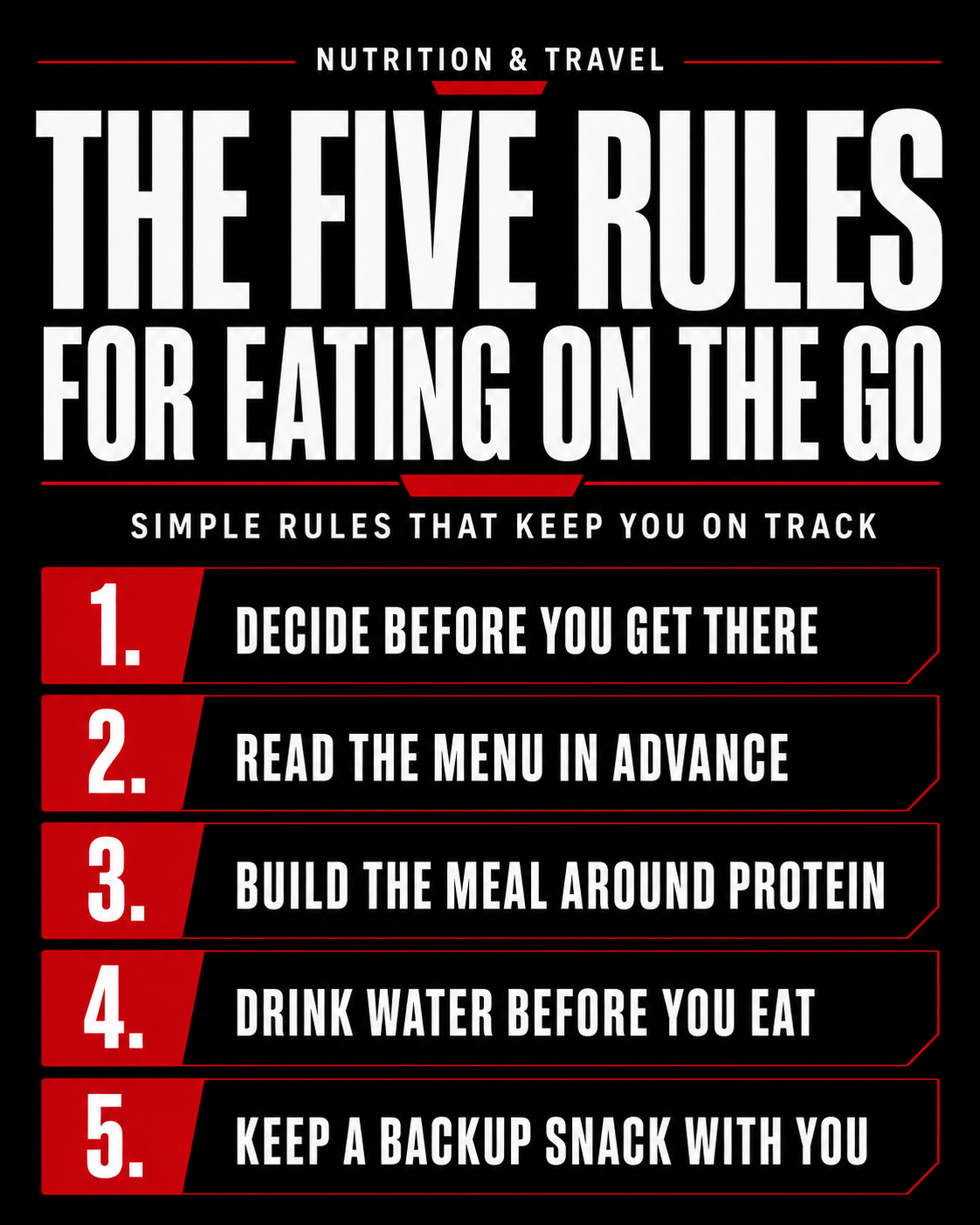
Here's a framework I give clients who eat out often because of work and travel. It holds five decisions. You make each one ahead of time, so you never make it while you're hungry and standing at a counter.
Rule One: Decide Before You Get There
Don't wait until you sit down to figure out your order. Your stomach growls. The special of the day sounds better than your sensible plan. Decide what you're ordering before you walk in the door.
Rule Two: Read the Menu in Advance
Most restaurants post their menu online. Spend two minutes looking at it before you arrive. Pick two or three options that work for you. This step removes most rushed orders you'll regret later.
Rule Three: Build the Meal Around Protein
Aim for four to six ounces of protein at each meal. Go higher on active days. Protein stays the hardest thing to find on the road, so grab it when you can. Add vegetables next. Carbs and fats will show up on their own. Restaurants cook with oil and butter to boost the taste. You don't need to chase extra fat. It's already on the plate.
Rule Four: Drink Water Before You Eat
Your stomach takes about twenty minutes to register fullness. Drink a glass of water before your food arrives. This gives your body a head start on that signal and helps you stop eating once you've had enough.
Rule Five: Keep a Backup Snack With You
Some days stack you with back-to-back meetings near bad food options. Keep something simple in your bag. A protein bar. A small bag of nuts. This stops a rough stretch from turning into a blown afternoon.
What This Looks Like in Real Situations
These rules sound simple on paper. Let's see them in action.
At the airport, a cinnamon roll and a sugary latte can run several hundred calories higher than dark roast coffee with a splash of cream and a protein bar from your bag. Both choices take the same amount of time. One gets decided in advance.
At a sit-down restaurant with a packed photo menu, skip the heaviest item just because it sits in front of you. Order a three egg omelet loaded with vegetables. Swap toast for a side of tomatoes. Drink coffee. This holds you over fine, especially with a bigger dinner ahead later that day.
At a fast casual bowl spot, double the protein and the vegetables. Skip the chips and extra toppings. You still get a meal you enjoy, minus a few hundred calories you didn't need.
On a long drive with only a gas station nearby, grab protein first and fruit second. Beef jerky. A hard-boiled egg. A small bag of nuts. These sit on most shelves, and they won't crash your energy an hour later like chips and an energy drink will.
At a client dinner or steakhouse, you don't need the salad while everyone else orders steak. Order a filet with double vegetables. Skip the bread basket and the loaded potato. Stay present and social through the whole meal. Skip the recovery day after.
None of this asks you to stand out as the guy who eats differently at the table. It asks you to decide your move before you sit down.
Build the Habit, Not the Perfect Day
If you travel often, some days won't go to plan. A meeting runs long. The only food around is bad. You sit through a conference with food everywhere for three straight days. This happens. Your goal isn't a perfect record. Your goal is to keep one off meal from turning into your new normal for the week.
Men who struggle most here aren't the ones with one rough dinner. They're the ones with no plan at all, so every meal on the road turns into a fresh decision made under pressure. That drains you. It also explains why the same few pounds creep back after every busy travel stretch.
Build a default plan for the situations you already see coming. Eating on the road stops feeling like a daily struggle. You already made the call. Now you follow it.
What to Do This Week
Pick the three places you'll most likely eat at this week. An airport. A fast casual chain. Your usual client dinner spot. Decide your order at each one in advance. Write it down if that helps you stick to it. Next time you stand there hungry and rushed, you won't decide anything. You'll just order what you already chose.
If eating on the go has worked against your progress for a while, start here. Most men over 40 skip this step. The win doesn't sit in willpower at the table. It sits in the decision you make before you ever sit down.
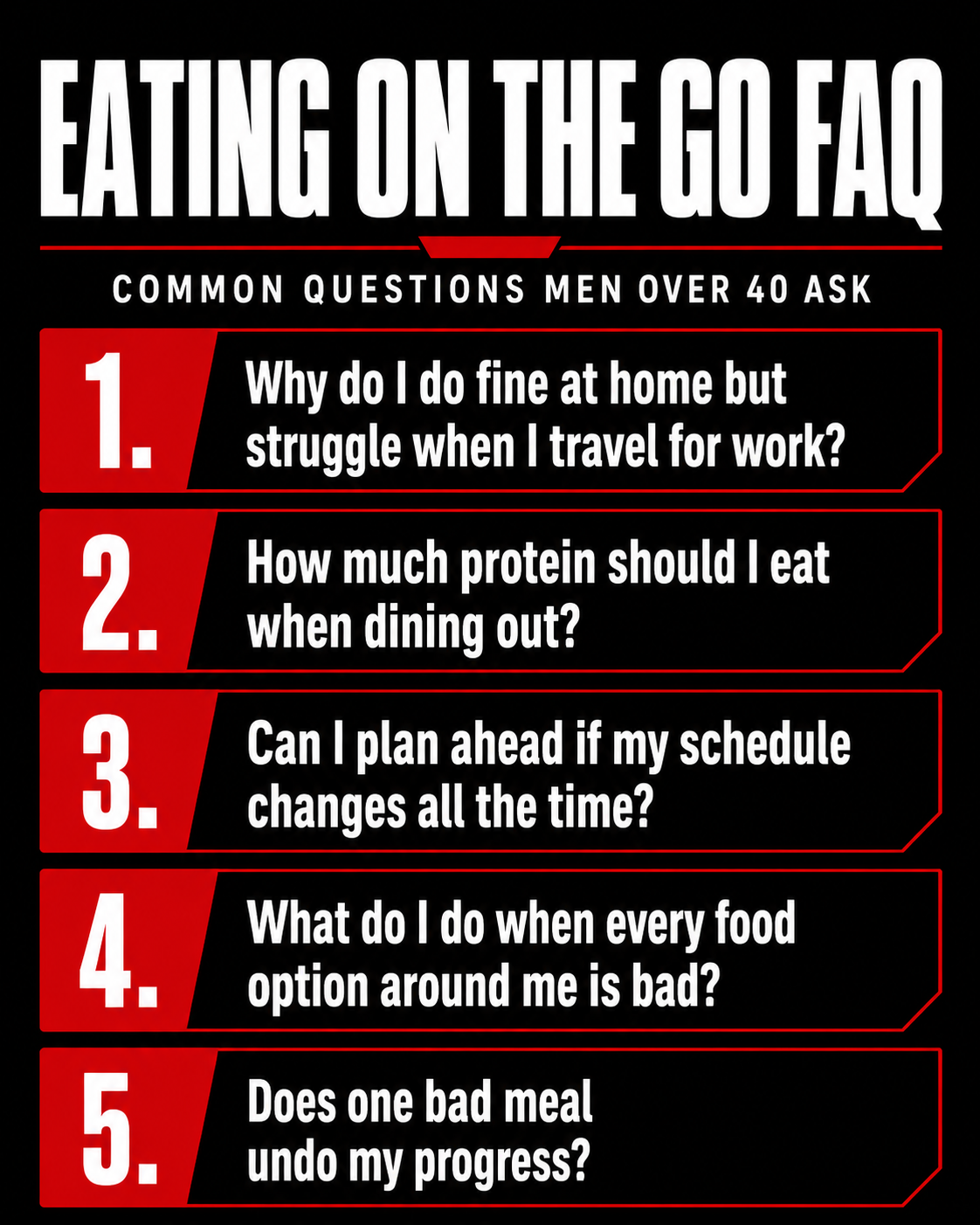
Q: Why do I do fine at home but struggle when I travel for work?
A: Home meals come with less time pressure and fewer competing decisions. Travel and client meetings add hunger, fatigue, and rushed timing. All three make good choices harder in the moment. The fix isn't more willpower. The fix is deciding your order before you face the situation.
Q: How much protein should I eat when dining out?
A: Aim for four to six ounces of protein per meal. Go higher on active days. Protein stays the hardest macronutrient to find on the road. Prioritize it, and it keeps you full longer than chasing low carbs or low fat in the moment.
Q: Can I plan ahead if my schedule changes all the time?
A: You don't need a plan for every meal this month. Most people eat from a small rotation of airports, chains, and client spots. Pick your go-to order at those few places, and you'll cover most of your real eating situations.
Q: What do I do when every food option around me is bad?
A: Carry a backup. A protein bar or a small bag of nuts works well. Having something on hand stops a bad food environment from turning into a bigger calorie load once hunger takes over your judgment.
Q: Does one bad meal undo my progress?
A: No. One meal won't move your weight or your health markers. The risk shows up when one off meal turns into a pattern with no plan to return to. Getting back to your normal routine matters more than any single meal.
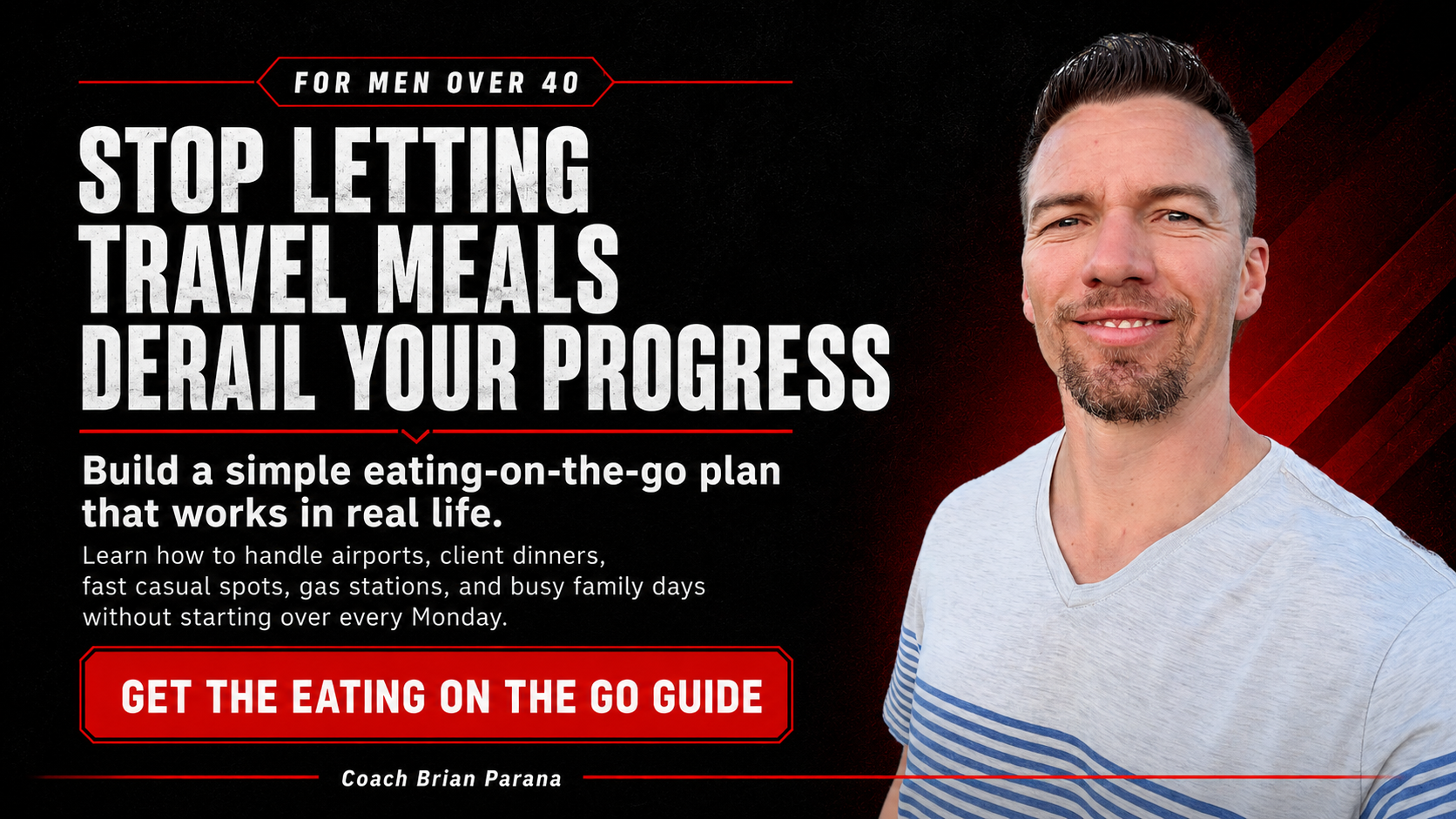

CEO l Head Body Tranformer
Brian Parana is a men’s health coach with 23+ years of experience helping busy professionals improve their body, energy, and day-to-day habits while still leading at work and at home. His coaching is built around practical nutrition, training, sleep, and accountability, with a plan tailored to the person in front of him.
Over the years, Brian has helped thousands of clients through his work as a personal trainer, CrossFit gym owner, and online coach. He has also coached an Olympic silver medalist, a 2-time Olympian, and a CrossFit World Champion.
Brian is the host of the Driven For Health Podcast, where he shares real-world strategies for men who want to feel strong again and stay consistent without making health a second job.
He’s also the creator of The Call To Rise, a 100-day fat loss experience for driven men who want to drop 20–30 pounds, boost energy, and rebuild confidence through strength training, personalized nutrition, and high-accountability coaching. Many men join because their blood pressure, cholesterol, or blood sugar is heading the wrong direction, and they want a clear plan that fits real life.
Brian is married to his high school sweetheart, Amber, and they have four kids. Their family has traveled to all 50 states and 4 continents, with a goal to reach all seven.
What To Order At Dessert Restaurants For Fat Loss


 YouTube