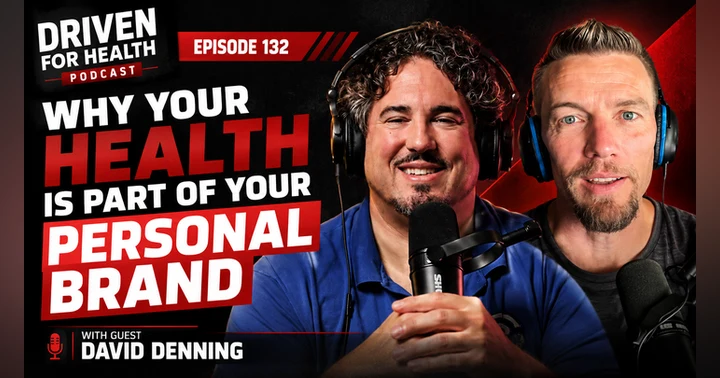
Why Your Health Is Part of Your Personal Brand with David Denning 132
David Denning's doctor said his cholesterol was high enough to start a statin. David asked to fix it on his own first and his doctor agreed to check back in three months. Coach Brian and David talk through what he changed from his morning coffee to his one meal at dinner. David also explains why a real story builds more trust than a polished post.


 YouTube
 David Denning went in for his yearly checkup. His doctor said his cholesterol was high enough to start a statin. David asked to fix it on his own first. His doctor agreed to check back in three months.
(Have you ever gotten a lab result that pushed you to change before your doctor made you? See what worked for David at www.thecalltorise.com)
Coach Brian sits down with David Denning, co-founder of Jumpstart Go and host of The Modern Insurance Agent podcast. David breaks down what he changed to bring his cholesterol down, from his morning coffee to his one meal at dinner. He also explains why a real story builds more trust than a polished post, with AI content everywhere now.
By the end of this episode you will know how David fixed his cholesterol without a statin, and how telling that story only made people trust him more.
Main topics in this episode:
- Why David's doctor gave him three months before starting a statin
- How one meal a day and a morning walk brought his cholesterol down
- Why he keeps coming back to his "default" instead of chasing perfect
- Running a business and a marriage with the same person every day
- Why real, unpolished content builds more trust in an AI-heavy world
- Why David tells clients to pick one social platform and go deep
The Call To Rise is a 100-day fat loss challenge for driven men ready to take their body back. It combines strength training, personalized nutrition and real accountability. Most men drop 20 to 30 pounds and rebuild the confidence that comes with it.
This program also works if you are dealing with high blood pressure, high cholesterol or Type 2 diabetes. It was built for those men too. Many men see those numbers move in the right direction alongside their weight loss.
Inside the program you also join a Brotherhood of men doing the same work. Together you build a body you're proud of and start leading like the man you already are at work.
This is your wake-up call to rise. Learn more and apply at www.thecalltorise.com
About David Denning:
David Denning is co-founder of Jumpstart Go. He runs it with his wife, Elle. She is also his high school sweetheart. Jumpstart Go teaches insurance agents and agency owners how to grow through organic social media and referral partnerships instead of cold calling.
David and Elle host The Modern Insurance Agent podcast. They cover marketing, sales and business strategy for insurance professionals. They also lead a Facebook group called Marketing for Insurance Agents, now past 37,000 members.
David went to Georgia Tech and worked in construction before moving into marketing. He met Elle in high school at 16, and they married at 21. They lived in South Africa for two years. They worked out of Thailand, Vietnam and the Philippines next. They now live in St. Petersburg, Florida.
David and Elle share their home with Lula, a Rhodesian Ridgeback they brought back from South Africa.
You can find David at jumpstartgonow.com, or search for him by name on social media.
Common questions from this episode:
- Can you lower high cholesterol without a statin?
- Doctors do not always start with medication. David's doctor agreed to hold off and check his numbers again in three months. Diet and movement changes brought his cholesterol down enough that he never needed the statin.
- Does eating one meal a day help with weight loss?
- For David it did. He drank black coffee and water during the day and ate one meal at dinner. That change helped him drop weight without tracking a single calorie. A morning walk added even more.
- Why do insurance agents hate cold calling?
- Contact rates have dropped so far that agents now need 300 to 500 dials a day to get through. David calls the old method "frown and drown" because of how it wears people down.
Want help applying this to your own health, weight, energy, or lab numbers?
Coach Brian Parana offers Health Hot Seat coaching segments for men who want a clear next step with nutrition, fitness, weight loss, blood pressure, cholesterol, A1C, or daily consistency.
Learn more about The Call To Rise, a 100-day coaching program for driven men over 40 who want to lose weight, improve their health, and rebuild confidence:
To connect with Coach Brian:
brian@brianparana.com
Disclaimer: This podcast is for education and coaching support only. It is not medical advice. Always work with your physician before changing medication, treatment, or medical care.
David Denney had built the kind of business most entrepreneurs want. He's working with his wife. He's traveling the world. He's helping thousands of insurance agents grow their social media, their personal branding, their businesses. And then his doctor told him his cholesterol was higher than it should be.
He started considering medication, and David was like, "No way. Not doing that." So, he took a hop, skip, and a jump into the fast lane of changing his health, found better ways to manage nutrition and health into the busy lifestyle that he has with his wife. And that's what we're talking about today, along with being authentic in an AI-driven world.
And even more so, why we're on this podcast as real people having real conversations. And we'll also talk about health and its relationship to business, accountability, and sharing your real story behind what makes you you, so that people can know, like, and trust you better. Welcome to Driven for Health, episode 132. Chris Prime Prana, and welcome David to the show.
And I already prepped you. So, what is the biggest takeaway that we want the audience to have from our conversation? >> So, I mean, not not only, of course, balancing your health with the business, but I think the biggest practical application from that as a takeaway is making sure you have others to hold you accountable, that know your goals, that you're trying to accomplish there.
As if we keep those to ourselves, it's easy to let up on them or kind of shift or give ourselves any reasons to to not follow that. But if we have others that are in our corner holding us accountable or just even aware of what those are, whether family or even publicly like on social media, we're much more likely to to hit those goals.
>> I totally agree. And And that's really what I've done for 23 years is just hold people to do the things that they said they were going to do. But in the easiest, best way for them so that they, in my case, lose the weight, but more importantly keep it off and get rid of some bad blood panels and all.
And that's one of the points that we want to talk about here is you do take care of your health now, but that wasn't always the case. And so what were some of your like health wake-up call earlier on that that said, "Hey, I actually need to do something about this." And then we'll we'll jump into your actual story with your wife.
And you know, I'm a high school sweetheart, too. So we'll go into that, too. >> Yeah, absolutely. I mean, there's two two bigger points. One more recent and then one previously of kind of the hey, I really need to take control of my health. Um one was that we had uh worked from South Africa for 2 years. I was living over there.
Um it wasn't a very healthy work life. >> just saying that my wife would love that. She can't wait to like go Europe and just travel and >> [laughter] >> and work remotely. That's That's chapter three with after these four kids are gone. >> I would love to talk about it. That's something that's uh super important for us that we do regularly.
Actually about to leave next week uh head over to Spain for a month. Um but uh South Africa, fantastic, especially Cape Town. We helped plan people's honeymoons there and give them itineraries. So if you guys do go, uh I got full list of what you guys should do. But living there, the work-life balance wasn't great. It was working 12-14 hours days and then everybody wanted to, you know, kind of party or go, you know, kind of live >> Right.
>> live the luxury life outside of that. Um and so there's a lot of eating and drinking, not a lot of movement, and then a lot of work. Um to where I coming back, I probably weighed the most I'd ever weighed at that point. It's something that clothes didn't fit well. I I realized having grown up as an athlete my whole life, I did not feel at my best.
And that that was tough, right? Like when you especially if you grow up like fit and stuff, you you know when you're not, right? And you know you don't feel like at your peak. And so that was one big case, came back, and that's actually when I originally did like keto and lost like 30, 40 lb like a month and a half. I loved it.
The food tastes good on keto, no denying that. But but realizing it is a is a balance, especially when you go places that don't have a lot of great options, have to keep track of so much, and you know, and why running and building businesses, which as we came back, that's kind of what we were kicking off was our very first company.
And then more recently, I know we had talked about is maybe like a year, year and a half ago had gone to the doctor for my annual check-in. I was like, "Hey, I know I need to lose weight." He's like, "Yeah, you do." And you know, I know it runs in your family, high cholesterol, but you have pretty high cholesterol, like really high cholesterol, that I should put you on a statin.
And I said, "Hey, I would love to try natural to reduce that first." And he said, thankfully, it was a doctor of like, "Hey, I'm okay with that. We'll just do check-ins every 3 months." >> And guys listening in, this is that specific instance is where I get so many guys that finally had enough. Nothing's going to change because you're stuck in the rut of living life, of doing business, of and you don't have the skill sets or the time or the ability to do it.
And I have so many guys like my clothes finally didn't fit, or I went to the doctor and they had meds, and they finally end up reaching out and and taking control of their health. And it's really important that that is a very definitive time frame to go left or go right. It's a fork in the road. Are you going to continue heading in the sand and just ignore it, hope it goes away, or actually start doing something about it? And really glad that you did something about it.
>> Yeah, I mean, nothing changes unless something changes, right? Like we will continue in whatever that uh trajectory is, right? Like physics. I don't know. Some some sort of math that tells you you keep going. Inertia. I don't know. We throw out some high school Einstein some high school like words there or whatever, but it's the same thing like and ultimately I I believe uh you know, people will continue till the pain is enough to the point where they'll make a change, right? Like it's one thing to ignore
like, yeah, I put an extra pound on, whatever, but eventually it's like, okay, I'm either having trouble breathing or like sweating tying my shoe or like I just don't feel great or like you know, I've had people start mentioning things to me. Whatever it is when you hit that pain point of like, okay, I really need to make a change, right? And we can certainly get into what that looks like hold accountable.
That's why I'm a huge believer in coaching. Our business is actually coaching along social media and other stuff, but it's so so cute. >> Absolutely. I know we're going to talk about all of it, but you know, that that was That was a point for me it was like, hey, I'm I I strive to do the best at all the things I do and realize stuff's balanced, but this has got to be a key part that I I put in place especially for longevity and why why work towards things if you're not going to be healthy enough to enjoy life as well.
>> Yes. I say it so loud. Aristotle says it. Life's a journey, not a destination and you don't want to get to the end of the rope and be like, hey, I I should have had more fun. I got all this money or whatever or I do have more health. That will be a definitive end for you as it is with everyone here, but let's like live live live live die and have a lot of fun along the way.
>> [laughter] >> I think that's why we why a lot of us get into this entrepreneurship and building business cuz we kind of don't ascribe to the maybe the the the boomer or parents generation of the hey, work 40 years the same company and then retire, maybe get a 10 years to enjoy life and then and die.
And it was like, that doesn't sound like a good trade-off. I don't like that deal. I'm going to make a new deal. I'm going to run this stuff and balance it. So. >> Yes, I agree. We are about ready to go to a 7-day cruise up in Alaska here. We just got back from Peru for 2 weeks and spring break. My wife's going to head out to Ireland.
We're going to join her around Thanksgiving and hopefully, fingers crossed, we got Japan on the list for spring break next year. So, some very exciting places that that we're going to really try to live. So, we work hard every day, but we we we we play hard, enjoy life, too, on the back end. >> Did you have any chicha morada or morada? Chicha morada? The purple the purple corn drink? It's so good.
The spice so good. It's my favorite thing in Peru. >> Oh, yeah, yeah, yeah. Yeah, we had a blast. One of the coolest things is my last name is Piranha. We were fishing for piranhas in the Amazon. Piranha fishing piranhas is is one of most of my kids really, really, really enjoyed it. All six of us caught piranhas.
They weren't the man-eating looking things, but they were like say bluegills. You could hold them in your hand and then you hold them, look at the camera, and they got their jaws and stuff, but don't get your finger too close. >> [laughter] >> You will still get you will bleed if they get you there. But >> it.
You're like, if you don't listen to my coaching, I'm going to sick my piranhas on you, right? So, there you go. >> Now, so cholesterol was high. You you decided to change. We got some What were some of the things that worked for you? And everyone is different and that's a beauty of say coaching and the process is that you find what works best for you and that you can maintain.
I call it the 2-2-2 rule. What we do in 2 weeks, we should be able to do 2 months and in 2 years so on and so forth so that we can continue to sustain whatever process it is. So, say like keto. Yeah, that can work, but people aren't just like on the keto bandwagon. That word is not nearly remotely as as prevalent as it once was.
So, so what what has been some effectiveness of that? And then let's talk about some of your other like your wife and and business and stuff, too. >> Yeah, and like you mentioned, I mean whatever is has to be something that's sustainable and easy enough that you can repeat it, right? Like it's and it's tough for me.
When I when I go in on things, I'm like all in. I'm obsessive. You know, maybe that's why entrepreneurship, right? Like okay, I'm at the gym five times a day for 3 hours each time. Like no, it's like it's not sustainable, especially right running business or if you if you have kids like you do, like you know, life's not always predictable and stuff as well.
So, I was like, okay, what can I do that that is easy enough for me to do day in and day out without having to think too hard or is going to be too complex. Like I love the gym. My wife and I love weights and weightlifting and and working out, but you know, with the way business is balanced, it wasn't something that like, hey, we could repeatably hit [clears throat] those times at the gym on going.
It's something I would love to add add back and probably will in in pieces at a time sustainable, but I need something day in and day out. Don't have to think about that is going to make that difference. The two biggest things were one, eating. No, you can't can't out outwork out a bad diet, right? And it wasn't that I necessarily had a terrible diet.
It's just the way that I was consuming calories and and was was eating too much, right? And it wasn't something I was thinking about purposely paying attention to. Now, I could, hey, I'm going to eat very specific types of food. I'm going to measure my stuff out and do all that, but I also knew sustainability-wise that might work for the week or two and then I would get a little lax on it or just not have time and I don't have my my you know, scale with me.
And so I was like, okay, what's easy enough for me to do? And what I had done years ago and I actually loved and felt really good doing and also fit where I'm busy in the mornings and afternoons and lifestyle was one meal a day. So I went back to doing just one meal dinner in the evenings and you know, I would just have some some coffee and water throughout the day and then dinner in the evenings to where didn't have to really think about what I was eating as much cuz I was just consuming one meal and just that alone started making a pretty significant difference
in me starting to drop weight and my health get better and then I wanted to add one fitness thing in even if it was simple and that was for going for morning walks. And so we'd wake up, walk around the neighborhood. It's Florida, so it's kind of like a little safari of all the different crazy wildlife >> Yeah.
>> including the pond has a gator. I've yet to see the gator. I've yet to see the gator, but the pond apparently has a gator in it near us. >> And so and those those two things I mean made a pretty significant difference. I mean it was also nice to get out and breathe fresh air and and do everything but >> your lady.
>> Yeah. Yeah, exactly. You know, kick off the day before we both go into the office. Um but it was something that it was it was repeatable, something we could both do, something that she enjoyed doing those walks too. So it's great when both you and someone else enjoys it. Hey, let's go for the walk.
Okay, I don't really feel like it, but you said it, so let's do it. So it kind of balanced each other a little bit and then the one meal a day for the food. Um cuz three three people in the household all have kind of vastly different what we can eat, what we can do and so like losing like, hey, all the food needs to be on my particular diet, that's a lot more challenging than a hey, I just eat one meal a day and that way whatever is for dinner, I can do.
>> Yeah. Now the premise of why it worked, we are increasing activity, >> Mhm. >> decreasing calories. That's it. It's a math equation here and that's why I work people. So, >> Not calculus. It's It's It's straightforward math enough anybody can >> Addition and subtraction. That's That's about it. >> [laughter] >> I like to simple is easy.
Easy gets done. And the everyday life that we live is complex enough that we don't need food. We don't need everything else stacking up on our calendar and stuff to make it more challenging than it needs to be. So, just constantly and anytime that I'm coaching, right? We go back to accountability and support.
What are the things that I can get this person to do on a consistent reliable basis and get them to be easier over time and more repetitive behaviors and providing that structure so that they do it. Because everyone knows what to do, but they're not doing those things. Right? Generally, eat less, move more. So, just find these these pathways to do it.
Now, >> Yeah. >> Go >> I'll go ahead. I I was I was just going to say like yeah, I mean, you can always as that becomes ingrained into your life, you can continue adding to that or getting, you know, okay, now I can add the gym back in or now I do want to add in tracking certain macros or getting, you know, my creatine in it, whatever that is, but it's it's one step at a time.
If you can't put something where you're consistent over months, over a year, you know, then it doesn't really do too much good to be crazy healthy and do all your things for a few weeks or a few months and then just go right back to where you were. >> Right. Building momentum, then you can add on. I had two guys join my Call to Rise 100-Day Fellows Challenge this week and they started technically Sundays is when it starts.
It's the programming and everything in in my app. But, they signed up earlier in the week so they get bonus time. >> [laughter] >> So, listening in, if you schedule call and you get you get booked on and sign up on a Monday, you get six extra days. So, 106 days of Brian. You'll get a lot of Brian just as Eric did yesterday on our first call.
He's like, "All right, I took way too many notes. My hand's cramping." But uh the the premise is one of the guys is going away for an all-day meeting and I basically the premise he was just trying to just like go all in and and whatever. It's like, "Can you just make better choices than you did the on the last time you were in this situation?" And we did.
He was texting me. He ended up going to Whole Foods. He sent me a picture of what he ended up eating. He told me we were game planning it before he got there. So, he got this fish, some rice, some garbanzo beans, heavy amounts of vegetables. It was plenty of flavor and deliciousness and it's way better than the Subway sandwich, cookie, and uh chip bag of chips that he was going to alternatively get after and it was like the tuna sub or something.
like, "Hey, FYI, there's a crazy amount of fat in the tuna sub at Subway. Just an FYI, if that's your go-to one, please check their website so you make an informed decision about how much more fat calories you get over protein because of the meal. Just FYI there. Just do something better. Do something better and then like I think gearing putting things in place that like you know, striving for perfection is always going to be uh a disappointing outcome, but something to where you know, hey, as things pop up like if you know, hey, a client wants to
take take us out to like a meal right now to to celebrate something cuz they just pop by the office and are in town. Well, yeah, I might be normally doing the one meal day, but for for that like hey, I'll hop in, I'll do the meal with you maybe or something there. But always being able to come back to the default.
Okay, what's my default? My default's one meal a day and that's just my default. And like, hey, if I have days, or weekends out with friends, or something that they came in town specially once a year, or something, cool. But then I'm back to my default. Um I think that's that's the thing versus like, oh, I missed a day, or I missed missed a few days, I give up, I'm done, right? Versus being able to come back to that default.
>> on a Monday. Good thing that today's a Monday, I can just start over in six or seven days here. Yeah. So, okay, excellent. I'd love to kind of talk about some family life and stuff. One of the unique reasons why I even you caught my attention to bring on is is obviously the business stuff that you do, but you're high school sweethearts with Ellie.
And let's talk about some of that, and some of how that has been a part of obviously a very long life. I'm I'm 43, wife's 43, and I've known her since I was 11. And we were high school We dated our senior year, and 20 years of marriage, four kids later. So, I totally resonate with that story. So, tell me a little bit about your your relationship and stuff, and how it all is a obviously it's a huge part, because you guys are you know, in business together, too.
Absolutely. Yeah, so we started dating at 16 in high school. I think it was right as we were going into actually summer right before junior year. And dated all through high school, was class couple. We're like, we're going to prove them wrong. And uh even in college, it's kind of 2 years long distance, but we're both originally from Atlanta.
Um I went to Georgia Tech, and she went to school for 2 years outside of state in South Carolina, and then came back to Atlanta. And finished school at SCAD there. And we had been dating for 5 years at that point. You know, I was working for a company, um and we're like to our parents, hey, we want to get married before senior year of college.
Uh so, we did, got married at 21 right before we started senior year. Whole bunch of stories right after, especially I I even from from honeymoon of uh of essentially getting fired on honeymoon. Uh And all kinds of stuff. But yeah, I mean, from there ended up traveling, living in South Africa for a couple years for company I was working for before coming back and starting our own businesses.
And for the last like 12 years have been running our own companies together, working together. So yeah, we live together, we work together, we travel together. Get to live life and run business with my best friend. And so absolutely absolutely a blast. >> Yeah. I feel that, too. It's My wife has two businesses. One's a little more prominent than the other, but they both center around travel and travel advisor.
So she sends people on epic bucket list style trips all over the world. So hence why we're going all over the world. She's not only learning, but she's experiencing and and >> Business research trips. >> Yes, exactly. >> Write that tax off, right? >> She's been to Italy more times in the last three or four years than I think she's just even been out of state, Ohio.
>> [laughter] [snorts] >> But so but yeah, being there to support your your spouse, your partner through all the ups, the downs, the challenges, the happiness, the celebrations uh is so important to be able to do that. And it's very very cool to to just participate and and see the wins and and help where you can.
>> And to help each other in your own health journeys, too. Even though like my my spouse is kind of the opposite body type as me and initiatives and and stuff around that and very much like foods. It's kind of interesting. I would say like oh gluten and some other things kind of affect, but it's really foods inside the US.
Um so like the bread here and other stuff the bread here and other stuff, she just eat and you know and and it's like absolutely uh you know hurts her and then we'll go to like Italy and or you know outside the US and have pasta and it's fine, all right? And it's like okay, there's something a little up here with our food and what's gone into it or into the soils and stuff.
I it's just you know it's crazy. It's just so much more freedom outside the US. It is unfortunate. Yeah and so um something to keep [clears throat] in mind. But yeah, having someone to help help kind of push and and you guys hold each other accountable to your own health journeys is big too. >> Oh, definitely.
We're always up to go for a walk. She doesn't necessarily work out. She says I work out the most for both of us. Which is fine. So I I strength train with my buddies and then we spend a lot of time walking and hiking with the dog. We have a newfie and he's a giant 140 pounds at this point or something. Some massive dog but Yeah. I always say this, you walk and talk with with your spouse cuz one of you likes to talk more than the other and it's a great time to get your steps in.
So me, I have to always remember to just listen Brian. Just listen. Get your steps, enjoy just being around her and don't put don't give it any input. Don't coach. Don't give her solutions. She's a she's smarter than me so just let her clear her head and and find the solutions herself. >> [laughter] >> Oh, absolutely.
I mean yeah, it's good talking time, good you know, it's good to be moving while while talking and get outside. Now, you might have to time it slightly different depending on the time of year. It is like a hundred and thousand degrees right now in the middle of summer in Florida. Feels like a swimming pool when you step outside.
So I'm like okay, early mornings and in the evening later in the evenings are great times to be outside. >> p.m. please. >> Yeah. >> Yeah. Excellent. Now, let's lead into how you both do business together and and what's important in your world with coaching people, with guiding them in this throughout authenticity and in AI-driven world.
And you and I both know, I don't know, I'm sure you feel it, I feel it, too, with AI showing up, it's just everything is faster. Like the the pace has quickened. Like it's it's like if you're not sprinting 24/7, you definitely feel like you're behind. If you're not on the latest AI trend thing, then you feel behind again. But again, you're if you're even aware of AI, you're probably still ahead of most of the masses in a sense.
But uh yeah, let's jump in. How does this How does this show up for you and in your business and everything? >> Yeah, it shows up I mean, we we've had our business for a really, really long time, and we've been uh specialized to our niche over the last 8 years. We've worked with a lot of insurance agents and agencies. It's very much a niche.
We worked with all kinds of industries prior to that and and probably will start opening up to even more, but that's been the niche we've been focused on. And we've had our strategy we taught, and AI just has allowed us to make those even easier and faster um for for our clients and what we teach them.
AI is amazing tool when brought in to either make things faster, smoother, fit within processes, or strategies, or things that you already have. It's not such a great retool for a replacement of a human. Um it's not great on a lot of the interpersonal and a lot of that human connection. And something that I know we'll talk about a good bit more is um how individual consumer and generational behaviors change uh a bit, right? Like with the rise of AI and AI content, it's not that really the amount of content can put out.
Like you can easily put out whole bunch of AI content. In fact, there already is. And now it's becoming, okay, what's not only good quality, but what's real? Like who is that really them talking? Is this a real person? Where can I put my trust? Who do I listen to? Who do I want to be coached by? Um all those things is what's real, [clears throat] right? Especially if you start getting to older demographics, I don't want to be tricked.
If you tricked, I feel feel not that's not real or not authentic, you're dead to me. I'm not doing any business with you. And then even younger generations, it's like, I want what's authentic, what's real. I don't want perfection. I want things with mistakes. And that's why even some of the like talking head content creators are starting to move a little bit away just from talking head, cuz that's so easy to fake with AI.
If it's me on a walk and pulling up my phone or talking to someone or stuff there, then it's a lot more authentic. Really they messed up a word, they said um that wasn't perfect. It's like, okay, that's real as well. So, I mean, I very much talk about like leaning AI in the tools and help us do more and remove some of the repetitive things or help with our creative thinking a little bit, but at the end of the day, we still are the brand.
We are who's in front of people. We're the ones building the trust. That's who people have conversations, connect with. And so that's what we really lean into also for our clients as they're doing that with their audiences using social media as well. >> Yeah, definitely. It is important in this day and age to show up as authentic as possible.
And it's one of the biggest reasons why I even did the podcast started is I need to talk out and I had been posting once a day every day and it just didn't seem to be going anywhere and talking and creating long-form content has allowed people to get to know, like, and trust me because of the 7-Eleven and all that stuff that you have to do for touch points in terms of building trust with someone.
So, if they can actually hear my real voice and go through the process of the 132 episodes here that are there, then they can see if they like what I have to offer, if I can actually help them and and start to believe that trust and move toward me or toward a decision of taking responsibility for their health. And and that's important because I can't work with anyone that's not ready to to change.
It doesn't not it. >> And and and you know, I I'm sure it's not uh going through 132 episodes. In reality, it's part of one or even one that's like, "Okay, this is who I need to reach out and touch base with." Cuz we all talk about like, you know, who we feel connected to or trust. If it's someone I've heard someone mention a name, okay, I'm aware they exist.
If I've seen a picture of them or they've popped up on social or seen a picture, okay, I see what they look like. And maybe that's not feel a little more trust or connected. Now I've actually heard them talk or or train or teach on something. Okay, now I know what they're about, their personality and everything there, too.
So, by you doing long-form and podcasts and and or or those that are listening being able to like, you know, put out video or content, even if it's like just a simple one, that's what really people can hear you, can see you, and helps build that trust or in your case like authority as well with the podcasts and stuff as well.
Cuz at the end of day, people connect. It's relational. It's, you know, and that's also what builds trust. So, them being able to hear you go through these podcast episodes, teach, you know, it's almost a preview of what would it like to be coached by Brian and what he can help with and that knowledge.
And it's what takes people across the stepping stones to, "Yeah, I'd love to work with you." as a part of that. So, we live in a cool age where we can get in front of, you know, hundreds, thousands, thousands of thousands of people just through social media and not have to be like, "Well, I need a couple million dollars to run a TV commercial.
So. >> Right. Yeah, we do not need that. Uh can't afford that. >> [laughter] >> Four kids and a grocery budget, yeah. Uh not not doing Super Bowl commercials anytime soon. All >> Yeah, we'll leave those for the beer companies, yeah. >> Yeah, right, right. Now, when as you're coaching someone, you know, who is it that you end up you Who's the ideal client? They come in Like even before they come in, who is that person that you help to connect with others to grow their social media presence to show grow their business and then kind of walk through a
client journey of how you create the experience and the the coaching experience accountability and the deliverables for Jumpstart Go. >> Yeah, absolutely. I mean, so our core audience is like insurance agents can really take any business owner, entrepreneur and replace it with that, but that's our our core niche, which is kind of part of the process.
I'll talk about it like target audience, like know your target audience who you're talking to and who you work with. >> And we talked about four different types of >> help anybody if they have a pulse, they're my my audience or client. And it's like, okay, you're going to help nobody.
That's the, you know, jack of all trades, master of none. Like, oh, why don't I get any referrals? Like, who do I refer you to? You didn't specify anything, right? So And it makes it especially tough when it comes to social, which I'll I'll talk about in a second as well. But take take that audience. Now, pain points, you know, whether they're brand new or established, like, you know, is I need I need my target audience knowing I exist and and me connecting with them so I can help them with a policy, for example, you know, or whatever it is I'm
selling, right? And so I need client acquisition, right? You know, sales is a part of that, but I could be amazing at sales and if I have nobody to talk to, it doesn't do me any good, right? So marketing, client acquisition is a piece of that. And so from the industry I'm we're primarily focused on in the insurance one, it's a very old industry, very slow to change, it's been around forever.
There's a lot of industries like that, but they they don't like to adapt to things very quickly. Now technology has made them start adapting quicker, but in general they still if you've seen Wolf of Wall Street and things like that, they're still on the they call it smiling and dialing days. I call it >> Let's let's print out the the paperwork and fill it out by hand.
>> Buy buy a bunch of old leads and other stuff where they're calling numbers all day long and do hundreds of thousand dials a day or whatever and stuff. They call it smile and dial, I call it frown and drown cuz that's more likely the faces they're making. >> I I've tried doing just calling or outreaching or date DMing and it's it gets sad.
It is drowning and frowning and drowning, that's for sure cuz you're just like, this is awful. >> It's almost like a spray and pray method of of marketing growing your business, which doesn't work very effectively or well, especially if you care about your time, you don't like rejection all that and you want to be more efficient, too.
It's like, okay, it doesn't make a lot of sense where it'd be one thing if I was at least on the phone and talking to people all day long and connecting with a few people that might listen and and hear what I want to say, but in reality most days spent listening to ringtones or the dial tones or voicemails because stuff isn't getting picked up, contact rates are dropping, there's so many anti-spam >> power dialer or all that other more advanced marketing things, so they're literally >> numbers getting flagged. I mean, it's
just it's just not a super efficient way of growing and they and they know this, right? Like it's very transactional and they're also realizing like, hey, this in pretty much all business relational, transactional just ends up with people like canceling policies and me getting charged back money, me having to constantly find new people.
I'm not getting referrals cuz they don't even remember my name cuz it's all transactional versus relational. And so when I talk to these agents or and once again, substitute any business owner, they're like, "What do you want?" Well, I want people coming to me who already know who I am, see me as an authority, already ready to have a conversation, they're excited about it.
I don't want to go chasing down people who don't want I have, don't want to talk about it, see me as spam, and don't trust me. >> You're the direct TV marketer sales guy that's in Sam's Club chasing everyone down. >> Exactly. Like I won't chase chase people down. It's not only a waste of time, but it feels terrible, too, or however, and like >> both parties involved.
>> It's It's just It's just not It's not efficient. And, you know, at the end of the day, like I'm like, "Okay, yeah, I want these hot, warm, almost referral quality or referrals coming through. Fantastic." And they're like, "You know, what do you do all day?" Well, I do the opposite.
I I literally try to transact in no trust and >> Right. >> It's like, "Okay, that those are two opposite things that don't align. It's not magically one day going to swap to what what you want." And so that's where we really lean into, "Okay, how do I achieve that? How do I have people know who I am? How do I have my personal brand? But how do I go beyond just posting and hoping people see it and reach out to me to where it is like actions I can take to make those conversations happen to turn into sales and referral partner relationships and
all these things. And that's really what we focus on is how do I use social media to get in front of my target audience, connect with referral partners, drive all this business through to me who already knows who I am, sees me as an authority, and I don't have to do paid leads or paid ads. This is business that's coming inbound to me and my team off of that.
And that's what we really focus on is helping them get away from those things. Exactly. And like infinite ROI. Like, you know, if with ads and and paid leads, you're just renting. You're just renting and then you just got to go re-rent again and re-rent again. Cuts out your profit margins, and it just feels like, man, I can't >> There's a science to it, too.
There's a science both ways, but when we go back to authenticity, we're building relationships with people to then referral partners and stuff to build that no, like, and trust. So, it's a self-serving circle of influence and business that works for you long-term, whereas you bought the leads, you dialed the leads, you DM people, you just and then and then >> up go nowhere, and you got to do it again.
>> It's a It's a modern application like cuz cuz marketing principles, sales principles, they don't they don't change. They've been the same over time. The application of them and how we go about our technology we use has changed over time. So, if we go to like pre-internet, like how did someone build and establish their business? You know, they went out into their area, into their town.
They connected with other businesses, formed referral relationships, did events or or, you know, things together. They sponsored nonprofits or involved in school systems, maybe of commerce, city council. They went to different meetings. They become the go-to for whatever it is they did. Like, Brian is the fitness health coach in the area.
Everybody goes to him. It's hard for anybody to compete cuz everybody knows Brian is like the long-established best person here, and this is just comes to you every day. And it's like, okay, that's fantastic. And now, we can literally use social media to replicate that exact same thing. I can go where the crowds are already gathered, where they're already segmented in a Facebook group just like they would be doing different meetings in local area in person, and I can make these connections without even having to leave my house or
get out of my pajamas if I don't want to off this, and I can do this all over the country, not even just my local area. So, it's the same principles. It's just now shifted to being a lot more efficient, a lot more ability to get in front of people and form these relationships and connections. It's just how do I do it in a manner that that works on social.
>> [clears throat] >> So, how do we do that? Outside of not moving away from talking heads and showing up as an authentic version of yourself. >> And it's not necessarily like the specific type of content or real, a story, a talking head, the format. You know, I'll I'll give a couple I'll give like some pieces with that.
The first the very first thing we we already talked about is know your target audience, cuz that affects everything. And and don't focus it just on demographics. Demographics is a piece, right? I know what I sell and so I know, you know, who maybe an age range or location or income value that or income that would be good fits.
But then going beyond that of okay, you know, what are their fears, where are the concerns, where do they hang out, what do they enjoy? And I can even tie those to things that tie to me, right? Like maybe I sell a certain type of insurance that's for seniors, right? Um they're 65 or plus, right? And so I know, okay, my age range is going to be 55 or 65 plus, somewhere in there. Fantastic.
But then maybe I'm also really big in like fitness or pickleball, right? Well, I can tie that to seniors cuz they're also into staying healthy or fitness for my target audience, right? That's who I want to go after, which makes it easier for me for me to write insurance policies for them. Cool. And so I can end up leveraging things like pickleball Facebook groups and pickleball coaches or Silver Sneakers, which is like a free fitness program for people on Medicare, and I can end up having these communities come through to me and
connect with those communities on social of things already enjoy and I'm doing in my life. I don't have to create new hobbies or change my personality. I can lean into those and tie it to my target audience. So, knowing your target audience is key. And and so that tells me where do they hang out, where can I find them, what are their concerns, also what referral partners are going to be best for me.
Someone that just works with new parents with toddlers may not be the best fit if I work with seniors, but someone that, you know, runs, you know, maybe if I do life insurance and they just do Medicare for seniors, so that could be a great fit or if they are involved with a senior fitness center or anything like that, there's all kinds of things that could be great referral partners there.
So, know your target audience plays a factor in everything cuz if I don't know who I'm trying to get, then that's going to make it really hard to get those people. So, target audience. And then social media, yeah, there's a lot of platforms out there. What I typically, you know, really talk to our clients about which which insurance spans a lot of age ranges.
I've got some even 80 and 83-year-old clients. >> I'm right. I'm right. >> [laughter] >> Yeah. Yeah. So, >> I I find that a lot of people have maybe a little hesitancy about social, maybe a little fear, a little bit putting themselves out there. And so, I really want to give them recommendations of what they can do that's going to be the easiest, fastest, and simplest for them.
And there's a lot of platforms, but insurance agents, you know, they're trying to grow their business, which we're talking about here, versus being an influencer like a Kardashian or something like that where I'm getting paid off by however many eyeballs they >> for a view count or likes or followers. >> It's not not about going viral and view counts like an influencer, that's a whole different route and strategies.
I want to do this to grow my business. I want to grow my insurance business, for example. So, me having a whole bunch of people in Russia watching my videos isn't going to help me too much cuz I can't write them insurance policies. I want the right audience coming through. >> Right. >> And I want to do it in a way that's sustainable.
Come back to the fitness side. If it's something that isn't sustainable, then I'm not going to be able to keep doing it. So, like if I told all our clients, "Hey, let's go leverage TikTok." TikTok's a great platform. Well, unless they're really committed and able to do four videos every single day and publish them, then that's probably not the platform for them.
And honestly, most of my clients would rather mug me than do that. It's They don't want to be full-time content creators. >> this to me? >> It's not It's not what they want to do. Like, and I know they're not going to do it sustainably, so what's the point? I want them to get results. So, we actually lean to Facebook. Is it the sexiest, most fun, amazing platform? No, heck no.
I mean, listen, I I don't even really like it, but it's so good for business and for these things, and it's the easiest cuz it takes the least amount of content also, then it's something they can sustainably do, easily fit within their day, not something it takes hours for them to implement.
And so, it's like I know they can do this and get the most >> of Facebook is a bit different than Tik Tok or Instagram >> The only difference, yeah. >> Uh my wife spends her time on Facebook primarily in growing a Facebook group, which she doesn't do any video at all. She hates it, and she's just never going to do it.
So, she's will do pictures, but she's very good at written word. And so, she can express herself in a a much more aligned way, and that's be the the the singular point. And then she has Instagram. I'm over here. I got to find me on I'm on seven different platforms or something, posting everywhere and everything. Uh I I I I guess it works. I don't know.
I like the podcast thing, but you got to promote it or no one will listen to it, right? >> And >> And like I said, there's many there's many ways to grow a business. Each social has its advantages and disadvantages for for our audience and for a lot of businesses, I want to keep it easiest, most effective, and as they scale and grow, I I'm a big proponent of them focusing on a single platform until they're at least doing a million from it, and then expanding maybe to a second cuz each platform, like you said, works differently. It's like trying to start
two separate businesses to do two separate platforms versus focusing on one and scale and grow. And another thing, a unique advantage of Facebook, for example, is Facebook groups, like you just mentioned. Tik Tok doesn't have Tik Tok groups. I can't go just get a group of people together on Tik Tok and chat and get in conversations and sales conversations out there, but I can on Facebook.
And so, so that's a big thing is the platform and knowing that my target audience, fantastic. The third another thing is it the platforms maybe work differently than they think they do. And understanding how the tool works I want to use keeps him from fighting against it and wasting a bunch of time and energy versus actually using it with less time for more results.
And that's where I got to understand why it's built the way it is. Facebook's a business, it's built to make money. It makes money through ads. And so a lot of people, hey personal profile do my personal and a business page is where I do my business. But in reality that makes no sense because if I'm doing organic content on the business page they have no incentive for people to be see they'll see that and come to me cuz they want me to pay for ads.
They'd go out of business if I could do that effectively. So they limit reach to usually 1% or less. Meaning if I've got a thousand people following that business page I'm lucky if 10 people see it. So it's really waste of time really doing any organic really on a business page cuz no one's going to see it.
It's like having a Michelin star restaurant in the middle of the desert. Doesn't matter if the food's amazing if no one knows it's there. So the personal profiles actually what you want to use and leverage because Facebook actually wants to push that and connect and put content out and everything with the personal cuz the longer they stay on the platform the more ads they can serve the more money they make.
So a lot of people are fighting against it spending a lot of time and energy maybe even doing great content but nobody's seeing that or coming through because they're fighting the system then versus knowing how the tool actually works. And yeah, and then extended from there the types of content we're doing how's that feel with our target audience? How do I grow and scale that audience? Facebook groups, how I move those into conversations and DM to appointments for sales or referral partner relationships.
All that plays into it but those are some of the key initial parts is using your personal profile, knowing your audience, and knowing what platform I'm going to use to leverage, and then going from there. If you don't have those things initially then it's going to be really hard even if you create a whole bunch of content.
>> Right, definitely. And you'll get on that content hamster wheel and never get any fruit of thy labor from it. And the outline that you're sharing does work for any solopreneur, entrepreneur, business owner, whether it's online, brick and mortar, selling things, products, services, whatever.
This is the general approach that you need to do to be able to then create those conversations, which is where the magic happens anyways, because then you build that know, like, and trust and that proximity to that person to be able to then offer them help. At the end of the day, that's what you're trying to do.
They have a problem, you have a solution. Is it a good fit? And if it is, then you'll make money. You'll be able to offer them your services. And it'll feel good. >> Yeah, you got to you got to feel good with what you're doing if you want to keep doing it and do it for a long period of time. Like, that's you know, I felt the most free ever when I hopped out of corporate or ever cuz I didn't like what I was doing.
I didn't I didn't enjoy it. It felt soul-sucking, especially once you I knew I was going to be hopping out of that, running businesses. Every single day felt worse and worse. That's kind of a thing. Like, you accept it until you know that that's not the reality of what you have to be doing and then it all of a sudden all those things that you just kind of accepted start popping up or like, oh, this is terrible.
Why I can't believe I did this for so long. And, you know, that was that transition. But, I mean, it's you got to enjoy it. And at the end of the day, like, keep in mind, what's what's the goal with what I'm doing for my marketing? Is I want to get into conversations with people I can help, right? So, whatever I'm doing, whether that's podcast and me educating them, people reaching out to me from that, forming referral partnerships who connect me with people who need my help because they're already working with them and they they can pass that trust off to me,
whether it's social media. Uh heck, even calling, which was the most direct way initially of getting conversations that now no one answers and no one calls are getting screened or blocked or there's no trust there. Now I've got to like, okay, how do I have this trust and get in front to then get to those conversations.
And for me, social media is one of the most powerful ways of doing that that I love teaching of how do I get to these qualified conversations with my audience referral partners through social. So, lots of ways to do it, but at the end of the day, if you're not getting in conversations, then need to take a look at what you're doing for marketing cuz that's really the whole point is to get to these conversations.
>> Right. Help someone. >> Exactly, yeah. That's what's what what we do our businesses. We want to help people, right? Like if you if you talk about fitness and health and right running your business all day long, but no one listens and no one goes and does it, then it's like, you know, I can I can give advice or input all day, but people people got to put it in place so they can get results.
And and when they're winning and they're healthy or they're or they're succeeding in their business, that's rewarding. That feels good. Not only to us helping them, but to them. That's their goals. That's their life. And so, yeah, it's powerful being able to help people. >> That's the best part of what I do is the outcomes.
I have to imagine for you, too, is the outcomes of doing the actions that your clients get to see. So, on my end, we see a lot more confidence, a lot more energy showing up in their everyday life so that they start doing things that they would not do. And for some, it's better connecting with their partner, spouse, their kids. Others, it's better connecting at work.
And all of a sudden, they're getting promotions or they're running their business more focused, proficient, efficient to make more money. I've seen it so many different ways where these the fruits of the labor, of the effort of losing weight and getting in better health has a just like it's a it's a rocket ship trajectory to a different planet in a sense of where they would have been if they would just say, "It sucked.
" I've had And this one client, the guy moved from Upstate New York down to Myrtle Beach and because he lost 50 pounds, that that was the the preempter of doing it. He was locked into his career, had a spouse, and just doing the normal everyday thing. He just like get up, go to work, go home. It's all that stuff. He's like, "No, I don't want to do this anymore.
" And now he takes long walks on the beach on the weekends. And and this is more of his happy place. And he's around family, too, which is is really really cool. But it was because he had enough of where he was at and he had to unstuck. So, what are some of the things that you see once the people start taking action on on creating conversations, on showing up authentic? Like what is the outcome that you seen from stories of people and such? >> So, I mean, a big thing like off the bat, especially as they push past some of these initial fears. Maybe
they've never touched social. They're fearful. 80 80% of people come to me immediately. I'm not a social media person. I was like, "Well, you know, before I ever, you know, played baseball or basketball, I wasn't a basketball or baseball person." Like it's a skill set. It's something new you have to learn.
No one starts off like, "I've never touched social, but I'm a social person." Like, you know, it's it's something there. So, a big piece is confidence right off the bat is, you know, as people I I post or I start taking action, realize, "Oh, people are actually positive about this. Oh, I haven't seen this person in years and they're congratulating me on this or commenting and and put okay.
This this is nice. I thought I thought people would be like, 'Oh, your hair's terrible. What happened to your nose?' or whatever." Like, "Oh, my no." It's like people people are actually, you know, especially organic, nice and encouraging versus, you know, ad ad comments are a whole different thing. You know, but but but but organic social, absolutely.
And they're like, "Oh, actually this is not so bad. I like that. People are paying attention. I I didn't think anybody would care what I posted." And and so confidence initially, but then coming from that is yeah, increased business. Business coming to them, not actually enjoying what they're doing each day because it ties into the type of content they're creating, to the people they're helping and servicing and writing um and growing their business and sales is a big thing, of course.
And then that also by removing 14 hours a day of dialing, now freeing up time with social to accomplish a lot more in a lot less time. Yeah, more time with their family, more time to to do their health, their walks, their gym, um and their spouses and kids get to see them more, which is part of the reason they're doing what they're doing in the first place.
I'd like to spend more time with my family. Well, can I adjust my business to do so? Yes. And so, you know, that's some like of the short-term and the long-term, they end up like, I'm actually having a lot of fun with this. I enjoy this. It's my favorite way of acquiring stuff. Now I have visions of Oh, I think I want to start a podcast or I'm actually hosting a conferences now because I'm an authority that people want to come to this conference or this webinar or seminar.
So, it just opens up a world of opportunities. We've had people even take this to shift into things that were even more aligned with their vision and dreams. I remember a client who was doing life insurance and he tripled his business in you know, a few months of putting the stuff in place. It was great. But his whole passion, he was in Chicago, was like, you know what I really really want to do is I really wanted to run food trucks with my family, or ovens and stuff.
And so, he started up a food truck business called Tacos, t a k o z z, funny. And uh actually, my spouse actually helped him with the design for the wrapping the food trucks and used the social media strategies to kicked off and launched it. Got so popular, he now has two food trucks and a brick and mortar restaurant all in Chicago, runs everything there, doesn't do insurance anymore.
He's had that taken off and just uses social media for it. Same strategies, different business, but something he gets to do with his spouse and kids, all run that business together. He's living in of his life, right? And that was something I was going to point out. We live in a day and age where we have never had this much freedom to craft our our lives and our businesses to what we want.
Whether that's time with our families and our local communities of volunteering and and live in the best lives there or whether it's travel around the world. >> is that you can't volunteer your time if you're worried about how you're paying your bills. You can't they can if you're time strapped, you're working all day or any of this that you do not have time to take care of yourself or do other things.
And so that's just >> up in a rat race a little bit, right? And also the help and support like previously like, "Oh, I I need team. Well, I got to go find and hire. I got to be able to afford 50 30 50,000 to pay them a salary all these things and to do this and and even basic things I need help with and stuff and to really now like there's so much ability between both location dependent and virtual work but also leveraging like virtual assistants to be able to take over a lot of these areas usually like four or five dollars an hour. We have nine full-time
virtual assistants helping with different areas of the business. Like it's never been easier to leverage your time with technology and AI and like virtual assistants and stuff to be able to do more with with less time and effort. And so yeah, I mean it's it's a cool age we live in.
I mean can you know can you imagine like 20 30 years of like, "Oh, yeah, I'm going to work from Spain this month or run my business and manage my team and then I'm going to come back and then I'm going to go to a conference in Peru and then you know my it's but you can today. Like it's it's awesome. I love it. >> Yeah, it's it is so awesome.
I even my wife is doing exactly what you're doing or or talking about is that she wasn't on social a very my very personal started putting herself out there and everyone in our sphere of circle, right? This is social network friends, family, and all this stuff. They understand that we travel a lot because it's we've been doing it for 10 plus years of heavy going somewhere all the time.
So, it's her it's her DNA. That's how people know her. Like, "Oh, where are you going next? Where are you going?" Literally, that's when we see friends or acquaintances. So, what do you Where did you go? Where are you going next? And I've just seen it and she ended up growing a Facebook group and just literally just being diligent with posting every day and creating connections.
So, she has a a women's only Puya trip in October 27, and she sold it out. Basically, launch day is 10 of 11 spots sold out and it was a it was a wasn't the cheapest experience to go on, but it's it's a trip that these women have never been on because of her skill sets in demand and capacity over the years of acquiring this travel skill.
And so, she sold it and then the next spot went within under 24 hours of launching. It's it's just so awesome to see this fruition and just people just are referring her and clients and and they keep coming back cuz they know, like, and trust her and so, it's like every once in a while in travel, you know, things don't always go You don't go from part A to point B and it's seamless.
And so, she ends up being the savior all the time and it's just it's really cool to see her do this. It's like, that maybe I need to start working for you here, especially as we get to part three because I want to go places. I don't want to just stay at home >> [laughter] >> and watch the cats. >> Someone's got to watch the cats, but once again, that's that's probably someone we could bring someone in to watch the cats while while you travel, right? So.
>> Yeah, but but going away to Spain for a month would totally be the thing for her, for sure. So, pretty cool. Pretty cool. It's awesome that you're able to help people it shift, like the taco truck guy. Like, that's a reality in our world today, and it just starts with deciding to do something different, showing up as yourself so that people gain that know, like, and trust, and we don't have to rely on AI running your whole business or whatever.
You can show up as you, and we can leverage things that's important. Time leverage is very important, and if you're a good business owner, you run an efficient business that can allow for that so that you can show up in your zone of genius, and not just doing every single thing in the background, and and just burn out, because that's not helping anyone, either.
Very cool. >> Absolutely. I mean, balance balance is key. I mean, I'm a someone who believes that every day and periods of our lives are like balance is never like balance is and things are even. It's just like, hey, there's certain time periods where I'm watching something new or diving in, and that's going to be going to be there, but I can't do that for months and and years.
I have to have that balance back, as well. Like, kids like, I didn't see you for 5 years, Dad. It's like, you can't can't be that that that dad, right? Especially when family is important to you. So, balance is key, but you can't can't neglect things. Can't neglect our our cats. Can't neglect our kids, [laughter] our health, which will come back and honestly delimit us in what we want to accomplish, cuz if you don't feel good, you feel healthy, your your energy is down, you do less, then you get stressed more, and then it just kind of is a once
again a hamster wheel. So, nothing changes nothing changes, like you said. People have to break out and make that change. >> Very much so. Awesome, David. I appreciate you coming on the show, and I've I've been through a lot of different coaches and such and the the experience that you share is the exact one that you have to embrace if you want to do something different.
And in the ever-changing world of business and of opportunity in this day and age, it's worth you showing up as you, just finding the best way to do that and deliver it to the people around and and that resonate or they need your help, your assistance so that you are able to offer your help, get business from it and live a happy, healthy life that's fun, it's exciting, that's enjoyable and isn't a 40-year career and then and you slowly die. That's definitely not it.
So, listening in was just a a great reminder that if you're a business owner after you it always goes back to building trust, having conversations with people to then be able to then facilitate a transaction and a a good, helpful transaction in a sense beyond just like taking someone's money in a sense.
So, offering value, which is so How How do we find you? Where you show up at? It'll obviously be in the show notes. >> So, I mean, probably the easiest thing if you're insurance agent or business owner, we do run a Facebook group. It is called Marketing for Insurance Agents. If you're a business owner, entrepreneur, feel free to hop on, just say I heard David podcast.
Um, but it's about 37,000 insurance agents around the country in there, great discussions. We talk about social and a lot of these things in there and have a podcast called The Modern Insurance Agent Podcast where we talk about these concepts around technology and sales and marketing, health, a lot of these things that we pull together for that.
And I'm on social, David Dunning. If you If you look for me, a picture of me there, you can shoot me a message. I I handle my messages and would love to connect, love to chat more. Um but I just uh feel blessed and honored to be on the podcast with you, Brian, and really appreciate you having me on. >> Yeah.
David, you showed up with authenticity, with excitement. It's been easy to talk with you and I would tell anyone to definitely jump in. And again, his niche is insurance agents, but if you just peel that that title off, it is business owners and it's anyone that is trying to do business in a modern day era and leverage their strengths, improve their weaknesses, so that they can better serve world and live a more fun, engaging life.
Well, that's it for this episode of Driven for Health. I hope that you took some notes and that this resonated with you. If it does, show notes, please check it out and connect with us both. All right, off we go.