
Why Ages 40-60 Can Be the Most Challenging Years for Men: Albert Butler
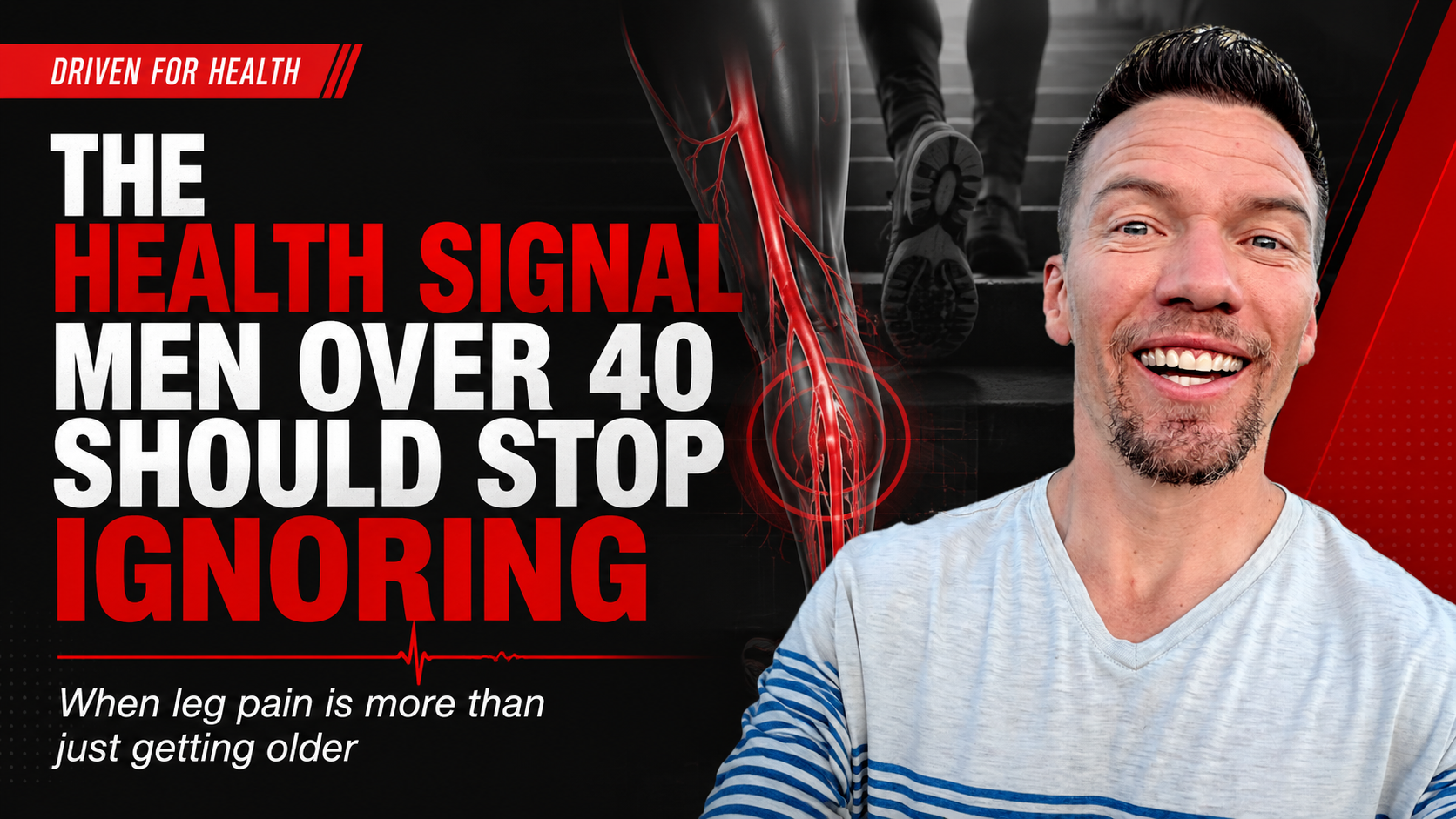
You feel it in your calf on the stairs. Not pain exactly. More like a swelling, a tightness that builds when you push and fades when you stop. Cream goes on it, then something for the inflammation. Eventually you tell yourself it's getting older.
That's the story of a man who waited too long, and he's not alone in it.
A guest on a recent episode of the podcast told me about the years he spent watching his own stamina drop. His name is Albert Butler, a CPA. He went from running to jogging to walking. Eventually he couldn't make it from his car to the front door of a grocery store without his calf swelling up like a balloon. He treated the symptom for months before he treated the cause. When he finally saw a vascular surgeon, a scan showed his main leg artery was nearly 80% blocked.
The blockage took years to form. The delay in getting it checked took even longer, and that delay was the part he could have controlled.
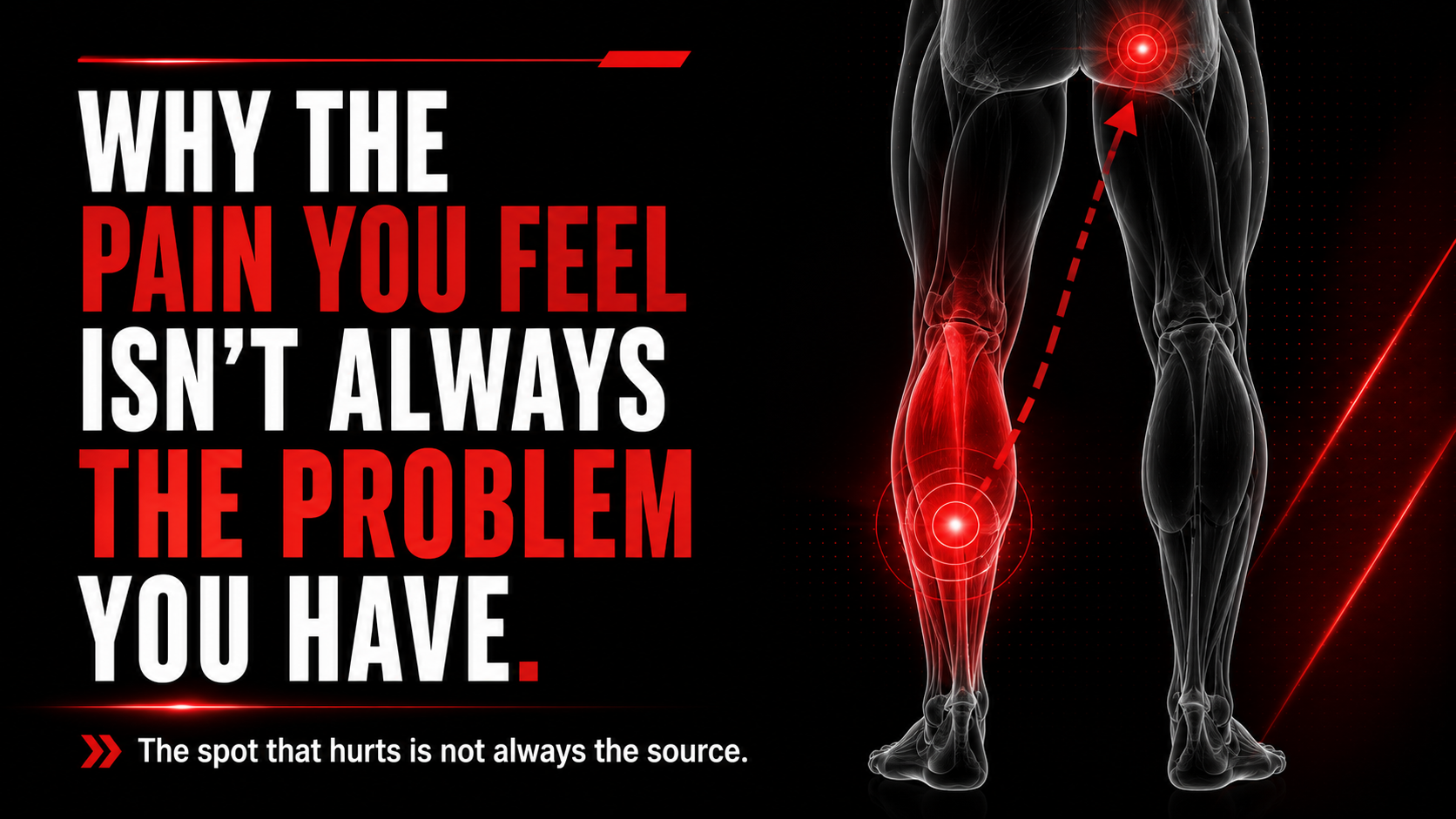
Here's the detail from that conversation that matters most for you. Albert's surgeon told him something most men never hear: you typically feel pain one joint below where the real problem is. His calf hurt. The real issue was upstream in his leg artery.
This pattern is constant in men over 40. A knee that aches might be a hip issue. A shoulder that's tight might be coming from the neck. The location of the discomfort points you in a direction, but it isn't a diagnosis. Treating the spot that hurts without finding out what's driving it is how small problems turn into surgical ones.
The fix isn't complicated. It's getting evaluated by someone qualified to trace the signal back to its source, rather than guessing and self-treating based on where it happens to ache.
Why the Delay Mattered More Than the Diagnosis
Albert didn't get an artery that was 80% blocked overnight. That took years. What took even longer was the decision to go get it looked at.
Cream went on the calf to numb it. Over-the-counter pain relief kept him moving. Eventually he scaled back what he was doing, without ever asking why scaling back had become necessary in the first place. Every one of those choices felt reasonable in the moment. Strung together, they delayed a diagnosis that could have come much earlier.
This is the pattern I see constantly in coaching men in their 40s and 50s. A symptom appears. It's manageable, so it gets managed instead of investigated. Months pass. The body adjusts around the limitation instead of getting it corrected. By the time someone finally goes in, the problem has had a long runway to get worse.
Managing a symptom and understanding it are two different things, and only one of them keeps you out of a vascular surgeon's office.
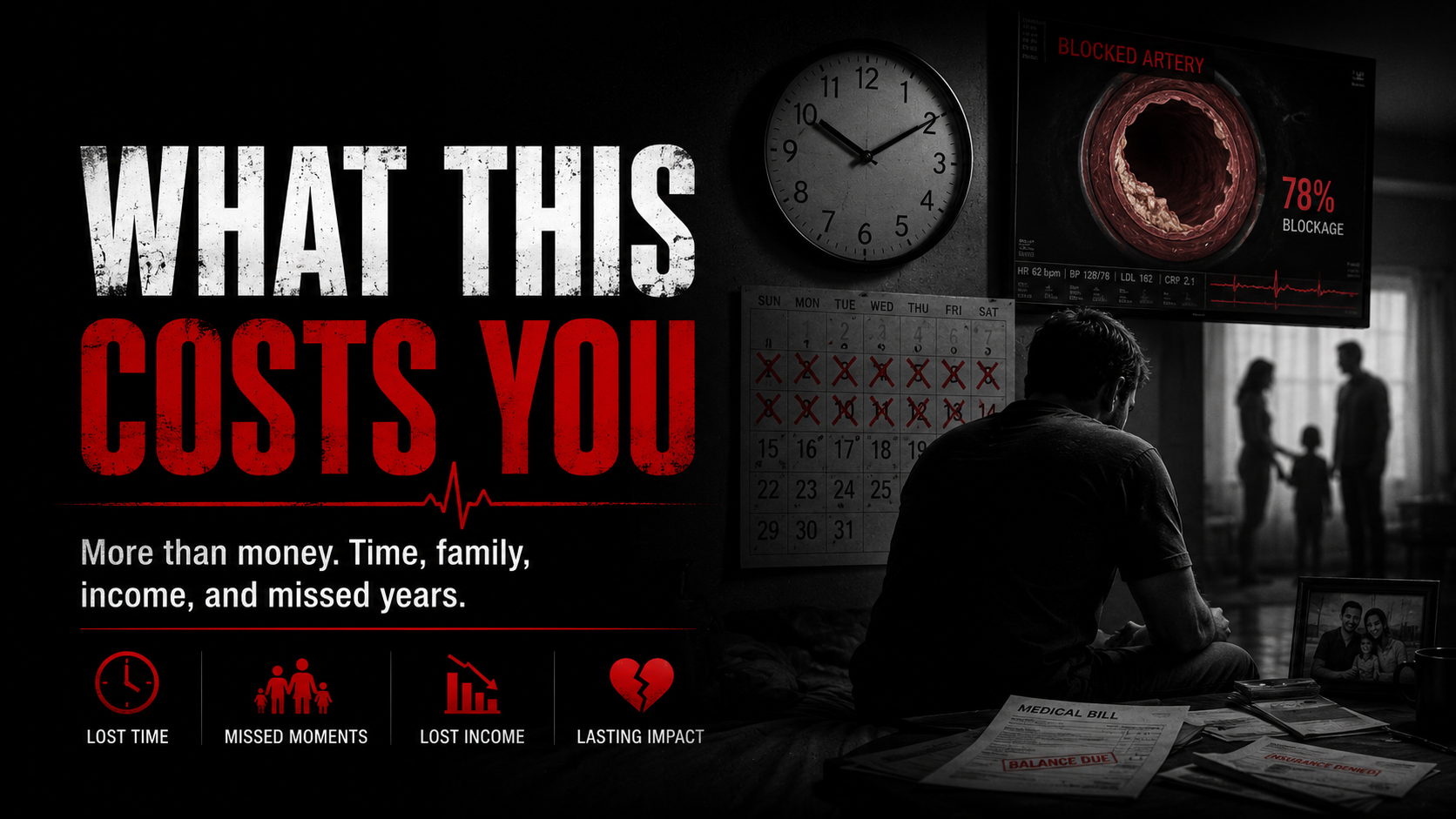
A heart attack or a blocked artery in your 40s or 50s doesn't only cost money. Albert pointed out that the bigger loss is usually the time and the missed years. There's also the strain it puts on the people depending on you. A health crisis that sidelines you for months affects your income and your family. It can affect your ability to be present for the next decade you were planning on.
The version of this that protects you isn't more grit or more pushing through. It's earlier information. A scan or an honest conversation with a doctor costs you an afternoon. Waiting until the symptom is undeniable costs you a great deal more.
How to Catch This Before It Becomes a Crisis
Most men have at least one thing right now they've quietly been explaining away. It could be a joint that's been bothering them longer than it should, or a stamina drop they've chalked up to being busy. It could even be a number from their last physical that got mentioned once and then forgotten.
Start here this week:
-
Name the one symptom or change you've been managing instead of investigating.
-
Book the appointment for it specifically, not as part of a general checkup you'll get to eventually.
-
Bring a written list of what you've noticed and when it started, so the conversation moves faster.
Take a notepad with specific questions written down before you go. Doctors are working with limited time per visit, and walking in prepared is what gets you real answers instead of a generic response.
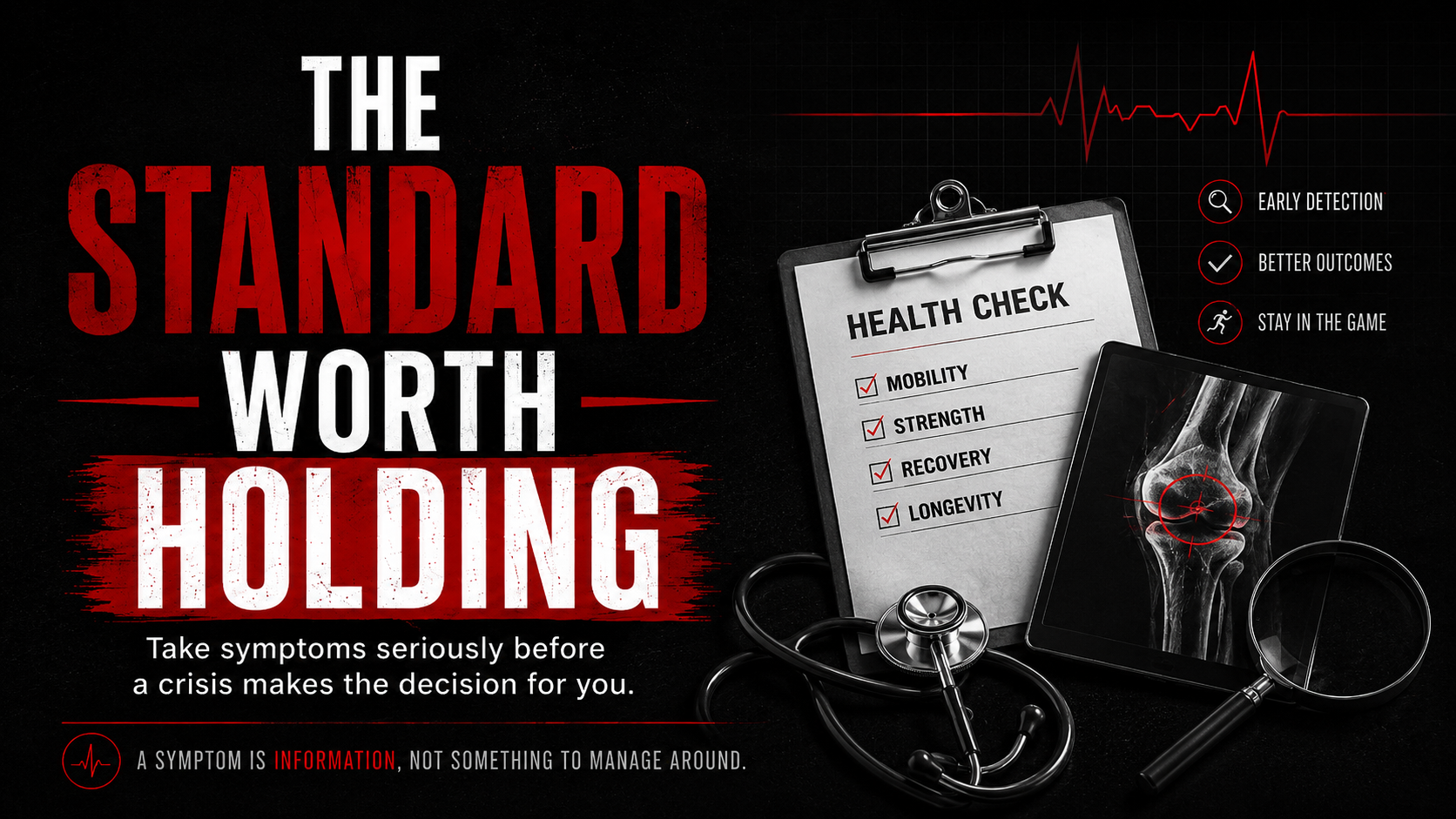
You don't need to wait for a crisis to take a symptom seriously. The men who catch problems early are the ones who treated an ache as information worth investigating instead of a nuisance worth managing around.
If something in your body has been quietly off for months, that's not a signal to push through harder. It's a signal to find out what's happening before the decision gets made for you.

CEO l Head Body Tranformer
Brian Parana is a men’s health coach with 23+ years of experience helping busy professionals improve their body, energy, and day-to-day habits while still leading at work and at home. His coaching is built around practical nutrition, training, sleep, and accountability, with a plan tailored to the person in front of him.
Over the years, Brian has helped thousands of clients through his work as a personal trainer, CrossFit gym owner, and online coach. He has also coached an Olympic silver medalist, a 2-time Olympian, and a CrossFit World Champion.
Brian is the host of the Driven For Health Podcast, where he shares real-world strategies for men who want to feel strong again and stay consistent without making health a second job.
He’s also the creator of The Call To Rise, a 100-day fat loss experience for driven men who want to drop 20–30 pounds, boost energy, and rebuild confidence through strength training, personalized nutrition, and high-accountability coaching. Many men join because their blood pressure, cholesterol, or blood sugar is heading the wrong direction, and they want a clear plan that fits real life.
Brian is married to his high school sweetheart, Amber, and they have four kids. Their family has traveled to all 50 states and 4 continents, with a goal to reach all seven.

What To Order At Dessert Restaurants For Fat Loss



 YouTube