How Fast Can Men Over 40 Actually Lose Weight?
You're standing in front of the mirror with a date circled on the calendar. A wedding, a reunion, a vacation. And the question that shows up isn't "how do I get healthy." It's "how fast can I drop this."
That question feels practical. It's actually the one that gets men in their 40s and 50s into trouble. Because the speed you choose right now is doing more than determining a number on the scale next month. It's deciding whether the weight comes back in three weeks or stays gone.
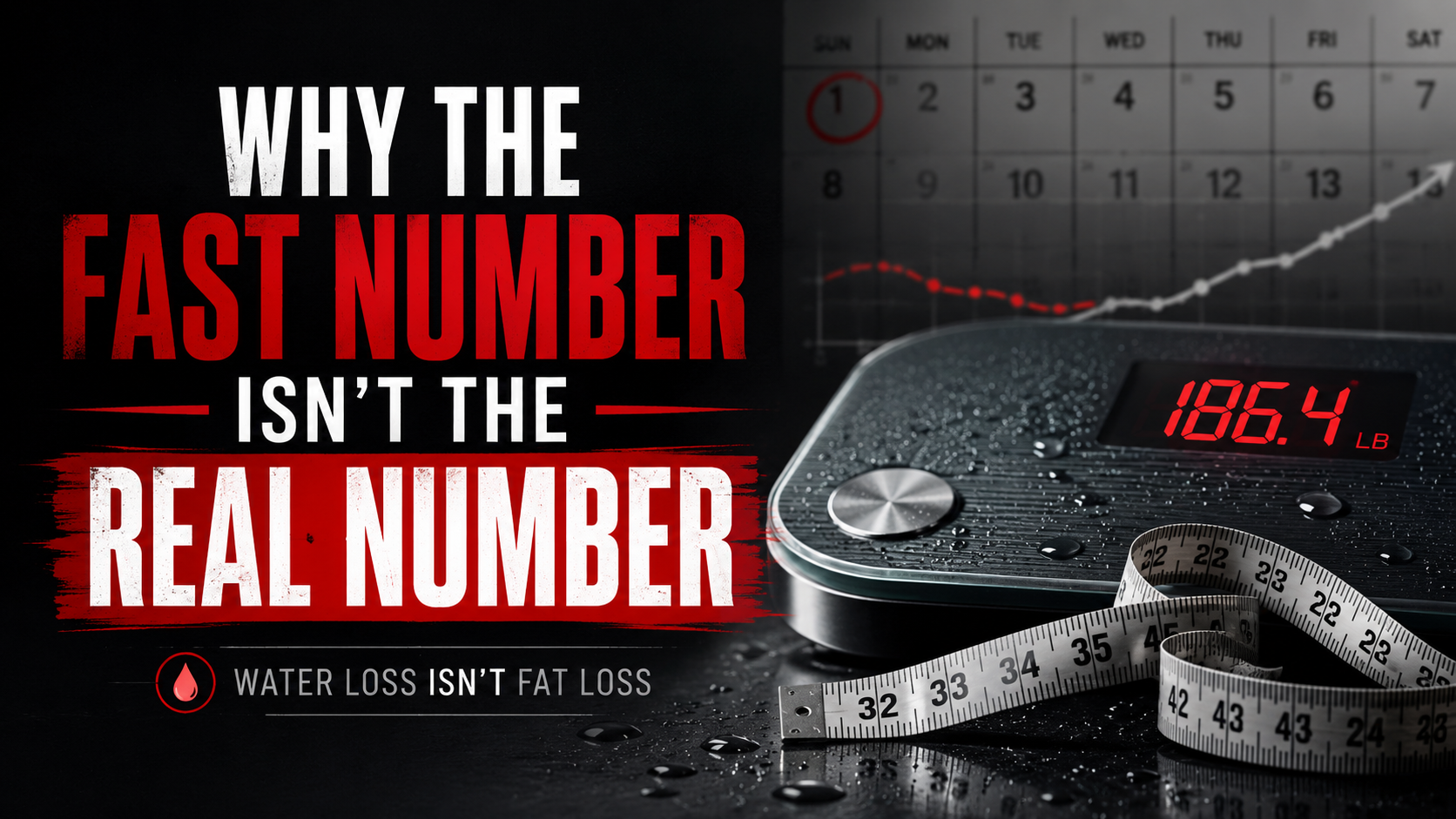
If you're carrying significant weight right now, the first week of any plan will look dramatic. Drop your calories, start training, and the scale moves fast. That's real. It's also mostly water.
When you cut carbohydrates, your body releases the water that was stored along with them. Cleveland Clinic's Dr. David Creel has explained this pattern directly: cutting calories burns through stored carbohydrate, and that carbohydrate carries water with it. The first several pounds you lose aren't fat. They're water weight leaving because your stored glycogen dropped.
This matters because it sets a false expectation. You see six pounds gone in seven days and assume that's your new pace. It isn't. Once the water weight clears, the real rate of fat loss settles into something much slower, and most men aren't prepared for how much slower that actually is.
The Number Backed by Research
The National Institutes of Health states that a safe, sustainable rate of fat loss sits at one to two pounds per week. A 2014 review in the American Journal of Clinical Nutrition found that weight loss averaging 0.5% to 1% of body weight per week was both effective and sustainable over time.
That's the real number. Not the first-week number. The one that holds up over months.
Here's what that looks like for an actual person. A man at 200 pounds carrying 30% body fat has roughly 60 pounds of fat on his frame. To get to a lean 15%, he needs to lose somewhere around 35 to 40 pounds of fat specifically, not just scale weight. At one pound a week, that's 35 to 40 weeks. At two pounds a week, it's closer to 20.
That's eight to ten months of consistent work. Most men hear that number and feel discouraged before they've even started. But the men who actually keep the weight off are the ones who accept that timeline going in, rather than discovering it three weeks into a much faster plan that's already starting to fail.
Why the Pendulum Always Swings Back
Picture a pendulum at an amusement park ride. Pull it hard in one direction, and it doesn't just settle there. It swings back with equal force in the other direction.
Aggressive restriction works the same way. No carbs, extreme calorie cuts, two workouts a day, minimal recovery. You can force the scale down fast doing this. But the body doesn't treat that as a new normal. It treats it as a deficit to correct. Let go of the restriction, even briefly, and the weight often returns within a few weeks, sometimes faster than it came off.
A 2019 study published in the Journal of the International Society of Sports Nutrition found that rapid water-cutting practices, the kind used by wrestlers and fighters making weight, significantly increase the risk of kidney strain, cardiovascular stress, and impaired cognitive function. That's brain fog, low energy, and a body under real stress, all to hit a number on a scale that wasn't accurate fat loss to begin with.
The pace you choose isn't just a comfort preference. It's the mechanism that determines whether the result holds.
The Real Risk of Going Slow Instead of the Risk You're Afraid Of
Most men fear that slower fat loss means falling off the plan from boredom or impatience. The actual risk runs in the opposite direction. Going too fast for too long is what triggers the crash.
A 2019 study in the journal Obesity tracked dieters over twelve months and found that small, untracked increases in calorie intake, as little as 150 to 200 calories a day, were enough to stall fat loss entirely. That's a bag of chips. That's two Reese's cups. Aggressive plans leave almost no room for that kind of normal daily drift, which means one ordinary week with a few extra calories looks like total failure, even though the body composition behind it hasn't actually changed much.
A slower, deliberate rate of loss builds in room for a regular life. A date night. A holiday. A rough week at work. The plan can absorb that without falling apart, because the math was never built around perfection in the first place.
How to Find Your Actual Rate This Week
Stop asking how fast you can lose weight. Ask what rate you can sustain without needing to white-knuckle through it.
-
Calculate roughly how much fat you need to lose, not just scale weight, based on your current body composition.
-
Divide that number across a one-to-two-pound-per-week pace, and write down the actual number of months that gives you.
-
Plan for that timeline from day one rather than discovering it halfway through when motivation is already fading.
This isn't the exciting number. It's the number that's still true in month six.
The Standard That Actually Matters
The goal was never to be lean for three months. It's to still be lean in three years, in a body that can keep up with your kids, your career, and the next decade of your life. That outcome depends far less on how fast you started and far more on whether the rate you chose was one you could actually live inside of.
If you're sitting at a body composition where you know real change is overdue, the timeline in front of you is honest, not discouraging. One to two pounds a week, applied consistently, is how the men who keep their results actually get there.
Listen to the Related Episode
Listen to the related Driven For Health Podcast episode here:
https://podcast.brianparana.com/how-fast-can-men-over-40-actually-lose-weight-2/
Ready to Build a Plan You Can Actually Sustain?
If you're a man over 40 and ready to lose fat at a pace that holds, apply for The Call To Rise. It's a structured program built around realistic timelines, strength training, and accountability that fits an actual life.
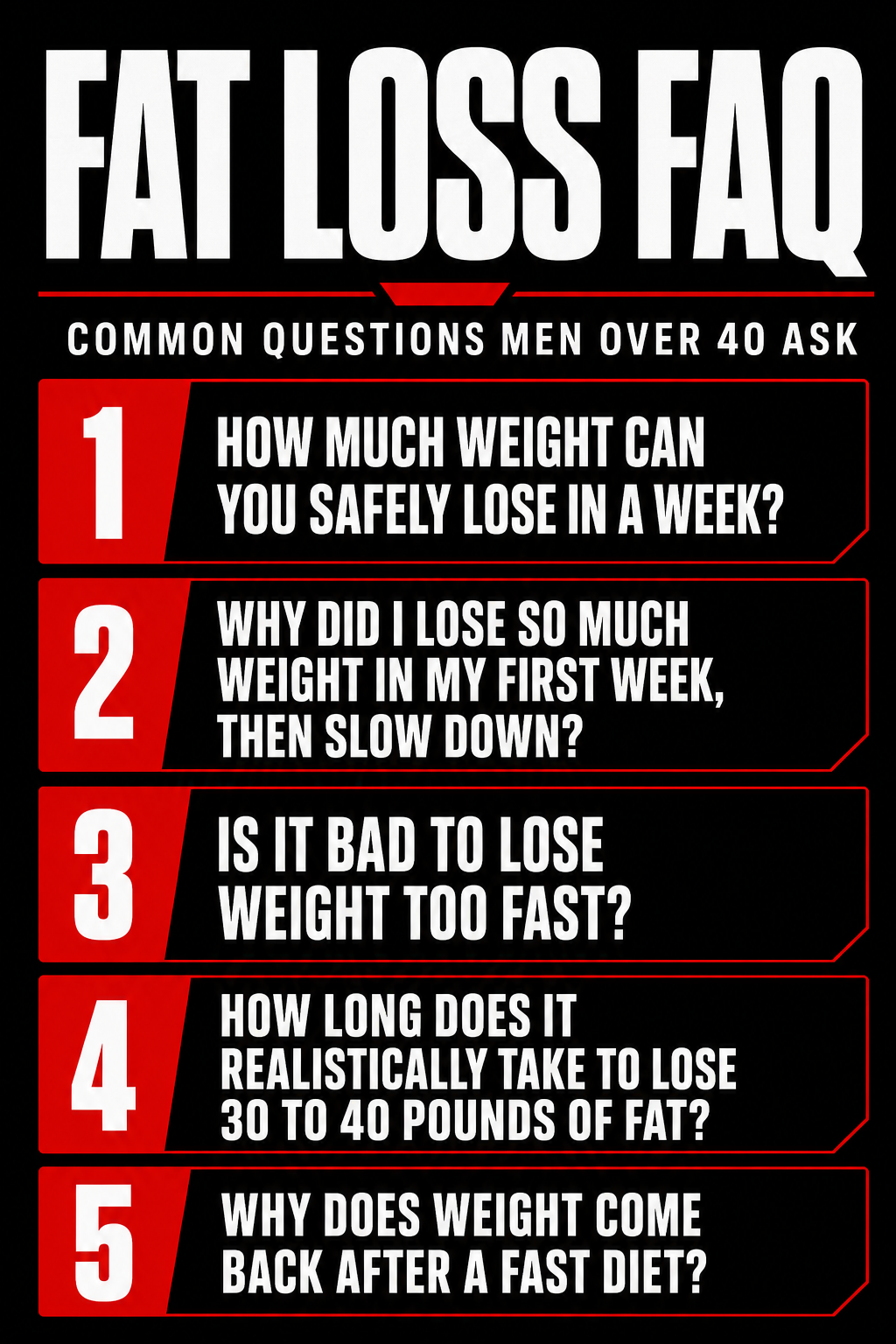
How much weight can you safely lose in a week?
A safe, sustainable rate of fat loss is one to two pounds per week, according to the National Institutes of Health. Losing more than that in the first week or two is usually water weight from reduced carbohydrate stores, not fat, and isn't a pace that holds up over time.
Why did I lose so much weight in my first week, then slow down?
The first week of weight loss is often water weight, not fat. Cutting calories causes your body to burn through stored carbohydrate, which is bound to water, so that initial drop on the scale doesn't reflect your true fat loss rate going forward.
Is it bad to lose weight too fast?
Losing weight too fast usually isn't sustainable and increases the likelihood the weight returns once restriction eases. Extremely rapid methods, like aggressive water cutting, have also been linked to kidney strain, cardiovascular stress, and impaired cognitive function in research on rapid weight-cutting practices.
How long does it realistically take to lose 30 to 40 pounds of fat?
At a sustainable rate of one to two pounds per week, losing 35 to 40 pounds of fat typically takes 20 to 40 weeks, or roughly five to ten months. This timeline reflects actual fat loss rather than the faster water-weight changes seen in the first week or two of a new plan.
Why does weight come back after a fast diet?
Rapid, aggressive weight loss often triggers a rebound once normal eating resumes, similar to a pendulum swinging back after being pulled hard in one direction. A slower, more moderate rate of loss is less likely to trigger this rebound because it doesn't create the same level of deficit stress on the body.

CEO l Head Body Tranformer
Brian Parana is a men’s health coach with 23+ years of experience helping busy professionals improve their body, energy, and day-to-day habits while still leading at work and at home. His coaching is built around practical nutrition, training, sleep, and accountability, with a plan tailored to the person in front of him.
Over the years, Brian has helped thousands of clients through his work as a personal trainer, CrossFit gym owner, and online coach. He has also coached an Olympic silver medalist, a 2-time Olympian, and a CrossFit World Champion.
Brian is the host of the Driven For Health Podcast, where he shares real-world strategies for men who want to feel strong again and stay consistent without making health a second job.
He’s also the creator of The Call To Rise, a 100-day fat loss experience for driven men who want to drop 20–30 pounds, boost energy, and rebuild confidence through strength training, personalized nutrition, and high-accountability coaching. Many men join because their blood pressure, cholesterol, or blood sugar is heading the wrong direction, and they want a clear plan that fits real life.
Brian is married to his high school sweetheart, Amber, and they have four kids. Their family has traveled to all 50 states and 4 continents, with a goal to reach all seven.

What To Order At Dessert Restaurants For Fat Loss



 YouTube