
What a CGM Can Teach You About Type 2 Diabetes That Your A1C Doesn’t Show - 98
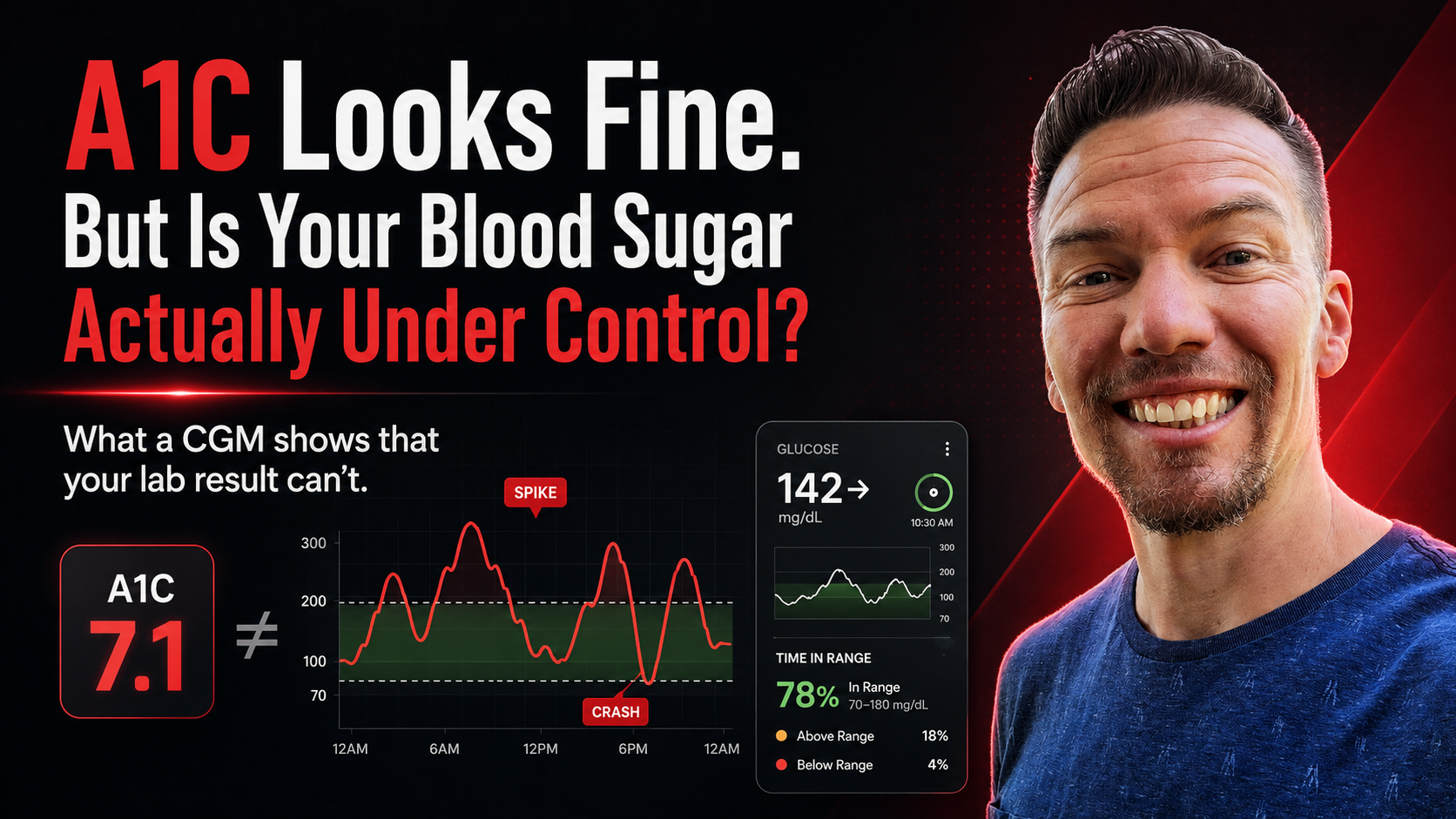
Your A1C comes back at 7.1. Your doctor tells you that's okay. So is it?
That number gives you your average blood sugar over the last three months. A man can hit that average by sitting at a calm, steady level the whole time. Another man can hit the exact same average by swinging between too low and dangerously high, day after day. Same number on the lab report. Different story happening inside the body.
Most men over 40 with type 2 diabetes are stuck somewhere in that gap. You've packed the gym bag. You're trying to eat better. Effort alone doesn't tell you whether the disease is actually under control.
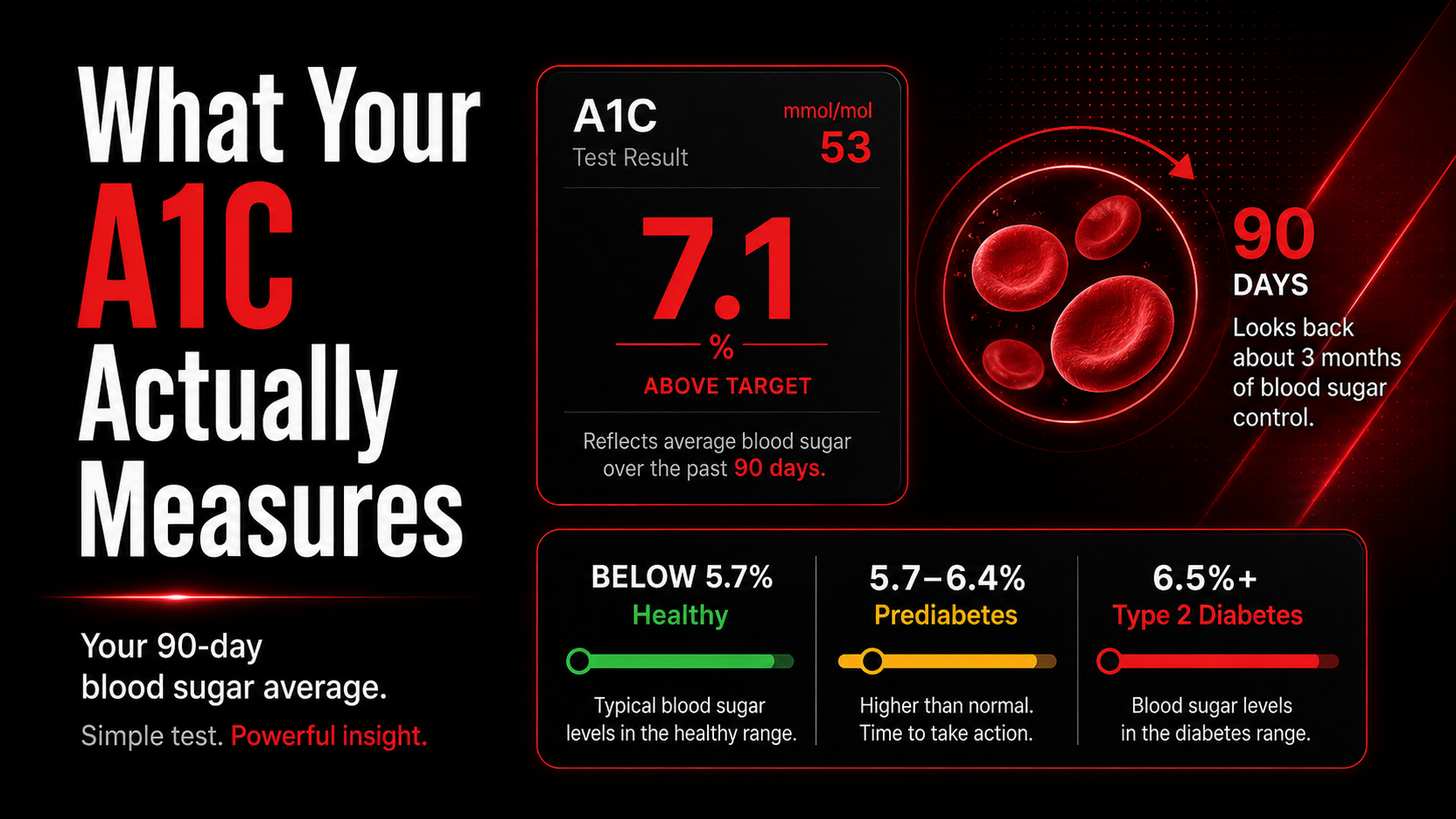
Your A1C measures how much sugar has attached to your red blood cells over roughly the past 90 days, since that's about how long those cells live. A reading below 5.7 is considered healthy. Between 5.7 and 6.4 puts you in the pre-diabetic range, a warning worth taking seriously rather than filing away. At 6.5 and above, you're classified as type 2 diabetic. Most doctors use 7 as a treatment target.
This number tells you the general direction you're trending. It tells you almost nothing about the shape of your day.
Think of a road trip from Cleveland to Miami. You log 55 miles an hour average over three days, which sounds calm and controlled. That average is hiding four hours stuck in traffic barely moving, then two hours running 90 to make up time. The wear on your engine and your brakes came from those swings. Your blood sugar runs the same calculation. The A1C reports the average. The swings are where the damage happens.
Why the Swings Matter as Much as the Average
Here's the part most men miss. Two men can carry an identical A1C of 7.1. One man's blood sugar holds in a steady, elevated range all day. The other man's blood sugar climbs near 240 after meals and drops toward 70 overnight, on repeat. Both numbers land at 7.1 on the lab report. One man is doing far more damage to his blood vessels than the other.
Glucose swings, the sharp rises and drops, have been linked to more oxidative stress on blood vessel walls than steady elevation produces on its own. Oxidative stress works like internal rust. Unstable molecules damage the lining of your blood vessels over time, and that damaged lining is exactly where cholesterol tends to collect, setting the stage for arterial plaque down the road.
A 2025 study found that men with volatile, up-and-down glucose patterns accumulated more long-term markers of vascular and tissue damage than men with steadier patterns, even when their average blood sugar levels were similar. An A1C taken once every 90 days can't catch that difference. A continuous glucose monitor can.
What a CGM Shows That a Lab Result Can't
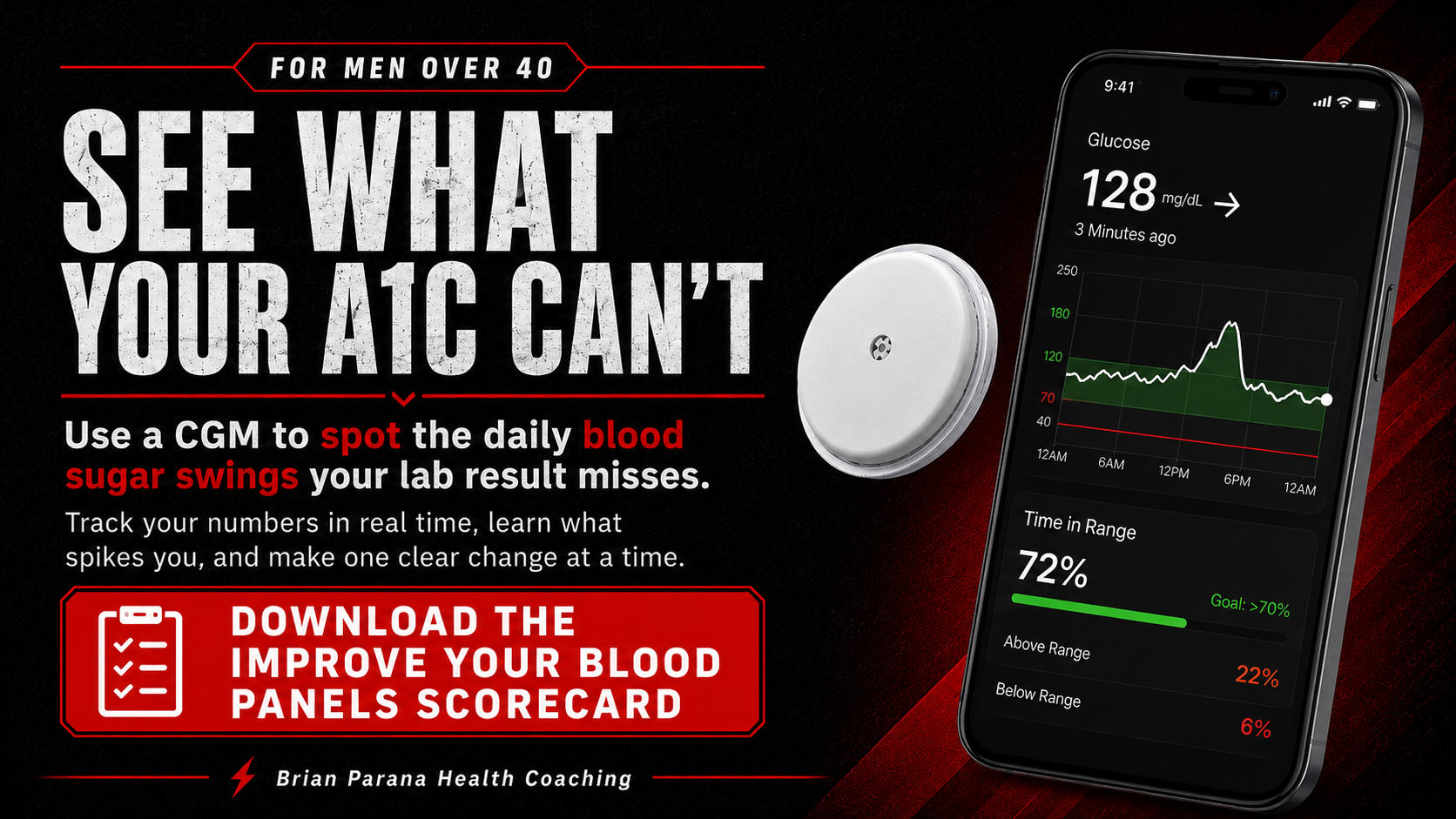
A continuous glucose monitor is a small sensor, usually worn on the back of the upper arm, that reads your blood sugar roughly every five minutes around the clock and sends it to an app on your phone. The two most accessible options right now are the Dexcom and the Freestyle Libre. The Freestyle Libre 3 is available over the counter without a prescription in many states, so you can try one without waiting on an appointment.
The American Diabetes Association's 2025 and 2026 standards of care now recommend CGMs for adults with type 2 diabetes who take glucose-lowering medications like metformin, even without insulin. That guidance used to apply mainly to insulin users. The supporting data grew, and the recommendation grew with it.
The most useful number a CGM produces is time in range. It's the percentage of your day your blood sugar spends inside a target zone, typically 70 to 180 mg/dL for someone with type 2 diabetes. The general target is at least 70% of the day inside that zone. A roughly 10% improvement in time in range has been tied to measurable drops in risk to the kidneys, eyes, and nerves in the hands and feet. Moving from 55% to 65% is a real, trackable gain you can watch happen on the same device, week over week.
A CGM picks up patterns that a lab result can't catch on its own.
Meal response is the most obvious one. The same plate can spike one man to 190 while barely moving another, based on his own body's chemistry rather than a generic nutrition chart.
Movement matters too. Walking after a meal pulls blood sugar down through muscle contraction, and you can watch the number fall on the app as you walk it off.
Stress shows up on the screen even when nothing was eaten. A tense meeting or a hard conversation can raise blood sugar 20 to 40 points, because cortisol signals the liver to release stored sugar.
Sleep plays a role overnight. Poor or interrupted sleep raises that same cortisol and dulls how well your cells respond to insulin the next day, which often shows up as a rougher morning number.
And early mornings carry a pattern of their own. Between roughly 3 and 7 a.m., the body releases hormones to start the wake-up process. In a man with insulin resistance, that release can push blood sugar up steadily before he's eaten anything. Roughly half of people with type 2 diabetes experience this, known as the dawn effect.
What a Typical First Week Looks Like
Most men who start wearing a CGM have the same reaction in the first 48 hours: disbelief. A meal they've eaten for years, one they assumed was fine, sends their blood sugar past 200. They ate the same thing six months ago and their doctor told them they were fine. The meal hadn't changed. The A1C simply hadn't caught up to the pattern yet.
By the end of a typical first week, a man might see his time in range sitting at 58%, meaning 42% of his day landed above 180 mg/dL without him noticing in the moment. The A1C had already hinted things weren't great. The CGM showed him exactly when, why, and how often.
Plenty of men put off wearing one for the same reason they avoid the scale or delay lab work. Not knowing feels safer than knowing. But the men who find this data hardest to look at are usually the ones who need it most. A spike you can see on a screen is a spike you can do something about.
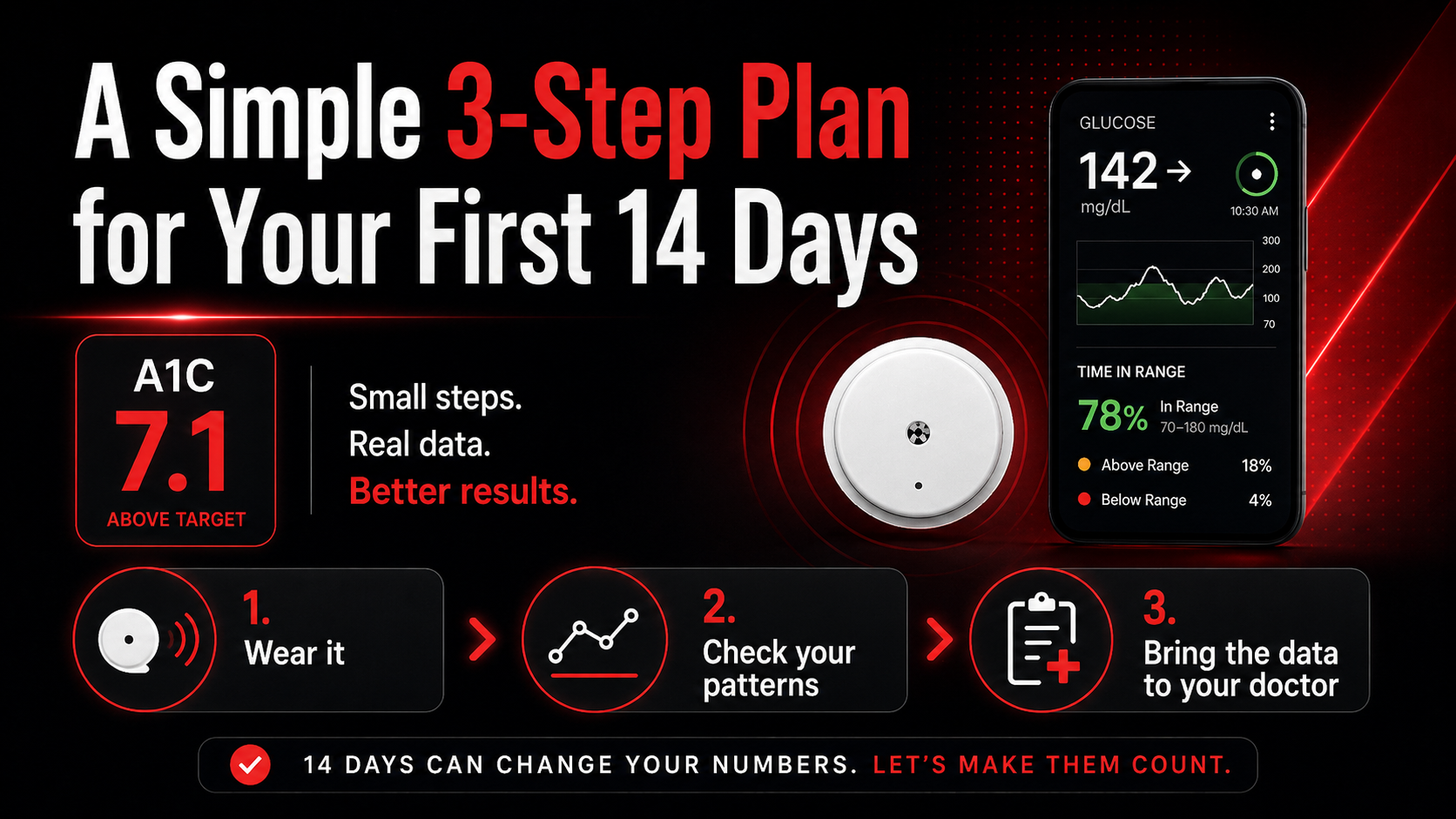
This isn't about fixing everything in week one. It's about getting an honest picture first.
-
Wear it and change nothing for the first week. Eat, sleep, and work the way you normally do, and let the device show you the real pattern before you try to manage it.
-
At the end of the week, check your time in range and pick one thing to address, whether that's meals, stress, sleep, or mornings.
-
Bring the data to your next doctor's visit, and use it to decide on next steps together.
A man who knows what's driving his numbers has something concrete to work on. A man who avoids the data is letting the disease run unmanaged in the background, and that catches up eventually.
The Bottom Line
Keep tracking your A1C with your doctor. It's still a useful marker of long-term direction. But it only shows you where you've been over the past 90 days. A continuous glucose monitor shows you what's driving that number right now, meal by meal and day by day.
Pick the one pattern costing you the most, and start there this week.

CEO l Head Body Tranformer
Brian Parana is a men’s health coach with 23+ years of experience helping busy professionals improve their body, energy, and day-to-day habits while still leading at work and at home. His coaching is built around practical nutrition, training, sleep, and accountability, with a plan tailored to the person in front of him.
Over the years, Brian has helped thousands of clients through his work as a personal trainer, CrossFit gym owner, and online coach. He has also coached an Olympic silver medalist, a 2-time Olympian, and a CrossFit World Champion.
Brian is the host of the Driven For Health Podcast, where he shares real-world strategies for men who want to feel strong again and stay consistent without making health a second job.
He’s also the creator of The Call To Rise, a 100-day fat loss experience for driven men who want to drop 20–30 pounds, boost energy, and rebuild confidence through strength training, personalized nutrition, and high-accountability coaching. Many men join because their blood pressure, cholesterol, or blood sugar is heading the wrong direction, and they want a clear plan that fits real life.
Brian is married to his high school sweetheart, Amber, and they have four kids. Their family has traveled to all 50 states and 4 continents, with a goal to reach all seven.

What To Order At Dessert Restaurants For Fat Loss



 YouTube