How To Get Fit At 48 And Age Healthier With Jeff Weiss - 96
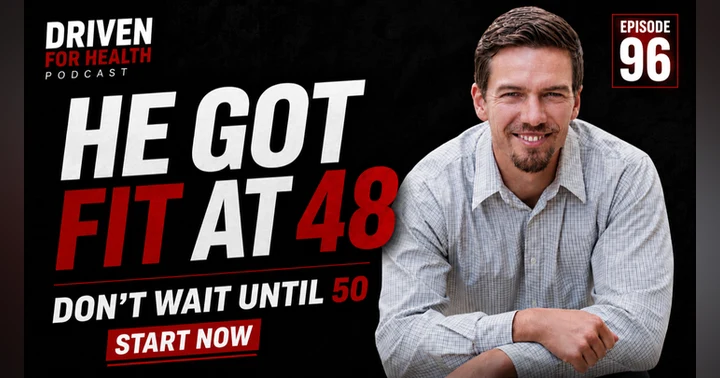
Jeff Weiss was 48 when he signed up for a running class a year after his father died. Coach Brian talks with Jeff about how that one decision led to marathons and two Ironman finishes. You will hear why waiting for the right moment costs you years. You also get his case for training first thing in the morning.


 YouTube
 At 48, Jeff Weiss stepped on a scale and read 226 pounds on a 6 foot frame. His cholesterol was climbing and getting out of an airplane seat took real effort. His father passed away when Jeff was 47. A year later Jeff signed up for a running class and never looked back.
(Have you let your health slide while you carried everyone else? See the first simple step at www.thecalltorise.com.)
Coach Brian sits down with Jeff Weiss for this episode. Jeff wrote Racing Against Time: On Ironman, Ultramarathons, and the Quest for Transformation in Mid-Life. He spent years lifting heavy and gaining weight while raising four kids and building a law career. Then a decade of training turned him into a marathoner and a two time Ironman finisher.
By the end you will know why starting now beats waiting for the right moment. You will also see how one decision at 48 can reshape the decades that follow.
Main Topics:
- Jeff weighed 226 pounds at 48 with rising cholesterol and low energy
- His father's passing became the wake up call that started his fitness journey
- Going from a first 10K to marathons, ultramarathons and two Ironman finishes
- Balancing urgency to start now with the patience real change requires
- Training first thing in the morning before the day takes over
- Why healthspan matters more than chasing a longer lifespan
- Building a startup career at 50 alongside endurance training
- Jeff's book Racing Against Time and lessons from two decades of racing
The Call To Rise is a 100-day fat loss challenge for driven men ready to take their body back. It combines strength training, personalized nutrition and real accountability. Most men drop 20 to 30 pounds and rebuild the confidence that comes with it.
This program also works if you are dealing with high blood pressure, high cholesterol or Type 2 diabetes. It was built for those men too. Many men see those numbers move in the right direction alongside their weight loss.
Inside the program you also join a Brotherhood of men doing the same work. Together you build a body you're proud of and start leading like the man you already are at work.
This is your wake-up call to rise. Learn more and apply at www.thecalltorise.com
About Jeff Weiss:
Jeff Weiss practiced law for 25 years before he joined a startup at 50. That startup ran for 11 years and ended in a successful exit. Starting at 48, Jeff went on to run marathons and finish Ironman races at 57 and 59. At 61 he finished a 72 mile ultramarathon around Lake Tahoe. He is the author of Racing Against Time: On Ironman, Ultramarathons, and the Quest for Transformation in Mid-Life. Learn more at jeffreyweissauthor.com.
Want help applying this to your own health, weight, energy, or lab numbers?
Coach Brian Parana offers Health Hot Seat coaching segments for men who want a clear next step with nutrition, fitness, weight loss, blood pressure, cholesterol, A1C, or daily consistency.
Learn more about The Call To Rise, a 100-day coaching program for driven men over 40 who want to lose weight, improve their health, and rebuild confidence:
To connect with Coach Brian:
brian@brianparana.com
Disclaimer: This podcast is for education and coaching support only. It is not medical advice. Always work with your physician before changing medication, treatment, or medical care.
- Welcome back to Driven for Health podcast. This is episode 96 and with me today is Jeff. Jeff is a classic story of how the 20s and it was active in high school and in his 20s and 30s got away with family and career and then next thing you know by the time he's 40s 50s like hey I need to change this around and and he did.
- We're going to go through those the story and how he has shifted his health and fitness and it's a main part of his identity and it's going to be an awesome story to hear about the demands of his career, the demands of his life, his family. Those are things that every person that I have worked with for 20 years now and all the guys that I am currently working with the call to rise, the 100 day fat loss challenge are experiencing as well.
- And so let's jump into our conversation. Without further ado, here is Jeff Weiss. What's one powerful thing that we need these guys to hear in our conversation and take away? >> Um, I think, you know, honestly, we we'll we'll get into this in more detail, but I think start now, be consistent, and it will have a profound impact on how you live your life and how you age.
- >> Oh, that's excellent. And and the aging thing is super important. I'm 43 years young now and we won't say how old you are. You look a lot younger than you are, right? How how young are you? >> I'm 63. Um and and I'm proud to be 63. I I still kick it. >> I don't hide from it. >> Yeah, definitely not. Definitely not.
- You're looking awesome and it's a it's a a badge of of the hard work that you put into your everyday life. Now we had a precon conversation talk about urgency and patience and that's really hard to blend right in our life of instant demand and constantly on the go but then trying to have patience and into that mix how do you define that job? How do how do we balance those things out? I think to me urgency is about starting now um and not not procrastinating, not delaying, not deferring until sometime in the future when you have more time.
- And certainly I was guilty of that for the longest time. And when I was 48, that's when I realized no more putting it off. Um and then I think patience, you know, important change, significant change, those things do take time, they take consistency, and they will come. And you have to be confident that if you put in the work and um and you really stick to a plan um the results will they will come >> right you have four different five different areas.
- You have your family most importantly right and seeing the evolution. So we'll talk about them first. We've got your first career then your first startup and then now your second startup where you're working through so and your athletic career as well. So there's like five different things that you're working on with this urgency to start now, but also patience.
- So, let's start take it back to describe where Jeff was in his youth and then kind of work us through that timeline so we can start pinpointing why guys need this sense of urgy to not wait till they're 45 or something to get the bad doctor's visit to shake them out of a 15ear slump of I'm too busy or I have kids or I've got blah blah blah whatever going on. So, take us back, Jeff.
- >> Yeah. Yeah. No, I think look, I think I'm like a lot of guys. Played sport uh I was a tennis player, played tennis in high school on on my team and played it in college as well. Um after college, actually did pivot nicely to another sport in my case to powerlifting and did that in a pretty consistent way um for maybe eight or 10 years, but then got married um started to have kids.
- We had four ultimately and um >> I've got four too. The last one, >> it's a wonderful number. Um and of course that takes a lot of time and a lot of effort and yes >> that really did come first and I continued to lift but but without you know without the consistency without a lot of discipline >> and over time just kind of you know got progressively more and more out of shape started to put on some weight >> and and kind of just accepted it as that's just sort of how life is.
- we get older and we slow down and we get a little bit weaker and >> right >> and just I'm gonna accept that with dignity and with grace and I'm not gonna kind of fight it and and be angry about it. Um but then realized um my dad passed away when I was uh 47 and when I was 48 kind of realized you know what actually I I do want to be fit again and >> real quick can we talk about where the body changed because a lot of the guys are just floating through and they're just hearing this but what are more say specific numbers or what was the reality
- of the actual situation of I was healthy and fit now I you dad passed away unfortunately the circle of life and now it's like, "Oh, shoot. This does matter." Where what was that? The physicalness of it? Uh any health issues that popped up? Anything like that? >> I mean, for me, when I played college tennis, I weighed about 160 pounds.
- >> I got into powerlifting, got my weight up to about 185, 190. >> Um and then when I was 48, uh I was weighing about 226. >> Okay. Um, and uh, I think the lifting in some ways allowed me to kind of >> hide the weight a bit and to look in the mirror and think, you know, I don't look that bad.
- You sort of look on the parts that still, you know, have some mass. >> How tall are you? >> I'm 6 foot. I've probably shrunk a little bit since then. Probably like 5'11. >> So 190ish for six foot is completely reasonable, but 225, we're on the 225. >> Yeah. Yeah. We're on the overweight side now. So listen in guys. If you are six foot, 510, 5'5, and you're over 200 pounds, you are likely headed in the wrong direction because there are no guys that I know of in 20 years, unless you're massive lineman that that should be carrying 225 at six foot. It's it's
- just too much weight ultimately. >> It's way it's way too much weight. Way too much weight. And I could see it around my middle. There was just no kind of escaping it. Um, and actually felt really soft and weak in my core when I would get up, like from an airplane seat, I realized actually getting up was a bit more of an effort than it had been in the past.
- Um, my cholesterol was pretty high. Didn't really have any significant health scares, but you know, by that time in life, by your late 40s, you've seen enough people that you care about in your life, you know, in my case, my dad, my father-in-law, um, others, you've seen them go through decline and and and in both cases, they actually had passed away.
- And you realize that there are long-term consequences for not getting mindful about your health at a point in life when you can still make some changes that will carry long-term benefits. >> You hear that, guys? There are long-term situations that pop up. You might be healthy now or your blood panels might be okay now, but there will come a time that you will be met with some form of illness or disease.
- And it's usually selfinduced. And certainly we can do nature nurture type thing and yes you could have some genetic history of that and be a hereditary type thing. But if you're literally carrying too much weight and you're actively choosing poor nutrition and not moving your body, let's let's get real. Sure, we can't just we can say that genetics play a part in but you're you're exacerbating the the consequences and bringing them to your reality a lot faster than they might actually happen.
- you could push off hypertension, cholesterol issues for another 10, 20 years before it actually gets you in a sense if you take care of yourself. >> And that's the thing that I love about about this area about fitness, nutrition. We do have and there's it's not scientifically controversial. We have immense influence on how we age, the quality of our life, our health span, the period of our life in which we are free of disease and and hopefully fit and healthy and active.
- um we have huge input on that and of course weird things can happen. Of course there are >> you know rare genetic cases that interfere you can get hit by a bus for that matter but I think we have immense influence on that now whether we live to be 90 or 100 or 105 I think that's where genetics starts to play more of a role >> of course >> and honestly that that part of it doesn't really move me all that much.
- I'm not really interested in the longevity piece. I am hugely focused on the health span. >> I want to live my best life for as long as I can being able to do the things that I want to do. Yes. >> For the longest period of time possible. I think that >> live live die. That's what I >> Exactly. Exactly. Very much so.
- Let's not have this slow decline where your bank account is getting robbed by health assisted living and all the hard work that you spent decades building is quickly unraveling and next thing you know you're on med you hope Medicaid will cover your bills but it's not going to. So, >> and another reason why I don't like the longevity focus is it pushes it way way off into the future in terms of, you know, well, if I'm 40 now, should I really care all that much today about whether I live to be 80 or 85 or 90? >> But if we take our fitness serious and
- our nutrition seriously in our 40s, it's going to pay dividends in our 40s. It's going to pay dividends right away. We're going to start to see changes, you know, within a 100 days. um we're going to see them uh soon and they're going to stay and we're going to really benefit from them and we'll be so happy.
- It's just I think the challenge is getting started for so many of us >> very much so. So let's take us back to the the very busyness going into your 30s with business career, your marriage, developing your family. Paint some of the pictures that would resonate with the guys listening in cuz I I'm 43 and I'm going through thick of it.
- oldest 16, youngest 10, three boys and a girl. And there's just such a demand of time, energy, and money. It's just $100 bills fall out of my pocket all the time now. Uh like should I work day or should I like go go ride my bike with my son on three hours? You know, technically I should probably work.
- The provider in me wants to say that, but also provider means multiple things of being a father and my son is off school and he invited me to go bike. So, I'm gonna take him up on that because that is something I enjoy and I want him to have connection with and and also fond memories of us being together doing fun things like that.
- So, >> I can't think of anything better. That's fantastic. >> Let's go back into some of those times that were really challenging and and why the focus was taken off of health, nutrition, and and all that. >> And look, some of it I think is quite fair. I mean, when when the kids were small, we had four essentially in five years.
- Um, you know, when you've got a lot of small kids, I think three of them at one time were in diapers. >> Yep. >> You know, you you do need to prioritize that. There's no getting away from it. That wouldn't have been a time in my life to take up marathoning or or iron man or anything like that. >> Your wife would not like you. >> No. And and and justifiably so.
- And and it would have been stressful if you know if she had been um you know going in that direction. I think >> Sure. I think there is a time in life where you really do have to just be cognizant of the fact that, you know, young kids take time and you need to enjoy it and and and really do it in the best way possible.
- Um, and that's fantastic. >> And as they get a little bit older, you know, you've got carpools and you've got after school activities and and all of that and there's no sort of getting away, you know, with a bigger family that that's going to take a lot of your time and that's fine >> and and the time that isn't taken up with that, you're going to have a lot of work to do.
- And look, if you can fit in lunchtime workouts, if you can find a way to exercise during that period just some amount, I think that's great. And I tried to do the best that I could with it. I think I could have done better in hindsight. Um, but as the kids get older and they need less and less of your attention and time, um, you know, high school kids are not typically looking to hang out with mom and dad.
- And so at some point you do start to have uh more time and that's when I think you need to pay attention to that and really take advantage of that. Um and and you know from my point of view it's not just about your physical health. It is also about being a more energetic person, a better partner uh to your to your spouse um or your significant other.
- And I think it's about being more effective in the workplace. I think fitter people um have more energy um have you know >> seeing that now? >> Yeah, very much so. Um, I think it has given I think it has extended my my career runway. Uh, which is awesome. You know, I I I'm hoping that I can be the person to decide when it's over.
- Um, and not that I kind of get put out to pasture because I've, you know, slowed down and have lost relevance and uh, >> you miss. >> Exactly. You know, so hopefully that will be a decision that I get to make. >> Fingers crossed. Me too. >> Exactly. At least that's the goal. We'll see. >> Yesterday was Sunday. Today's Monday.
- I had to drive two of my kids to their theater practice and I'm grateful to do that, but it also took 15 minutes there, 15 minutes home, 6 hours later, 15 minutes there, 15 minutes home. There's an hour. Then the bedtime routine takes an hour. So, there's two hours. And then there's making sure that they're getting ready and then getting them settled.
- Then I have to make them dinner. And it's like 3 to four hours worth of time on a Sunday. and it's at 10 to 4, so it's it's kind of in the middle of the day and I can't really necessarily get a lot done, per se. Then I had client calls and next thing you know, like there's no time to the the day has been eaten up.
- I did work out with my son, my oldest son again. He's just a worker outer. So he I I I was like, "Hey, go let's go work out." So we came out to the barn here and and did some some presses. This is I'm excited. This is March 9th, the first day that I've had my barn door open. And now I can get back out here. If if anyone's been watching the video podcast on this for the last, I don't know, 20 to 30 episodes, I've had a a map in the background.
- The reason the map was there is because that's the most interesting to look at instead of a wall, a blank wall. And and we love to travel and that's why I set myself up there. But back out into the barn. looking forward to this. >> So busy busy. Let's go to the catalyst, the urgency part that caught. So we've got a lot of busyness and in life and and rightfully so.
- The the season of of maintenance in a sense of just taking care of yourself enough through the the child wearing ages so that you don't get deconditioned and out of shape and then bad things start showing up sooner rather than later. But we had your father's passing which is unfortunate and but then that next year what was the the catalyst? Uh so your father what was the other catalyst that that got you actually into the endurance space? >> I I think in the back of my mind I had always been conscious that I wasn't really doing right by my fitness and
- that I needed to get more serious and just kept in my mind putting it off into the future. Um, and um, so I think that was part of it. And then I think just having, you know, watched my father's decline and uh, and then his passing, kind of realizing that actually >> I'm not getting any younger, getting close to 50.
- Um, I think uh, I think those decade kind of milestones can be focusing uh, for a lot of us. Um, and it it sort of came together. And then I saw an ad for a running class of all things, the goal of which was to prepare you in two months for the Veterans Day 10K in Washington DC. And in that case, in November of 2010.
- Uh so I signed up for it. And uh you know, in my mind, I'd always thought that running was a special thing. Uh uh my my wife was a great runner and um I'd always admired that, but I also always thought that I wasn't a runner and that I would >> Well, you identified with being a powerlifter, right? You know, I I lift heavy things, not necessarily go run and and ultimately ride bikes and all.
- >> Exact. And I had and I had a good friend who had gotten into running, also a much bigger guy than me, actually, a former football lineman in high school, and uh had lost a bunch of weight and really gotten into it, had run a marathon, and he told me his story. And and I kind of realized, wow, like if he can do it, you know, maybe I can do it, too.
- And and he gave me some tips and how to get started. So between that and the running class, it really um got me going. And then, you know, accomplishing that first 10K. I had actually tried to run a 10K when I was 17 um when I was playing tennis actively. Thought I was in great shape and ended up walking the last two miles.
- >> And it always bothered me. It always noded at me that I had kind of failed. Um Okay. And so this is redemption, huh? >> Exactly. It was unfinished business. So it was a way to kind of, you know, rewrite the ending to that particular story. And then when I, you know, when I made it, it just was exciting.
- It was a, it was an exciting experience and it made me want to do it again. And did that a few more times the 10k distance and then started to think, well, what what more could I do? Maybe I can go farther. And uh, >> you know, one thing led to another. >> Right. Right. Right. Then where did it lead to? So start over with an ad, start running, get to 10K.
- Where did that transition into other? >> Basically within a year of that first 10K, I ran a half marathon. a year after that ran my first marathon which was completely unexpected. I I had once told a friend I was as likely to run a marathon as I was to walk on the moon. Um so it was it was an incredible experience and it was a great first marathon.
- It was the Marine Corps Marathon in Washington also. >> That was my fastest one or two. >> Oh that's amazing. It's a beautiful course. >> Oh yeah. >> Yeah. People are out there. The the support from spectators is wonderful. And of course >> is amazing. >> Oh my god. and you have like a Marine second lieutenant salute you and put the medal over your neck.
- I you can't all in like underneath their inside of the Euima memorial. You can't imagine a more >> kind of dramatic way uh you know for someone for an amateur athlete to >> Yeah. Yeah. >> Um it was just amazing. So and and actually I did that with the intention just to do it the one time to one one and done bucket list kind of mindset >> and then realize you know what actually I'd like to be a marathoner.
- don't want to just be somebody who who managed the distance one time and then kind of got back to, you know, his or her old ways. Um, and so tried it again. Did the same race again actually two years later and then kept going with that distance and then ultimately got into ultramarathons >> and uh when I was 61, I ran my longest one to this point and probably ever uh 72 mile race around Lake Tahoe.
- >> Um, >> I've done 50 and it's it's a lot. and 50 is actually in some ways I think that's a better distance. I did a 50 mileer >> in West Virginia two years ago. Uh no. Yeah, two years ago. And um >> it was it's a it's a magnificent distance. It really pushes you incredibly. >> Um >> but I think the 72 was a little too brutal.
- Um I found the 50 to be more >> another marathon on top. I I was good after eight and a half hours of running. I I did mine in it was the JFK50. It was about Midland of Pennsylvania and Maryland. And I actually went back and forth in the States. My my girlfriend now wife was actually there supporting me.
- And I think she drove 100 miles trying to see me for, you know, 30 seconds at a time a couple times in the race. >> That's amazing. And that's an iconic race. That's actually an incredible one. If you're going to do 150 mileer, that is the one to do. >> Yeah, it it was pretty spectacular. So, oh my gosh, that that was a long day. My son, again, going back to Levi, he's bringing out the the young Brian in there's a picture back here right over my left shoulder.
- >> I see that. >> That's of me running at a triathlon way back in the day. >> Two 20 2003 was my first marathon. Then I went on to multiple marathons. I end up running Boston. Marine Corps was my fastest at 256. I was fortunate not to be able to break three hours. I realized that unless I was going to go exponentially more running like distance-wise every week, then I I ended up shifting to triathlons and that's when that love of that sport.
- So, that is a picture of the triathon and then you can see right here my bike hanging up. That's my Surveillo P2 Carbon. And I would race around and and ride around on that. And >> then he he raced on that bike in September and ran in my jersey that I still have. >> He looked like me out there. I'm jealous. I'm really jealous.
- Then I And then I supported and crewed him for the marathon. Really, I just I went around and videotaped him running by to to make a a memorable video of him running his first marathon. and stuff. But, uh, I was like I was so jealous when he left the starting line because I was down there and just all pumped and I got like the dad the the dad tears coming out like, "Oh, I'm so proud.
- " >> That's wonderful. You know, it's funny. I think a lot of folks talk about inspiring others in their in their life to do um the kinds of things that they're doing. And I I think that is if if that works out, which clearly it is for you and your son, I there's nothing better. >> Um >> but I still think it's an important thing to do even if even if nobody is in the short term following in your footsteps.
- Um and I do actually think it's a kindness for them >> because, you know, I think you're you're you're more likely to be there for them longer. Um and to really be there in their lives, to be a participant, to be a support for them, >> and I think you're less likely to need to lean on them. uh later in life if you've been doing a good job of taking care of yourself all along.
- So that however it works out I really do think >> it's not just about yourself. It's not it's not an entire there's there is a selfishness to it >> with the most extreme sports and I I do admit that >> like endurance athletes ultras spending a significant amount of time training. It's the way. >> Yeah, I think there's no getting away from that in part, but I also think >> I think it's incredibly important for your family for you to be taking care of yourself um in a serious way.
- >> And I do think it makes you better um a better worker, a better employee, a better provider um >> for your family. So, it's there's there's a lot to to to be to be extracted from um the investment of uh really taking care of yourself. >> Yeah. So let's move into So you went to tri you went to uh marathons or 10k half marathon marathon and did you get dabble in much triathlons? >> I did.
- So I was crossraining and um >> and I really got into reading about the sport and uh and >> it's fascinating. >> It it is great and I love like I love the stories. Um, I love the memoirs and honestly that's why that's why I wrote Race Against Time was to kind of try to be for other people what what folks like Dean Carnasses and Rich Roll and David Gogggins were for me just inspiring me to >> to do things out of my yeah, you know, doing things out of my comfort zone.
- Um, so I realized, you know what, I'm crossraining already, uh, running, biking, swimming, I should try a triathon. So in 2011, tried my first sprint, >> uh, for a few years, did sprints, then thought maybe I could do an Olympic. It was kind of the same progression or parallel progression to the running then did Olympic >> and then um then I decided to take on a 56 mile ultra and but I was worried I wouldn't be able to finish that one because there was a strict time limit.
- So >> decided to set my next kind of bold goal, audacious goal before I set foot on that course just either way whether I succeeded or not I wanted to be able to pivot my thinking to the next big thing. And for me, the next big thing was to do a half iron man a year later and a full iron man the year after that and and was able to do those things.
- And um >> Iron Man's an incredible it's an incredible sport. Um >> there's there's kind of nothing like it. And of course for old guys like me who grew up watching Wide World of Sports, there was that uh >> you know, remarkable episode um with um spacing on her last Julie Moss um >> in the World Championships at Kona and I think 1982 or so uh where she collapsed within maybe a hundred yards of the finish line >> and just dragged herself uh across um you know in in total distress.
- But you know it that actually really put the sport on the map and um it is quite um a thing to go through, >> right? Oh yeah, I remember seeing that. And also let's talk about the battles of Mark Allen and Dave Scott >> epic. The iron the Iron D. >> Uhhuh. They they definitely paved the way too because they just Oh man, I remember all those things too watching those and that was an inspiration for me to get in triathlons.
- Plus again that exponential amount of time to be able to run what felt incrementally faster because I' I'd ran a multitude of of races of marathons around say 305 310 and then I finally broke the three hours like my 10th time through something. I I was hoping to do it on the first one, which I was actually on pace to run 250, but then the the course that I did it on has a nasty uphill elevation in the background and in the back n the back half and it totally caught me and I barely qualified for Boston on that first.
- >> Still, I mean, running a Boston and and you know, honestly, I'm not fast. You know, your times are mind-blowing to me. Those are those are pretty elite times. Um, anybody can qualify for Boston, you know, in my view is is is an elite runner. Um, and that's not me. Um, >> but I still think this, you know, doing these kinds of events can be achievable for even, you know, back of the Packers like me.
- >> And there's there's still a lot of time. >> Yeah, there's still a lot of time. I did my first Iron Man at age 57, my second one >> at age 59. So, >> you're a young guy. Um, >> I'll have to put it back on. That's my biggest regret in my athletic career because I was in in tip-top shape and I would have actually been able to race it competitively in my young 20s.
- I let the I let the $500 race entry fee hold me back. That was when you're 21 and 500 bucks is like a half month's pay or something. You're like, >> "Okay, this is a lot." >> No, look, and we have to be mindful of that stuff. I mean these you know cords can can be demanding both both um in terms of time and in terms of of money but >> um but I also am a huge believer that um >> you know in life I think when we look back um the things we most regret are the things we didn't try >> um much much more so than the things that maybe we tried and just didn't work
- out the way that we had hoped to I've certainly had you know some failures along the way um but I don't regret any of it um and um and and having said all of this I'm not I'm not of an evangelist for ultras or for Iron Man. For me, they've been >> health fit. Move your body. Take care. >> Move your body. Be active.
- Take this stuff seriously. Be consistent. Um, I love the advice that they give in the world of personal finance. Pay yourself first. >> Um, you know, so if you want to save money, take it out of your paycheck at the beginning of the month before you spend on anything else. So >> for me when it comes to your physical well-being and the fitness part of it um >> you know that should be your most important priority of the day.
- Um and for me that means working out first thing in the morning before my workday starts and I lose control um over my time. Um >> day goes crazy after that. >> At the beginning it's hard to do it. >> Yeah. Exactly. Exactly. you have all your responsibilities will take over. But if you can get into the habit of um you know getting up early and uh getting that workout in um it's not just that you will have succeeded in getting that workout in, but you actually start your day with a feeling of accomplishment.
- >> Um and it really carries over in a really wonderful way in terms of elevating your mood and uh really getting you just going through the day optimistic and confident um that you can take things on, which is a wonderful way to live life, >> right? And oftent times if you do the hard first it makes everything else easier and the hard being the exercise activity and different things like that.
- So all right. Excellent. Excellent. Now >> next in really uh yeah in extreme days really cold days really hot days and you >> you get that workout in and you feel like wow that was that was that was tough but I did it and I feel great for I feel great about myself. I've never at the end of a workout felt anything other than really really happy that I did it.
- Um, even if I started it feeling a little bit off, not excited to get out there and train that particular day, I always finish just with a great sense of accomplishment. >> Right. Totally. Totally. So, now you're back into fitness. You're back into taking care of yourself. You have boundless energy in a sense and in comparison to where you were being overweight and not definitely not as in shape.
- Transition. I had another gentleman on alt Albert and he talked about the 40s to 60s is a crucible, a time where your parents start to pass. There's there's decline in your parents and you have to take care of them or they pass. You have your the accelerating of your kids getting ready to leave and they leave you.
- You've got you're either making the best money you ever had or you're looking at a career shift because this is the season in life where you may again be thriving or realize wow I've spent like 15 years doing things I don't want to do and I'm running out of time to do things I want to do and you change. So what were some of the the changes that happened around 50ish or so after we get this fitness and this this capacity to do work? what what new roles did you start taking on as a result? >> Um, I had always in the back of my mind had aspirations of of joining a startup.
- Um, I had friends who had joined America Online AOL when it was a startup and uh I just loved hearing their stories and I could tell that it had really transformed them. They just were, you know, they were confident >> um and accomplished and I I always told myself if I ever get that chance I will I will jump at it.
- and I was a lawyer in private practice. Uh worked for big firms at the beginning of my career in Los Angeles and Washington DC. Um but I was a practicing lawyer for 25 years and that that opportunity to join a startup, you know, seemed like that was never going to happen. And then suddenly when I was 50, um it dropped into my lap and and as I had promised myself, I jumped at it, grabbed it, and it ended up being an 11-year uh journey. It was wonderful.
- Had lots of ups, lots of downs. um and then ultimately succeeded, you know, ended up in a positive way with an exit, >> right? >> Um >> that's what you hope when you get into a startup, right? It's going to be a lot of work and you hope for a big payoff. >> Although the funny thing is when I started, people would ask me like my friends like, "How long do you think this is going to last?" And I I would always give the same for like eight years, I gave the same answer, six months to two years.
- And I really believed it every time that I said it. Um, >> yeah. >> And it wasn't until the end that I I really started to feel like, you know what, actually, I think I can see, you know, the end in sight. Um, but, um, but I think the Ultras, the Iron Man, all that other stuff really prepared me for dealing with the ups and the downs.
- Um, >> and, uh, you know, all the patience side of this, >> the patient side of taking action, and now we're in the patience of a 11-year payoff, right? A even the the your journey of getting healthier and happier in your physical fitness and energy there that took how many years to be able to get to say the Iron Man level or capacity.
- >> The Iron Man was about nine years after I started training. >> So I started in when I was 48 did the Iron Man at 50 at 57. Um >> nine years guys listening in >> and I ran my first marathon in October of 2012. uh at the end of October, either the 30th or the 31st, and started my new job at the startup three days later um in early November of 2012.
- And I don't think it's a coincidence that those two sort of journeys, my fitness journey and my uh professional journey uh in the startup world really went on parallel paths. Um I I did feel like the one >> Yeah, they both >> probably the biggest thing you just said told the universe you're open to new opportunities with your with yourself and and I gave it >> Well, when I was uh when I was getting started with the with uh in the startup, I read a book called uh Good to Great by Jim Collins.
- >> Oh, of course. Yeah. and he talks about for the companies that have succeeded in in separating themselves from their competitors and becoming market leaders um said that they all of them had set a big hairy audacious goal a bee hag to be number one and um and it kind of it focused them it energized them and it really drove them to their ultimate success and as I read it I thought you know what you could actually you can apply that on the personal level set your own personal behag and so that's when I started to set these
- >> more ambitious goals to start running ultras to start taking on the half iron man and then the full iron man distance. And it really did work for me in the same way that Collins describes for companies. It it focused my training. It energized everything. And it just gave me this wonderful feeling throughout that I was on a journey toward >> a destination that was exciting and challenging, you know, like climbing a tall mountain.
- And so >> it's great to live life with that sort of feeling, especially as you get into a period of life where I think >> for a lot of us our horizons become narrower rather than broader. Um and yet midlife crisis is a real thing because all this stuff comes folding down on you of the time, the pressure, the responsibility, the all of this stuff.
- Uh, I'm I'm feeling it myself and I do take care of myself and I am self-employed and I am a very proactive person in a lot of different ways and I'm still feeling crunched in in this this mid 40ish journey here and uh I I will persevere because that's just what it is. I started this podcast back in September.
- So, it's been about 170 days and I'm uh I'm going to be eclipsing a hundred episodes here pretty darn soon. So, it's just just >> this is an easy avenue for me to be able to express journeys like this to be able to create opportunities for guys to be inspired and your story is inspiring. Hence why I had you on. Uh so let's let's go into some of the the things of uh the the patient side of of your first and now your second uh startup that you're in.
- >> Yeah. I think um you know you know again I think the urgency patience thing and that I I I basically came up with it when I would talk to younger colleagues at at the first startup that you really need both things. your your competitors are out there working hard and so if you're if you're going to be slow, if you're not going to have a sense of urgency, you you're you're going to fall behind and that's a problem.
- On the other hand, um you don't want to make mistakes because you're rushing in a in a in a careless way. Um and these things can really take time. I mean, my six months to two years turned into 11 years. Um and I and I also think it's important to enjoy the journey. I mean, I loved every day with that first company.
- Um And I think with fitness as well, you do need to find things that you enjoy sufficiently to want to continue to do them. And it and it may take some time to find those right activities and you need to give them a fair opportunity before you reject them and move on to something else. >> Running may or may not be your thing, but uh maybe pickle ball is or maybe it is turning into uh some form of strength training or there's so many different ways to express yourself with your exercise.
- Yeah. And I think also another way in which I see overlap between the fitness and the and the and the work stuff is, you know, there's this there's this kind of notion in Silicon Valley that we, you know, we need to learn from our failures. And they've almost taken they've almost fetishized failure. Um that someone in Silicon Valley wants to criticize this what he called failure porn like we've made it too much of a of a something that we should celebrate when when really failure actually is not something to be celebrated. But but if
- you do have a failure, you want to learn from it. And and for me, fitness, sports, racing is a way to create the potential for failure in a very protected controlled environment. And if you do fail in one of those environments, as I have, um it's really not consequential um other than for your for your pride.
- Um and then you do have that wonderful opportunity to learn and to get better. Um whereas in the in the work world you really want you know in the best way possible to try to avoid failing and actually to be successful because there can be such terrible consequences for a lot of people >> right uh yeah there are big ones that's for sure >> without a doubt so >> all right that is tremendous story so far I imagine retirement is six months to two It's funny.
- I for the first time I can see off in the distance how that might be part of my life. Um >> yeah, >> I'll never retire retire. At least I I hope that I never will retire retire in the sense that I'll just want to play golf and >> and and and relax. Um I'll always want to do something. writing for me has been a great um has been a great um second kind of career is probably saying it's too strong but um Racing Against Time is my third book.
- Um and I've been writing for years. My first book came out in 1998. Um and I actually I actually write for an hour before I train every morning and that's something that I really hope to do for the rest of my life. >> Um and so I'll always want to have >> writing people. He's talking about like pen to paper, fingers to keyboard.
- Not none of this AI stuff. >> Exact. Although the AI stuff is great. Um it's a great It's almost like having your own personal research assistant, >> which is a wonderful thing. >> But >> um >> and look, as we get older, we we need to integrate technology. Yeah, >> we need to um >> you know, we need to keep up with uh with new developments.
- I think it's part of >> staying relevant. But um but yeah, no, I'll always want to have fitness. I'll always want to have writing. And I I'll always want to have my hand in something professionally. I just I can see how in a few years, five days a week, 40 hours a week is probably not going to be how I want to live my life as I get into my 70s.
- But um >> Right. >> But we'll see. I'll I'll take it as it comes. >> Yep. I hope that travel is going to fill my third season of life with my wife here, there, and everywhere is the goal. >> It's a fantastic way to go. It really is. >> Yep. Yeah. We've uh traveled all 50 states with my kids. My daughter, she's 10.
- She's been to all 50 states and we're working on all seven continents. We're actually going to Machu Picchu and the piranhas. They're going to go fish for piranhas in the Amazon here. So, pretty pretty cool. Really excited about the opportunities that we give our kids and just make make things happen for them. So, very very cool. >> I think it's amazing.
- Absolutely amazing. It it really travel really does broaden your horizons in in a very literal sense. >> Yeah. Very uh the the biggest thing that I've seen the takeaway just for anyone listening >> out of all the culture, the people, the backgrounds, any of that stuff, the number one thing that I see from humans, we're all the same.
- We all want to live happy, healthy lives with people that we are close to. We want to experience joy and happiness and do fun things and create memories. That's the human experience. I don't know what any of this other stuff is that people think is going on. And if you if you never left the state or left your town or you've only been to less the majority of Americans have been to less than seven states.
- So you if you are that person, you can't say anything about other people in other places because you do not know because you've never seen it. So stop, go see for yourself and experience what life has for everyone and how we should be expressing life and living life and and being happy and and all these things. These are really really important things.
- So >> look, yeah, I think we we want to be growing uh in every way that we can that we can responsibly do that. And I think travel and >> seeing more of the world and meeting more people and uh learning from everybody that you meet, that's a huge part of growth. Jeff, we understand this balance of urgency and patience now, right? And and urgency to take action, but patience to see that it everything in life is a process, especially if you're doing something worthwhile.
- And that that's a huge undertone that you have given us in this conversation. I appreciate it with sharing experience of your life and how things have gone for you and and really urging the listener to take urgent action and not just wait because waiting is the worst thing you can do in life.
- So, with that said, where are places we can find you, books, like what what's important to share about Jeff as we wrap up? >> Thank you so much. Uh the the book is Racing Against Time. Uh best obtained on Amazon. Uh it's available in either paperback, a Kindle, or an audio book version. Um and um I have an author website, jeffreywissauthor.com.
- Uh probably the best place to find me. I'm also on LinkedIn. Um, but yeah, I love it when people reach out and uh uh it's always fun to talk about um about fitness and just how we can make our lives uh better as we as we get older. >> Yeah, very much so. Uh I love it. All that stuff will be in the show notes, so check that out.
- You can learn about Jeff's experience through his books and through our conversation. I appreciate your time. I appreciate the listeners time. I hope that you are taking things away from the guests that I'm bringing on. I'm I'm literally sourcing and filtering the the guests that I bring on to make sure that it's really relevant to the ideas, the shared experience that we are having here as men in our 40s and 50s and 60s to live your best version of yourself.
- And that's how we'll wrap up with this episode of Driven for Health. Thank you so much for being here and sharing your time with me. >> Thanks so much. I've really enjoyed our conversation. This has been great. >> Wonderful.