Vitamins, Minerals, and Hydration for Men Over 40
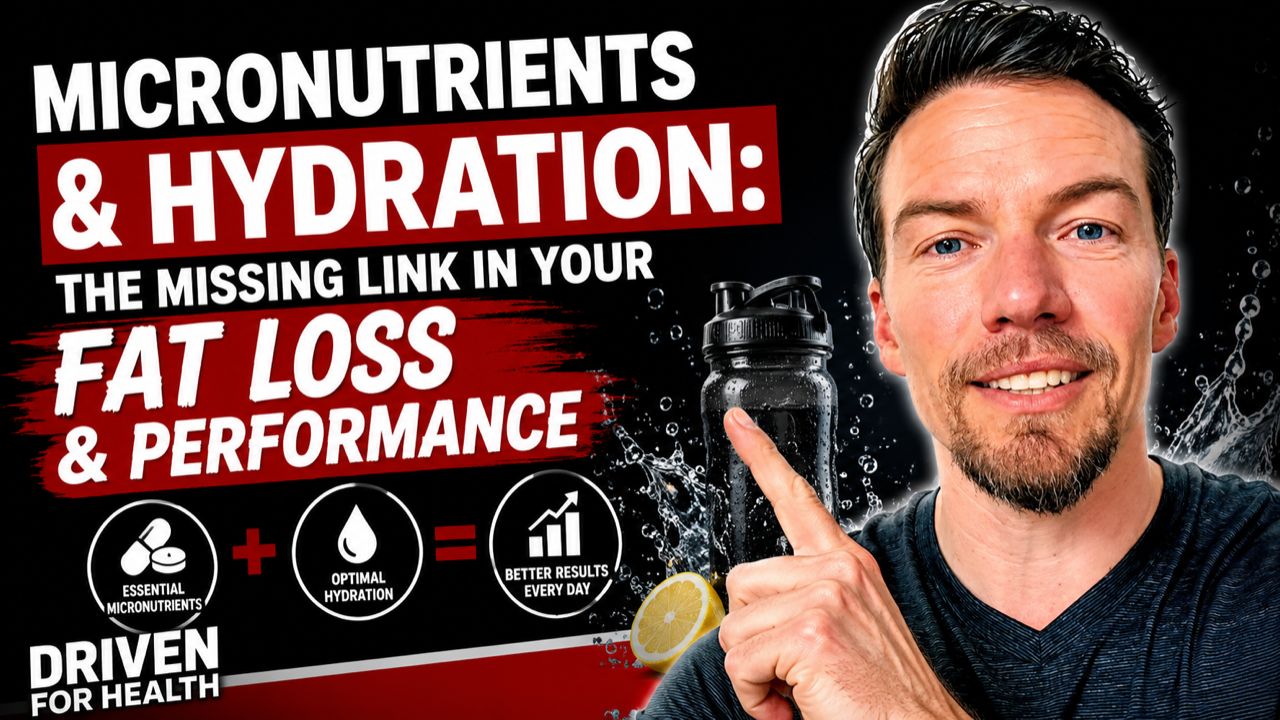
You can hit every macro on your plan and still leave results on the table. Vitamins, minerals, and water are the third level of the Nutrition Pyramid. They decide how you feel, how you perform, and how fast you recover. Coach Brian breaks down what your body needs and how to get there.
Why Micronutrients Still Matter
Macronutrients come in large amounts, sometimes hundreds of grams a day. Micronutrients come in tiny amounts, often only milligrams. The small dose does not mean small importance. Micronutrients split into two groups: minerals and vitamins. Minerals are inorganic and come from the periodic table. Vitamins are organic and come from plants, animals, or small amounts your body makes on its own. Both groups run processes your body needs every day to perform, recover, and stay healthy.
Why Men Over 40 Need More
As you age, absorption changes. Stomach acid production drops. That reduces how well your body absorbs vitamin B12, iron, calcium, and zinc. Skin converts sunlight into vitamin D less efficiently after 40. Training sessions burn through magnesium and electrolytes. Men who diet to lose fat often cut the most nutrient-dense foods first: whole grains, legumes, leafy greens, and dairy. The result is a man eating fewer calories and getting less of what his body needs to recover and perform.
The gaps add up quietly. Poor sleep, slow recovery, weaker workouts, and low energy are easy to blame on age or stress. The real driver is often a nutritional gap that a few targeted swaps can close.
The Minerals Your Body Runs On
Macrominerals are the ones your body needs in larger amounts. Calcium supports bones and teeth, and it also drives muscle contractions and nerve signaling. Magnesium runs over 300 biochemical reactions, including muscle relaxation, energy production, and sleep. Potassium and sodium work as electrolytes that regulate fluid balance and prevent cramping.
Trace minerals matter in smaller amounts but carry a real impact. Iron carries oxygen through your blood, and low iron shows up as fatigue and weak workouts. Zinc drives immune function and testosterone production. Iodine controls thyroid hormone, and low iodine slows your metabolism and drains your energy.
The Vitamins Your Body Runs On
Fat-soluble vitamins store in your body and include A, D, E, and K. Vitamin A supports vision and skin health. Vitamin D helps you absorb calcium and phosphorus, and your body makes it from sunlight. Vitamin K supports blood clotting and bone strength.
Water-soluble vitamins flush out daily, so you need a steady supply. The B-complex vitamins convert food into energy and support your nervous system. Vitamin C supports immune function and collagen production for skin and joints.
Micronutrients and Training Recovery
A diet that lacks micronutrients undermines your training. Magnesium deficiency shows up as poor sleep, muscle cramps, and slow recovery. Low iron shows up as short workouts and poor stamina. Low vitamin D connects to lower testosterone and weaker strength output.
Micronutrients are not a separate goal from your fitness goals. They are the support system that makes those goals reachable. Dialing in vitamins and minerals closes the gap between training hard and seeing results from it.
Fortified Foods Fill Real Gaps
Food fortification adds vitamins or minerals to foods that do not naturally carry enough of them. Iodine was added to table salt in the 1920s to prevent goiter. Today, cereal often carries added iron and B vitamins. Milk often carries added vitamin D. Orange juice sometimes carries added calcium. Whole foods absorb better because they arrive with fiber and other compounds that support absorption. Fortified foods work as a backup. They should not replace fruits, vegetables, and lean protein.
Fruits and Vegetables by the Cup
Match your produce intake to your calorie target. At 1,200 to 2,000 calories a day, aim for at least two cups of fibrous vegetables and two cups of fruit. At 2,000 to 3,000 calories, move up to three cups each. At 3,000 to 4,000 calories, aim for four cups each.
If you are running a low-carb plan, lean on berries. They give you more fruit volume for fewer carbs, along with high fiber and high satiety.
Hydration: How Much Water You Need
Count every fluid except alcohol toward your daily total, including coffee, tea, milk, and diet soda. A simple starting target is two-thirds of your body weight in pounds, converted to fluid ounces. A 210-pound man would aim for about 140 fluid ounces a day.
Strength coach Lyle McDonald offers a sharper marker: five of your daily urinations should run clear, with one or two of those clear trips landing around your training sessions. Even a 2 percent drop in body weight from dehydration can hurt your performance.
Supplements Worth Considering
A multivitamin covering at least 100 percent of the daily value for most nutrients can close gaps you miss from food alone, especially B-complex and vitamin C. Electrolyte supplements support hydration and muscle function if you sweat heavily during training or live in a hot climate. Vitamin D3 paired with K2 helps direct calcium toward your bones instead of your arteries, and D deficiency runs common in men over 40. Standalone magnesium supports muscle function, recovery, and sleep. Many men fall short even with a solid diet. Supplements fill gaps. They do not replace whole foods.
Inclusive Eating Beats Exclusive Eating
Flexible dieting lets you enjoy food while hitting your macro targets, but it can turn into an excuse to eat processed food that fits the numbers without feeding your body. The other extreme carries the same risk. Eating only a handful of clean foods can create the same micronutrient gaps. The fix is inclusive eating: add fruits, vegetables, leafy greens, nuts, and seeds without cutting out the foods you enjoy. Balance beats extremes on both ends.
Micronutrients Recap
Vitamins and minerals are the third level of the Nutrition Pyramid. They sit above macronutrients and below behavior and habit. Calories and macros drive your results on paper. Micronutrients drive your results in the gym and in the mirror. Hit your produce targets. Drink enough water. Take the supplements that fill your specific gaps. Get this level right, and the rest of your nutrition plan runs the way it is supposed to.
Listen to Episode 7 for the full breakdown of these micronutrient and hydration targets.
For more on this episode, read the companion post on the GHL blog: The Vitamins and Minerals Men Over 40 Are Missing.
Common Questions From This Episode
What is the difference between macronutrients and micronutrients?
Macronutrients are the protein, carbs, and fat your body needs in large amounts. Micronutrients are the vitamins and minerals your body needs in much smaller amounts, but they still run processes your body depends on every day.
What are the most important minerals for men over 40?
Calcium, magnesium, potassium, and sodium top the list for larger daily amounts. Iron, zinc, and iodine matter in smaller amounts. They still drive energy, immune function, and thyroid health.
What vitamins should men over 40 focus on?
Vitamin D matters most, since deficiency is common and it supports bone and immune health. B-complex vitamins and vitamin C also matter, since your body flushes them out daily and needs a steady supply.
Why are men over 40 more at risk for micronutrient deficiencies?
Stomach acid production drops with age. That reduces how well your body absorbs vitamin B12, iron, calcium, and zinc. Skin makes vitamin D from sunlight less efficiently than it did at 25. Training burns through magnesium and electrolytes. Dieting often cuts the most nutrient-dense foods first.
What does micronutrient deficiency feel like?
Rarely a single dramatic symptom. More often it is poor sleep, low energy, slow recovery, and weaker workouts. These are easy to blame on age or stress. The real driver is often a nutritional gap that targeted food swaps or supplements can close.
How do micronutrients affect testosterone?
Vitamin D, zinc, and magnesium all support testosterone production. Deficiencies in any of these lower it. Men over 40 already face natural testosterone decline. Keeping these nutrients at healthy levels protects the hormonal environment that supports muscle, fat loss, and energy.
How much water should I drink each day?
Start with two-thirds of your body weight in pounds, converted to fluid ounces. A better marker is five clear urinations a day, with one or two landing around your training sessions.
What supplements are worth taking?
A quality multivitamin, electrolytes if you train hard or sweat heavily, vitamin D3 paired with K2, and standalone magnesium cover the biggest common gaps for men over 40.
How many fruits and vegetables should I eat each day?
It depends on your calorie target. At 1,200 to 2,000 calories, aim for two cups each of fruit and fibrous vegetables. At 2,000 to 3,000 calories, aim for three cups each. At 3,000 to 4,000 calories, aim for four cups each.
Are fortified foods a good source of nutrients?
They help fill gaps, but whole foods absorb better because they carry fiber and other compounds that support absorption. Use fortified foods as a backup instead of your main source.
What is the difference between flexible dieting and inclusive eating?
Flexible dieting only tracks whether food fits your macro numbers, which can miss nutrient quality. Inclusive eating adds nutrient-dense foods like fruits and vegetables on top of your macros, without cutting out the foods you enjoy.
How do I put micronutrient targets into practice?
Start with produce. Match your fruit and vegetable intake to your calorie range using the targets above. Add a quality multivitamin to cover common gaps. Prioritize vitamin D3 with K2, magnesium, and electrolytes if you train hard. Eat a variety of whole foods.

CEO l Head Body Tranformer
Brian Parana is a men’s health coach with 23+ years of experience helping busy professionals improve their body, energy, and day-to-day habits while still leading at work and at home. His coaching is built around practical nutrition, training, sleep, and accountability, with a plan tailored to the person in front of him.
Over the years, Brian has helped thousands of clients through his work as a personal trainer, CrossFit gym owner, and online coach. He has also coached an Olympic silver medalist, a 2-time Olympian, and a CrossFit World Champion.
Brian is the host of the Driven For Health Podcast, where he shares real-world strategies for men who want to feel strong again and stay consistent without making health a second job.
He’s also the creator of The Call To Rise, a 100-day fat loss experience for driven men who want to drop 20–30 pounds, boost energy, and rebuild confidence through strength training, personalized nutrition, and high-accountability coaching. Many men join because their blood pressure, cholesterol, or blood sugar is heading the wrong direction, and they want a clear plan that fits real life.
Brian is married to his high school sweetheart, Amber, and they have four kids. Their family has traveled to all 50 states and 4 continents, with a goal to reach all seven.

What To Order At Dessert Restaurants For Fat Loss



 YouTube