Mike Acker's 3-Part Confidence Framework: Skills, Message, Identity
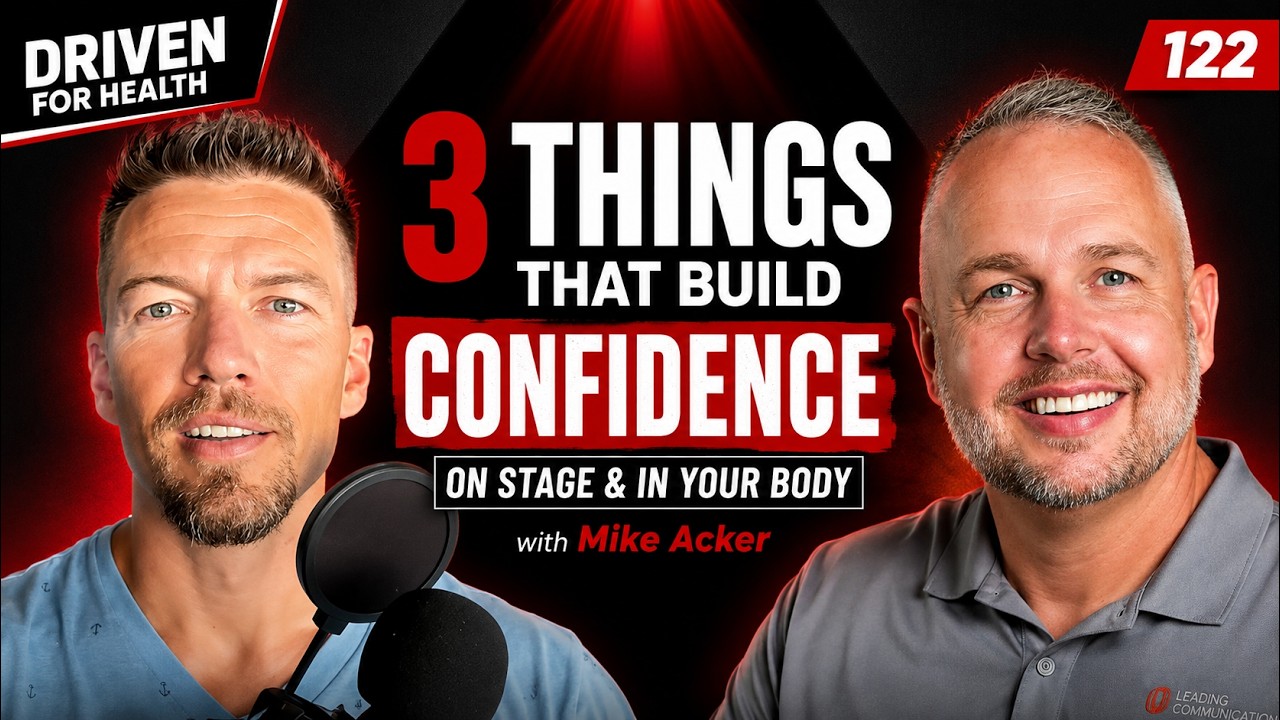
Confidence follows a formula, not motivation. Executive coach and TEDx speaker Mike Acker breaks it into three parts: skills, message, and identity. On episode 122 of Driven For Health, he hands Brian Parana that exact system. Brian applies it straight to the fat loss goals that keep stalling out.
The Confidence Problem Men Over 40 Actually Have
Most guys think they are stuck because they have the wrong diet or the wrong program. Mike Acker says that diagnosis is wrong. Acker is a TEDx speaker and executive communication coach who spent over 20 years teaching leaders why they freeze on stage. His answer has three parts: skills, message, and identity. Brian Parana pulled the same three parts apart on episode 122 and applied them to health, because the reason a man can't stick with his fitness is often the same reason an executive can't hold a room.
Start With Skills, Not Willpower
Acker starts every new client with skills first. Skills give you a fast win, and a fast win is what keeps a person going. In speaking, that means posture, eye contact, and hand gestures. In health, Brian points to the same kind of small, learnable moves: reading a nutrition label, carrying a water bottle, practicing portion control, and building a plate around protein first, vegetables, and starchy carbs last. None of these require motivation. They just require repeating them until they stick.
Acker's own posture work is a simple example. He does chin tucks and a door hang in the morning, more posture work at night, and a dead hang before bed. He also takes a photo of his own posture from the side every so often and sends it to ChatGPT for feedback, then adjusts from there. It is a five-minute habit, not a program.
Build One Message You Can Repeat
The second pillar is message: the system you use so you are not rebuilding your approach from scratch every time. Acker calls a disorganized answer "stuffing a pothole" — dumping in whatever comes to mind until it overflows. The fix is a frame you fill in the same way every time. For a meal, that frame is protein, vegetables, then starchy carbs. For a communication update, it's what happened, why it happened, and what it means. Either way, a repeatable frame removes the decision fatigue that wears people down by day three of a new plan.
Let Identity Catch Up Last
Identity is the slowest pillar to shift, and Acker says that's expected. He points to James Clear's idea from Atomic Habits: your habits stack until you start believing "I'm the type of person who does this." Acker used to think of himself as someone who has a bourbon every night. He changed the habit first, and the identity followed: "I'm the type of person who doesn't need alcohol." The same order applies to fat loss. Change the skill, repeat the message, and the identity update comes after the actions, not before them.
Mike Acker's Own Health Routine
Acker is 45 and has four sons, including a one-year-old at home. He starts most days before 6 a.m. with a 15-minute mobility routine: cat-cow, child's pose into cobra, 20 push-ups, and dead bugs. He runs Monday, Wednesday, Friday, and Saturday, with Saturday as his long day. On a recent Saturday he ran 11 miles, and on a weekday run in 85-degree heat he covered 4.11 miles. He is training for another marathon this year, one his oldest son challenged him to run. He also stopped drinking alcohol entirely, a decision he ties directly to the identity shift described above.
What This Costs You If You Skip It
Acker has watched the same three-part shift change more than how his clients speak. One client tied a $12,000 bonus directly to improved communication. Others moved from mid-manager roles into director roles, and one became the spokesperson for a company worth hundreds of millions of dollars. The lesson for health is the same: skills build the confidence, the message keeps it consistent, and the identity locks it in. Skip straight to identity and you're left with a poster on a wall. Skip straight to skills with no repeatable system and the wins don't compound. All three have to run together.
The Takeaway
Where you are right now is not where you have to stay. That's the line Acker opened with, and it applies to a stalled fat loss goal as much as it applies to a bad presentation. Pick one skill this week. Build one repeatable frame for your meals. Let the identity shift come from the actions, not the other way around.
Frequently Asked Questions
What is Mike Acker's three-part confidence framework?
Mike Acker's framework has three pillars: skills, message, and identity. Skills are the specific, learnable actions like posture and eye contact. Message is the repeatable system or frame you use so you're not rebuilding your approach every time. Identity is how you see yourself, and it shifts last, after the skills and message are already in place.
How does Mike Acker's framework apply to fat loss and fitness?
Brian Parana maps the same three pillars onto health. Skills are reading a nutrition label, carrying water, and practicing portion control. Message is a repeatable meal frame: protein first, vegetables, then starchy carbs. Identity is becoming "the type of person" who trains and eats this way, which follows the actions instead of preceding them.
What is Mike Acker's morning routine?
Acker wakes before 6 a.m. and does a 15-minute mobility routine that includes cat-cow, child's pose into cobra, 20 push-ups, and dead bugs. He follows it with posture work, including chin tucks and a door hang, and repeats posture work again in the evening with a dead hang before bed.
How often does Mike Acker run?
Acker runs Monday, Wednesday, Friday, and Saturday. Saturday is his long run day, and he recently ran 11 miles that day. He is training for another marathon this year after his oldest son challenged him to run one.
What does Mike Acker mean by "stuffing a pothole"?
It's his term for a disorganized answer, where someone dumps in whatever comes to mind until the point overflows and gets lost. The fix is a repeatable frame you fill the same way every time, whether that's a meal structure or a work update.
Why does posture affect confidence?
Acker cites Harvard researcher Amy Cuddy's work on expansive posture, sometimes called "power posing," which found that standing tall with your chest open and shoulders back for a short period changes how confident you feel afterward. Acker also checks his own posture from the side periodically and adjusts based on what he sees.
What results have Mike Acker's clients seen from this framework?
Acker has coached clients who tied direct pay increases to better communication, including one who received a $12,000 bonus. Others moved from mid-level roles into director positions, and one became the spokesperson for a company worth hundreds of millions of dollars.
Where can I listen to the full conversation with Mike Acker?
Listen to Episode 122 of Driven For Health, where Brian Parana and Mike Acker break down the skills, message, and identity framework in full, including Acker's own daily routine. For the full write-up on Mike Acker's framework and his own daily routine, read the companion article on the Driven For Health blog.

CEO l Head Body Tranformer
Brian Parana is a men’s health coach with 23+ years of experience helping busy professionals improve their body, energy, and day-to-day habits while still leading at work and at home. His coaching is built around practical nutrition, training, sleep, and accountability, with a plan tailored to the person in front of him.
Over the years, Brian has helped thousands of clients through his work as a personal trainer, CrossFit gym owner, and online coach. He has also coached an Olympic silver medalist, a 2-time Olympian, and a CrossFit World Champion.
Brian is the host of the Driven For Health Podcast, where he shares real-world strategies for men who want to feel strong again and stay consistent without making health a second job.
He’s also the creator of The Call To Rise, a 100-day fat loss experience for driven men who want to drop 20–30 pounds, boost energy, and rebuild confidence through strength training, personalized nutrition, and high-accountability coaching. Many men join because their blood pressure, cholesterol, or blood sugar is heading the wrong direction, and they want a clear plan that fits real life.
Brian is married to his high school sweetheart, Amber, and they have four kids. Their family has traveled to all 50 states and 4 continents, with a goal to reach all seven.
What To Order At Dessert Restaurants For Fat Loss


 YouTube