How to Spot a Fake Supplement Ad Before It Costs You Money
In October 2025 a video circulated that looked like Oprah Winfrey sitting with a man presented as a doctor. She never made it. The bottle it sold ran over $300 and got pitched as a cheaper stand-in for Mounjaro.
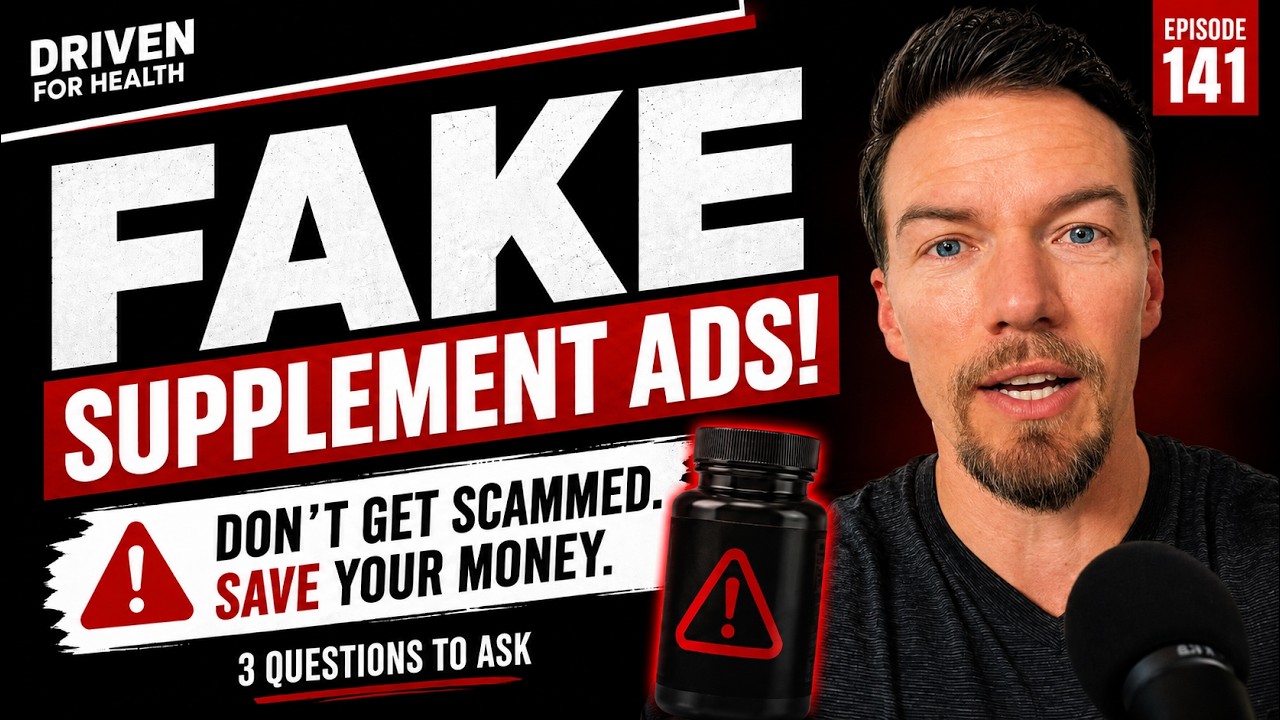
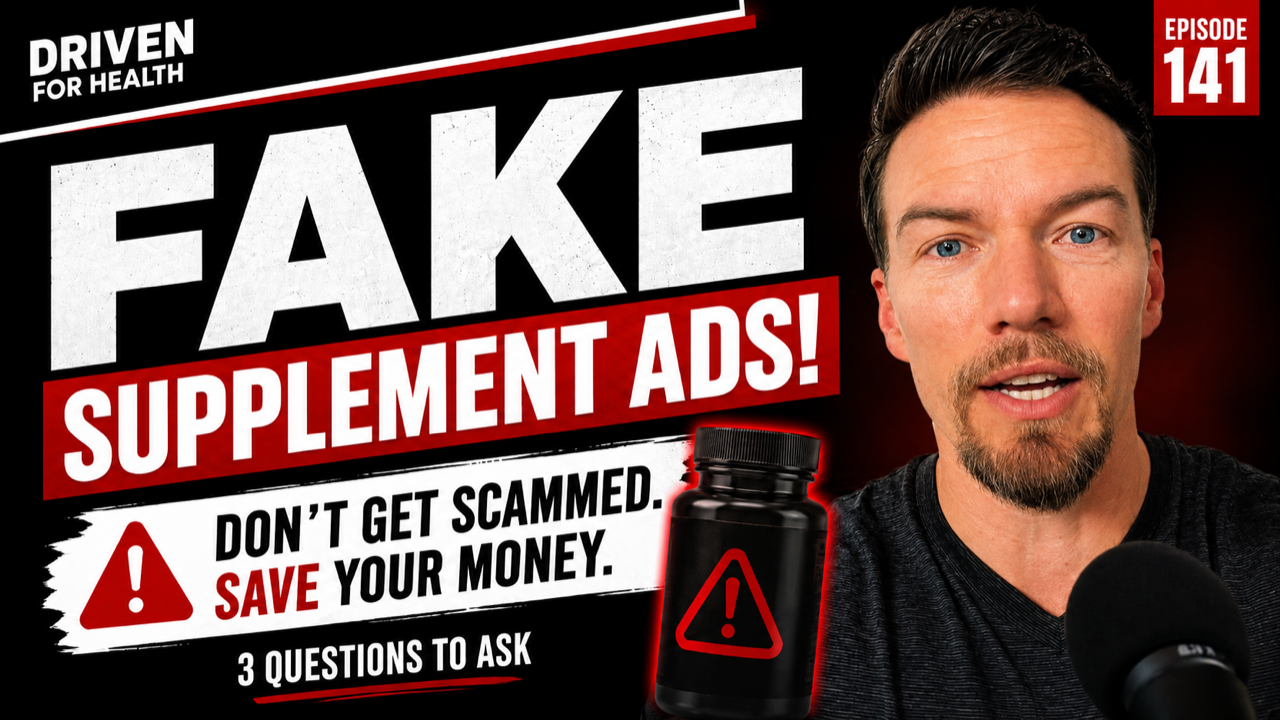
Three questions catch a fake supplement ad before your card comes out. Can you find a real company name and a real address instead of a landing page with a countdown clock? Can you find reviews somewhere other than the seller's own website? Can you find the cancellation terms in writing before you pay? A no on any of the three means close the tab. Listen to Episode 141 for the full breakdown.
This is part two of a series. Episode 139 covered fake workout ads. This one covers supplements and nutrition scams. Coach Brian is a coach and not a doctor. Nothing here is medical advice.
The Ad That Looked Like Oprah Winfrey
In October 2025 a video started circulating online. It showed what looked like Oprah Winfrey sitting with a man presented as a doctor. The product sold for over $300 a bottle. The seller pitched it as a cheaper stand-in for Mounjaro, the GLP-1 drug.
Oprah never made that video. Somebody built her face out of code and put words in her mouth she never said. They built her voice the same way. She came out and said that someone is misusing her name.
One buyer had the bottle shipped to her house. It arrived with no paperwork. The return address on the package traced back to a car shop in Florida. She never found the company again.
She was not careless. She watched a video that looked credible and made the decision in under a minute.
What the Better Business Bureau Logged on That Product
The Better Business Bureau tracked the same product under the name the pink salt trick. It logged over 170 consumer reports in two months across 34 states.
An Illinois woman spent over $400. Sellers then contacted her with offers to spend more. A Florida buyer paid $300.95 and got a call from someone posing as a health coach. That caller pushed her to spend $800 more on supplements.
Hundreds of people went through this and lost money on whatever sat inside the bottle. The company behind the product denied authorizing any of the deepfake videos and blamed independent affiliate marketers running its ads. That claim might be true. It does not change what happened to the people who paid.
The Same Playbook on an Eye Supplement
A separate company used Steve Harvey's face to sell a product called Vision Hero. It is an eye supplement with nothing to do with weight loss.
The ad routes through fake news sites first. The sales page then claims the product reverses vision loss by 82% in serious conditions like glaucoma and cataracts. None of that is true.
The cycle is the same one aimed at a different fear. This time the fear is going blind.
Coach Brian sees the same build in the ads on his own YouTube feed for HVAC work and garage floor sealer and insurance. One insurance ad puts a man on stage telling viewers their state is overcharging them. The scene cuts to the audience and fifteen people are wearing mics on their faces. Nobody films a real conference audience with fifteen lapel mics.
This Con Ran Fine Before AI Existed
None of it needed AI to start. In 2012 the Federal Trade Commission went after a company called Central Coast Nutraceuticals over an açaí pill and a colon cleanser. The ads claimed that Oprah Winfrey and Rachael Ray personally endorsed the products. There was no video and no deepfake. Someone typed their names onto a web page.
The company settled for $1.5 million against roughly $8 million in consumer harm.
Back then a person at a keyboard could type a lie because it was cheap and hard to trace. Today that same lie gets a video model and better production value. The intent has not moved in decades.
Hydroxycut and the 2009 FDA Recall
If you were anywhere near a gym in the 2000s you know the name Hydroxycut. It sat on the counter at GNC and in gym bags across the country. Plenty of guys our age took it without a second thought.
In 2010 the FTC settled with the maker of Hydroxycut for $5.5 million in consumer refunds. The case centered on false claims about weight loss and colds and the flu. All five products made promises the company could not back up. Part of the case involved actors dressed up to tell you the product was clinically proven.
Most guys never heard the other part. The FDA had already pulled Hydroxycut off shelves once in 2009. The agency had received 23 reports of serious liver injury tied to the product. Those reports included jaundice and seizures and cardiovascular problems. One case was a 19-year-old who died in 2007.
That bottle sat in major retail stores while those reports came in. Every case in this episode carries a cost in money and a cost in health.
The Subscription Trap Built Behind the Sale
FitSpresso is the one Coach Brian's own audience asks him about most. The pitch is two pills 30 minutes before your morning coffee. The claim is that the pills activate with the caffeine and boost your metabolism to burn extra calories.
Exercise burns extra calories and you have to move your body to get them. Caffeine can burn a few. Neither one burns pounds of belly fat off a man because he started drinking coffee.
The terms bury an auto-billing clause that enrolls you in a monthly shipment without a clear yes at checkout. One bottle turns into a card charge that is hard to get out of. Three months later a guy is still paying for a bottle he forgot he bought. The advertised numbers land at 97 or 47 or 19 or 17 because those read as cheap on the page.
FitSpresso's file with the Better Business Bureau shows 23 complaints in the last three years. Twenty of them never got a response. Customers reported that the refund window changed from 180 days down to 60 with no clear heads up. Customers also reported charges they never approved and a product that did not work. There is no clear number or email to cancel the thing.
Noom Paid $56 Million Over Its Cancellation Terms
This does not only happen with small operators running ads from a domain nobody has heard of. Noom is a weight loss app that millions of people already have on their phone. It paid $56 million in a class action settlement in February 2022.
The case centered on three things:
- Hiding the trial and auto enrollment terms
- Restricting cancellation to a chat with a virtual coach
- Charging non-refundable lump sums up to eight months in advance
Guys assume the well-known brand is the safer one. A big logo has never been proof of honest billing terms.
The FTC's own record shows this working as a repeatable business model. In 2016 the agency went after a company called Direct Alternatives. Its supplement brand was Original Organics and its products were named AF Plus and Final Trim. The ads claimed the pills worked while you sleep. The company promised $80 gift cards that never arrived. Its risk-free trial required you to pay the return shipping yourself or face a charge of $79.90. Buyers got enrolled in a $24.95 monthly plan they never agreed to. The judgment ran $16.4 million.
What a Real Supplement Company Does
A company can print a fake celebrity and a fake doctor and a fake FDA approval on the same bottle. Coach Brian's other flags:
- A good manufacturing practices claim with no certified label behind it
- A proprietary blend on the label
- The result doing the selling, as in lose this much weight in this much time
- A product that cannot stand up without a famous face attached to it
A supplement company that is proud of its own product signs its own name to the claim.
Run These Three Questions Before You Pay
- Can you find a real company name and a real address? A landing page with a countdown clock is not a company.
- Can you find reviews somewhere other than the seller's own website? Search the product name next to "does this work" or "is it legit" and read what comes back. Coach Brian names Snopes as one place claims get checked.
- Can you find the cancellation terms in writing before your card gets charged?
If the answer to any of the three is no, close the tab. And if you are paying for one of these right now, cancel it.
What Fat Loss Runs On Instead
Fat loss comes from work that is unglamorous and repeatable. It runs on real food, calories you understand, and protein at most meals. Most guys land at 400 to 600 calories a meal three or four times a day. No app and no proprietary blend does that part for you. The food on your plate is what does the work.
Jamie lost 38 pounds in the Call To Rise 100 day fat loss challenge because his nutrition fit into a busy week. His story is Episode 140.
Even Jamie needed a rule about this. Coach Brian told him he was not allowed to buy supplements without checking first. Jamie had picked up an enhanced honey product for around $60 and protein goo packets that worked out to about $5 a pound of protein. Chicken costs less than that and it is real food.
Common Mistakes Men Make Here
Deciding at 11 at night. The ad finds a man after back-to-back meetings and a dinner he ate standing up. Coach Brian's rule is to stop making buying decisions in a moment of weakness.
Trusting a face instead of a company name. The Oprah buyer got a package with no paperwork and a return address at a car shop.
Treating the big brand as the safe one. Noom paid $56 million over its trial and cancellation terms.
Skipping the cancellation terms until after the charge. Twenty of FitSpresso's 23 Better Business Bureau complaints in three years got no response.
Buying a label word. One guy in Coach Brian's DMs signed up for a meal plan because the label called it healthy. It carried a lot more fat than what he already ate at home, at $14 or $15 for a 500 calorie meal.
Buying a supplement instead of fixing the food. Jamie's $60 honey and his $5 a pound protein packets both got replaced by groceries.
Who This Is For and Who It Is Not For
This is for the man over 40 with a supplement tab open right now. He has a card on file and no time to research the company behind the bottle. He gets these ads late at night after a long day, and his buddy already swears by one of them.
It is not for the man who wants a bottle that replaces the food part. Nothing in this episode names one that works.
Cross-episode links
- Episode 139: How to Spot Fake AI Workout Ads Before They Cost You Money
- Episode 140: How Jamie Lost 38 lbs in 100 Days
- Episode 5: How Many Calories to Eat to Lose Fat (Men Over 40)
- Episode 17: Why Men Over 40 Can't Stay Consistent in the Gym (and the Fix)
Call to Action
If you want a starting point that has no bottle attached to it, the free Lose 3 lbs in 3 Days plan gives you three days of food and training structure. Get it at thecalltorise.com/lose3lbsin3days.
When you want the full structure, The Call To Rise is Coach Brian's 100 day program for driven men who want to lose 20 or more pounds and get their health up to the level their career is already at. What is included:
- An individualized meal plan
- An individualized training plan
- Weekly round table calls with the group
- 1:1 calls with Brian
- A client site holding every resource in one place
The guarantee is one sentence. Lose 20 or more pounds in the 100 days, or Brian keeps working with you until you do. Apply at thecalltorise.com.
Frequently Asked Questions
Did Oprah Winfrey endorse a pink salt weight loss supplement?
No. Coach Brian covers a video from October 2025 that showed what looked like Oprah Winfrey sitting with a man presented as a doctor. She never made that video. Her face and her voice were built out of code. She came out and said that someone is misusing her name.
How do you tell if a supplement ad is fake?
Run three questions. Can you find a real company name and a real address instead of a landing page with a countdown clock? Can you find reviews somewhere other than the seller's own website? Can you find the cancellation terms in writing before your card gets charged? A no on any of the three is your answer.
What are the complaints against FitSpresso?
FitSpresso's file with the Better Business Bureau shows 23 complaints in the last three years. Twenty of them never got a response. Customers reported that the refund window changed from 180 days down to 60 with no clear heads up. Customers also reported charges they never approved and a product that did not work. The terms bury an auto-billing clause that enrolls buyers in a monthly shipment without a clear yes at checkout.
Why was Hydroxycut pulled off shelves?
The FDA pulled Hydroxycut off shelves in 2009 after receiving 23 reports of serious liver injury tied to the product. Those reports included jaundice and seizures and cardiovascular problems. One case was a 19-year-old who died in 2007. In 2010 the FTC settled with the maker for $5.5 million in consumer refunds over false claims across five products.
What was the Noom class action settlement about?
Noom paid $56 million in a class action settlement in February 2022. The case centered on three things: hiding the trial and auto enrollment terms, restricting cancellation to a chat with a virtual coach, and charging non-refundable lump sums up to eight months in advance.
Did fake celebrity supplement ads exist before AI?
Yes. In 2012 the Federal Trade Commission went after a company called Central Coast Nutraceuticals over an açaí pill and a colon cleanser. The ads claimed that Oprah Winfrey and Rachael Ray personally endorsed the products with no video involved. The company settled for $1.5 million against roughly $8 million in consumer harm.
Why is it so hard to cancel a supplement subscription?
The friction is built in on purpose. Coach Brian points to auto-billing clauses buried in the terms and no clear phone number or email to cancel. Customers reported FitSpresso's refund window shrinking from 180 days to 60. Noom's settlement centered in part on restricting cancellation to a chat with a virtual coach.
What works for fat loss instead of a supplement?
Real food, knowing your calories, and protein at most meals. Most men land at 400 to 600 calories a meal three or four times a day. Jamie lost 38 pounds in the Call To Rise 100 day fat loss challenge by fitting that into a busy work week.

CEO l Head Body Tranformer
Brian Parana is a men’s health coach with 23+ years of experience helping busy professionals improve their body, energy, and day-to-day habits while still leading at work and at home. His coaching is built around practical nutrition, training, sleep, and accountability, with a plan tailored to the person in front of him.
Over the years, Brian has helped thousands of clients through his work as a personal trainer, CrossFit gym owner, and online coach. He has also coached an Olympic silver medalist, a 2-time Olympian, and a CrossFit World Champion.
Brian is the host of the Driven For Health Podcast, where he shares real-world strategies for men who want to feel strong again and stay consistent without making health a second job.
He’s also the creator of The Call To Rise, a 100-day fat loss experience for driven men who want to drop 20–30 pounds, boost energy, and rebuild confidence through strength training, personalized nutrition, and high-accountability coaching. Many men join because their blood pressure, cholesterol, or blood sugar is heading the wrong direction, and they want a clear plan that fits real life.
Brian is married to his high school sweetheart, Amber, and they have four kids. Their family has traveled to all 50 states and 4 continents, with a goal to reach all seven.
What To Order At Dessert Restaurants For Fat Loss


 YouTube