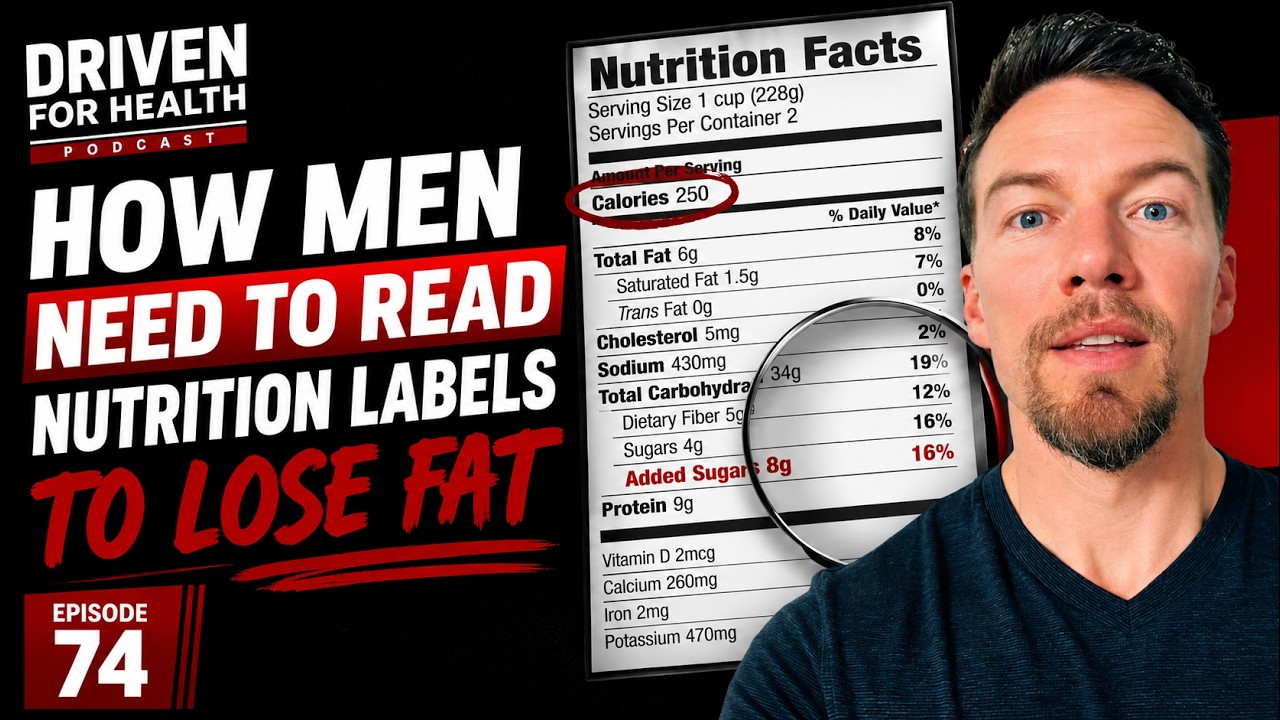
How to Read Nutrition Labels for Fat Loss After 40
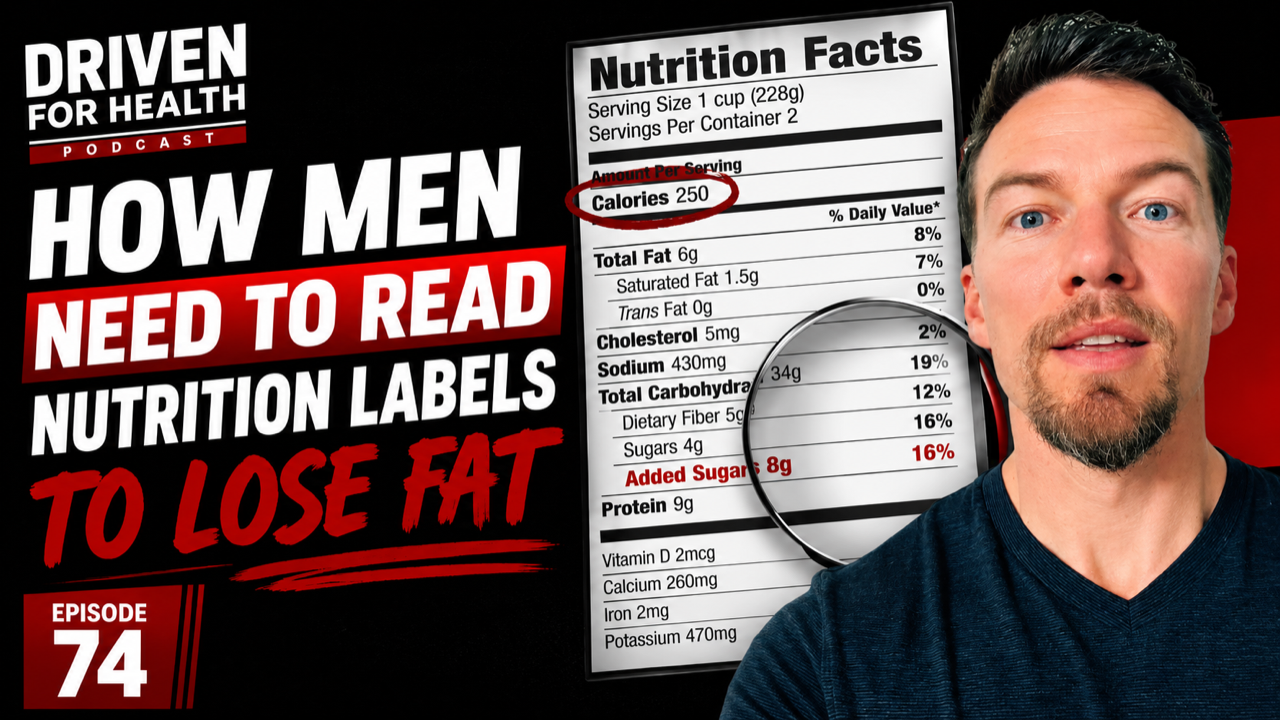
Most packaged food is sold on the front of the box. Episode 74 is about the back. Coach Brian Parana walks through the five numbers that decide whether a product belongs in your cart and the scan that finds them in under a minute.
Most packaged food is sold on the front of the box and explained on the back. Men over 40 who want to lose fat need the back. This episode gives you five numbers to read and a scan that takes under a minute. Listen to Episode 74 for the full teaching.
Coach Brian is a coach and not a doctor. Nothing here is medical advice.
You Read the Numbers at Work and Guess at the Grocery Store
The average man over 40 makes over 200 food decisions a week. Most of them happen in under ten seconds. Without a system you are guessing.
Coach Brian Parana has worked with hundreds of men in their 40s and 50s who are sharp everywhere else in life. Almost every one of them has the same blind spot at the grocery store. They ignore labels completely or they read the wrong lines.
Why the Nutrition Facts Panel Exists
Up until 1990 nutrition labeling in the United States was largely voluntary. Food companies could put whatever they wanted on a package or nothing at all. Congress passed the Nutrition Labeling and Education Act in 1990, and that law made standardized nutrition facts labels mandatory on most packaged foods.
The FDA rolled out the first standardized format in the early 1990s. For nearly 25 years that format stayed about the same. In 2016 the FDA issued its biggest label update since the original rollout, and most manufacturers had to implement the new format by January 2021.
Four things came with the update. Added sugars became their own line item. Serving sizes were updated to reflect how people eat. The calorie count got bigger and bolder. Vitamin D and potassium replaced vitamins A and C because deficiencies changed over the decades.
Regulators designed these labels. That makes the panel a starting point and never a complete picture of a food. Your job is to know which five numbers move the needle for your goals and ignore the rest.
What the Research Says About Men Who Read Labels
Large observational studies find that adults who regularly read nutrition labels tend to have lower BMI and better diet quality. A 2015 study analyzing NHANES data from over 5,000 U.S. adults found that label users had significantly lower BMI and ate fewer calories and less fat and less sodium.
Reading a label does not cause better health on its own. People who read labels also tend to be more health conscious in general. Men who pay attention to what goes in their body make better decisions on average.
How you use a label matters as much as whether you read it. A systematic review of label comprehension found that most people misread serving sizes and underestimate calories in larger packages and are poorly calibrated on percent daily value.
Front-of-package language is a separate problem. Low fat and natural and multigrain and heart healthy are largely unregulated and often misleading. Wansink and Chandon found that low-fat labels caused subjects to eat 28 to 50 percent more. The panel on the back is your tool.
The Label Reading Operating System
Five metrics carry the whole system, and the scan takes under a minute once you have run it a few times.
1. Calories per serving and per container
Start here, because everything else runs downstream of it. Check the serving size and then check how many servings sit in the package. If the bag says 250 calories per serving and there are three servings in the bag, that is 750 calories for the whole bag.
Fat loss needs a calorie deficit. You do not have to track every calorie obsessively. You do have to be approximately right about the foods you buy every week.
2. Protein
For men over 40 protein is the macronutrient that carries fat loss and muscle preservation. A reasonable target for most men is 0.7 to 1 gram per pound of bodyweight per day.
At the shelf the question is whether a product pulls its weight. A snack with 3 grams of protein and 300 calories is not the same as one with 20 grams of protein and 300 calories. One is filler. The other is fuel.
Roughly 10 grams of protein per 100 calories earns a product its place. Anything lower should deliver fiber or micronutrients to justify the calories it costs you.
3. Added sugar
The 2021 label update gave added sugar its own line, which is one of the most useful numbers on the panel. Added sugar in packaged food is a reliable marker of a low quality product. It drives insulin response and contributes to triglyceride levels and stacks calories without improving satiety.
A reasonable daily ceiling for most men is 25 to 36 grams of added sugar. Read the label and ask how much of that ceiling one product spends.
4. Fiber
Fiber slows digestion and blunts blood sugar response and improves satiety. It also plays a direct role in reducing cardiovascular risk. Most American men get about 15 grams per day and the recommendation is 38 grams.
Aim for products with at least 3 grams of fiber per serving. A carbohydrate heavy food with almost no fiber spikes your blood sugar fast and leaves you hungry again in 90 minutes.
5. Sodium
Sodium is the one to watch closely if your blood pressure runs high or your last labs came back at the top of the normal range. The FDA recommendation is under 2,300 mg per day. Most American men eat well past that, and most of it arrives in packaged and restaurant food rather than the salt shaker at home.
A single serving of canned soup can carry 800 to 1,000 mg of sodium. Processed meats and frozen meals and condiments add up fast. The work is knowing where it comes from.
The 60-Second Scan
- Check the serving size.
- Multiply to find the calories in the whole package.
- Check protein against the calories.
- Check added sugar. Under 5 to 6 grams per serving is solid.
- Check fiber. At least 3 grams per serving.
- Check sodium if blood pressure is a concern.
- Ignore the front of the package.
Do that consistently and you will make meaningfully better decisions without turning a grocery run into a part-time job.
Five Products Read Properly
Granola
Granola is one of the most misleading products on a grocery shelf. A popular brand lists the serving size as a quarter cup. That is about the size of a golf ball and most men pour two to three times that amount.
At a quarter cup you might see 200 calories and 4 grams of protein and 3 grams of fiber and 12 grams of added sugar. Pour three quarters of a cup and the calories reach 600 with 36 grams of added sugar in a breakfast you counted as health food.
Protein bars
Some protein bars are useful tools and some are candy bars in marketing clothes. Run the protein-to-calorie ratio and read the added sugar line. A bar with 10 grams of protein and 280 calories and 20 grams of added sugar is a candy bar with a fitness logo.
Canned tomato soup
One can often holds two servings rather than one. Read at two servings, a standard canned tomato soup can run 300 to 400 calories with almost no protein and almost no fiber. Eaten straight from the can as a light lunch it leaves you hungry an hour later. Look for a version with more fiber and lower sodium and pair it with a protein source.
Greek yogurt against flavored yogurt
Plain full fat Greek yogurt typically runs 150 calories with 15 to 17 grams of protein and 0 grams of added sugar. A flavored low fat yogurt from the same refrigerator case runs 150 calories with 5 to 7 grams of protein and 20 or more grams of added sugar. Same calorie count with a different result. One keeps you full and supports muscle. The other spikes your blood sugar and has you reaching for something else in two hours.
Low sodium crackers
Any time a claim shows on the front, flip the box over. A low sodium cracker might list 140mg of sodium per serving. If the serving is 5 crackers and you eat 20, you have had 560mg. A different box at 180mg per serving where a realistic portion is 10 crackers can leave you lower on the day. Context decides.
Common Traps on the Front of the Package
Natural and organic
These words are largely unregulated by the FDA for use on packaged foods. Organic sugar is still sugar. Natural ingredients can include high-fructose corn syrup. Neither word tells you anything about calories or fiber or protein.
The serving size illusion
Food companies are legally allowed to set serving sizes and have an incentive to set them small, which makes calories and sodium look lower per serving. The 2021 update improved this. Check whether the listed serving is what a real man eats in one sitting.
Multigrain against whole grain
Multigrain means multiple types of grain and none of them have to be whole. Whole grain means the bran and germ are intact. Read the ingredients list. Whole wheat flour as the first ingredient points to whole grain. Enriched wheat flour means refined.
The low fat relic
Low fat products came out of 1980s and 1990s dietary guidance that has since been revised. Taking fat out usually means putting sugar or refined starch back in to restore palatability. Low fat versions often carry more added sugar than their full fat counterparts. Compare both versions on the shelf.
Per serving against per 100g
Some labels show both. Compare two products on the same unit. Per 100g is cleanest, because serving sizes vary between products.
Your One Action This Week
Pick five products you buy regularly and run them through the scan. Change nothing yet. Awareness comes before adjustment.
Cross-episode links
- Episode 5: How Many Calories Should I Eat for Fat Loss (Men Over 40)
- Episode 6: What Should Your Macros Be to Burn Fat for Men Over 40
- Episode 143: How to Set Up Your Kitchen for Fat Loss After 40
Call to Action
The Health Hot Seat is a free recorded coaching session where Coach Brian looks at your situation and names what is getting in your way. Email him at brian@brianparana.com to get on it.
The Call To Rise is a 100-day Fat Loss Challenge designed for driven men ready to get back to a healthy body, boost their energy, and lead as a powerful man.
If you are struggling with some form of chronic illness such as high blood pressure, cholesterol or even Type 2 Diabetes - this program is designed for you too.
Through a proven system of strength training, personalized nutrition, and real accountability, most men lose 20 plus pounds and rebuild the confidence that comes with it and even improve chronic illness issues. It's more than a fitness program, it's a body transformation experience with a Brotherhood of like-minded men committed to showing up, leveling up, and leading in a body they are excited about.
This is your wake-up call to rise.
www.thecalltorise.com
The guarantee is one sentence. Lose 20 or more pounds in the 100 days, or Coach Brian keeps working with you until you do. Apply at thecalltorise.com.
Sources
- FDA: Nutrition Labeling and Education Act (NLEA) overview
- FDA: What's New with the Nutrition Facts Label
- Food label use and its relation to dietary intake among US adults
- Effects of front-of-pack and back-of-pack nutrition labels on attitudes and behavior
- Can "Low-Fat" Nutrition Labels Lead to Obesity?
- American Heart Association: added sugars recommendation
- Institute of Medicine: dietary reference intakes for fiber
- FDA: sodium in your diet
Frequently Asked Questions
How do you read a nutrition label for fat loss?
Read five numbers in one pass. Calories per serving and per container, protein, added sugar, fiber, and sodium. Check the serving size first and multiply it out for the whole package. Then ignore the front of the package entirely.
What five numbers matter most on a nutrition label?
Calories, protein, added sugar, fiber, and sodium. Calories set the budget for the day and everything else runs downstream of that. Protein carries fat loss and muscle preservation after 40. Added sugar and fiber and sodium tell you what the rest of the product does to your blood sugar and your blood pressure.
How much protein should a man over 40 eat?
A reasonable target for most men is 0.7 to 1 gram per pound of bodyweight per day. At the shelf the test is whether a product pulls its weight on protein. Roughly 10 grams of protein per 100 calories earns a product its place, and anything lower should deliver fiber or micronutrients to justify the calories.
How much added sugar per day is too much for men?
A reasonable daily ceiling for most men is 25 to 36 grams of added sugar. On a single product, under 5 to 6 grams per serving is solid. Added sugar has had its own line on the panel since the 2021 label update, which makes it one of the fastest reads on the back of a box.
How much fiber do men need each day?
Most American men get about 15 grams per day and the recommendation is 38 grams. On a label, aim for at least 3 grams of fiber per serving. A carbohydrate heavy food with almost no fiber spikes your blood sugar fast and leaves you hungry again in 90 minutes.
Are claims like low fat and natural regulated?
Largely no. Low fat and natural and multigrain and heart healthy are marketing terms rather than regulated facts. Wansink and Chandon found that low-fat labels caused subjects to eat 28 to 50 percent more. Turn the package over every time and read the panel instead.
Is granola a good breakfast for fat loss?
Granola is one of the most misleading products on a grocery shelf. A popular brand lists the serving size as a quarter cup, which is about the size of a golf ball, and most men pour two to three times that amount. At three quarters of a cup you reach 600 calories with 36 grams of added sugar.
What is the Call To Rise program?
The Call To Rise is Coach Brian Parana's 100 day fat loss challenge for driven men who want their health at the level their work is already at. It runs on strength training and personalized nutrition and real accountability, and most men lose 20 plus pounds. The guarantee is one sentence. Lose 20 or more pounds in the 100 days, or Coach Brian keeps working with you until you do.

CEO l Head Body Tranformer
Brian Parana is a men’s health coach with 23+ years of experience helping busy professionals improve their body, energy, and day-to-day habits while still leading at work and at home. His coaching is built around practical nutrition, training, sleep, and accountability, with a plan tailored to the person in front of him.
Over the years, Brian has helped thousands of clients through his work as a personal trainer, CrossFit gym owner, and online coach. He has also coached an Olympic silver medalist, a 2-time Olympian, and a CrossFit World Champion.
Brian is the host of the Driven For Health Podcast, where he shares real-world strategies for men who want to feel strong again and stay consistent without making health a second job.
He’s also the creator of The Call To Rise, a 100-day fat loss experience for driven men who want to drop 20–30 pounds, boost energy, and rebuild confidence through strength training, personalized nutrition, and high-accountability coaching. Many men join because their blood pressure, cholesterol, or blood sugar is heading the wrong direction, and they want a clear plan that fits real life.
Brian is married to his high school sweetheart, Amber, and they have four kids. Their family has traveled to all 50 states and 4 continents, with a goal to reach all seven.
What To Order At Dessert Restaurants For Fat Loss


 YouTube