How to Get Back on Track After Two Weeks Off Your Plan
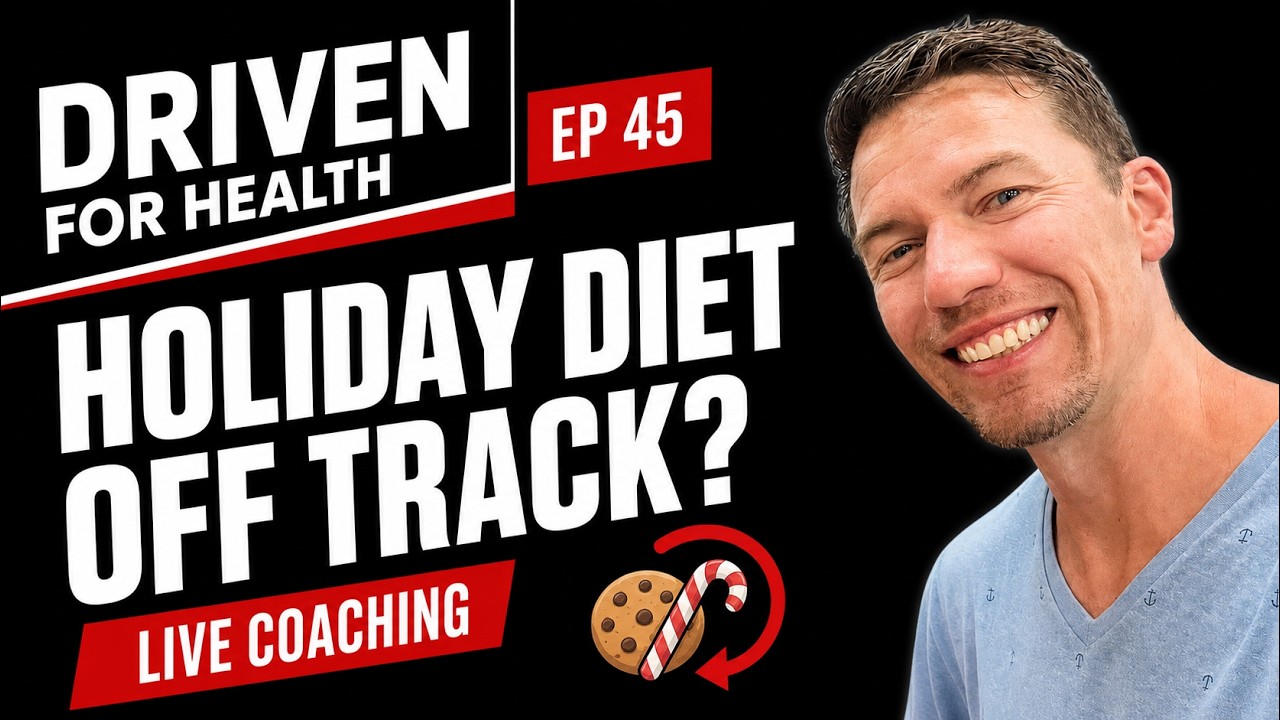
In this live coaching session, Coach Brian works through a recalibration with a man who had finished a hundred day fat loss block and then spent close to two weeks off plan. The scale came back up seven pounds. The call covers what that weight is made of and what the first week back looks like.
Two weeks away from your routine does not undo a hundred days of work. It does put weight on the scale fast, and most men read that number wrong. This live coaching call covers what comes back on first, why the restart is harder than the original start, and how to get the plan running again inside a week.
The Scale Jumps Fast and Most of It Is Not Fat
A man who had finished a hundred days of steady work went home to family for close to two weeks. There was no plan for the food in front of him. He came back and the scale was up seven pounds.
Coach Brian takes that number apart on the call. Extra carbs pull water into muscle as glycogen. More food and more sodium hold more water again. Bigger meals later at night add inflammation on top. The scale reads all of it at once and gives you one number.
Real fat gain over two weeks is small next to what water and food volume can do in the same window. Coach Brian points to another man in the group who came back up about eight pounds after his own time away. They talked a few days later and he was already down four.
That is why the first weigh-in after a trip is a poor place to make decisions.
A Planned Break Is Part of the Plan
A hundred days in a calorie deficit is a long run. Coach Brian treats a two to four week pause as normal, and he says most of the men he has worked with take one at some point in a long stretch.
Training already works this way. Three to four weeks of higher volume come first, then a lighter week to recover, and then you build back up past where you were. Food follows the same shape. You can hold a deficit for months and then eat at maintenance for a stretch. After that you start the deficit again with a fresher head.
The pause is not the problem. Eating above maintenance for two weeks does exactly what it is supposed to do. The problem starts when the pause has no end date on it.
The Restart Is Harder Than the First Start
The plan going in was to lock back on a set date and go straight to the old numbers. That snap back was harder than expected, and cravings were the reason.
Two weeks of open eating changes what your appetite expects. Sugar and volume come down in one day and hunger runs higher than the calories on paper say it should. Men read that as a character problem when it is a physiology problem with a short shelf life.
Give it a few days. Hold the basics and let appetite settle instead of adding a harder deficit on top of it.
He Felt the Difference Before He Saw It
The most useful part of this call has nothing to do with the scale.
Two weeks of different food landed in energy, sleep, focus and work output. Mornings ran slower. Work took longer to get through. The fog was there before any weigh-in confirmed anything.
Ice cream and brownies before bed do not leave you the same the next morning as a dinner built on protein and fiber. Once a man has felt both versions of himself inside the same month, the food stops being about the scale.
That awareness is what makes the next break easier to handle. He knows what he is choosing and he knows what it costs.
You Still Control What Goes in Your Mouth
One honest point on the call was about control. At home there is your own kitchen and a predictable week, and you have full say over what is in the fridge. In someone else's house that goes away.
Coach Brian's answer holds either way. The choice of what goes in your mouth stays yours in any kitchen. That is not a scolding. It is the reason a bad two weeks stays a two week event rather than a two month one.
The System That Built the Result
The work that produced the hundred day result was plain. He walked 10,000 steps a day for a hundred days and held the calorie target he had been given of 1,800. Water and a running group came in on top of that.
Two notes on that calorie number. It was his, set for his body and his week. Yours would be set the same way and would land somewhere else.
He tracked his food in an app for the whole hundred days, which is where the learning happened. He stopped tracking while he was away, which is where the guessing started. The tracking was never the point. Knowing what a portion of food is worth is the point, and that knowledge stays with him.
Accountability Shortens the Gap
Asked whether he would have come back this fast on his own, the answer on the call was no.
Weekly check-ins and a group of men doing the same work close the gap between coming off plan and getting back on. Somebody asking where you are at this week is the whole mechanism. Without it, two weeks turns into two months and the hundred days becomes a story you tell about a year you used to have.
Train for the Season You Are In
The next block is strength work three days a week while the running stays light.
Cardio is easy to count. You finish an hour on the elliptical and the app hands you a number. Lifting is hard to count, so men in a fat loss phase lean toward the machine that gives them a clean total. Coach Brian puts general lifting at roughly 300 to 500 calories for 45 minutes, and the muscle you rebuild afterward keeps burning past the session. Cardio burn ends close to when the session ends.
There is a second reason to lift now. Heavy endurance work later in the year leaves less room for strength training, so the strength gets built in the quieter block. On the conditioning side two hours on a bike lines up with about one hour of running. Coach Brian took that ratio from his own triathlon coach.
Your First Week Back
- Give the scale a few days before you read it. The first weigh-in after time away tells you little.
- Go back to the two inputs that built the result. Steps and calories.
- Do not chase the lost days with a harder deficit. The water leaves on its own.
- Track your food again for one week. That is how you find out what the two weeks cost.
- Put three strength sessions on the calendar this week.
- Write the plan for the next trip before the trip. Plan, prepare, act is the order.
- Tell one person your number and your date.
More From Driven For Health
The restart usually holds for a while and then wobbles. Episode 54 covers week three, where a restart built on motivation runs out and a system has to take over.
For the hundred day story that came before this coaching call, listen to episode 34, where a desk job and a full work week still produced 30 pounds.
If the cravings in the first days back are the hard part for you, episode 57 breaks down why food takes up so much room in your head and what to do at night.
Get Back on Track With a Coach
The Call To Rise is a 100-day Fat Loss Challenge designed for driven men ready to get back to a healthy body, boost their energy, and lead as a powerful man.
If you are struggling with some form of chronic illness such as high blood pressure, cholesterol or even Type 2 Diabetes - this program is designed for you too.
Through a proven system of strength training, personalized nutrition, and real accountability, most men lose 20 plus pounds and rebuild the confidence that comes with it and even improve chronic illness issues. It's more than a fitness program, it's a body transformation experience with a Brotherhood of like-minded men committed to showing up, leveling up, and leading in a body they are excited about.
This is your wake-up call to rise.
www.thecalltorise.com
Want a smaller first step? The free Lose 3 lbs in 3 Days plan gives you three days of food and movement to get the needle moving again. Get it at thecalltorise.com/lose3lbsin3days.
Frequently Asked Questions
Why does the scale jump so much after two weeks off plan?
Most of it is water. Extra carbs pull water into muscle as glycogen, more food and more sodium hold more water, and bigger late meals add inflammation. Real fat gain over two weeks is small next to all of that.
Is the weight you gain over a break real fat?
Some of it is and most of it is not. On this call a seven pound jump came off fast once the man went back to his normal food and steps. Another man in the group came back up about eight pounds and was down four a few days later.
How long should you wait to weigh yourself after time away?
Give it a few days of normal eating and normal steps before you read the scale. The first weigh-in after a trip mixes water and food volume into the number and tells you little about fat.
Why is getting started again harder than starting the first time?
Two weeks of open eating changes what your appetite expects. Cutting sugar and volume in one day sends cravings up, so the first days back feel worse than the first days of the original hundred days.
Is taking a break from a calorie deficit a bad thing?
No. A planned break at maintenance calories after months of deficit is normal, and Coach Brian treats a two to four week pause as part of the plan. The problem is a break with no end date on it.
What should you do in your first week back on plan?
Go back to the two inputs that built the result, which are steps and calories. Track your food for a week, hold off on the scale for a few days, and put three strength sessions on the calendar.
Should you train for strength or cardio when you are coming back?
Both have a place and the season decides the mix. Coach Brian puts strength work at three days a week while endurance stays light, then flips the priority when the endurance goal gets close.
What is the Call To Rise program?
The Call To Rise is a 100-day fat loss challenge for men over 40, built on strength training, personalized nutrition and real accountability. Most men lose 20 plus pounds.

CEO l Head Body Tranformer
Brian Parana is a men’s health coach with 23+ years of experience helping busy professionals improve their body, energy, and day-to-day habits while still leading at work and at home. His coaching is built around practical nutrition, training, sleep, and accountability, with a plan tailored to the person in front of him.
Over the years, Brian has helped thousands of clients through his work as a personal trainer, CrossFit gym owner, and online coach. He has also coached an Olympic silver medalist, a 2-time Olympian, and a CrossFit World Champion.
Brian is the host of the Driven For Health Podcast, where he shares real-world strategies for men who want to feel strong again and stay consistent without making health a second job.
He’s also the creator of The Call To Rise, a 100-day fat loss experience for driven men who want to drop 20–30 pounds, boost energy, and rebuild confidence through strength training, personalized nutrition, and high-accountability coaching. Many men join because their blood pressure, cholesterol, or blood sugar is heading the wrong direction, and they want a clear plan that fits real life.
Brian is married to his high school sweetheart, Amber, and they have four kids. Their family has traveled to all 50 states and 4 continents, with a goal to reach all seven.

What To Order At Dessert Restaurants For Fat Loss



 YouTube