
Does a Long Ingredient List Mean a Food Is Bad for Fat Loss?
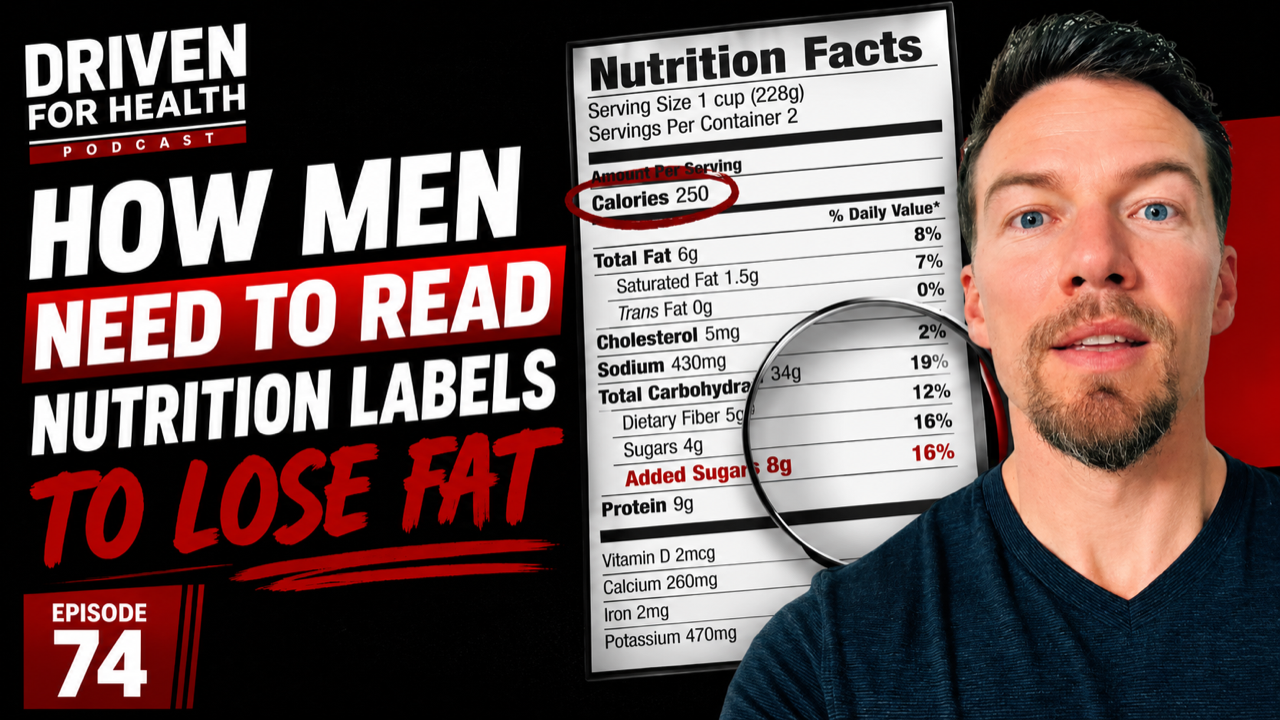
Quick Answer: No. The number of ingredients on a label does not tell you whether a food helps or hurts fat loss. A product with 3 ingredients can be mostly sugar and oil. A product with 15 ingredients can be a plain, unprocessed food with nothing in it to worry about. Count is not the test. Which ingredients, and how much of each, is the test.
Coach Brian is a coach and not a doctor. Nothing here is medical advice.
A Shortcut That Spreads Faster Than It Gets Checked
A popular idea floats around social media. The fewer ingredients a food has, the healthier it is. Coach Brian Parana ran into this shortcut while filming a recent short video in a grocery aisle. He walked through real labels to show where flour, sugar and oil turn up on packaged food. The video pointed at a problem with that shortcut directly. Counting words on a label tells you how many words are on the label. It does not tell you what any of them weigh or what they do to your body.
The shortcut is easy to repeat and easy to act on in 5 seconds in an aisle. Easy is not the same as right.
Where the Idea Comes From
The shortcut usually travels as "if you can't pronounce it, don't eat it," or some version of counting past 5 or 10 ingredients and putting the box back. Both versions grew out of a real concern. Heavily processed food tends to carry long lists of additives, stabilizers and preservatives. A lot of those products are not doing a man's fat loss any favors.
The shortcut swapped that real concern for something easier to apply and much less accurate. Processing and ingredient count travel together often enough to make the shortcut feel true. They are not the same thing. The gap between them is where this shortcut falls apart.
2 Labels That Break the Shortcut
A short list that is still a problem. A bottle of chocolate syrup can carry as few as 6 or 7 ingredients. Sugar leads the list. Vegetable oil, a blend of palm, canola and soybean, comes second. A short ingredient list here did not protect you from anything. The first 2 ingredients by weight are sugar and oil, which is exactly the combination a man watching his fat loss would want to catch, and the count would have told him to relax.
A longer list that is not a problem. A loaf of sandwich bread can carry 10 or more ingredients once every vitamin and mineral in the enriched flour gets its own line. Niacin, iron, thiamin mononitrate, riboflavin and folic acid are all required additions to enriched flour under federal fortification rules, not warning signs. A loaf like this can run longer on paper than the syrup and still be a reasonable staple, because the ingredients past the first few are fortification, water and yeast rather than sugar or oil doing real work.
Count the words on both labels and the bread loses. Read what the words are and the comparison flips.
What Determines the Answer Instead
Two things matter more than count, and both come straight off the same ingredient list the shortcut is trying to shortcut.
Which ingredients. Flour, sugar and oil are the 3 the reel pointed a camera at, because all 3 turn up constantly across ordinary packaged food. None of the 3 is automatically disqualifying on its own.
How much of each. Every ingredient list runs in descending order by weight under federal law, 21 CFR 101.4. The heaviest ingredient sits first. The lightest sits last, often grouped at the end behind the phrase "Contains 2% or less of the following." A food where sugar or oil leads the list is spending real weight on it. The same word appearing after that 2 percent line is barely present at all. Counting ingredients skips this information entirely. Reading the first 3 in order captures almost all of it.
A Better Question Than "How Many"
Skip the count. Ask 2 questions instead. Where does sugar sit on this list, first or after the 2 percent line? Where does oil sit on this list, first or after the 2 percent line? Those 2 questions take less time to answer than counting past 10 words, and they tell you something the count never could.
Why the Habit of Checking Matters at All
Research on label reading backs this up at the habit level, even though it does not settle the count-versus-order question directly. A large study of more than 5,000 US adults using NHANES data found that people who regularly read food labels carried a lower BMI on average and reported eating fewer calories, less fat and less sodium than people who did not. Reading a label does not settle anything by itself. Men who bother to read tend to make better choices once they are looking at the right part of it.
The habit of looking is worth keeping. The method needs to be checking the right thing instead of the fastest thing.
Your One Action This Week
Pick one product you would have judged by its ingredient count alone, a short list you assumed was fine or a long list you assumed was junk. Read the first 3 ingredients in order instead. See if the order changes your answer.
Keep the Shortcut Honest
A man who wants a body that matches the effort he puts into everything else does not get there on shortcuts that sound right and check nothing. The Call To Rise is a 100 day fat loss program for driven men, built on personalized nutrition and strength training with a real coach checking the numbers every week. Apply at thecalltorise.com.
Sources
- FDA / Cornell Law: 21 CFR 101.4, ingredient declaration
- Food label use and its relation to dietary intake among US adults, PubMed
- FDA / Cornell Law: 21 CFR 137.165, enriched flour fortification requirements
Frequently Asked Questions
Does a short ingredient list mean a food is healthy?
No. A short list only tells you how many words are on the label. A bottled sauce can carry 6 or 7 ingredients with sugar and oil as the top 2 by weight, which is a worse combination for fat loss than a longer list where sugar and oil barely register.
Does a long ingredient list mean a food is unhealthy?
No. A longer list often comes from fortification. Enriched flour alone adds several required vitamins and minerals as separate line items under federal rules. A loaf of bread can run longer on paper than a bottle of syrup and still be the more reasonable choice of the 2.
Why do ingredient counts and processing seem to go together?
Heavily processed foods often do carry long lists of additives and stabilizers, which is where the shortcut came from. The correlation is real often enough to feel true, but it is not strong enough to use the count as a stand-in for checking what the ingredients are and how much of each one the product carries.
What should I check instead of counting ingredients?
Check the first 3 ingredients in order. Federal law requires ingredients to be listed by weight under 21 CFR 101.4, heaviest first. Sugar or oil in the first 3 spots means that ingredient is doing real work in the product. The same word listed only after "Contains 2% or less of the following" is a minor ingredient regardless of how long the rest of the list runs.
Does reading nutrition labels correlate with better health outcomes?
A study using NHANES data on more than 5,000 US adults found that people who regularly read food labels had a lower average BMI and reported eating fewer calories, less fat and less sodium. The study shows a correlation between the habit of reading and better outcomes, not proof that reading alone causes them.

CEO l Head Body Tranformer
Brian Parana is a men’s health coach with 23+ years of experience helping busy professionals improve their body, energy, and day-to-day habits while still leading at work and at home. His coaching is built around practical nutrition, training, sleep, and accountability, with a plan tailored to the person in front of him.
Over the years, Brian has helped thousands of clients through his work as a personal trainer, CrossFit gym owner, and online coach. He has also coached an Olympic silver medalist, a 2-time Olympian, and a CrossFit World Champion.
Brian is the host of the Driven For Health Podcast, where he shares real-world strategies for men who want to feel strong again and stay consistent without making health a second job.
He’s also the creator of The Call To Rise, a 100-day fat loss experience for driven men who want to drop 20–30 pounds, boost energy, and rebuild confidence through strength training, personalized nutrition, and high-accountability coaching. Many men join because their blood pressure, cholesterol, or blood sugar is heading the wrong direction, and they want a clear plan that fits real life.
Brian is married to his high school sweetheart, Amber, and they have four kids. Their family has traveled to all 50 states and 4 continents, with a goal to reach all seven.
What To Order At Dessert Restaurants For Fat Loss


 YouTube