David Barnett Sold 36 Businesses. Then His Own Body Almost Cost Him Everything
Read the companion article on the Driven For Health main site for more on how David Barnett applies the same discipline to business exits and his own health.
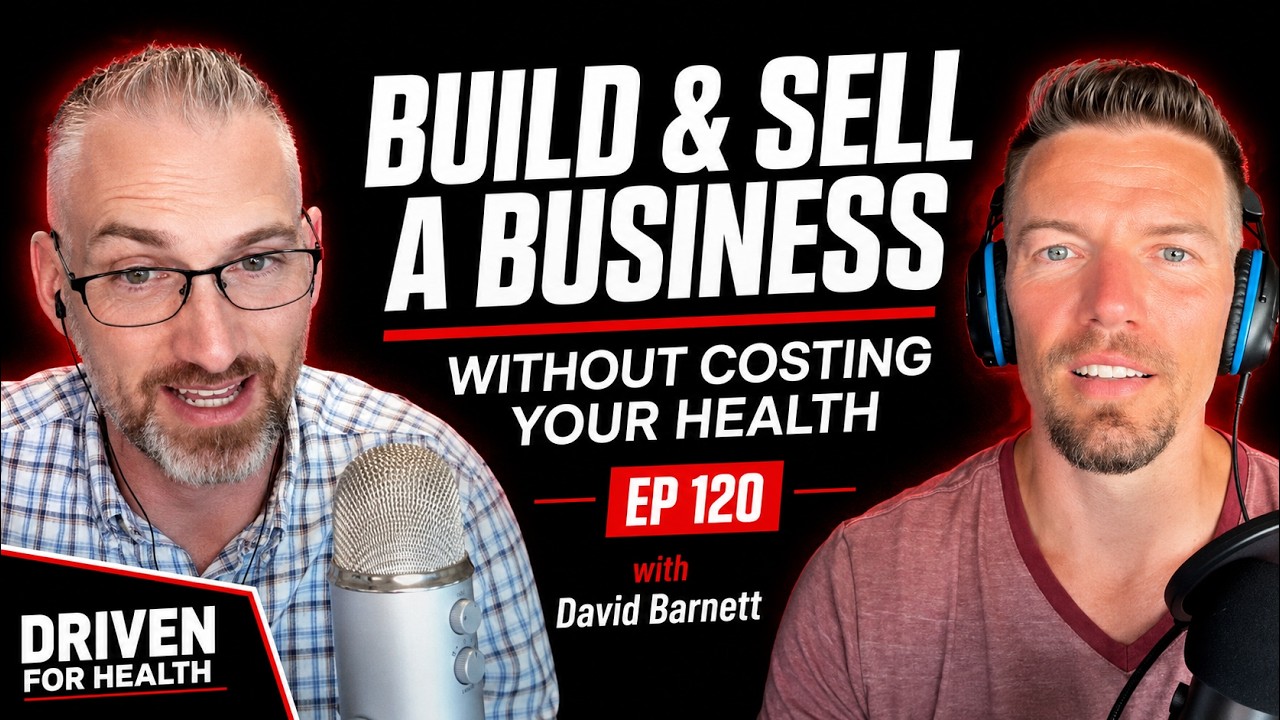
David Barnett sold 36 businesses as a broker before he became a consultant. He also survived testicular cancer, gained weight up to 244 pounds during recovery, then dropped to 171 pounds and rebuilt his body from there. His story on episode 120 of Driven For Health ties two lessons together: most business owners never plan their exit, and most men never plan for a health scare either.
The Shower Discovery That Turned Into a Cancer Diagnosis
During a five-week family trip in an RV, David felt a sore spot on one testicle. He shrugged it off. A week later he felt it again, so he called his doctor. An ultrasound came back inconclusive, and his doctor referred him to a urologist. Surgery got scheduled for April 2020. Then the hospital moved him up to March 27, 2020, clearing single-day surgeries off its schedule before COVID hit. A month later, his urologist called with the result. It was cancer, and the surgery had already removed it. David spent the next five years on an observation program, with blood tests every three months and a CT scan every six months.
From 244 Pounds Back to 171
The surgery went fine, but the recovery didn't. David grew lethargic and stopped wanting to move. He spent his evenings on the couch eating chips and drinking beer, and his weight climbed to 244 pounds. He assumed the surgery had lowered his testosterone, so he researched it and learned that testicles use vitamin D to help produce testosterone. He started supplementing vitamin D, and within two weeks his appetite changed. He started craving salads instead of chips. That shift is what started the weight loss. Over about a year and a half, he dropped from 244 pounds to 171 pounds.
The Two-Step Plan That Actually Worked
David didn't count a single calorie at first. He just stopped snacking at night and stopped eating after 7 p.m., which meant skipping breakfast too. That alone took him from 244 pounds down to 200. When he plateaued, a one-day fast was enough to break through it. At 200 pounds, he downloaded a calorie counting app and bought a food scale. That's when he found out he was eating 600 to 700 calories of almonds a day without noticing.
The Habits That Keep It Off
Since 2022, David wakes up between 5:30 and 6 a.m. and walks for 90 minutes, which covers his 10,000 steps before his workday starts. He lifts weights twice a week, Tuesday and Thursday, 35 minutes each, plus one longer 75 to 90 minute session on Sunday. He keeps a stack of cards on his desk, and one has a photo of a lean, fit man taped to it. Before he eats something questionable, he looks at the card and asks himself if that man would eat it.
Why Most Businesses Never Actually Sell
David spent three years as a business broker and sold 36 companies before he became a consultant. He says buyers ask two questions before they'll close a deal. Can you prove steady cash flow, and will that cash flow continue once you're gone. Most business owners can't answer both, so David estimates only about one in five businesses that come up for sale ever transfer to a new owner. He built a tool he calls the locus of goodwill calculator, which shows whether a business's value sits in the owner, the brand, or the location.
The Real Reason Owners Sell
David tells business owners that 80 percent of small business sales aren't planned for retirement. Burnout, divorce, poor health, or a sudden need to relocate forces the sale instead. His advice is to get a "most probable selling price" evaluation done 10 to 15 years before you plan to exit, so you know what you're working with instead of guessing.
Frequently Asked Questions
What is the "locus of goodwill" in a business sale?
It's a tool David Barnett built to show where a business's value actually sits. He scores it across three places: the owner, the brand, or the location. A business too dependent on the owner needs different work than one whose value lives in its brand or a hard-to-replace location.
How many small businesses actually sell?
David estimates only about one in five businesses that go up for sale ever transfer to a new owner. Most owners assume a buyer will show up when they're ready, but buyers need proof of steady cash flow and proof the business runs without the current owner.
When should a business owner get their business evaluated?
David recommends getting a "most probable selling price" evaluation done 10 to 15 years before you plan to exit. That gives you time to fix any gaps in cash flow or transferability instead of finding out too late.
What actually forces most business owners to sell?
David says 80 percent of small business sales aren't planned for retirement. Burnout, divorce, poor health, or a sudden need to relocate forces the sale instead, usually at a worse price than a planned exit would bring.
How did David Barnett lose weight after his cancer surgery?
He stopped snacking at night and stopped eating after 7 p.m., which took him from 244 pounds to 200 pounds. At 200, he added a calorie counting app and a food scale, which showed him he was eating 600 to 700 calories of almonds a day. Over about a year and a half, he went from 244 pounds to 171 pounds.
What role did vitamin D play in David Barnett's recovery?
After his surgery, David researched why he felt lethargic and learned that testicles use vitamin D to help produce testosterone. He started supplementing vitamin D, and within two weeks his energy and appetite changed, which is what started his weight loss.
What does David Barnett's weekly workout look like now?
He walks 90 minutes each morning starting between 5:30 and 6 a.m., which covers his 10,000 steps. He lifts weights twice a week, Tuesday and Thursday for 35 minutes, plus one longer 75 to 90 minute session on Sunday.
What is David Barnett's background as a business broker?
David spent three years as a business broker and sold 36 companies before moving into banking and then business consulting, where he now charges fees instead of working on commission.

CEO l Head Body Tranformer
Brian Parana is a men’s health coach with 23+ years of experience helping busy professionals improve their body, energy, and day-to-day habits while still leading at work and at home. His coaching is built around practical nutrition, training, sleep, and accountability, with a plan tailored to the person in front of him.
Over the years, Brian has helped thousands of clients through his work as a personal trainer, CrossFit gym owner, and online coach. He has also coached an Olympic silver medalist, a 2-time Olympian, and a CrossFit World Champion.
Brian is the host of the Driven For Health Podcast, where he shares real-world strategies for men who want to feel strong again and stay consistent without making health a second job.
He’s also the creator of The Call To Rise, a 100-day fat loss experience for driven men who want to drop 20–30 pounds, boost energy, and rebuild confidence through strength training, personalized nutrition, and high-accountability coaching. Many men join because their blood pressure, cholesterol, or blood sugar is heading the wrong direction, and they want a clear plan that fits real life.
Brian is married to his high school sweetheart, Amber, and they have four kids. Their family has traveled to all 50 states and 4 continents, with a goal to reach all seven.

What To Order At Dessert Restaurants For Fat Loss



 YouTube