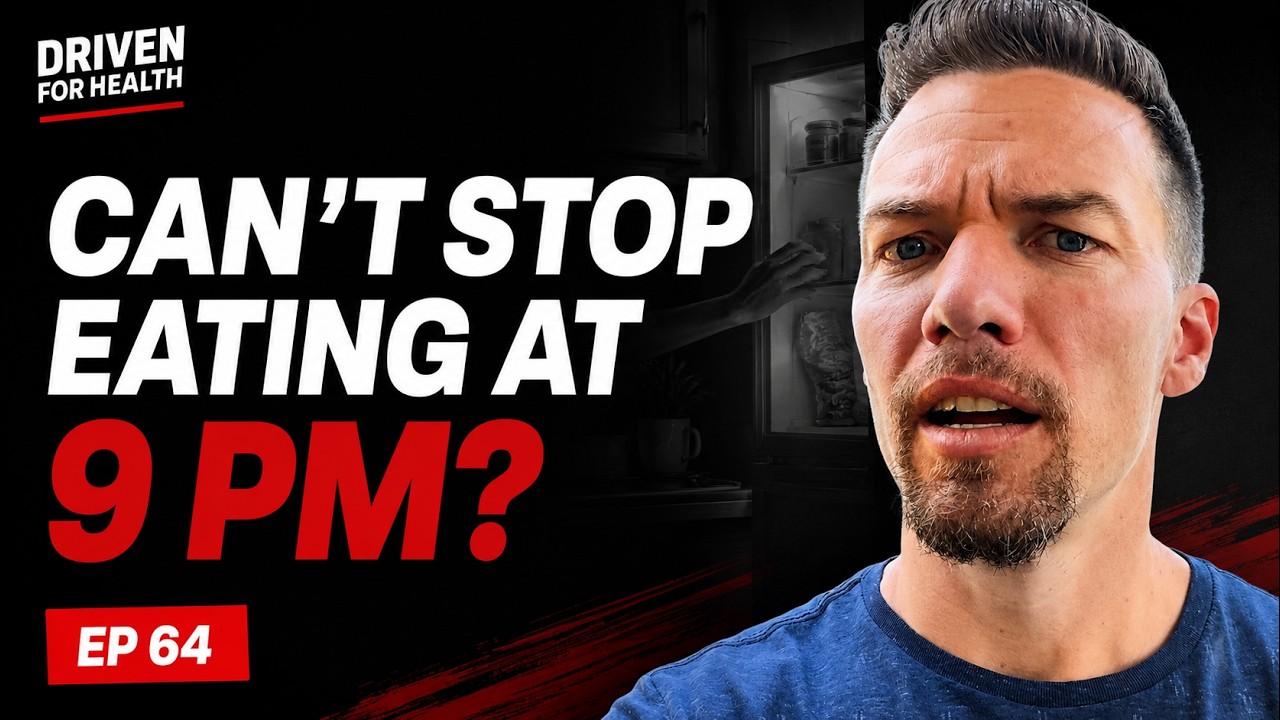
Why You Can't Stop Eating at 9 PM (And How to Fix It)
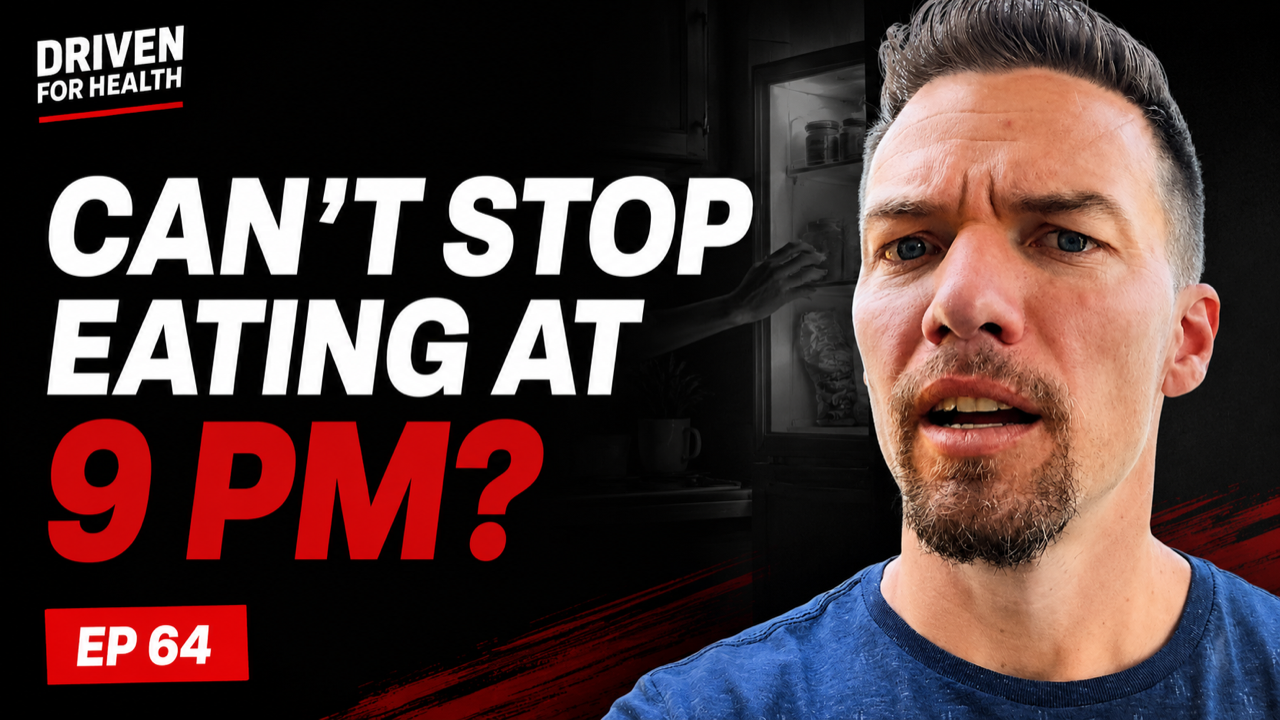
The 9 PM pantry trip has a shape to it. It starts hours earlier with something small that set you off, and it ends with cereal eaten standing up in the dark. Episode 64 walks through the four steps of that loop and what to put in the place of step three.
Most men who eat at 9 PM are not hungry. They are running a loop their brain learned years ago, and food is the fastest relief in the house. Episode 64 lays out the four steps of that loop and the three-part reset Coach Brian Parana uses with his clients.
When Food Stopped Being Fuel
One client told Coach Brian he used to be an athlete and now he cannot walk past the pantry without grabbing something. That man played college baseball and raced triathlons in his 30s. He is 43 and works in finance and he carries 35 pounds he does not want.
At 25 or 30, food was a simple thing for most men. You ate when you were hungry. You trained and you recovered. A sleeve of Oreos after a hard week did not register, because your sport or your job gave you structure and your metabolism did not care.
Then the structure went away. Work got heavier. Kids arrived. A parent got sick. Somewhere in there food stopped being fuel and became the thing that shuts your brain off after everyone else is in bed.
The thought that runs with it late at night is usually the same one. I used to have control over this. What happened to me? Coach Brian's answer is that the old version of you is still available. The strategy around him is what has to change.
The Four-Step Loop Behind 9 PM Eating
Mike is a sales director in a high-pressure job with three kids and a wife who teaches. Every night around 8:30 he ended up in the pantry eating cereal out of the box. He could not account for how he got there.
The pattern underneath it has four steps.
Step one is the trigger. Something small sets a man off. An email from the boss at 7 PM. A report card lower than expected. Ten seconds on Instagram looking at a guy from high school who appears to be winning at everything.
Step two is the emotion. Mike felt inadequate and a little angry with himself. Nothing about that feeling is comfortable and none of it gets said out loud.
Step three is the behavior. He ate. He did not plan it and he did not decide on it. He ended up in the pantry.
Step four is the relief. For about 20 minutes his brain went quiet and the uncomfortable feeling dropped away. That is the reason the loop keeps running.
The next morning he woke up bloated and annoyed with himself. The feeling he was running from came back louder with guilt stacked on it. Guilt is a trigger too, which is how the loop feeds itself night after night.
Why a Stricter Plan Makes It Worse
Most men respond to this by going extreme. They cut carbs. They run a detox. They try to be perfect for two weeks.
Restriction adds stress on top of the stress that started the loop. The cravings get louder from there, and the overeating that follows brings its own guilt with it. The plan gets tighter and the nights keep getting worse.
Men also try to solve it with a nutrition strategy. Macros. A meal plan. Cutting sugar. Recipes and food swaps are useful tools and they do not touch an emotional coping habit. What works is a system that holds up on the night everything goes sideways.
A Plan That Only Works on Calm Weeks Is Not a Plan
Most men can hold their nutrition and their training until something lands on them. A kid gets sick and they are awake all night. A brutal week at work leaves them on five hours of sleep. Four days of travel means airport food.
That is when they fall off, and none of those weeks are avoidable. Coach Brian cannot control whether something bad happens today and neither can you.
You would not build a house on sand and hope it never rains. A health plan built on the assumption that nothing goes wrong fails in the same way. The plan has to work on the bad weeks, because the bad weeks are coming.
Step One: Name Three Triggers
Not 20 of them. Three.
Write down the three moments in a normal week that put you in the pantry. Bedtime with the kids. Criticism at work. Scrolling on your phone late at night.
One client worked out that his was Sunday night. Around 8 PM the week ahead started landing on him and he would put away half a bag of chips without noticing it.
What changed things for him was having another tool ready for that moment. He stopped asking himself to sit through the feeling with nothing in his hands. For him the tool was a ten-minute walk around the block. He would feel the anxiety coming and lace up his shoes, and most nights the craving was gone by the time he got back.
Some men use pushups or prayer. Others call a friend or go do the dishes. The tool matters less than picking one before the craving arrives.
Step Two: The 10-Minute Interruption
When the craving lands, you do not tell yourself no. You tell yourself not yet.
Coach Brian runs this on himself. Telling himself a food was off limits made him think about it more, so now he gives it 10 minutes. He drinks a large glass of water and has a protein shake, then takes the dog out or reads for a few minutes.
Most of the time the craving is gone at the end of those 10 minutes. Cravings arrive in waves that peak and pass. They feel urgent in the moment and they are temporary.
If you still want the treat after 10 minutes, eat it. The difference is that you chose it. Delaying the decision is what puts you back in charge of it.
Step Three: Build a Default Day
Steve Jobs wore the same clothes every day so he would not spend mental energy deciding what to put on. A default day of eating does that for your food.
You make close to a thousand decisions at work before you walk in the door. You manage people and put out fires and solve problems all day. Adding one more decision about dinner at the end of that is how the night goes wrong.
Here is the shape of one:
- Breakfast: high-protein Greek yogurt with berries. The same thing every day.
- Lunch: grilled chicken with rice and vegetables, prepped on Sunday.
- Dinner: something simple the whole family eats, on a rotation of five meals.
- Snack: a protein shake or an apple with peanut butter. Planned.
- Treat: dark chocolate or popcorn. Controlled.
Run that most days and one hard night does not undo the week.
You do not need more variety in your food than that. Your work is unpredictable and your kids are unpredictable and your schedule is already chaos. Food is the one place where you can take decisions off the table instead of adding them.
Four Rules That Keep It Sustainable
Protein first. When you want something sweet, reach for a protein option first. A chocolate protein shake counts. This episode sets the target at one gram of protein per pound of your goal body weight, so a man who wants to weigh 180 pounds eats 180 grams a day. Hunger drops and cravings calm down when that number gets hit, and it is worth setting the exact figure with a coach who knows your body.
Plan your treats. Put the food you love on the calendar instead of hoping it fits. A treat with a date on it stays a treat. Random ones turn into binges.
Know your hard-to-moderate foods. Foods are not good or bad. Some are harder to control than others. If one cookie always becomes six, the bag does not belong in your house.
Do not start over tomorrow. After a bad night you follow your normal plan the next day. Fasting and punishment cardio set up the next binge by dinner. Eat your default day and keep going.
When Food Is Covering Something Bigger
Sometimes this is not a food problem at all. Grief that never got processed sits underneath it for some men. So does loneliness, or stress that nobody ever taught them how to carry.
You cannot outwork an emotion you have not faced. Coach Brian's advice is to get it out of you with a therapist or a counselor or a friend, or on your knees in prayer. Asking for help is the strongest move available to a man in that spot.
What Doing Nothing Costs
Do nothing and next year looks like this one with more weight on it. The gap between who you are now and who you used to be keeps widening. Coach Brian calls that the cost of inaction, and it is the one cost most men never put a number on.
Here is the work for this week:
- Write down your top three triggers.
- Pick your 10-minute interruption and commit to it.
- Write out your default day of eating.
- Stop chasing perfect and start being consistent.
Your relationship with food stays a work in progress. Coach Brian says his own is not perfect either. Getting better at it year after year is the realistic goal, and it is enough.
Get Help Building the System
The Call To Rise is a 100-day Fat Loss Challenge designed for driven men ready to get back to a healthy body, boost their energy, and lead as a powerful man.
If you are struggling with some form of chronic illness such as high blood pressure, cholesterol or even Type 2 Diabetes - this program is designed for you too.
Through a proven system of strength training, personalized nutrition, and real accountability, most men lose 20 plus pounds and rebuild the confidence that comes with it and even improve chronic illness issues. It's more than a fitness program, it's a body transformation experience with a Brotherhood of like-minded men committed to showing up, leveling up, and leading in a body they are excited about.
This is your wake-up call to rise.
www.thecalltorise.com
If you want a smaller first step than the full 100 days, the free Lose 3 lbs in 3 Days reset is at thecalltorise.com/lose3lbsin3days.
Frequently Asked Questions
Why can't I stop eating at 9 PM?
The 9 PM pantry trip is the end of a loop that started hours earlier. Something set you off. An uncomfortable feeling followed it. Eating brought about 20 minutes of quiet, and your brain filed that away as the fix. Hunger is rarely any part of it.
What are the four steps of the emotional eating loop?
Trigger, emotion, behavior, relief. Something small sets a man off. He feels something uncomfortable. He eats without planning to. His brain goes quiet for about 20 minutes. The guilt that arrives the next morning becomes the next trigger.
Why does a stricter diet make night eating worse?
Restriction adds stress on top of the stress that started the loop. Louder cravings follow, then overeating, then guilt. Coach Brian's position is that emotional eating never gets solved with more rules. It gets solved with a system that holds up on a hard night.
How do I stop a craving at night?
Do not tell yourself no. Tell yourself not yet and give it 10 minutes. Drink a large glass of water and have a protein shake. Then go do something else. Cravings arrive in waves that peak and pass. If you still want the food after 10 minutes, eat it as a choice.
What is a default day of eating?
A default day is a repeatable set of meals that removes decisions from your evening. High-protein Greek yogurt with berries for breakfast. Grilled chicken with rice and vegetables for lunch. A simple family dinner from a rotation of five meals. A planned snack such as a protein shake or an apple with peanut butter.
How much protein should I eat to calm cravings?
This episode sets the target at one gram of protein per pound of your goal body weight. A man who wants to weigh 180 pounds eats 180 grams a day. Hunger drops and cravings settle down when that number gets hit every day. Set the exact figure with a coach who knows your body and your training.
What should I do the morning after I overeat?
Follow your normal plan. Fasting all day or adding punishment cardio sets up the next binge by dinner, which is how one bad night becomes a bad week. Eat your default day and keep going.
What is the Call To Rise?
The Call To Rise is Coach Brian Parana's 100 day fat loss challenge for driven men who want their health at the level their work is already at. It runs on strength training, personalized nutrition and real accountability. Most men lose 20 plus pounds. The guarantee is that you lose 20 or more pounds in the 100 days, or Brian keeps working with you until you do.

CEO l Head Body Tranformer
Brian Parana is a men’s health coach with 23+ years of experience helping busy professionals improve their body, energy, and day-to-day habits while still leading at work and at home. His coaching is built around practical nutrition, training, sleep, and accountability, with a plan tailored to the person in front of him.
Over the years, Brian has helped thousands of clients through his work as a personal trainer, CrossFit gym owner, and online coach. He has also coached an Olympic silver medalist, a 2-time Olympian, and a CrossFit World Champion.
Brian is the host of the Driven For Health Podcast, where he shares real-world strategies for men who want to feel strong again and stay consistent without making health a second job.
He’s also the creator of The Call To Rise, a 100-day fat loss experience for driven men who want to drop 20–30 pounds, boost energy, and rebuild confidence through strength training, personalized nutrition, and high-accountability coaching. Many men join because their blood pressure, cholesterol, or blood sugar is heading the wrong direction, and they want a clear plan that fits real life.
Brian is married to his high school sweetheart, Amber, and they have four kids. Their family has traveled to all 50 states and 4 continents, with a goal to reach all seven.

What To Order At Dessert Restaurants For Fat Loss



 YouTube