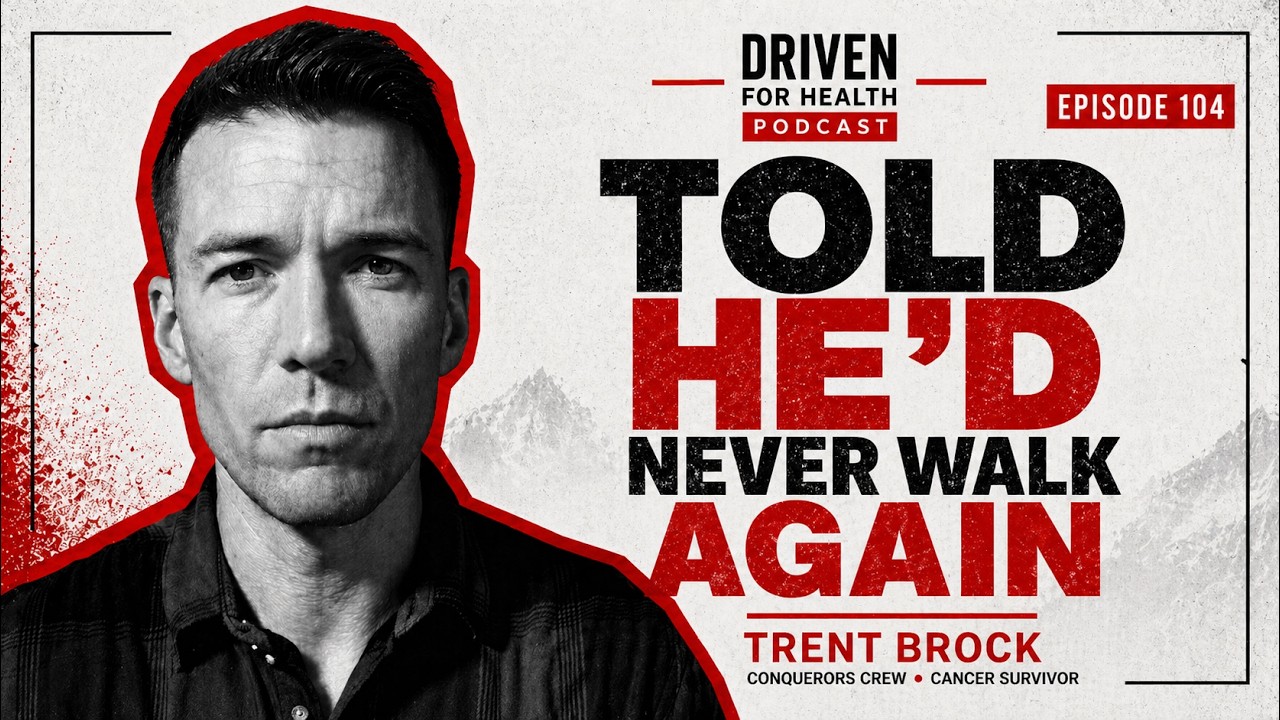
Trent Brock Refused Amputation and Rode 1,500 Miles to Save His Leg
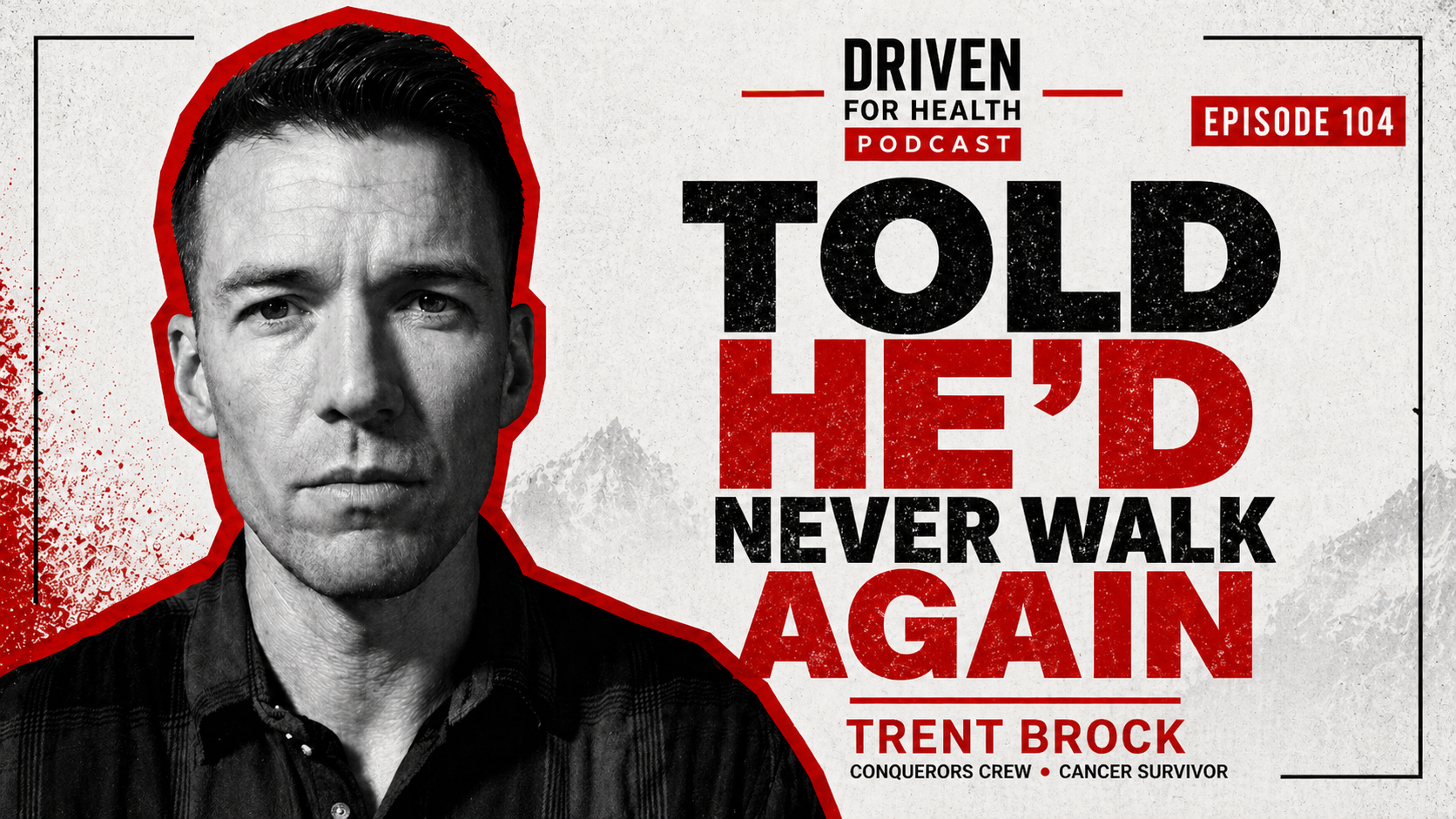
Trent Brock has survived cancer three times. When doctors wanted to amputate his leg, he found the one surgeon willing to try something else. He then rode a stationary bike more than 1,500 miles to prove his leg was strong enough for a hip replacement.
Trent's Cancer Story and the Amputation He Refused
Trent Brock hosts the Conqueror's Crew podcast. He survived cancer three times, including a battle with pancreatic cancer. His first surgery removed his entire pelvis on the left side after doctors found cancer in his hip.
Doctors told him he would never walk again. They said he needed crutches for life and recommended amputating the leg. Trent refused. His father stepped in and backed that choice after Trent broke down over the decision.
Trent spent five and a half years on crutches.
The 1,500-Mile Ride That Earned Him a New Hip
Trent's leg had atrophied down to almost nothing after years without full use. He knew a weak leg would end his chance at a real hip replacement if a surgeon tested it and found it too weak. So he trained at the Mayo Clinic in Rochester, Minnesota. He rode a stationary bike more than 1,500 miles to rebuild the leg before doctors would even consider him for surgery.
Trent now has what he calls the largest, most complex hip implant ever placed in a human being. He walks with a cane today. He does not run anymore.
Two and a Half Months Alone Led to 50 Pounds Gained, Then Lost
During COVID, Trent had a lung surgery and a hip surgery back to back. He spent two and a half months in the hospital completely alone. No visitors were allowed.
He walked laps around the hospital ward as his only exercise. He ate poorly and drank more than usual during that stretch. By the time he stepped on a scale, he weighed 205 pounds. His normal weight sits between 155 and 165 pounds.
That number was the wake-up call. Trent knew he could not carry extra weight on a leg that had already been rebuilt once. He decided that day to change. It took him nine months to lose the 50 pounds.
Brian's Five Pillars for Men Who Need to Change
Brian coaches men through the Call to Rise, his 100-day program built around five pillars. The Call covers identity, or who you see yourself as. The Forge covers movement and exercise. The Fuel covers nutrition, eating the right foods at the right times in the right amounts for your body. The Code covers mindset, the thought patterns that drive your choices. The Brotherhood covers community, a group of men who hold each other accountable.
Brian tells men their body should match the identity they want to hold. A leader who feels 30 pounds heavier than he wants to be carries friction between who he is and how he shows up.
The Real Math Behind Safe Weight Loss
Brian breaks weight loss down to real numbers. Cutting roughly 500 calories a day for a week produces about a pound of loss. One to two pounds a week is sustainable. Three pounds a week is strong progress. Four or more pounds a week usually means you are losing water weight and muscle along with fat.
Brian's own clients lose 20 plus pounds in 100 days inside the Call to Rise, then keep building from there.
Drake's Story: From 280 Pounds to a New Career
Drake came to Brian weighing between 270 and 280 pounds with high blood pressure. His doctor was ready to put him on medication. Drake asked for a chance to fix it another way first.
Drake worked a high-pressure job managing over a billion dollars in assets for an architecture firm. He drove a Shelby GT Mustang and ate steak dinners alone most nights. Brian asked him why he kept the car. Drake sold it within three days and bought an F-150 instead.
Drake lost 80 to 90 pounds, changed careers into work he enjoys, and built a new relationship that led to marriage. He shares the full story on Driven For Health, Episode 50.
Why Health Is a Leadership Tool
Health reaches past the number on the scale. It shapes how you show up for your spouse, your kids, and your team at work. A man who feels a gap between his body and his identity leads with less confidence, and people pick up on it even when he says nothing.
Trent lived this himself. Nine months of mental work went into believing he could survive pancreatic cancer, a disease with a five percent survival rate in his case. That same mental rebuild carried him through losing the 50 pounds after his hospital stay.
Listen to Episode 104 for the full conversation between Brian and Trent.
Common Questions From This Episode
What happened to Trent Brock's hip?
Surgeons removed Trent's entire pelvis on one side after finding cancer in his hip. Doctors told him he would never walk again and recommended amputating the leg. He refused.
How did Trent Brock save his leg from amputation?
Trent trained at the Mayo Clinic in Rochester, Minnesota. He rode a stationary bike more than 1,500 miles to rebuild his atrophied leg, and that strength earned him a hip replacement instead of amputation.
How much weight did Trent Brock lose after his hospital stay?
Trent gained weight to 205 pounds during a two-and-a-half-month hospital stay for a lung surgery and hip surgery. He lost 50 pounds over the following nine months to get back to his normal weight of 155 to 165 pounds.
What are Brian's five pillars in the Call to Rise program?
The Call covers identity. The Forge covers movement and exercise. The Fuel covers nutrition. The Code covers mindset. The Brotherhood covers community and accountability.
How much weight can you safely lose per week?
One to two pounds a week is sustainable. Three pounds a week is strong progress. Four or more pounds a week usually means you are losing water weight and muscle along with fat.
How much weight did Drake lose working with Brian?
Drake started between 270 and 280 pounds with high blood pressure. He lost 80 to 90 pounds and changed careers. He shares the story on Driven For Health, Episode 50.
How many pounds does the Call to Rise program target in 100 days?
Brian's clients typically lose 20 plus pounds during the 100-day Call to Rise program, then continue building from there.
Why does Brian call health a leadership tool?
A man who carries extra weight or feels disconnected from his own body leads with less confidence at home and at work. Closing that gap between identity and body changes how he shows up for the people around him.
Read the GHL-side version of this story, with Coach Brian's full breakdown, on the Driven For Health blog.

CEO l Head Body Tranformer
Brian Parana is a men’s health coach with 23+ years of experience helping busy professionals improve their body, energy, and day-to-day habits while still leading at work and at home. His coaching is built around practical nutrition, training, sleep, and accountability, with a plan tailored to the person in front of him.
Over the years, Brian has helped thousands of clients through his work as a personal trainer, CrossFit gym owner, and online coach. He has also coached an Olympic silver medalist, a 2-time Olympian, and a CrossFit World Champion.
Brian is the host of the Driven For Health Podcast, where he shares real-world strategies for men who want to feel strong again and stay consistent without making health a second job.
He’s also the creator of The Call To Rise, a 100-day fat loss experience for driven men who want to drop 20–30 pounds, boost energy, and rebuild confidence through strength training, personalized nutrition, and high-accountability coaching. Many men join because their blood pressure, cholesterol, or blood sugar is heading the wrong direction, and they want a clear plan that fits real life.
Brian is married to his high school sweetheart, Amber, and they have four kids. Their family has traveled to all 50 states and 4 continents, with a goal to reach all seven.

What To Order At Dessert Restaurants For Fat Loss



 YouTube