Nutrition That Fits a Busy Man's Life After 40
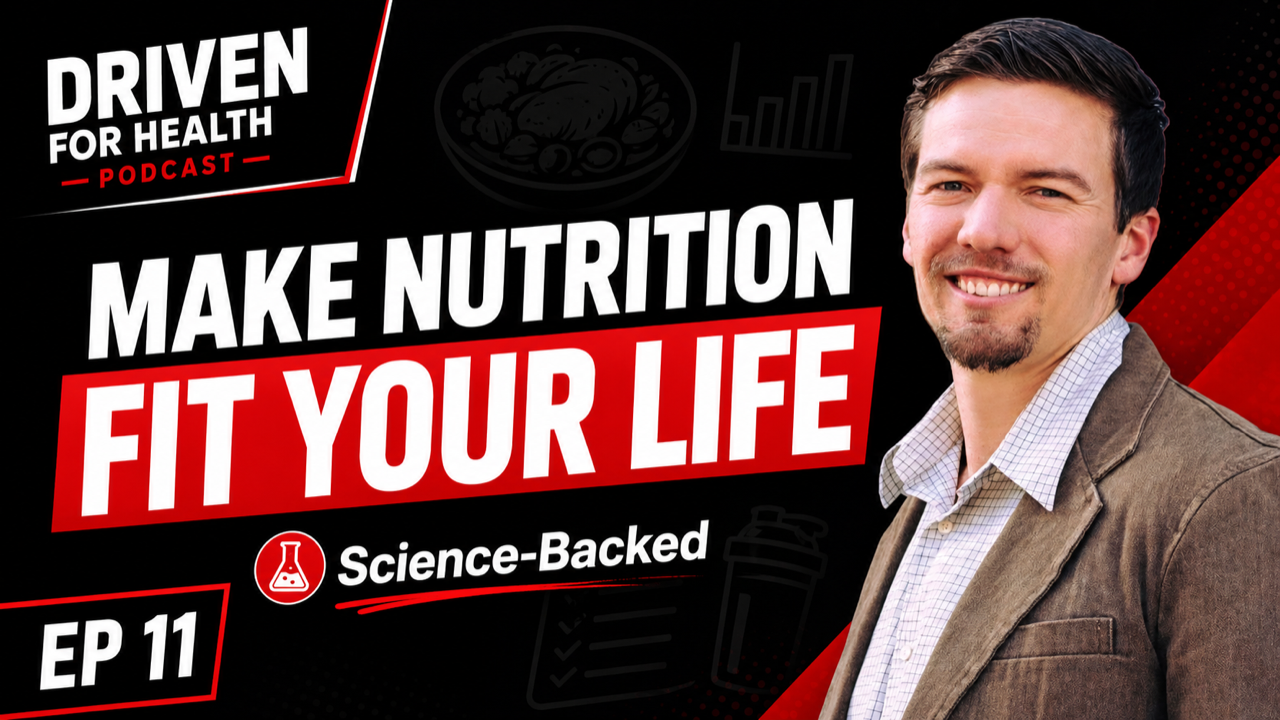
Science only works if you can live with it. Coach Brian closes out the Nutrition Pyramid with the behavior and lifestyle habits that turn a good plan into results you can keep for years.
Track What You Can Measure
You cannot manage what you do not measure. A food scale teaches you what real portions look like. Most guys underestimate how much they eat by hundreds of calories. They eyeball portions and that cup of rice turns out to be a cup and a half. A digital scale, used even for a few weeks, calibrates your instincts so you stop guessing.
Apps like Cronometer, MyFitnessPal, or Macros+ make logging easier and keep you honest without obsessing over every gram forever. Weigh yourself daily, first thing in the morning, and track the weekly average instead of any single day. Sodium, carbs, water, sleep, and stress can swing your weight by several pounds. The trend line over weeks is what tells you the truth.
Match Your Precision to Your Goal
How tight you track depends on where you are in the process. With 50 or more pounds to lose, a rough calorie and macro range still produces steady results. The deficit is large enough that small estimation errors do not stall progress. With 20 pounds to go, tighten your ranges, especially on protein and fat. Small misses start to matter more. In your final 5 to 7 pounds, use a food scale for nearly every meal. An extra 100 to 200 calories can stall progress at this stage.
A client named Will came in with more than 80 pounds to lose. Early on he estimated his intake and still lost weight steadily. Once he dropped 40 pounds, he added tighter tracking on protein sources and starchy carbs. In his final 10 to 15 pounds, he weighed nearly every meal and stayed inside narrow macro ranges. Matching his effort to his stage kept him consistent instead of burned out.
Some clients skip macro tracking altogether and only track protein and calories. That is often enough to stay on target while keeping life simple. The goal is not precision for its own sake. The goal is sustainability.
Eating Out Without Losing Your Progress
You cannot pause your life every time a dinner or work trip comes up. During a fat-loss phase, keep restaurant meals simple: grilled protein, steamed vegetables, and light on sauces. During maintenance or a building phase, eat out a couple times a week and track it roughly. One imperfect meal does not erase your progress. What kills progress is the guilt spiral that follows. How quickly you get back on track matters more than how perfectly you avoid mistakes.
Ten Ways to Track Progress Beyond the Scale
The scale is only one signal among many. Body measurements at the waist, chest, arms, and legs can show real change even when the scale holds steady. Energy levels, clothing fit, progress photos, feedback from people around you, gym performance, mood, sleep quality, and how well you handle a busy week without derailing all count as progress.
A client named Dennis trained consistently, tracked his food, and slept well. He still felt frustrated because the scale barely moved. When Coach Brian checked his measurements, Dennis had lost multiple inches off his waist and dropped two pant sizes. His body was losing fat and holding muscle the whole time. The scale alone had been telling him the wrong story. Checking several signals at once gives you the full picture.
Break Free From All-or-Nothing Thinking
All-or-nothing thinking convinces you that one missed target ruins the whole day. Five thoughts feed that trap: telling yourself you might as well quit if you cannot do it perfectly, deciding the day is ruined after one slip, assuming everyone else's strict approach is the only path, believing you need 100 percent adherence to succeed, and promising to start over tomorrow while today does not count.
Rigid meal plans, strict macro rules, and clean-eating lists all reinforce this pattern. They sound like discipline but they lead to burnout, binge eating, and starting over. The men who succeed long-term are not the ones who never slip. They are the ones who reset at the next meal instead of the next Monday.
Drop the Good Food, Bad Food Labels
Labeling foods good or bad creates guilt that often triggers overeating after a single slip. Chicken, egg whites, and brown rice were good. Bread, pasta, and pizza were forbidden. Some coaches added no dairy, no gluten, no carbs after 6 p.m. One bite of a forbidden food and the whole day felt blown.
That thinking is binary. You are either good or bad. That binary shuts down flexibility, kills your social life around food, and eventually leads to binge cycles. No single food derails progress inside a balanced plan. Energy balance, protein targets, and consistency over time decide your results. Even white rice and brown rice have nearly identical nutrition labels.
Build Accountability, Then Become It for Someone Else
No one sustains results alone. A coach, a training partner, or a group of men on the same path keeps you sharp. Accountability does not make you weak. It keeps you honest when motivation fades.
A client named John ran a business, managed a team, and raised a family. He cycled through keto, intermittent fasting, and low-fat diets for years. Each time he lost weight. Each time it came back. The restriction isolated him from meals with his family and work lunches with his team. Coach Brian shifted the approach to flexibility and consistency over perfection. John learned to fit macro-conscious choices into the meals he was already eating. He kept the weight off this time because the system worked with his life instead of against it.
The deeper you go into your own progress, the more people around you will look to you for guidance. Teaching someone else what you learned locks in your own habits even further.
Handle Alcohol Like a Coach
Alcohol carries about 7 calories per gram, close to the 9 calories per gram in fat. Most drinks add carbs on top: barley in beer, juice in cocktails, sugar in mixed drinks. A few drinks can add 300 to 500 calories without filling you up. Your body treats alcohol as a toxin and burns it first. That pauses fat burning until the alcohol clears your system.
Alcohol can also lower testosterone and raise cortisol, both of which make fat loss harder, especially around your midsection. Two beers might be 300 to 400 calories. You can account for those by cutting 50 grams of carbs and 20 grams of fat across your meals for that day and stay inside your energy balance. Keep drinking to one or two occasions a week with one or two standard drinks each. Avoid drinking right after hard training or before important recovery days.
Your Next Step
If this episode hit home, start with the free guide. Get the Lose 3 Lbs in 3 Days plan here.
If you are ready to work with Coach Brian directly, apply for Call To Rise. The program comes with a guarantee: lose 20 pounds in 100 days or Brian keeps coaching you until you do.
Listen to Episode 11 for the full breakdown of how to make nutrition fit your real life.
Also read: The Behavior Layer That Makes Nutrition Work on the Driven For Health blog.
Common Questions From This Episode
How precise do I need to be with tracking my macros?
It depends on how far you have to go. With 50 or more pounds to lose, a rough calorie and macro range still produces steady results. With 20 pounds to lose, tighten your ranges on protein and fat. In your final 5 to 7 pounds, use a food scale for almost every meal. Small misses matter most at this stage.
What is the best way to track progress besides the scale?
Body measurements, clothing fit, progress photos, energy levels, gym performance, mood, sleep quality, and how well you handle a busy week all show progress the scale can miss. Check several signals at once before deciding if your plan is working.
How do I stop all-or-nothing thinking with food?
Notice the thoughts that feed it, like believing one slip ruins the day. Reset at your next meal instead of waiting for tomorrow. Recovery speed matters more than avoiding every miss. Progress comes from how quickly you get back on plan, not from perfection.
Should I avoid foods labeled bad?
No single food derails progress inside a balanced plan. What matters is total energy balance, hitting your protein target, and staying consistent. A good or bad label on a food does not decide your results.
How does alcohol affect fat loss?
Alcohol carries about 7 calories per gram. Your body burns it first, which pauses fat burning until it clears your system. It can lower testosterone and raise cortisol. Two beers add roughly 300 to 400 calories. Account for those calories in your macros and avoid drinking right after hard training sessions.
How do I stay on track when eating out?
During a fat-loss phase, keep meals simple with grilled protein and steamed vegetables, and go light on sauces. During maintenance, eat out a couple times a week and track it roughly. One meal will not erase your progress. The guilt spiral that follows a slip does far more damage than the slip itself.
Why does accountability matter for long-term results?
No one sustains results alone. A coach, training partner, or group keeps you consistent. Helping others stay on track reinforces your own discipline. The men who succeed long-term are the ones who build a support system and stay inside it.
How much should my bodyweight fluctuate day to day?
Sodium, carbs, water, sleep, and stress can swing your weight by several pounds in a single day. Weigh yourself daily in the morning and track the weekly average. The trend over several weeks tells you whether your plan is working.

CEO l Head Body Tranformer
Brian Parana is a men’s health coach with 23+ years of experience helping busy professionals improve their body, energy, and day-to-day habits while still leading at work and at home. His coaching is built around practical nutrition, training, sleep, and accountability, with a plan tailored to the person in front of him.
Over the years, Brian has helped thousands of clients through his work as a personal trainer, CrossFit gym owner, and online coach. He has also coached an Olympic silver medalist, a 2-time Olympian, and a CrossFit World Champion.
Brian is the host of the Driven For Health Podcast, where he shares real-world strategies for men who want to feel strong again and stay consistent without making health a second job.
He’s also the creator of The Call To Rise, a 100-day fat loss experience for driven men who want to drop 20–30 pounds, boost energy, and rebuild confidence through strength training, personalized nutrition, and high-accountability coaching. Many men join because their blood pressure, cholesterol, or blood sugar is heading the wrong direction, and they want a clear plan that fits real life.
Brian is married to his high school sweetheart, Amber, and they have four kids. Their family has traveled to all 50 states and 4 continents, with a goal to reach all seven.
What To Order At Dessert Restaurants For Fat Loss


 YouTube