How to Set Your Macros for Fat Loss and Muscle Gain After 40
How to Set Your Macros for Fat Loss and Muscle Gain After 40
Every macro mistake Coach Brian sees starts with the same problem: men set their numbers by feel instead of by math. This episode gives you the math. It covers protein, carbs, and fat. It shows exactly how two men changed their bodies once the ratios were right.
Macronutrients Build on Your Calorie Foundation
Episode 5 covered energy balance, the foundation of the Nutrition Pyramid. This episode moves up one level to macronutrients. Protein, carbs, and fat make up every calorie you eat. Get your calories right first. Then macros decide how those calories work for you.
How Protein, Carbs, and Fat Break Down
Protein and carbs each provide 4 calories per gram. Fat provides 9 calories per gram. There are two common ways to set macros. One is grams per pound of body weight. The other is a percentage of total calories. Grams per pound respects your body size but ignores your total calorie budget. Percentages respect your calorie budget but ignore your individual body size.
The Hybrid Method for Setting Your Macros
Coach Brian uses a hybrid method. Protein is set by body weight, since it builds and repairs your body. Carbs and fat are set as percentages of total calories, since they mainly fuel energy. This approach works because protein requirements track how much muscle you have to protect or build. Your calorie budget determines how much room remains for the two fueling macros.
Macros for Fat Loss
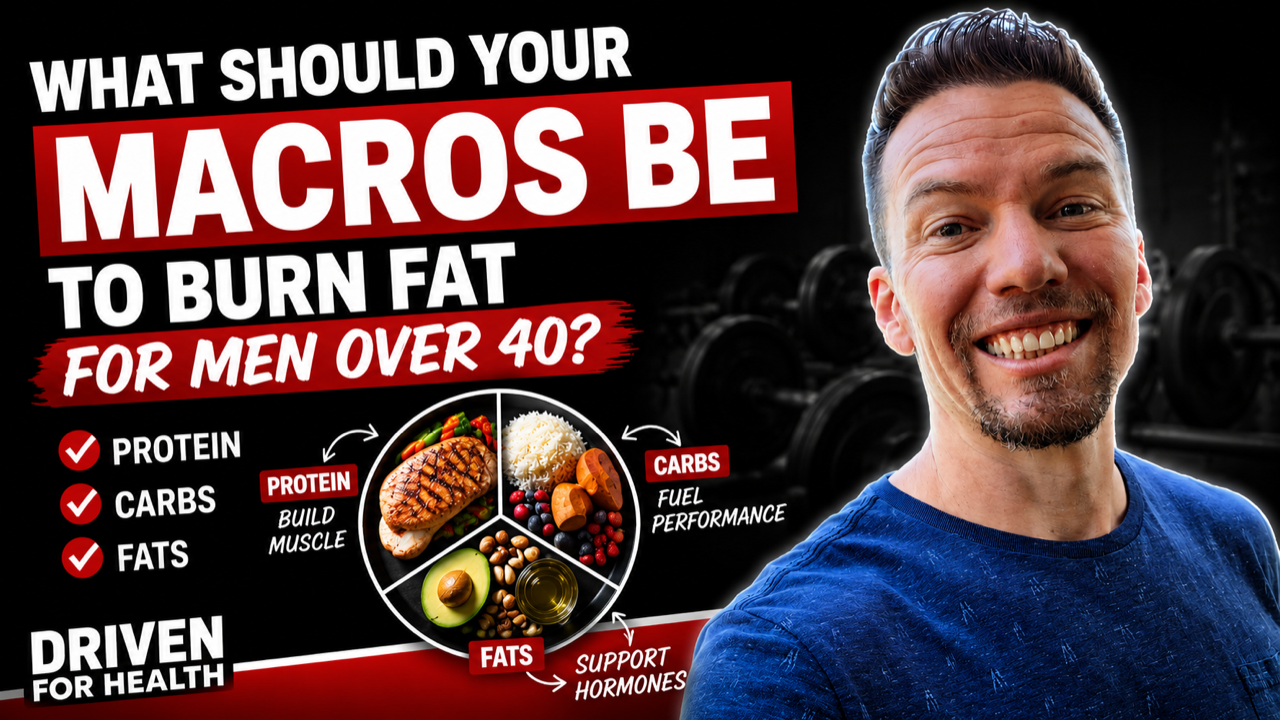
A calorie deficit puts your muscle at risk. Protein needs to stay high to limit how much muscle you lose alongside fat. Aim for 1 to 1.4 grams of protein per pound of body weight. How high you go depends on your deficit size, training volume, and body composition.
Fat intake drops a little in a deficit. Keep it between 15 and 25 percent of total calories. That range supports healthy hormones and basic function. Carbs fill the rest of your calories. Training intensity is the main driver of muscle retention in a cut. When carbs drop too low, workout quality drops. Muscle retention drops with it.
Macros for Muscle Gain
A calorie surplus creates an environment where muscle growth is more likely. Your body is not fighting to hold on to what it has. Protein needs drop here: 0.8 to 1.2 grams per pound of body weight. Fat can run higher in a gaining phase, between 20 and 30 percent of total calories. Carbs fill the rest. They fuel harder training sessions and speed recovery between them.
A Worked Example at 200 Pounds
Take a 200-pound man eating 3,200 calories to gain muscle. He needs 200 grams of protein, 90 grams of fat, and about 400 grams of carbs. Protein covers 800 calories. Fat covers 800 calories. Carbs cover the remaining 1,600 calories.
Now take the same man cutting at 2,500 calories. He needs about 225 grams of protein, 55 grams of fat, and 275 grams of carbs. Protein goes up to protect muscle. Fat drops a bit. Carbs shrink but stay high enough to keep training quality where it needs to be.
Why Protein Goes Up When Calories Go Down
Most men assume they need more protein when gaining and can ease off when cutting. The opposite is true. In a surplus, your body has plenty of energy. Muscle has a reason to grow. Protein requirements are lower because conditions favor retention. In a deficit, your body looks for calories wherever it can find them. Muscle tissue becomes a target. High protein keeps the body choosing fat as the fuel source instead of muscle.
Dropping protein during a cut is one of the most common mistakes Coach Brian sees in men over 40. They cut carbs. They cut fat. They take protein down with everything else. The scale moves but strength drops. Energy crashes. The physique ends up softer than it started.
Fat Intake and Hormones
Fat below 15 percent of total calories disrupts hormone production. Testosterone and other hormones that regulate body composition depend on dietary fat. Men who cut fat too aggressively often see energy, mood, and recovery drop before they see any change on the scale. Keeping fat above the floor protects the hormonal environment that makes fat loss and muscle gain possible in the first place.
Fiber: The Piece Most Men Skip
Fiber supports gut health, nutrient absorption, and appetite control. Men need at least 25 grams a day. Women need at least 20 grams a day. Keep fiber under 20 percent of your total carb intake to avoid digestive issues. On a lower-carb plan, aim for about 10 grams of fiber per 1,000 calories you eat.
Most men eating 2,000 to 3,000 calories fall short on fiber because they cut whole grains, beans, and vegetables when they start tracking. A few easy swaps at meals can close the gap without touching your protein or calorie targets.
David: When the Numbers Are Off
David was 46 and an executive who played college sports. He had not felt athletic in over a decade. He was raising kids, climbing the corporate ladder, and grinding through long commutes. His workouts disappeared. When he came back to fitness, he slashed carbs and overdid cardio to drop weight fast. He skipped meals and ran a deficit that was too deep. He lost weight. He also lost muscle and felt exhausted. His body got lighter on the scale and weaker in the gym. That is what happens when a deficit runs too deep and macros are not set to protect muscle.
Coach Brian reset David's numbers. Protein went up. Carbs came back to a level that let him train hard. Fat stayed in a range that kept his hormones working. David lost fat and built strength at the same time. He did not need more willpower. He needed the right ratio.
Ralph: When the Numbers Click
Ralph was 52 and a father of three. Every January he cut carbs to nothing and ran every morning. He would lose 20 pounds, and by summer the weight was back. Coach Brian set the right macro balance: protein high enough to protect muscle, carbs high enough to fuel training, and fat at a level that kept his hormones stable. Ralph lost fat and rebuilt his strength. He trained to perform. He stopped shrinking toward a number.
Putting This Into Practice
Start with protein. Take your body weight and multiply by 1 to 1.4 if you are cutting, or 0.8 to 1.2 if you are gaining. Set fat next. Pick a percentage from the ranges above and calculate the grams. Multiply protein grams by 4 and fat grams by 9 to find the calories each one uses. Subtract both from your total calorie target. What remains goes to carbs. Divide that number by 4 to get carb grams.
Track your weight and training performance for two to three weeks once your macros are set. Your weight trend tells you if the calories are right. Your training performance tells you if carbs are high enough. Adjust from there. Once macros are dialed in, move up the Nutrition Pyramid. Micronutrients sit at the next level.
Macronutrients Recap
Protein is set by body weight. Carbs and fat are set as percentages of your calories. Fiber supports digestion and appetite control. Set protein first to protect muscle. Use the remaining calories for carbs and fat based on your training and recovery needs. Get this level right, and the rest of the pyramid builds on top of a solid base.
Listen to Episode 6 for the full breakdown, including how to use the hybrid method to set your numbers right now.
For more on this episode, read the companion post on the GHL blog: Macros for Men Over 40: Protein, Carbs, and Fat Explained.
Common Questions From This Episode
What are macronutrients?
Protein, carbs, and fat are macronutrients. Protein and carbs each carry 4 calories per gram. Fat carries 9 calories per gram. Every calorie you eat comes from one of these three sources.
How do macros work with calories?
Calories set the total amount you eat. Macros decide how those calories are split between protein, carbs, and fat. Get your calorie target right first. Then macros shape whether those calories go toward fat loss, muscle retention, or muscle gain.
What is the hybrid method for setting macros?
The hybrid method sets protein by body weight, since protein requirements track how much muscle you have. Carbs and fat are set as percentages of total calories, since they mainly fuel energy. This approach respects both your body size and your calorie budget.
How much protein do I need to lose fat?
Aim for 1 to 1.4 grams of protein per pound of body weight when cutting. The deeper your deficit, the higher protein should go. Protein protects the muscle you have while your body burns fat.
How much protein do I need to build muscle?
Aim for 0.8 to 1.2 grams of protein per pound of body weight in a gaining phase. A surplus gives your body the energy and building material to add muscle. You need less protein to build than to protect, because your body is not fighting a deficit.
How do I set my carbs and fat?
Set protein first, then fat. Keep fat between 15 and 25 percent of total calories in a cut, or 20 and 30 percent in a gaining phase. Multiply fat grams by 9 and protein grams by 4. Subtract both from your total calories. Divide what remains by 4 to get your carb grams.
Why does protein need to go higher when cutting?
A calorie deficit puts your body in a state where it may break down muscle alongside fat. High protein gives your body enough building material to keep muscle tissue intact. Cutting protein in a deficit accelerates muscle loss. You end up weaker even as the scale drops.
What happens if fat intake drops too low?
Fat below 15 percent of total calories disrupts hormone production. Testosterone and other hormones that regulate body composition depend on dietary fat. Men who cut fat too aggressively often see their energy, mood, and recovery drop before they see any change on the scale.
What role do carbs play in keeping muscle?
Carbs fuel your training sessions. When carbs drop too low, workout intensity drops with them. Lower intensity means less mechanical stress on the muscle. Less stress means the muscle has less reason to stay. Keeping carbs high enough to train hard is one of the most underrated muscle-retention tools in a cut.
How much fiber should I eat each day?
Men need at least 25 grams of fiber a day. Keep fiber under 20 percent of your total carb intake to avoid digestive issues. On a lower-carb plan, aim for about 10 grams of fiber per 1,000 calories you eat each day.
Do I need to track macros every day?
Start by tracking for two to three weeks to build your baseline. Once you know how your body responds to a given macro split, weekly weight trends and training performance become your main guides. Adjust the numbers based on what you see. Consistent direction matters more than daily precision.
How do I put macros into practice?
Start with protein. Multiply your body weight by 1 to 1.4 if you are cutting, or 0.8 to 1.2 if you are gaining. Set fat next using the percentage ranges above. Fill the rest of your calorie budget with carbs. Track for two to three weeks and adjust based on your weight trend and training performance.

CEO l Head Body Tranformer
Brian Parana is a men’s health coach with 23+ years of experience helping busy professionals improve their body, energy, and day-to-day habits while still leading at work and at home. His coaching is built around practical nutrition, training, sleep, and accountability, with a plan tailored to the person in front of him.
Over the years, Brian has helped thousands of clients through his work as a personal trainer, CrossFit gym owner, and online coach. He has also coached an Olympic silver medalist, a 2-time Olympian, and a CrossFit World Champion.
Brian is the host of the Driven For Health Podcast, where he shares real-world strategies for men who want to feel strong again and stay consistent without making health a second job.
He’s also the creator of The Call To Rise, a 100-day fat loss experience for driven men who want to drop 20–30 pounds, boost energy, and rebuild confidence through strength training, personalized nutrition, and high-accountability coaching. Many men join because their blood pressure, cholesterol, or blood sugar is heading the wrong direction, and they want a clear plan that fits real life.
Brian is married to his high school sweetheart, Amber, and they have four kids. Their family has traveled to all 50 states and 4 continents, with a goal to reach all seven.

What To Order At Dessert Restaurants For Fat Loss



 YouTube