Fat Loss Psychology and Supplements: What Works
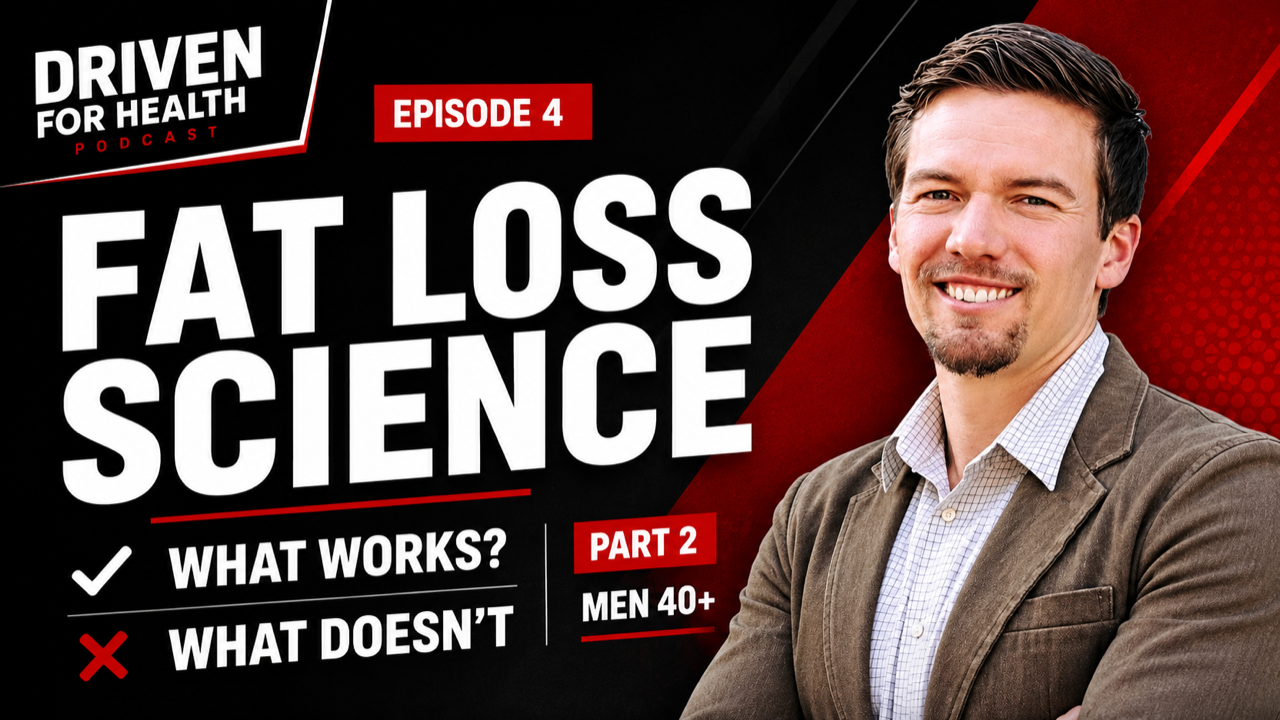
This is Part 2 of the Science of Fat Loss series on Driven For Health. Coach Brian covers why motivation fails, how to design your kitchen for better choices, and which supplements are worth buying. Two client turnarounds show what small, consistent changes look like in practice.
Why Habits Outlast Motivation
Motivation is high at the start of a diet. It fades fast once business trips, family dinners, and stress take over. Sports nutritionist Sohee Lee calls the constant chase for a new diet or supplement "shiny object syndrome." Building a real habit removes the need for constant self-control. Once a behavior becomes automatic, you no longer think about it.
Choice Architecture: Design Your Kitchen for Success
Moving a candy bowl from the counter to a high shelf cuts your intake without any willpower. This is choice architecture. It means arranging your kitchen so the better choice is the one right in front of you. Keep fruit and pre-cooked protein visible. Pre-portion treats into small containers. Keep high-calorie convenience food out of sight.
Why Habits Outlast Self-Control
Self-control matters early, while you're building a new habit. It matters much less once the habit sticks. A study in Health Psychology found it took about 66 days on average for a new behavior to become automatic. Sarah's story below shows what that looks like.
One Client's Turnaround
Coach Brian worked with a client he calls Sarah. She had tried keto, low-carb, and intermittent fasting. Each time she burned out by week three or four. This time she added a protein source to every meal, pre-cut veggies for snacks, and moved candy to a high shelf. Within weeks she was making better choices without thinking about it. Six months later she had lost 25 pounds and kept her muscle. She still enjoys vacations and treats with friends.
Do Supplements Work?
Supplements add a small boost on top of the basics: sleep, protein, training, and a calorie deficit. Sports supplement researcher Dr. Eric Trexler breaks fat-loss supplements into three groups. Fat oxidation enhancers like carnitine and conjugated linoleic acid show minimal effect in healthy adults without exercise, per a 2011 review in Molecular Nutrition and Food Research. Energy expenditure boosters like caffeine and yohimbine show small effects, and yohimbine carries real side-effect risk. Nutrient blockers often cause GI distress for modest results, per a 2015 review in Critical Reviews in Food Science and Nutrition.
The Four Supplements Worth Taking
Creatine monohydrate supports strength and helps preserve muscle during a calorie deficit. Research in the Journal of Strength and Conditioning Research backs creatine as safe and effective for this. Whey protein makes it easier to hit your protein target without excess calories. A 2013 meta-analysis in Nutrition and Metabolism found high-protein diets improve fat loss results. Fish oil supports recovery and general health during a deficit. A multivitamin or vitamin D fills gaps that show up when you're eating less food overall.
One Client's Supplement Reset
Coach Brian worked with another client he calls Jake. Jake kept buying fat burners and thermogenic supplements advertised online. He saw little fat loss, and he felt jittery and slept poorly. Coach Brian moved him back to the basics: a moderate calorie deficit, resistance training, a whey shake to hit his protein target, and creatine for strength. Jake started losing fat again once he made that switch. He stopped spending money on supplements that never worked for him.
Fat Loss Fundamentals, Recap
A calorie deficit comes first. Every other step in this list depends on it. Resistance training comes next, since it signals your body to hold onto muscle while you lose fat. Aim for a deficit of 0.5 to 1.5 percent of bodyweight per week. Hit at least 2 grams of protein per kilogram of bodyweight. A simple target: aim for a protein gram count close to your height in centimeters. Add cardio on top of resistance training and diet for an extra edge.
Nutrition Quality: What to Eat
Calories and macros are the main cause of fat loss. Food quality still matters for how full you feel and how long you stick with the plan. Build most meals around lean protein, fruits, vegetables, and carbs that aren't heavily processed. Treats and snacks still fit into this. Keep your plan flexible enough to enjoy a birthday cake or a night out, and you'll stick with it longer.
How to Keep the Fat Off
Track your weight or measurements every week so you catch a trend early. Keep training with weights and cardio on a regular schedule. A written plan for training and food keeps you consistent when motivation dips again. Add calories back slowly as you settle into a new maintenance level, and keep the same habits that got you here.
Putting This Into Action
Here is how to start today. Set a calorie target that creates a moderate deficit. Plan resistance training three to five times a week. Hit your protein goal with mostly whole foods. Keep cardio strategic: no more than 30 minutes of low-intensity work most days, plus one or two HIIT sessions a week. Build repeatable habits, and track your weight or measurements every week. Save supplements for filling small nutrition gaps once the basics above are in place.
Listen to Episode 4 for the full breakdown, including Part 1's foundational five factors of fat loss.
For more on this episode, read the companion post on the GHL blog: Why Motivation Fails and Habits Win for Fat Loss After 40.
Common Questions From This Episode
Why does motivation alone fail for fat loss?
Motivation is high at the start of a diet. It fades fast once business trips, family dinners, and stress take over. A real habit keeps you going after motivation runs out.
What is choice architecture?
Choice architecture means arranging your environment so the better choice is the one in front of you. Moving a candy bowl to a high shelf and keeping fruit visible on the counter are simple examples.
How long does it take for a new habit to become automatic?
A study in Health Psychology found it took about 66 days on average for a new behavior to become automatic. Self-control matters early. It fades in importance once the habit sticks.
Do fat-burning supplements work?
Most fat oxidation enhancers like carnitine show minimal effect in healthy adults without exercise. Nutrient blockers often cause stomach issues for modest results. Supplements add a small boost on top of the basics: sleep, protein, training, and a calorie deficit.
Which supplements are worth taking for fat loss?
Four supplements make the list: creatine, whey protein, and fish oil plus a multivitamin or vitamin D. Creatine preserves muscle during a deficit. Whey helps you hit your protein target. Fish oil supports recovery, and a multivitamin fills nutrient gaps.
What is the fat loss fundamentals recap from this episode?
A calorie deficit comes first. Every other step depends on it. Resistance training preserves muscle while you lose fat. Aim for a 0.5 to 1.5 percent bodyweight deficit per week and at least 2 grams of protein per kilogram of bodyweight.
How did one client break her yo-yo dieting cycle?
Coach Brian worked with a client he calls Sarah. She had tried keto, low-carb, and intermittent fasting. Each time she burned out by week three or four. This time she added a protein source to every meal, pre-cut veggies for snacks, and moved candy to a high shelf. Six months later she had lost 25 pounds and kept her muscle.
How much cardio should men over 40 do for fat loss?
Cardio adds an extra edge on top of resistance training and diet. Low-intensity cardio in moderation complements resistance training without hurting recovery. One or two HIIT sessions a week add extra benefit on top.
Why do I keep gaining weight even though I eat the same as before?
Men in their 40s often see their metabolism slow down. Fat tends to build up around the stomach even when your diet has not changed much. A calorie deficit of 0.5 to 1.5 percent of bodyweight per week offsets this. Building more muscle through resistance training helps too.
How can I get more energy throughout the day?
Low energy and midday crashes usually trace back to poor sleep, high stress, and inconsistent nutrition. Eating enough protein and keeping regular meal times helps prevent the crash. Fix your sleep schedule before you change anything about your training.
What is the fastest way to lose fat without spending hours in the gym?
Short gym sessions can still get real results. Train with weights three to five times a week, in sessions under an hour. That builds and preserves the muscle that keeps your metabolism higher. Add a 0.5 to 1.5 percent bodyweight deficit on top of that training.
How do I balance health, family, and career without feeling overwhelmed?
Pick two or three small changes that fit your existing schedule, such as a protein-forward breakfast and a set training schedule. Add one more change once those two feel automatic.

CEO l Head Body Tranformer
Brian Parana is a men’s health coach with 23+ years of experience helping busy professionals improve their body, energy, and day-to-day habits while still leading at work and at home. His coaching is built around practical nutrition, training, sleep, and accountability, with a plan tailored to the person in front of him.
Over the years, Brian has helped thousands of clients through his work as a personal trainer, CrossFit gym owner, and online coach. He has also coached an Olympic silver medalist, a 2-time Olympian, and a CrossFit World Champion.
Brian is the host of the Driven For Health Podcast, where he shares real-world strategies for men who want to feel strong again and stay consistent without making health a second job.
He’s also the creator of The Call To Rise, a 100-day fat loss experience for driven men who want to drop 20–30 pounds, boost energy, and rebuild confidence through strength training, personalized nutrition, and high-accountability coaching. Many men join because their blood pressure, cholesterol, or blood sugar is heading the wrong direction, and they want a clear plan that fits real life.
Brian is married to his high school sweetheart, Amber, and they have four kids. Their family has traveled to all 50 states and 4 continents, with a goal to reach all seven.
What To Order At Dessert Restaurants For Fat Loss


 YouTube