Entrepreneur Syndrome: How Success Quietly Breaks Your Health
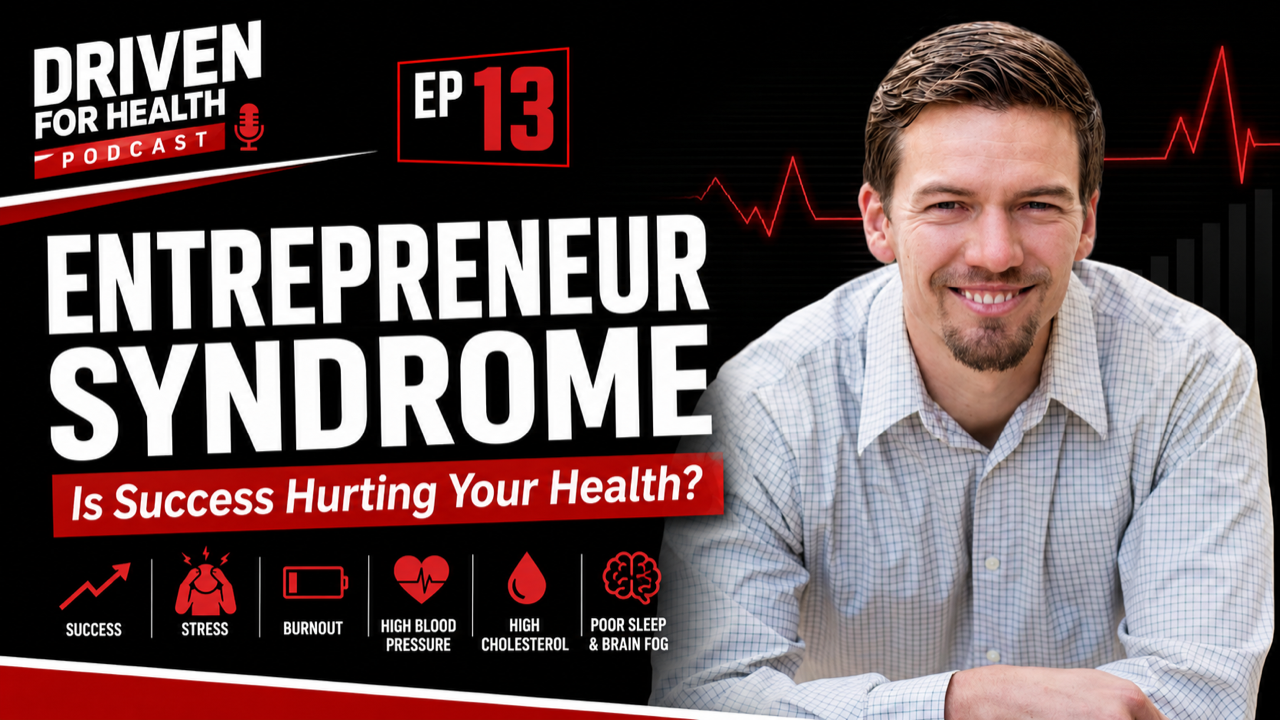
The same drive that built your business can quietly raise your blood pressure and cholesterol and put your heart at risk. Coach Brian breaks down Entrepreneur Syndrome, shows you the real numbers behind the risk, and gives you five steps to protect your health without slowing down your career.
What Entrepreneur Syndrome Looks Like
Entrepreneur Syndrome is not an official diagnosis. It is a pattern that shows up when the habits that helped you succeed start working against you. Imposter syndrome pushes you to overwork to prove you belong, and that pressure keeps cortisol high and energy low. Founder's syndrome keeps you doing everything yourself, so your brain never shuts off even when you are supposed to be resting. A third pattern shows up when you have achieved a lot but lost your sense of direction, and discipline quietly slips. All three leave you performing on an empty tank.
What Constant Pressure Does Inside Your Body
Chronic stress raises cortisol. That can lower testosterone and disrupt your sleep. Poor sleep means your body cannot repair itself. Skipped meals and long hours at a screen add fatigue, inflammation, and weight gain on top. This leads to high blood pressure, insulin resistance, brain fog, and low libido if nothing changes.
The Two Silent Killers: Blood Pressure and Cholesterol
High blood pressure and high cholesterol often develop without any noticeable symptoms. Nearly 1 in 2 men over 40 has high blood pressure, according to CDC data from 2021 to 2023. Many do not realize it because it rarely causes symptoms. By the time most men hit their 40s, 1 in 3 already has high cholesterol. That is according to the CDC's National Health and Nutrition Examination Survey from 2017 to 2018. Heart disease remains the leading cause of death for men. The CDC reports that 1 in 4 heart attack deaths happens before age 55.
Why High Performers Struggle to Change
The same mindset that wins in business makes it hard to slow down when your body is asking for it. You built success by being independent, driven, and able to push through anything. You cannot out-hustle poor recovery or a diet that is mostly grab-and-go.
Nick's Wake-Up Call
Nick is 47. He runs a small but successful marketing firm and is married with two kids in high school. His days start early and end late, breakfast is coffee and a protein bar, and dinner happens between calls. He kept telling himself he would get back to training once things settled down, but they never did.
He started waking up tired even after a full night's sleep. His clothes fit tighter, his energy crashed mid-afternoon, and he brushed off the chest pressure he felt after stressful days as ordinary tension. At a routine check-up, his doctor found his blood pressure at 152 over 96 and his cholesterol at 240. The doctor told him he was not sick yet, but he was on his way if nothing changed. Nick thought about his own father, who had his first heart attack at 52. He also thought about the real weekends he had not had with his kids in months.
Five Ways to Start Turning It Around
Pay attention to your body the same way you track profit margins. Energy, sleep, and focus are performance metrics too. Redefine success to include the energy to show up for your family and feel good in your own skin. Schedule recovery the way you schedule meetings. Sleep, workouts, and meals are non-negotiable. Treat them the same way you would treat a client commitment. Learn to delegate instead of carrying everything yourself. The more you carry alone, the less you have for the things that matter most. Get real guidance. Coaching means strategy and accountability instead of motivation alone. A coach does not motivate you. A coach gives you a clear plan, holds you to it, and helps you adjust when life changes and derails the best intentions.
Common Mistakes High Performers Make With Their Health
Waiting for a crisis is the most common mistake. Most entrepreneurs treat their health like a back-burner project. They plan to address it after the next launch, the next deal, or the next quarter. The problem is that blood pressure and cholesterol do not wait. They build quietly while you are focused elsewhere.
Treating exercise as optional is the second mistake. When calendars fill up, workouts are the first thing cut. But training is not a luxury. It is the mechanism that clears cortisol, rebuilds testosterone, and protects your cardiovascular system. Dropping it when stress is highest is the exact opposite of what your body needs.
Ignoring sleep is the third mistake. Entrepreneurs often wear short sleep as a badge of honor. Poor sleep raises cortisol and impairs insulin sensitivity. It accelerates the exact health risks that already follow high-stress lifestyles. Six hours is not enough for a man in his 40s carrying real stress.
Skipping bloodwork is the fourth mistake. You cannot manage what you do not measure. A basic panel covering blood pressure, cholesterol, blood glucose, and testosterone gives you the data to act early, before problems require medication.
Who Entrepreneur Syndrome Hits Hardest
This pattern shows up most in men who are highly capable and used to solving problems on their own. You are good at your work. You can power through discomfort. That skillset, applied to your health, becomes a liability when it convinces you that you can push through chronic stress with willpower alone. The men who turn this around fastest are the ones who apply the same discipline they use at work to their recovery, their training, and their nutrition.
Your Health Is Your Edge
Your health is not a luxury. It is your edge. Get ahead of the silent risks, protect your energy, and lead from strength instead of exhaustion.
Listen to Episode 13 on Driven For Health for the full breakdown, including Nick's complete story and the exact five steps to start turning things around.
Read the companion post: Entrepreneur Syndrome: Why Your Drive Could Be Breaking Your Health.
If you want to know where your health stands right now, download the free Blood Panels Scorecard. It shows you what to look for in your labs and what the numbers mean for your energy, testosterone, and fat loss. Get it at brianparana.com.
When you are ready for a structured plan with daily accountability, The Call To Rise is a 100-day challenge for men over 40 who want to lose 20 or more pounds and build real strength. Twelve men have finished it and averaged 25 or more pounds lost. The guarantee: lose 20 or more pounds in 100 days, or Brian keeps working with you until you do. Apply at thecalltorise.com.
Common Questions From This Episode
What is Entrepreneur Syndrome?
Entrepreneur Syndrome is not an official diagnosis. It is a pattern that shows up as imposter syndrome, founder's syndrome, or a loss of direction after early success. All three leave you performing on an empty tank.
How common is burnout among entrepreneurs?
Most entrepreneurs report feeling burned out at least once a year. Chronic stress, long hours, and poor recovery habits make them one of the highest-risk groups for physical and emotional fatigue.
What is the connection between burnout and physical health problems?
Burnout raises cortisol, disrupts sleep, and increases inflammation. Over time that combination contributes to high blood pressure, elevated cholesterol, and insulin resistance.
How many men in their 40s have high blood pressure without knowing it?
Nearly 1 in 2 men over 40 has high blood pressure, according to CDC data from 2021 to 2023. It often causes no symptoms, which is why regular checkups matter so much.
How big of a problem is high cholesterol for men over 40?
By the time most men hit their 40s, 1 in 3 already has high cholesterol. That is according to the CDC's NHANES survey from 2017 to 2018. High LDL cholesterol damages arteries quietly, even in men who are not overweight.
How big is the heart attack risk for men in their 40s and 50s?
Heart disease is the leading cause of death for men. The CDC reports that 1 in 4 heart attack deaths happens before age 55, and most of those men had at least one preventable risk factor.
What happened during Nick's routine check-up?
Nick's doctor found his blood pressure at 152 over 96 and his cholesterol at 240. The doctor told him he was not sick yet, but he was on his way if nothing changed. That moment made Nick think about his own father's heart attack at 52.
What are the first steps to turning Entrepreneur Syndrome around?
Track your energy, sleep, and focus like performance metrics. Redefine success to include your family and your own wellbeing. Schedule recovery like you schedule meetings, learn to delegate, and get real coaching instead of trying to figure it out alone.

CEO l Head Body Tranformer
Brian Parana is a men’s health coach with 23+ years of experience helping busy professionals improve their body, energy, and day-to-day habits while still leading at work and at home. His coaching is built around practical nutrition, training, sleep, and accountability, with a plan tailored to the person in front of him.
Over the years, Brian has helped thousands of clients through his work as a personal trainer, CrossFit gym owner, and online coach. He has also coached an Olympic silver medalist, a 2-time Olympian, and a CrossFit World Champion.
Brian is the host of the Driven For Health Podcast, where he shares real-world strategies for men who want to feel strong again and stay consistent without making health a second job.
He’s also the creator of The Call To Rise, a 100-day fat loss experience for driven men who want to drop 20–30 pounds, boost energy, and rebuild confidence through strength training, personalized nutrition, and high-accountability coaching. Many men join because their blood pressure, cholesterol, or blood sugar is heading the wrong direction, and they want a clear plan that fits real life.
Brian is married to his high school sweetheart, Amber, and they have four kids. Their family has traveled to all 50 states and 4 continents, with a goal to reach all seven.
What To Order At Dessert Restaurants For Fat Loss


 YouTube