Men Over 40: Start Here to Lose Fat, Get Strong, and Feel Alive Again - 1
This is the first episode of Driven For Health and the best place to start. Coach Brian shares his own story and why he built a show for men over 40. He lays out the pillars of long term health and energy. He closes with a Fast5 Q&A on health screenings and staying on track.


 YouTube
 Coach Brian spent 23 years coaching everyday men and Olympic athletes before he built this podcast around one mission: helping men over 40 take their health back.
(Ready to see what this podcast is actually about? Start with the episode that started it all.)
In this first episode of Driven For Health, Coach Brian shares his personal story and what led him to focus on helping men over 40 regain control of their health. He covers the common challenges men face while balancing work, family, and aging, including prevention, nutrition, exercise, and stress management as the pillars of long-term health and energy. He explains how steady, consistent effort creates lasting progress that actually fits real life, then closes with a Fast5 Q&A answering listener questions on screenings, nutrition habits, and staying on track when life gets demanding.
By the end you will know exactly what this show is about and where to start if you are ready to rebuild your body and energy.
Main Topics:
- Coach Brian's personal story and why he built this show
- The common challenges men face balancing work, family, and aging
- Prevention, nutrition, exercise, and stress management as the pillars of health
- Why steady, consistent effort beats short-term motivation
- Fast5 Q&A on health screenings and staying on track
- What to expect from Driven For Health going forward
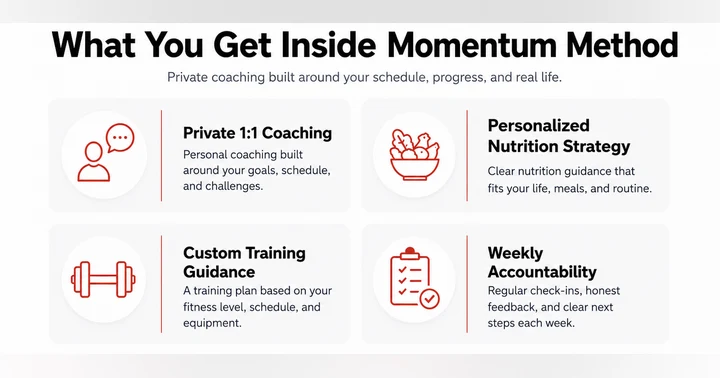
The Call To Rise is a 100-day fat loss challenge for driven men ready to take their body back. It combines strength training, personalized nutrition and real accountability. Most men drop 20 to 30 pounds and rebuild the confidence that comes with it.
This program also works if you are dealing with high blood pressure, high cholesterol or Type 2 diabetes. It was built for those men too. Many men see those numbers move in the right direction alongside their weight loss.
Inside the program you also join a Brotherhood of men doing the same work. Together you build a body you're proud of and start leading like the man you already are at work.
This is your wake-up call to rise. Learn more and apply at www.thecalltorise.com
Want help applying this to your own health, weight, energy, or lab numbers?
Coach Brian Parana offers Health Hot Seat coaching segments for men who want a clear next step with nutrition, fitness, weight loss, blood pressure, cholesterol, A1C, or daily consistency.
Learn more about The Call To Rise, a 100-day coaching program for driven men over 40 who want to lose weight, improve their health, and rebuild confidence:
To connect with Coach Brian:
brian@brianparana.com
Disclaimer: This podcast is for education and coaching support only. It is not medical advice. Always work with your physician before changing medication, treatment, or medical care.
- This is Mike. When I first joined the call to rise, I was beat. I felt tired all the time. My body wasn't where I wanted it. And I honestly felt like I was missing out on life with my family because I'd come home and just want to sit on the couch the rest of the night. My two little kids were missing out.
- And my wife felt the same. Yeah. And after 100 days, I lost 22 lbs. Got back into my 34 in jeans. And more than that, I actually had the energy to play with my kids, which just felt like myself again. I initially came to lose weight, but it was so much more that I got out of it. I feel like I'm back. Welcome to Driven for Health, the podcast for men over 40 who are ready to take control of their bodies, energy, and ultimately their lives.
- I'm Coach Brian Piranha and for over 23 years I've been helping men like you lose fat, build strength, feel confident in their body they are excited about to take their shirts off. Let's skip the weird fat diets and endless hours in the gym. Each podcast will tackle real life strategies for fitness, sciencebacked nutrition, powerful mindset shifts, and creating sustainable lifestyles so you can finally live leaner, stronger, and be more alive. Let's get started.
- A word from our sponsors. This episode is brought to you by The Call to Rise, a 100day fat loss transformation challenge designed for career-driven family men who are ready to take back their bodies. feel confident and energized to lead at their best for both their family and career.
- Through a proven system of strength training, personalized sciencebacked nutrition, and radical accountability from yours truly, you'll drop 20 to 30 lbs, build lean muscle, regain the confidence that's been missing in the last 100 days or more. But this isn't just some fitness program. It's a complete transformation experience.
- You'll join a brotherhood of like-minded men committed to showing up, leveling up, and stepping into a body and life they're proud of, too. This is your wakeup call. Rise up now and visit the call to rise to learn more. Welcome. Welcome. This is Coach Brian here and I'm so happy to have you. This is our inaugural episode of Driven for Health.
- And today we're going to be diving into why taking control of your health in your 40s, 50s isn't just important, but it's really an essential part of your day-to-day life moving forward. If you ever felt like your body isn't keeping up with your your drive, your ambitions, the fast-paced lifestyle that you live, I feel you. Life has changed quite a bit here as I am 42 years young and that energy that you once had might be slipping away and this episode is for you.
- Let's face it, 40 years and older means a lot of responsibility. Just some of mine. I have my wife, of course, our history together. I've actually known this woman since I was 11. She loves to travel. She is an amazing wife. parent. She runs her own business. She actually has two businesses. The her true passion is travel.
- And she actually sends people on bucket list trips, families on bucket list trips to beyond America, but even to Europe, South America, Africa, and beyond. I love spending time with her. We hang out a lot because we work at home and we live the entrepreneur lifestyle. So, she's there. Obviously, I have four kids. And my oldest, he's 16. He actually just learned to drive.
- He's an athlete. That's some of his base identity. He just completed his first Olympic triathlon just about two weeks ago at Portage Lakes Triathlon. It was really cool to see because I actually raced there back in 2006 to 2008. I did about three to four years there. He didn't he didn't beat my times, but he gave one heck of a race.
- He ended up at ninth overall at a time at 242. It was pretty crazy. Pretty awesome, and I'm really proud of him. He actually wants to run the Akran Marathon here in just a few days. Today being Tuesday the 23rd, he's going to run on Saturday. Pretty wild. This kid is driven. He's smart, too. and he's pretty funny and obnoxious as he's a teenager.
- My second is Everett. He's an artist at heart. This kid loves theater, visual arts, performance is his jam. He's actually sold his artwork to a number of different places around the city. It's been showcased in the mayor's office, at the Akran Art Museum, a lot of different places.
- So, I'm really proud of him for creating and cultivating something really special. My third one, Maxwell. Super duper smart kid. This kid, he aces state tests. I I don't even know how he does it. He's loves reading and he loves Minecraft, too. At the age of 12, he's an oraryy middle schooler, but I love that kid and we we have quite a bit of time eating ice cream together as well.
- Lastly, I have a daughter. Emmaine is her name. Super cute. Love spending time with her. She's into soccer, dance, theater. We read together every night. Right now, we're reading KR Alexander, and we just got done with Dark Room. That's a fun favorite. We also read occasionally Piggy and Elephant. If you're a father out there and haven't read that book to your kids, holy moly.
- I would highly suggest that you do that. And if you have younger kids, say under five, not only of course you're going to love it, but the kids are going to love it, too. Those are just some of the responsibilities that I have. I we have four animals or excuse me, four cats and a dog. All boy animals and they're a lot of responsibility and you know it being self-employed for 15 plus years.
- I've been in this business for 23. That's just a little bit about me. I love to actually be a an endurance athlete in my youth. I do a lot of strength training now and those fit into my daytoday life occasionally, but also making sure I can provide for my family and do it in a way that I absolutely love.
- And that's some of the responsibilities alongside home ownership, car ownership, and and all that stuff. You guys probably probably identify with that. But the wakeup call, really, let's face it, when you're turning 40, it is a wakeup call. It's not just a number. You could be 40% done, 50, 60, 80% done with this thing called life right now.
- And what's important is that we maximize what the second half of this is. We don't need a midlife crisis. We need to make sure that we're evolving, that we're changing, that we're putting our best health and self forward. And that's some of the underlying mission here that I have with this podcast. The reality is our bodies are changing and often not for the better.
- And we don't need to panic or do anything crazy or drastic or do some crazy hard challenge or fat diets or weird stuff. The GLP1s are all the rage now, unfortunately. But you can do it other ways and change your body for the long haul. And and that's what I've spent the last 23 years doing. The stats don't lie, gentlemen.
- Consider that 40% of men age 40 and older are classified as overweight or even obese. This is a health crisis and it's only getting worse. Most men in their 40s and 50s, I I hate to say it, they they look like a before photo and they have blood bad blood panels when they go to the doctor.
- You certainly don't need obesity that then brings in other chronic illnesses and issues and conditions from heart attacks, heart disease, diabetes, even cancer and beyond. Let's take heart attack and some of the stats around that. Not only do you have that day is a pretty bad day that when that happens, right? I actually have a client right now who has a heart attack.
- It's not great. He is challenged with making sure that he puts his best foot forward. Fortunately for him, it was a mild heart attack and he got to the hospital quickly because if you can get take action really quick, there's obviously the increased likeliness that modern medicine can help. But let's just think of time in general.
- You have potential one to multiple days in hospital or weeks if it was really bad. You have potential surgeries or procedures. There's outpatient that you have to go back to doctor visits on the regular. You have to get extra tests that are just not fun. There might be PT, physical therapy that gets brought into it.
- Talk about the money, 20k, even a lifetime cost of six figures. that could be partially covered by insurance, but also insurance is going to skyrocket. Out-of- pocket expenses are going up. You've got deductibles, co-pays, potential for a lost income, not only around the incident itself, but afterwards to take time off to manage it. And the impacts of having a heart attack, guys.
- Mild to where it's just, wow, my chest hurts. and you had a mild heart attack or a stroke to being dead. Yep. That's that's it. Most people survive. Even say 90% survival rate, especially modern medicine has helped with that. But this also is just one line in a series of potential events that will come ahead. It's a serious event and it can lead to other just permanent heart damage if you're not treated or it's went unnoticed.
- Also, there's other damage that might be happening in your arteries and the vessels, arthoscllerosis, blockages that could be there and present from high cholesterol. Pair that with high blood pressure. If you have high cholesterol and high blood pressure and you're say 20, 30, 50 pounds overweight, you potentially could be a walking heart attack or you are subscribing to a lot of medicines that you probably don't want.
- And that's important to know and understand. Now, with the successful recovery of the heart attack, then we need to just you get ongoing medical management and a commitment to a lifestyle change. And guys, you don't need to have a heart attack. You don't need to be told that you have high cholesterol or high blood pressure or here's a medicine for these things. You can change ahead of this.
- Now, only 60% of men get annual physicals anyways, and there's a significant amount of people that just aren't paying any attention. I mean, guys have a hard time just even asking for directions, let alone going to the doctor. But it gets worse. Men are less likely to seek the medical advice and medical help until serious issues arise.
- And 40% of men say they would even delay seeking medical care if and when they're sick. A lot of times you might not feel well and you just brush it off. You just push it off and that's it. The delay can be early intervention and potential cure and and prevention from that to something more serious down the road.
- It could be lead to another heart attack. That's one thing with my client I constantly remind him, hey, you're doing this every single day because you don't want a second heart attack because it might not be as forgiving as it would on the first time. He can function in everyday life is a super busy lifestyle and stress at work, stress at home.
- He's got two young kids and a wife. He needs to be there for him. Right now, what happens in this midlife in our 50s? Well, metabolism and muscle are going to start decreasing upwards of 3 to 5% every decade. Our muscle mass declines. I always say this to people, but the Austrian oak, good old Arnold Schwarzenegger, he not quite the same as he once was when he was back in his youth, his obviously elite bodybuilding days.
- It will slow down. Your body will dip. Your energies will lessen. And sure, we want to look good, but we also need vitality. We need to make sure that we're able to stay the course long term. But there's always good news that these changes in poor health aren't permanent. There are real solutions that can be made when you are paying attention.
- I can't tell you how many times I come across men who are dealing with blood panels, high cholesterol, high triglycerides, HDL is low, LDL is up, and that they might not even have a belly or their A1C. Forget the 5.5 to six, they're at eight or nine on an A1C level. And that is a high risk and clearly put you in a type 2 diabetic state.
- And a lot of these things with the right approach of proper exercise, proper nutrition, and being a bit more strategic around some of your lifestyle habits, behavior choices can make a significant difference. And that's, you know, ultimately that's what I do every single day. And this we're going to shed some light on in this podcast here.
- When we make intentional choices to do some of the basic things of exercising regularly, eating nutrition nutritionally dense foods, managing stress and and getting sleep and let's stay hydrated. Those are the four key tenants and five key tenants that we need to do. I always say this thing, prevention is the cure. And often times a lot of people don't necessarily have a weight loss issue.
- They have a weight maintenance issue. And that becomes a very big challenge for them to be successful long term in their everyday life because they keep going through these radical expressions of all or nothing type approach and then they back out into, you know, screw it. And so they white knuckle it and then they crash their car in the ditch and then it's broke and it needs repair and it takes a long time to figure out and resolve.
- That's that's not how we want to actually live life by any means. So again reminding you loud and clear, prevention is the cure and it is the cheapest best way for you to get control of your life. Another example, a gentleman I've been working with and his name is Doug. Doug has not been under 200 lb in 33 years. And a lot of it is belly fat.
- that visceral fat, that hard belly fat there. That is something that we need to make sure that he is losing in the next couple of months to get to a healthy, happy, long-term body weight and look and feel for himself. We want him to be strong, energetic, and for his wife, too, and his family and getting into retirement age and doing a lot of fun things without having to worry about his health.
- If you look on my social again, today is Tuesday the 23rd. I believe it was yesterday the 22nd or 21st. I post a lot. So if you follow me at Coach Brian Barana, you'll see me on Instagram, on Facebook, everywhere. Actually, I just have to do that these days. But if you look, you'll see the post that I have a talking head video and then the overlay of the 199 huge celebration.
- And he recognized that he needed to take action and do it in a way that was different than what he' done in the past. even to the point where he worked with me after he already lost those say 8 to 10 initial pounds by the good old what I call the 1990s protocol the I'm going to not eat bread carbs sugar pastas things like that and when we cut those out obviously you create a calorie deficit which allows you to lose weight but also lose water and stored muscle glycogen those are things that happen when you are in this process. So, he lost a bunch
- of that in the beginning and then we had to get into the actual real work of him making progress beyond those old strategies by teaching them proper nutrition paired with exercise zone. Yeah, he had a foot and ankle issue that we can't just walk endlessly. We have to navigate around that because everyone's different.
- Everyone has issues and body and physical things that are happening with them. So going back to some of the reason why prevention is a cure and what we can actually do about that. These are the things that I will be beating my head against the wall to share with you time and again every single day every single episode if you work with me or not.
- I hope you get tons of value from all the conversations yet to be had in the future. But the key tenants are 10k steps. I think that is just a relevant healthy amount of activity to label yourself in quotations as a active healthy person. Ideally, we should be working out 3 days a week doing some form of what I call muscle building exercises.
- What that does is allows you to build muscle, maintain strength, maintain functionality, and push yourself. Your body is meant to be pushed. We are we we are unfortunately in the laziest potential laziest situation on human in human history, right? Convenience is at an all-time high. Movement is at pretty much an all-time low.
- And we're running into a lot of health problems that are self-caused from over eating processed foods that are cheap and everywhere and marketed to us. and we aren't active cuz we have to sit for work and sit at home cuz we're stressed out and sit at night cuz we want to just decompress. Now, as far as nutrition, I speak so much about nutrition every single day.
- That's probably the pinnacle. If if you were to look at me, I am a nutrition coach in a sense. I'm I wear a lot of hats. Life coaching, I think, is is one of them, too. But nutrition, I mean, I used to own two CrossFit gyms back in 2010 to 2015. I I've been doing remote online health nutrition, fitness coaching for decades now, for for a decade, 12 years, just specifically doing that.
- And then I've been working on doing the other stuff, which is I was a personal trainer for many years. Exercise was my bread and butter. But I realized soon as I learned nutrition and understood that even from my degree days with an exercise science and nutrition degree back in 2004 and hundreds and or even more podcasts, peer researched, reviewed articles, YouTube videos, blog posts, all these things that I've consumed has brought me to really paying the most attention to nutrition with people, especially initially in the transformation
- progress. Because something as simple as you can burn 200 calories roughly 20, 30, 40 minutes depending on your body size, shape, and how much you move. But then also the the food thing. You can eat 200 calories in one, two, three bites depending on what it is. It could be something really tasty and and there you go, you just out ate your exercise.
- And that's always a problem. It's because you can't outwork a bad diet, right? They always say that. We have to understand what I call the currency of food, currency of nutrition, which is calories and macros, which are protein, carbs, and fats. Macros, if you're unfamiliar, they're macronutrients. That is what makes up the food that you eat and has comprises the amount of calories that are inside of food.
- So, calories equal macros. That's really important to know and understand. And we'll be diving into these things like crazy. But just note that that whatever say a nutrition label says generally it should equal the amount of calories in the serving for what it is of protein, carbs, fats. And quick breakdown, protein is four calories per gram.
- Carbs are four calories per gram and fat is 9 calories per gram. You do have to be careful of fat because it multiplies calories in a sense and is really easy to overeat. From there, we've got water, right? Women, if you're listening in, 80 ounces or more. Men, we should be drinking at least 100 ounces or more.
- Okay, that's really important. Now, let's do a quick backtrack to that nutrition again. Things that you're going to hear me say a thousand times are going to be calories. They're going to be somewhere around 2,000ish if you're trying to maintain your weight. Maybe higher if you're a biggerbodied person, more muscle or just larger body weight, taller, right? Your body does determine your metabolic rate with height, weight, and metabolic muscle tissue on it or your lean body mass of your organs as well.
- And if we're looking for a calorie deficit or a fat loss, usually under 2,000 works like gang busters, we've got 1,800 to even 1,600 if you are a smaller person. It's important to know and understand where those calories are or even just being calorie aware. Again, we'll go into more of this stuff as as we dive into this. Back to water.
- I'm I'm going not detour too much here, but water. I always said that we can also drink water or flavored water or bubbled water. We can also drink coffee or tea. I I always include those. A lot of people will think, "Oh, coffee dehydrates me." Well, possibly, but I'm still going to allow it in any of my coaching that I work with everyday clients.
- They're just getting them to drink a total of 100 ounces of liquid, not say pop or soda, however you say it, Diet Coke or Coke Zero. You can drink low, no calorie, artificially sweetened beverages and they won't derail your weight loss. There's lots of studies out there that prove that. But you can do lots of different ways to drink the water.
- We need rest. I will say if I have a kryptonite, it's definitely going to be rest. Getting over seven hours is ideal. The typical in quotation 78 always works great. But if you're busy and you have a life and you got a lot of things going on, you're juggling a couple things, four kids or five beds, and the other responsibilities go along with that and and your wife is at night owl cuz she definitely loves staying up till midnight or later, which is cool.
- But then I have to get up for the kids in the morning and make sure they get on their way to school by shoot this morning was up at 5:30. I don't even know how I'm still standing right now, but that's what time Everett wanted up. And Levi, he's actually gotten up and ran 5, eight miles in the morning before school as well this early.
- This the the 6:00 is a very typical time frame for our household to start waking up. We have stress. How do you manage stress? So important. their skill sets and things we can deep dive in in future conversations, not only by myself individually, but finding some subject matter experts in this process, too.
- That's something I definitely plan on doing in this podcast is finding the right people to educate and inform you and make sure it's sciencebacked information and be able to apply in everyday life. That is super duper important to me. But we'll talk about stress and how you management. And if you stress and stress eat or stress and don't eat, those are still two challenges to manage because obviously the overeating situation is you consume generally high calorie foods that just don't work really well for you. Then
- consequently in the doing it the other way, not eating, there usually is a repercussion to not eating for a certain amount of time and then you eat a lot more later if you do have body weight issues still and that is your pattern of behavior around stress. Plus stress leads to heart attack people. We we definitely know that as well.
- Time is one more key tenant to managing this. This is a time management is super important to be able to set time aside. As I've been doing this for 23 some years, every single person I've ever worked with is BY. They're busy. Always busy. And it's really easy, especially being a parent, a husband.
- Throw the father back in there, dad, or just a friend or a co-orker or an employer. or an owner or an entrepreneur, whatever you want to identify yourself with, time management is going to be really important. We all have the 24 hours in a day. Some people are way better at utilizing it than others. Some people are way better at delegating at others.
- People have different skill sets around managing that as well. It's really important to understand those things. And if you say get stressed and you waste time in a sense of Netflix and chill for way too many hours or a doom scroll for way too long, that's going to detract from your overall health and well-being at some point.
- Why? Because at the very we just break it down. You literally be moving less. You'll be not learning anything. You'll be distracted by everyone else. and it's just going to take away from a lot of quality life that you're probably missing out on because you don't have good time management skills. So, the tenants again, let's recap those.
- I love 10K steps. I think it's just really good. Three workouts. And quick reminder, if you work out three times a week for the rest of your life, you're going to be more consistent than any human being ever in the history of or at least the modern history of our current lifestyle in the last say hundred years. Because you go back 100 or 500 years, you know, life is radically different in terms of the means to survive and the activities that needed to be done every day to account for that 10k steps, three workouts a week. Could be body weight,
- bands, machines, dumbbells, could be something that builds muscle in a sense. Nutrition. Got to have at least three or four balanced meals in a day ideally. equal portions of protein. Fibrous carbs I like to call them. You'll hear me reference that a lot. Fibrous carbs are generally think of them as fruits and vegetables.
- Stretchy carbs and healthy fats. So, we need to have balanced meals. Generally, throw out some calories here. You know, 400 to 600 calories for most guys will do really well. Again, we'll be banging on the door on that one quite a bit. We have water, rest, stress, and time management. Ultimately, I want Driven for Health to be a podcast that is about transformation.
- And over the upcoming episodes, we're going to dive into tons of practical strategies for improving your health from day in day out with nutrition tips, workout routines, mindset shifts, hopefully some insights. And I would love to hear in the comments, the reviews, my email of some of the things that you are learning and taking away because that's what fuels what I do.
- The big reason why I do this in the first place is because I love the outcome my client gets when we are done with this whole thing. It's incredible. It's uplifting. It's engaging. It's success. And more importantly than just the transformation of the body, but the look, the feel, the energy, and how that all resonates with the person, not only from the way they look, but feel in their confidence skyrockets their abilities to be transformative and to impact even those around them. So, think of it like this.
- If I drop a pebble in your pond listening in, it's going to impact the people around you. And I've seen it for decades. Your health journey is not a destination. Life is a journey. Your health is a journey. Your idea to preserve it is going to be the legacy that you leave for the people around you.
- Sure, we want to leave say maybe maybe part of your legacy is about wealth creation and and being financial financially secure. That is one mode of success in our world. But also leading your children, leading the people around you by being an example of what health is, that has a profound impact on people too. And you could even think of maybe a coach that you had in your past or a person that was in your periphery, a an acquaintance, a relationship, a running buddy or something like they they have impact in your life and I hope that I can have
- impact in your life in this podcast. So there's that. I'm going to transition into what I call the fast five. These are just going to be five fun questions whether it's going to be nutrition, fitness, lifestyle, behavior change, uh just even about myself, different things that I like so you get to know me a little bit more.
- But the fast five for this week are for guys. What screenings and tests should you be getting now in your 40s? Well, it's certainly we want to have that preventative health measure and it's in really important in this fourth decade or what do we say maybe fifth decade here. in in this that you are going through establishing future baselines of what your health can be compared to when you're 50, 60, 70 and make sure that you're managing potential issues early with key screens and tests that diagnose from the doctor.
- Things like cholesterol and blood pressure checks, you should have those regularly monitored when you go to the doctor. risk of heart disease. Strokes increase with age. We went over that. Diabetes, guys, if you have a belly, belly fat, visceral fat, your belly button, you can't see your toes when you look down. Also, skinny guys can have diabetes, too.
- It's the food that they're putting in. usually high calorie, high carb, processed, sugary type foods frequently or liquid beverages that contain lots of sugar and calories. Those are the definitely the indicators that will lead to potential for pre-diabetes, which is your A1C being 5.5 to six, and then it gets into being a type two diabetic.
- So, you do want to have type two diabetes screenings here. And I'm sure hopefully your doctor is managing your A1C if you have family history of any of these things. Prostate, colurectal cancer screenings, right? Get to have the the uh colonoscopy in our 40s. That's another one that you'll want to do as well. So, those are some quick screenings and tests that you should be paying attention to.
- Question number two, how can I manage my weight and metabolism? We need to do some of the things that I talked about earlier and maintaining a healthy weight. If you can maintain a healthy weight, I promise you maintaining your body weight over a long period of time is going to be so much better for you than it will be if you have gained a bunch of weight for a long time and are trying to lose it.
- But I promise you that lose the weight and you will still be in a healthier spot going into your 50s and 60s and beyond. Now, we already said metabolism slows down and muscle mass, strength training, high protein or higher protein in relation to you. Again, I'm going to be banging this on the wall, too.
- For more of my vegan men, 120 or more grams in a day who are vegetarian gentlemen, vegan vegetarian. For my not so excited protein lovers out there, which would be just odd because men usually are classified as loving protein, but not every person. We're all different. At least 140 to 160 grams in a day.
- If you're more athletic, then we're say 170 to 200ish. Uh in our age range, going over 200. I'm just going to ask you why. either you absolutely love protein or you end up just overeating and you can do a better job with your macronutrient profile and ratios. Those are things we can definitely talk about as well. Now we have to also manage the stress and anytime that those the the belly fat is changing and that could be a sign of moving less and decreased lifestyle and active lifestyle which then lowers your metabolism. We've got dietary changes.
- Maybe you're snacking more than you realize and you're getting more calories in than you think. You're exercise. You're just moving less. You're just tired more. Less energy. You also just don't have the the time or motivation to work out. That's huge. And then calorie needs. Why do my calorie requirements change as I get older? Well, they and how do they? It goes back to muscle mass. It goes back to movement.
- It goes back to body mass. And those are things that we can figure out. Number three, what can I do about declining energy levels and a lower sex drive? Well, decreased energy and libido is common concern for a lot of guys in this age group. And there's lots of factors, of course, stress, poor sleep are some of the bigger reasons why men are feeling the way they do.
- It's really important to know and understand, and we can outline testosterone and and and that in future podcast episodes as well. But men often want to know, are these changes normal? And yes, they can be. there can be decreased libido more naturally just cuz testosterone does lower down but also you don't have to accept that you can actually go to the doctor and get your testosterone levels checked ideally at least 500 or more is ideal 300 is lower on the spectrum and if you're say 6 800 900 then you're probably doing pretty
- well with your testosterone levels number four of the fast five how can I reduce my risk risk of heart disease, especially if I have family history. It's super important if someone a senior of yours in your surrounding family nuclear or your surrounding family has had some sort of a heart disease, then you need to pay attention.
- And this is where you double down and make sure you are going out of your way to get tests done, stress tests done on your body, your heart, and have your doctor look at your heart occasionally to help make sure that you are preventing any sort of heart disease or catching it. Nutrition and exercise are going to be the big key players to help keep, say, plaque out of your blood vessels.
- And we want to make sure that you're very aware of some of the health risks and risk factors that are in your day-to-day life. And with that, lastly, there is making sure you understand where your cholesterol levels. If they're above 240, you're a walking heart attack. If they're 240 or to 200ish, probably either on medication or your doctor really wants to put it on put you on it.
- And if you're below it, then you're probably eating a lot of plant-based food manner and low-fat food sources like say fatty meats or things that are fried. 120 over 80 is blood pressure. You want to make sure that stays within range too. Our fifth and final of the fast five questions. What are the best ways to manage stress and improve mental health? Well, managing stress is going to go around.
- What are some of the day-to-day responsibilities that you have in your life, your career demands? I've got some guys that travel so much they don't cook for themselves ever because they're never home. I have some that work remotely and never leave their house. I have some that love their jobs and others said they wish that they would have found a different passion in their life to pursue.
- And those things are going to have huge bandwidth around your mental health. I always like to frame it this way around mental health, especially if you do not like what you experience in your day-to-day life. You can change it. You're allowed to. You don't have to just finish out the work sentence in a in a sense to just get to retirement.
- You can change and you can find something that not only fulfills you, but fills your bank account. and you have a lot of fun doing it. That's what I'm doing here. I've actually had a a longtime desire to get on to do my own podcast. I honestly even before year 2025, I never really was on podcast and I didn't understand how to do it or why to do it or any of that stuff.
- I enjoyed it, but I just finally got inspired after being on 60 other podcasts and just really having a great time engaging with the other hosts and the atmosphere. I said, "You know what? I'm jumping in." And today was the day. I've been up since 6:00 today plotting this, planning this, getting the software, the tech, and running through this opening conversation with you.
- So, I hope that you enjoy it and I hope that you stick around for more. Well, I want to really thank you for tuning in to my first episode of Driven for Health. Now, men, if you're ready to take action of your health and start a transformation, then you can visit the call torise.com. That's what my 100day fat loss challenge is all about.
- and we go over nutrition and fitness and radical accountability to make sure that you not only get your results, but you're able to keep them. Now, remember too, guys, it's never too late to rise up and take charge of your body, your energy, and your life. All right? And if you're not quite ready for the 100 days, that's just yet.
- That's that's okay. I have, if you want to get a quick win in, I have a Kickstarter for your fat loss journey. And it's something I call my lose three lbs in three days program with my Rise 72 method. Now, what this is is just some quick wins to clean up your nutrition to get you moving again and get you feeling a lot better in a 72-hour time frame.
- It's about nutrition and fitness designed for men over 40. We're not starving. We're not doing weird fad diets, exercises, star, water fasts, or something bizarre. We're actually pulling out all the nonsense and then building up the foundational things that I educate my guys on all the time. Just simple as I can make it, I've laid it out in a stepbystep actionable sciencebacked fat loss strategy that you can kickstart boost your fat loss and start having a clear plan of what you need to do. So check out the link in the
- show notes for free access. And yes, even I do have text support and accountability for you in those three days just to have an extra layer of accountability to help you see the results that you're looking for even in the next few days. All right, so check the show notes and click that if a 3-day hit sounds a lot better than a 100 day challenge.
- But also guys, September 3rd, 100 days, it's it's about 97ish or something like that days until Christmas. And so that leave us about 100 days till New Year. And that would leave you in a really great spot to not have to over to do a New Year's resolution or something like that. Now, stay driven, stay healthy, and I'll see you in the next episode.
- Coach Brian signing