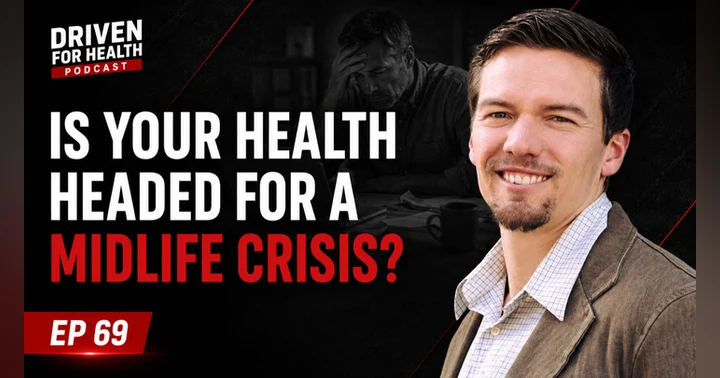
Work-Life Balance and Identity for Men Over 40 - 69
Most men build their identity around one role at work. That identity gets shaky once their health or energy starts to fall off. Coach Brian explains how identity affects work-life balance. You leave with ways to fit fat loss and training into a demanding schedule.


 YouTube
 Most men build their whole identity around one role, their job, their business, or being the guy who holds everything together. That identity gets shaky the moment health, energy, or family life starts to slip.
(Do you know who you are outside of work? This episode breaks down why that question matters more after 40.)
Coach Brian looks at why work-life balance breaks down for driven men and how identity plays a bigger role in that than most realize. He covers practical ways to fit fat loss and fitness into a demanding schedule, how nutrition and stress management affect focus and productivity, and why small, consistent actions beat big overhauls. He also connects the dots between redefining your identity and making health changes that actually last.
By the end you will know how to build health habits that fit your real schedule and understand why identity work matters as much as diet and training.
Main Topics:
- Why work-life balance breaks down for driven men over 40
- How building your identity around one role makes health harder to protect
- Fitting fat loss and fitness into a demanding schedule
- How nutrition and stress management affect focus and productivity
- Why small, consistent actions beat big overhauls
- Redefining identity to make health changes that last
This episode connects with Mum! Dad's Got Another Tattoo, a podcast hosted by Marc and Richard about navigating midlife, family, and health after 40.
Apple: https://podcasts.apple.com/us/podcast/mum-dads-got-another-tattoo/id1800924000
Spotify: https://open.spotify.com/show/2LPYgwQMCWGPJNlZOisq9W
Want to be a guest on Driven For Health? Send Brian Parana a message on PodMatch at https://www.podmatch.com/hostdetailpreview/brianparana
Want help applying this to your own health, weight, energy, or lab numbers?
Coach Brian Parana offers Health Hot Seat coaching segments for men who want a clear next step with nutrition, fitness, weight loss, blood pressure, cholesterol, A1C, or daily consistency.
Learn more about The Call To Rise, a 100-day coaching program for driven men over 40 who want to lose weight, improve their health, and rebuild confidence:
To connect with Coach Brian:
brian@brianparana.com
Disclaimer: This podcast is for education and coaching support only. It is not medical advice. Always work with your physician before changing medication, treatment, or medical care.
- I just told myself I'm now a person who trains. Mark shares a powerful moment in our conversation that he put together in the last two to three years. That simple mindset shift in his identity has literally transformed his life and how he looks, how he feels, and how he manages day-to-day to overcome any of the challenges and all the things that getting stuck in the rat race looks like for us guys. in their 40s and 50s.
- And many of my listeners and clients come to me dealing with that. Putting off the last 10 plus years of not being active and taking care of yourself has really not great impacts on your day-to-day quality of life or even how long you're going to live. I'm Coach Brian Piranha and this is Driven for Health episode 69.
- Join Mark and I as we talk. he and Rich on their podcast. Mom, dad's got a new tattoo. Looking forward to sharing this powerful interview we had with you. Enjoy. Hello and welcome to the latest episode of Mom Dad's Got Another Tattoo, the midlife crisis podcast. I'm Mark. Uh Richard, not here this week. Very business uh very busy with his own business.
- But our guest Brian Piranha, a health and lifestyle coach, is all about that stuff. But Brian isn't just a health coach. He's a transformative force for high performing professionals who want their body, energy, and mindset to match their ambition. He's also the host of the podcast driven for health. Again, focused on men's health and delivers engaging, story-rich interviews that balance strategic advice with real life transformation.
- Welcome to the show, Brian. >> Thanks. It's a beautiful introduction. looking forward to our conversation. >> Yeah, me too. And when I look at your the topics that you cover, health as a business strategy, habit and behavior change, there's many more there. That's right in our wheelhouse. And we said beforehand, if there was a ven diagram of the subjects we want to cover between our two podcasts, ours would be a perfect circle.
- So great, it would be great to hear your your insight. And I mean, do you have an overarching philosophy when it comes to this, or do you take people on a case-by case basis? >> Well, the overarching idea is that I leave the person on the other side of me in a better situation than when I found them.
- That seems to be a really good general advice in life, right? The golden rule. Do unto others as you love to be done to you. And I find that it works in my favor as well. Right? If our conversation's enriching enough and you take a lot of value out of this and I offer a lot for you, then you'll like me even more after we're done here.
- Who knows what what happens after maybe I come back on in a couple months or who knows? Yeah, >> that's and then yes, it does go to an individual basis because your life and my life although we probably have a lot of similarities in our and stuff with kids and and and all the things that that we find ourselves getting into by our fourth decade here.
- Your life is very unique to you and mine is mine. But we can cross over with these experiences and connect and find solutions for the challenges that you are having because everyone has challenges and they all have problems that they are looking to get solved every day. >> Yeah, that's right. And I know you've helped thousands of clients.
- >> Yep. >> Are there any common themes that run through the problems that they want to solve? >> Yeah, definitely. I've young, old, healthy, sick, chronically ill people who know a lot about this stuff and don't. In general, I've been in the health fitness industry for the last 23 years. Aki Balboa.
- Those training montages were the things that sucked me in. Back in high school, I started running and then I ran marathons. I did triathlons. I've owned gyms. I own two CrossFit gyms for a season. And I've been doing online remote health nutrition coaching and not focus on men in their 40s, 50s to not just die with a bunch of money in their bank account or use it on healthcare because they're in such poor health.
- But we want to really thrive there. The commonalities among humans is that we're overwhelmed. We're over busy. uh pace of life has quickened so much so even in the last year or three it feels like as the advent of AI and and all these things that are going on in our world us in Americas are are challenging some interesting political things going on as well uh and so we'll just leave it at that but [snorts] but what's happening is that you have all these responsibilities with work with kids with everything and you're not taking care of yourself and That's the
- point at which I come and intersect into that. It's like, "Oh, shoot." A the gentleman I was talking today with, he drops his kid off at a practice, goes at Panera, sits for two hours, just busts out the computer, starts doing this, gets another coffee. It's probably an eighth of the day or something cuz it's at night.
- And he just grinds at work and and that's it. It's either this or that. and and we need to find a way that allows him to be put back into the health driver's seat in a sense so that he can manage all of the situations that are coming at him. Because if he's lean and agile in a sense and he can be bendable with the challenges that he faces every day, he will be more resilient.
- He'll have better ideas, better solutions that not only benefit him but the people around him and so on and so forth. >> And do you think that what you described there is very familiar to me? My daughter plays net, have to drive all over the place and wait hours to to to do things. And you see a lot of the other parents with the laptop in the coffee shop just just over the road.
- You know how much of that is a societal thing where we kind of put hard work and grafting and grinding on a pedestal, but we don't do the same about looking after yourself. That that seems like a mad way to operate. And I I until the last two years have been exactly the same. >> Yeah. Guiltiest charge here.
- I'm not going to say that I have work life balance all figured out being a soloreneur and I've been self-employed for the last I don't know it's 2010 was when I I shipped it out on my own. I certainly had benefited from that in terms of like financial freedoms and time freedoms and I was able to travel this whole world behind me with my family and four kids and all.
- uh the the challenges of the inbetweens of getting enough money and helping enough people and all these things and so we do fall into this. I I think again going back to our quickened pace in our society and life and the demands that we have whether they're internal a lot of people put a lot of internal pressure to work and work and work but we also have external pressure of budgets and deadlines and goals and quotas and and these things as well where shoot my car broke down and I have it's not a $500 bill this time it's a dollar bill
- because the wheel thing is is not doing well and the engine thing is making a bunch of noise and it's a lot more expensive this time. So, oh shoot, I need to go make that money to pay for it. >> And I guess the term work life balance and we used to um talk about this at one of the businesses that I used to work at where we had some people in their 20s and they spoke about work life balance and I always thought that there was this gap between you know what they thought work and then they go out and enjoy themselves life. Whereas for people in
- their especially if you've got a family as well, work life balance kind of means work balance with all the other stuff you got to do rather than you know enjoying. Is is that um is that a fair tradeoff um that we have to make? Is it a zero sum game between you know all the stuff you got to do personally? >> Absolutely not.
- >> Absolutely not. It's not a good trade-off. Right. We should we have three different frames of time that we have. We have the past. It's behind us. We want to remember all the good stuff that happened to us. Learn from the other things that we made bad choices or bad things may have happened to us, right? We want to learn from those experiences. We have the present.
- It's just you and I right now talking and engaging and being fully present as much as possible and not distracted by this good old thing here, right? This phone, this walking rectangle. And then we've got the future which is full of anticipation. I hope not an anxiety of oh shoot I have all these things to do but things to actually look forward to and move toward.
- My wife and I decided about 10 years ago we were going to travel a lot and spend our money and our time that way with our family, not buying stuff. I could have a nice car or something, but I've drove we've had three minivans in the last 15 years because so many kids. But we we chose we've been to all 50 states. We've been to multiple countries.
- We're going to Machu Picchu here in about two to three months. And and so we're trying to live life as life is happening to us. And the way that you choose how you live your the day-to-day with your time, your priorities, how you spend money, how you allocate the energy and resources that you do have accessible to you can then create those opportunities if you're focused on them.
- But a lot of people aren't focused on them. They wake up, they go to work, they come home, and they stare at another screen, and there's no checking into actual what real life looks like. So, they always feel like they don't have enough time. They always feel like they aren't they're just not doing anything. Lastly, is I'm I'm on my kids right now, 16 to 10, three boys and a girl, but my oldest two, Levi and Ever, they have phones now, 16 and 15.
- And we waited until high school to actually give them phones because we knew it was going to be the end of of of [laughter] being able to talk to them, right? [snorts] But I'm on them so much about do not live your life 10 seconds at a time. That's what you're doing right now. And you're training yourself and you're going to wake up 10 years from now wasting so much time, opportunity, and potential to create the life that you want because you're distracted by someone else wanting your attention.
- And I think that's a big issue that we're struggling with in our societies as a globe, as a global community right now. For sure. >> Yeah, I'd agree with that. And I think people listening to that will, especially about getting out there and don't waste time and and go and see the world. And I think everyone would like to do that. Yet so few people do.
- What are things that are standing in their way of being able to live a life that they want? Do you think >> selfbelief, self-esteem, their ability to stay out of the trappings of things that happened to them now or in the past or their lack of skills. Everything in our world is a skill set. You just need to learn. Just say us doing podcasts.
- I didn't have a podcast before September 23rd, 25th, 2025, but I had a full day open. I had one client and a full day open. I said, "Huh, I probably should do something with this time." And therefore, I found out how to do create my podcast on Riverside. And then now I have on Monday will release my 68th episode.
- So, I figured out a skill on being able to use my abilities, my knowledge, my personability, my ability to connect with people because that honestly that's all I've done for the last my whole career is connect with people in a personal way that resonates with them. That creates some I always say humor and sarcasm are along for the ride.
- So, get ready because we need to make this fun and enjoyable so that then they enjoy that experience. And so we go back to self-esteem, lack of skills, and or even a lack of desire to to create something for themselves because they've not been exposed to it or they think they can't or or whatever. And so, how do you work on those those those aspects? I mean, if it's a lack of self self-esteem is probably right up there, I would say.
- How does that manifest itself anyway? I mean, I don't any of the roadblocks I've ever faced, and I don't think anyone be surprised who knows me listening to this. I don't think self-esteem's ever been much of a problem. It's the maybe the reverse should have been the case, but I always felt that the time or the window that I've got to operate for myself is just so compressed and that I'm I'm juggling all these plates and if I stop for one second, the whole thing's going to fall down.
- That's that's how I felt for a long time. >> Right? Something that goes into say time or stress management. And then the other underlying reason of any of this, say you wanted to change your health. That's what I primarily do is a health coach, nutrition, fitness, lifestyle, design, behavior changes. And I need to know your why. I need to understand why.
- What what's the outcome? What is the goal? What's the reason behind this? Because then if I understand that then I can start to anchor in new identities, new thought process, new patterns of behavior and do it in a fun enjoyable way that then creates the changes to happen for themselves. Then we also look at what are some of the most common constraints that you're having in your your health or in your time.
- And then we have to prioritize what actually needs to happen versus what doesn't. Then can we what it's it's Eisenhower's matrix. There are certain things that you absolutely need to do right now. They're urgent and important. There are things that are important but aren't urgent. You schedule those appropriately and use time block and different time management strategies.
- There are urgent but unimportant. These are the things that come out of nowhere that people want done immediately or something, but we can learn to delegate or ship those off somewhere else. and then unimportant and unurgent. You don't do those things. And a lot of us are living in those two last areas thinking that we're being productive, that we're being busy, but we're actually just spinning our wheels in a sense.
- I again fall victim to this being an entrepreneur and having squirrel. I feel like I've developed ADD or something over my life because it's just I'm I'm hyperfocused to these things, but also [snorts] can create a lot of busy work for myself that doesn't need to happen. A simple example, you and I know we can get magic clips from this little chopped up shorts.
- And I have 68 uh episodes that have at least five good ones from each of those. And you know how many I posted? Probably like going five, right? But [snorts] I'm going to go sit and then create a post that's going to take 20 to 50 minutes worth of time from start to completion and post that and and rec just create something new which I can just leverage the thing that I already have and and it turns into a 10-minute opportunity instead of 50 minutes to create something new based off something that I already did. So I
- find myself in that rat race as as well just being busy sake. Yeah, that's true. And I think something you said there about identity, I sort of stumbled across this method if you like, which is uh so over I used to be relatively active and sporty in my 20s and early 30s when I had the time and then for about 15 years I did absolutely nothing and then I realized I needed to do something about it and but but in the intervening period I had started and then stopped and I I subsequently have realized it was cuz in those stop start
- periods I was just right I want to lose like 25 lbs in the next 6 months and as the progress is not linear you sort of get dishearted and and move away but what changed for me is that I stopped saying that's what I wanted to do and I just said to myself right I'm now a person who trains that that that is it >> and that small change accidentally I didn't know it would have this transformationational impact on my life but it has um but for some reason I'm not applying it to other aspects of my life where you know you
- think I am a a productive person I might I might think that I'm a busy person but I think that's different to productive so how does that and the clients you work with that sort of self-t talk and is is that something that's very important in your approach >> yeah most definitely we'll say going back to the example I am a fit individual and I'm I'm an active person Right? There's certain characteristics that go to that.
- Sometimes I'll have someone in our journey, our health journey. They are a smoker and they want to be they don't want to smoke anymore. Well, certainly there's smoke sessation programs, there's nicotine patches, there all sorts of different ways to go about it. But if we don't address the root cause, then we don't have change.
- And a very simple shift in perception is exactly what you said is I am a non-smoker. And when we look through life in that lens, then we change identity and our relationship to smoking. I'm a non-smoker. I don't think about cigarettes ever. So, it's just not relevant to me. Even if I walk into the gas station and giving money to buy gas or whatever and there's that giant wall of cigarettes, it's just like it's not there because I I don't see that.
- I'm not filtering for that as an opportunity for myself. Understanding like self-t talk with people is super important. language. Words that people say give insights to what they're thinking and how they're framing this perception. So, when I'm listening to people, cuz I've listened to thousands and thousands of people throughout the years, when I hear patterns start to show up, then I can start to ask questions or ask where where did that come from? Or you're saying it like this, what do you actually mean by it? And oftent times
- it's what they meant wasn't even say the words didn't even align with what they meant like I I want to have a snack or something or or I I failed because I had a snack. Well, what do you actually mean by that? Because it's the snack isn't the point of failure. Like let's go back a little bit, rewind this and start unpacking some of that that selft talk or those thought processes, patterns of behavior.
- >> Yeah, that makes it that makes sense. I mean, one of the things I guess that people listening to this may say were in term, especially with fitness and health is I'm going to create an archetype here of someone saying, "Well, it's all very well for you. You're fitness professional or it's all very well for you, Mark, because you know, you work from home a lot.
- What about me?" Now actually something's going to change for me in the next uh few days which is going to put that under pressure which is I'm going to have a really long commute into London 5 days a week >> and it is going to put pressure on my regime. >> Now I think that I think that is going to be okay because of my identity of someone who trains.
- But if you're if you're somebody who hasn't quite got there yet, how would you advise someone to manage the busyiness of it? >> Yeah. We start looking at where their opportunities lie. Every person in the world is going to tell you that they're busy, right? They're able to fill their time, but are they actually truly busy doing things that are productive toward the overall outcome of whatever their life experience desire is? And lots of people waste lots of time.
- So we can start finding these nuggets of time. Really simple one is getting people to even just walk at lunch or go take that lunch hour and actually stop working and go do something with it because they're not getting paid to work usually over their lunch break. So why don't you stop and do something for yourself rather than keep working and lowering your hourly wage? That doesn't make a lot of sense, right? It'd be different if again you go on self-employment and every hour is billable in a sense, but then you still have to have some confines around
- when you're working, when you're not to have some sense of a life in and of itself. So, we're going to find little nuggets of time in the day to start to fill it with active, productive measures that move them toward their health goals. That's going to be the first part. So, we can just even All right, Mark, here's what we're waking up and we go to bed.
- Those are finite times because you definitely have to have a bedtime if you're going to be commuting so much because you need to be awake when you're driving. >> So, so we need a certain amount of sleep. So, 24 minus that amount of sleep, ideally at least six, right? 6 to 7 is pretty much it. Then from there, then we start to okay, I have this much time to drive.
- I have this much time allocated toward this, this, this. There will be time in the day that you can allocate toward doing something for yourself rather than just filling it with more busy work. Another example is we can start to delegate different tasks. Example being if your time is now full with commute, you should not be going to the grocery store in a sense.
- You can have food delivered to your house. Let's set that up. And that actually reduces a significant amount of time because you can go on to the computer, click, click, click, order, deliver at a time that's convenient for you to be able to sort and manage the food at your house. And then you just freed up more time.
- So we have to think about doing day-to-day life differently in a way to create more opportunities for you to do things for you. >> Yeah, that makes sense. And how much of the the overwhelmness if that's a word >> that people feel especially when starting to get fit and this is one of the things that I realized early on I say early on early on in this uh phase it took me like 40 odd years to actually work it out but you don't actually have to do as much as maybe you think you do that yeah you'll you'll see programs that say right four times a week in the
- gym resistance training meaning and I think that that that does work. But if you're a beginner and you're doing this for the first time, are you a supporter of, you know, short but maybe intense workouts? So, you know, maybe even if they're 20 minutes long, that is better than aiming for 4 hours but end up doing zero.
- And the way it worked for me is that so I started doing these shorter times because I hated going to the gym. I really didn't. I preferred playing sport, but I couldn't commit to being in the same place at the same time. And I I all right, I'll go to the gym. >> But after a while, what I found was I was doing these 20 minutes, but lo and behold, as I started to like doing it and it became a habit, I magically found time to to do it.
- And so I've always advocated for people if they are going to start doing that sort of stuff, make it manageable at least at first like 20 minutes even if it but so if you're doing weights for example try and go to failure I mean that'll happen quite quickly to the untrained individual and that's enough get out of there recover is is that something that you see as an effective tool >> totally in time and intensity have a direct relationship you have less time you generally should go more intense but to to the degree at which you use what
- tool in the toolbox do you use to facilitate the exercise, the burning of calories, the body transformation ultimately that you're going for can vary widely and greatly depending on each individual person and their overall goals. So for you, you said like I don't really like to go to the gym that much. Okay.
- Well, I'm going to then ask you a series of questions that get us to I like doing this thing and I can do this thing for 20 minutes. Why? because I want to link up joy, positivity, and connection around you taking that time and doing that exercise or that activity, no matter how hard or how easy it is. On my Driven for Health podcast, I have three guys in my 100 day fat loss challenge.
- The goal is to lose 20 plus pounds in 100 days and do it through nutrition, through exercise, through your identity shift, changing your mindset, having a brotherhood, some support. Those are the five pillars that I take my guys through. And on episode 34, Lucas on episode 43, Mike on episode 53, Andy, these three guys, and I I wrap all that up in episode 60 where they lost 98 pounds in 100 days between the three of them doing simple next step things.
- Mike episode 43, he said that the lynch pin that made the difference for him this time to go from 3:40 to 310 in the 100 days was I ate until I was 80% full. Pretty wild. He walked he went to the gym randomly. It wasn't even I couldn't get him consistently to the gym because it didn't work. He had two young kids.
- He had a [clears throat] a lot of knee pain. He actually has consultations about getting a knee replacement at some time in the future. So, I can't run this guy. I can't have him do in 10 20 minute circuits or something. I need to control what he has. Lucas Lucas went from he went from 240 to 210 and we've been a little bit less than that now because we're still working.
- We're going to get to 190. This guy barely worked out in the gym. I got him into the gym and as we went he reaffirmed his love for running and then I asked him if he should run a run get into a running club and then he did and he enjoyed it and now he's becoming a runner. He's changing that identity. Saturday mornings and maybe once or twice in the week he will go run and he's actually thinking about doing a marathon this year which is wild because he would have never if I would asked him that very first day that I met him hey Lucas
- because we're working together you're going to consider running a marathon he'd be like I that's a load B that's that's crazy and then Andy Andy we really anchored in 10k a day that was a huge facilitator to get him to shift his identity I can do 10k K a day, which turned in, if you do simple math, 10K steps over a 100 days is a million steps. He got to about a streak of 87.
- He's like, "Brian, I'm about to take a million steps." He was mind blown. And I didn't even think of it that way because I've just always generally do 10k steps on average, but that was the key shift. So, I was able to find easy hooks in a way to get these people to transform in a significant way without being incredibly disruptive to their life.
- Oh, you need to do this 5day gym routine. You need to eat these specific foods at these times. No, because we're using sciencebacked information implemented into their day-today life in the easiest way possible because I need it to be enjoyable. I need it to last. I need it for years to come that they'll be able to maintain their progress through the work that we did.
- Not just, oh, I'm gonna lose 26 pounds again or something and then it slowly comes back on. Like, let's let's not do that. >> Yeah. And I think the nutrition side of it is >> huge. 80 80% of the of the problem. And I I saw some I can't remember the the number, but we're making a stupid amount of micro decisions around nutrition every single day, like whether to have, you know, sugar sugar in your coffee.
- Um, one of your learning topics, smart nutrition for busy professionals. I' I'd love to hear your approach to that as well because many people listening to this will be at the office on Monday and someone will put a stack of donuts down because it's someone's birthday. What do you what what do you do? Do you eat? Do you not? What what happens? >> All right. I love that.
- Let's let's dive in. Well, episode 61, I went over beating decision fatigue when it comes to food. So, if you want indepth detail, you could go listen to that episode and and >> yeah, we'll we'll link to that in the in the show description as well. So that sounds like it'd be really interesting. >> So decision fatigue is truth, right? Uh do you know what you're going to eat today, Mark? >> Yeah, I do. I do.
- >> Good. Now, do the majority of people that you are listening in to your show know what they're going to eat today? >> I would say probably not. And and also >> Oh, also I'm going to say I'm going to answer as Mark in a week's time where I'm commuting. Yes. and and my whole life.
- And the problem I probably won't even think about dinner until I get home about half 7, >> right? So that is that is and you know what? There's a takeaway around the corner. Could could go there every day if I wanted to. >> There's always someone. We've got Door Dash here. So let's go pay 10, 15 extra dollars to get lukewarm food delivered to you. Awesome.
- Great use of your time, energy, and money. Right. Wait, I need to work an extra whatever amount of time to make that money to buy this lukewarm food that gets delivered to my house because I was unplanned and prepared. And there's a simple PPA, plan, prepare, act. So, we have to go into your everyday life and understand how do we plan? How do we get prepared better to be able to act better? So, it goes back to slowing down to be able to then speed up. I've slowed down.
- And I spent a lot of years just selfassessing nutrition myself, which then gives me the tools, the resources, the ability, the experience to be able to connect with anyone on their nutrition, their fitness, their lifestyle, all these things or the busyiness of their every day. They're sat in staring at their comp
- uter at 700 p.m. as their kids are playing sports or something. All right? Because I I've lived it. I experienced it and I've coached through it. So, when we have choices around our food, we you need to eat at least three times a day most of the time. And what we want to do at the very basic is have two or three go-to meals at each of at the very least a breakfast and lunch.
- And if you do that and you have those, it doesn't really matter what's in the fridge or what food you put in your mouth because we talk about nutrition, not diet. Nutrition is the education, the understanding, the application to the diet, the foods that you eat every day. And then we have to fit it into your lifestyle.
- So, we could have a number of different breakfast. It could be a smoothie breakfast, omelette breakfast, oatmeal breakfast. We could do cottage cheese. There's there's a bunch of last night's leftovers. Those could be five different opportunities for you to be able to have a go-to meal that takes very little time and energy to put on a plate in a bowl in your mouth.
- Then we go to say lunch for my busy guys honestly say, "Hey, do you like sandwiches?" And they I mean who doesn't like a sandwich, right? So, if I if I had to go work and leave my house and go to a place, I'd probably go back into my 1980s childhood and buy a lunch box that had probably the Ninja Turtles on it. And then that would be my lunch pail that I take to work and it would have a sandwich with adequate amount of protein, a fruit, a vegetable, and that would be it. And then I'm good.
- I eat what I pack. So we go back to that then other example of food being in the the boardroom, the break room, the donuts, the whatever gets brought in. Oh, we're buying lunch today. Well, we have to decide where you are on those things and your allowances to be able to let those external marketing come and influence your internal decisions.
- If you operate by the idea of I eat what I pack and I don't eat anything else, it doesn't matter what comes into the office, right? Because all right, I already have my lunch right here. Hey, I appreciate you inviting me out, but my lunch routine is I eat five minutes before I get on break and then I go to the gym and work out in that small sliver of time that I have or I walk around the building outside and get some air to take a break and then come back on work on the hour and then get back to it, right? Hey, if you want to join me,
- Mark, please. I'd love to have a workout buddy or someone to walk and talk with and not just be out there by myself, but this is what I do. This is how I operate. and someone who is active and identifies that way. I would hope that you're like that is a good way to go about my lunch break in a sense. So we there's a lot of different ways that we can prioritize it.
- But also lastly is that if that special donut or special cookie or whatever comes into the office does show up, then maybe you allow yourself a portion of it or whatever can check that box and you're good. But you can't have Monday someone brought donuts and Tuesday someone brought cookies and Wednesday Jan brought her famous whatever recipe on Thursday it's someone's birthday on Friday the office is buying and you packed your lunch too.
- You have to decide what you're doing there. >> Yeah. Well, I think if you if you decide ahead of time, it works. It works really well rather than trying to decide in the moment. I think that's the decision fatigue isn't just around the amount of decisions you have to make, but when you make them. >> Yes. >> But also sometime I think you can get in your own head about what people in the office might think if you say, "Oh, I'm not going to have a donut.
- " And the truth is no one really cares about what whether you eat a donut or not. >> And but I'm saying that from someone who realizes it. I'm just I'm highlighting it to those people listening and may Yeah, it's a real thing. And I think it's a it's a valid feeling that you have, but it doesn't reflect it doesn't reflect the reality. I I don't think.
- And >> another good example real quick with this piggyback on that specific settlement and why I'm I'm I'm throwing this out there is say McDonald's, right? McDonald's is over in your neck of the woods the same as mine, right? >> McDonald's wants you to show up in their place breakfast, lunch, dinner, and the snack and the late night meal as well.
- So just come for every single time that you eat. come to McDonald's and eat their food, right? That's literally what McDonald's wants to do. But are you going to listen to them just because they want you to come in? No. You're not spending however much money every single day, every single week eating their food just because they're saying, "Hey, you should come into our place and buy our food that we have processed for you.
- " It it'd be the same difference. So, if we can find analogies or different type of situations like that, then it can make it a little bit easier. Lastly on this is say you go out to the bar with your buddies and they they keep trying to get you to drink another one and another one another one.
- At some point he's just like, "Hey Mark, I'm having a really good time with you, but you're not going to be holding my hair back at 3:00 a.m. when I'm barfing all this stuff up and I'm really having a a really bad day tomorrow, right? You're not going to comfort me and tuck me in or any of that stuff either, right?" So, we have to have some self-perception in that situation.
- >> Yeah. No, I totally I totally agree with that. Um, I'd like to spend a bit of time, if I may, talking about traveling with with your family. It's uh I mean, on the one hand, that sounds like a absolute brilliant idea. You've probably created so many great memories over over the time.
- On the other hand, people might say, four kids in a minivan. Wow. >> Yes. Yes. It is not necessarily for the faint of heart. Always. Okay. I have driven tens of thousands of miles, my family across the US. I reside in Akran, Ohio. To give reference to where that is or a famous thing, home of LeBron James. Most people know who that guy is in basketball.
- >> Yep. >> He and I are the same age. Too bad we weren't buddies in high school, right? So, but so I'm I live in Northeast Ohio, just a little south of Cleveland, right under Lake Erie. But we have driven to Florida probably 50 60 times. We've driven to Yellowstone in an RV. We our very first trip we drove down to see bats underneath the bridge in Austin, downtown Austin.
- My oldest son said he wanted to do that. My wife has wanderlust and just wants to go everywhere. And we d we did a 10-day trip and just stopped off at all the major cities, spent the night, did the the thing that was in the area, ate the food that was in the area, and then went on to the next spot. And so we've been literally all over and it's it's such an amazing experience.
- But there are times where I am I remember this gigantic monument. Uh this was probably somewhere out in let me reflect on which vehicle I was in. I was in a minivan which I was probably headed out toward Iowa or Missouri. But we had this giant hands. We go we see all sorts of quirky things. the world's largestness and and oh like let's stop off at this exit because this looks fun or whatever.
- But they had these like praying hands that I remember in front of a church. It just like the largest hands of praying hands was that that was it. But I'm out there reflecting. It's like God [laughter] I'm paying a lot of time and money to feel this way. So it hasn't but with anything in life there's going to be ups and downs.
- Can't I know that there's been challenges. My wife threatened to send my myself and my oldest home while we were in Zion National Park in Utah. And she's like, "I'm gonna drop you off at Salt Lake City, three hours away, and send you both home because I can't put up with you anymore, and I'm going to continue and drive the rest of the trip.
- " Right? So, there are those experiences, but then also now we can look back and reflect on them and laugh on them. That's just humans, being humans, and being in tight quarters and and just expressing each individual personality with so many kids, right? We have 15 personal 15 relationships in our household.
- Not all of them are going the same direction always. But that's just life and and having to be with people, having to meet with them, to adjust, pivot, and and work through challenging situations and stuff. That's just part of life. And so I have so many enriched experiences as a result of that being part of our family history together and so many memories around that I can now link back to my kids on.
- And lastly, I told my oldest, he's an adventure seeker. I said, "Hey buddy, I'm really sorry that you've experienced so much in your youth. By the time you're 25, your dopamine is going to be crashed and burned to the ground in a ditch somewhere. And nothing more than like jumping, doing a space jump is going to be enough for you because you've experienced too much.
- But good luck with that. >> Do you know what? I actually I find that heartening in more than one way. First of all, it's great that you know you you've done that with your family. I also quite heartened by the this idea of the American highway being littered with these really strange attractions like the the most I don't know rubber ducks in a bath somewhere or >> Yeah. Yeah.
- >> or a house that looks like a like a dinosaur that almost seems like a throwback to a different age. So, and that's something that really it reminds me of a time. I mean, we we touched on politics a little bit. I used to really want to live in America in the 80s and 90s and informed by films and and TV, but of course over the last few years my relationship has with America has become more complicated.
- >> Agreed. So is mine. >> So yeah, that that sort of that those wholesome things that still exist. I think we we need to be reminded of that a little bit >> bit more. um and sort of em embrace that that life is is still there if that makes sense. I'm not entirely sure where I'm going with that, but it's just >> at the very end, we have a certain amount of people that get a lot of notoriety or they're seen a lot for a number of different reasons, but the vast majority of people, and this is something that I can personally say
- because I've literally been to multiple countries and continents around the world, is that we are as a human race, as a human being, we're looking to live happy, joyfilled lives around people that we love and want to have an experiencer rich life. We don't want to be overt taxed, overburdened, overworked. We don't want these things.
- And it's unfortunate that a select few have call a lot of attention. You know, obviously America has came from Britain. Even that in and of itself, right? So, it's just like h but humans just want to live a happy life. That's what I've taken away from all my travels and experiences. >> Yeah, I wouldn't disagree with that.
- Brian, if people want to hear more uh from you and Driven for Health and understand Lucas, Mike, and Andy's journey and that that decision fatigue, where can they find you? >> Yeah. Well, you can find me at Driven for Health. Here's my my shameless plug. My wife got my wife and kids got this for a Christmas present.
- But I'm I'm on Apple Spotify and all the other ones as well. Driven for health. At this point, I'm releasing an episode every other day and I'm going to keep that pace until I burn out. >> Wow. >> But I'm going to keep keep working it to grow that and get more Brian out there in a positive way and impact people's real lives.
- So it talks about men's health, nutrition, fitness, lifestyle, a lot of mental health, all sorts of different things a guy in their 40s can identify with because I'm literally 43 going through these things. even say loneliness. It can get lonely because you're so surrounded by piled up by all these responsibilities that you have selfisolated not on purpose but because of the responsibilities and the way that you view how you're supposed to go about solving them and staying busy or any of the things that we talked about.
- So there's that. You can catch me on the socials at Coachbrian Piranha and then I have a men's group 100 day fat loss challenge to help get you in some of the best shape you've been in in the last 5 to 10 years. And we focus on your identity. We focus on food, exercise, your mindset, the way you think about stuff.
- And ultimately, you're doing it with a bunch of other Brian and Marks in a sense, a bunch of other guys that are experiencing the same life experiences and want to figure out a better way approach. So that's the call torise.com. That's my program. That's what I do. >> Excellent. We'll put we'll put links to all of those things in the show description.
- Please go and check them out. Um, really great to talk to Brian. If any of you have any reflections on this, please get in touch on our own socials. That's Dad's Got another tattoo on Instagram or dad's Got another tattoo@gmail.com. All that's left for me to do is thank you very much, Brian, for your time. Really great insights there and >> really enjoyed our conversation, which has flown by.
- I know >> only >> that's always a a good sign. But thank you to Brian and thank you to everyone who's listening. But for now, we'll leave it there and catch you on the next one. Thank you very much. >> That's a wrap on this powerful conversation about identity and really stepping up as a man you want to be identified with and seen to most importantly yourself in the mirror.
- How you think about yourself and the people around you, your family, your co-workers, your business, the community you surround yourself with. I encourage you to go listen to Mom Dad's Got a New Tattoo podcast you can find on Apple and Spotify. I'll have the links to the show notes and listen to these great guys as they explore the challenges and excitements of middle life as a man.
- I'll be excited to also bring you episode 70. It's going to be five proteinpacked breakfasts to start your day and help you be more productive in your workday and every other area of life than you've been this next week than you felt in the last even couple months. So, tune in to that and I'll catch you in episode 70.