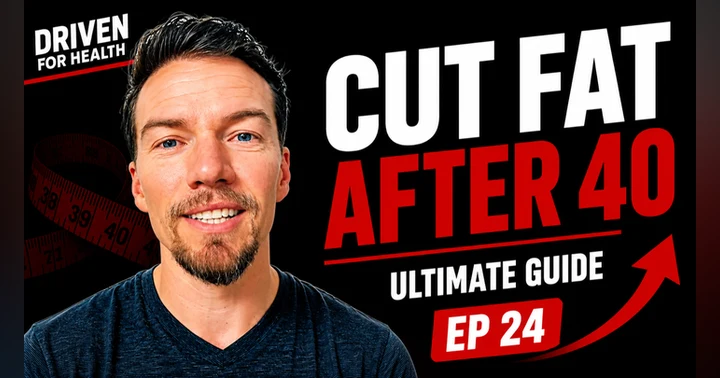
How to Cut Fat for Men Over 40 Without Losing Muscle - 24
Cutting fat in your 40s does not need an extreme diet. Coach Brian lays out a cut built for fathers and professionals with packed schedules. You leave knowing when to start a cut and how to set calories and macros. You also learn how to keep your muscle while the fat comes off.


 YouTube
 Cutting fat in your 40s does not need an extreme diet or a complicated set of rules. It needs a plan that survives a real schedule and still delivers steady progress.
(Do you think a real fat loss plan has to be extreme to work? See what a simple cut actually looks like.)
Coach Brian breaks down how to design a cut for busy fathers, husbands, and professionals who want to feel strong, lean, and confident again. He covers how to know when it is the right time to start a cut, how to set your calories and macros without guessing, and how to keep muscle while dropping fat. He also explains how to use cardio and steps without burning out, and how sleep, stress, and digestion affect the results you see.
By the end you will have a simple, practical plan that survives work, travel, and family life.
Main Topics:
- How to know when it is the right time to start a cut
- Setting your calories and macros without guessing
- How to keep muscle while dropping fat
- Using cardio and steps without burning out
- Handling cravings and low energy in a healthy way
- How sleep, stress, and digestion affect fat loss
Join 30 Tips in 30 Days, a free daily email plan with one practical tip to help you eat smarter, move better, recover faster, and feel more in control of your body.
go.brianparana.com/30days
Want help applying this to your own health, weight, energy, or lab numbers?
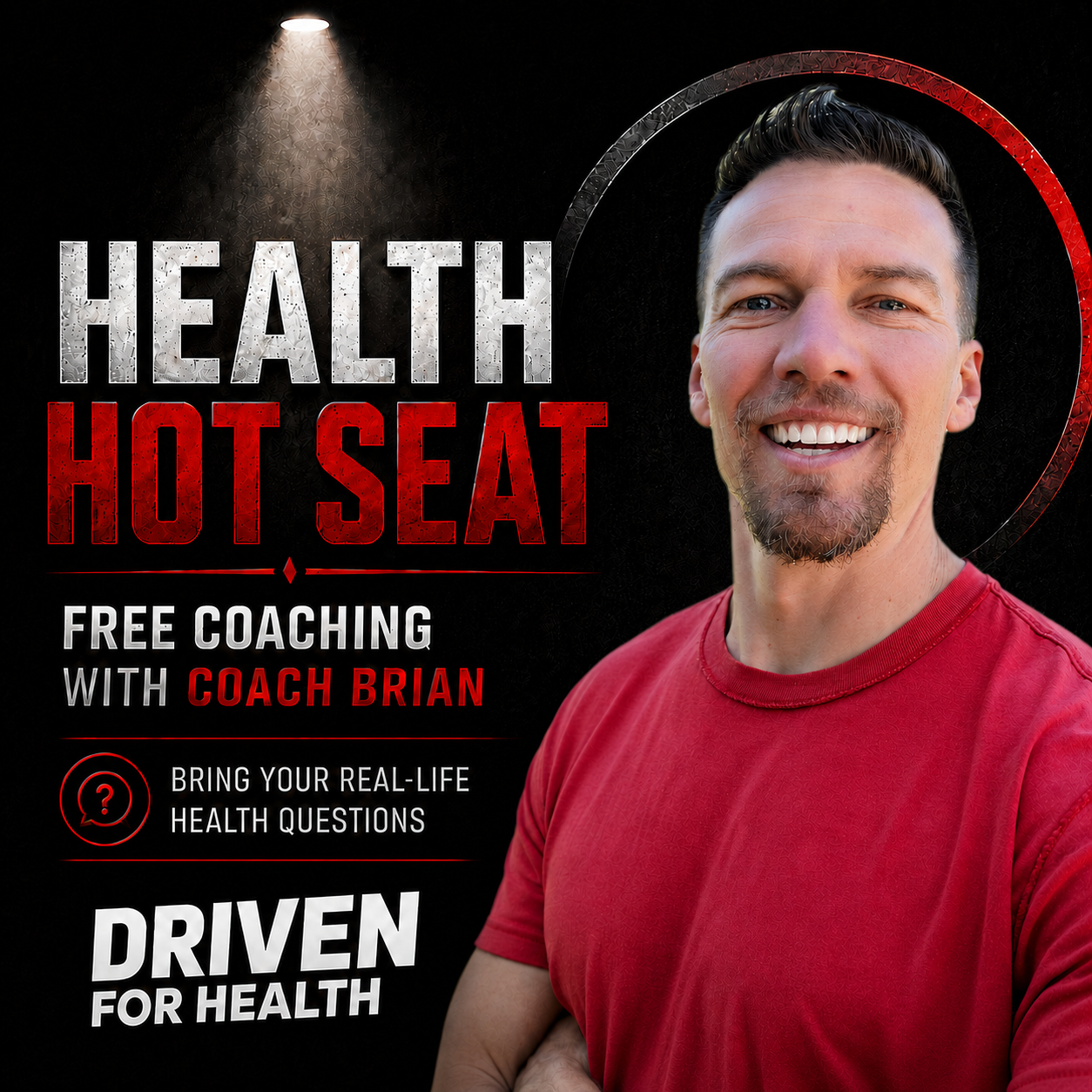
Coach Brian Parana offers Health Hot Seat coaching segments for men who want a clear next step with nutrition, fitness, weight loss, blood pressure, cholesterol, A1C, or daily consistency.
Learn more about The Call To Rise, a 100-day coaching program for driven men over 40 who want to lose weight, improve their health, and rebuild confidence:
To connect with Coach Brian:
brian@brianparana.com
Disclaimer: This podcast is for education and coaching support only. It is not medical advice. Always work with your physician before changing medication, treatment, or medical care.
- If taking your shirt off feels uncomfortable, you're not alone. In this conversation, I explain the exact steps men in their 40s can use to get lean again without skipping ice cream. In those moments after your kids win a game, your family wants to do Friday night pizza night, or you have to skip a beer when on a date night with your wife.
- We don't want to have to do those things. >> Hi, my name is Xavier Taylor and I'm from the Atlanta, Georgia area and I have been working with Coach Brian Piranha for the last two years. Originally, I was a bit hesitant to join this program because I wasn't sure if it was going to work. I tried several crash diets with no success.
- But over the the time we worked together, I've been able to drastically change my lifestyle, change my eating habits, change my activity habits, and I've been able to gain not only regain control of my physical health, but my mental health as well. Over the last uh two years we've worked together, I've lost about 40 45 pounds.
- Health has drastically improved again, both mentally and physically. And I can't thank the Brian Piranha enough, and I can't recommend this program enough. Welcome back to Driven for Health podcast. This is the place where men in their 40s, 50s come to rebuild their health, get lean, feel strong again without sacrificing time with their family, their business, or their sanity.
- I'm Coach Prime. Today we're hitting a topic almost every guy my age, I'm 42, almost 43, they they wonder, "How do I cut fat without losing muscle or tanking my energy down or throwing my life out of balance by doing something hard, weird, aggressive?" I was going to record a day of eating and what that looked like, but I decided to push that off and realize this is way more important.
- What my guys need to hear, a simple nononsense guide to cutting fat for your real life. We're not talking about cutting for a bodybuilding stage, something like that, right? We don't need to be eight pack abs or something. When we cut some of the fat off, say if you had 10, 20, or 40 pounds to lose, you're going to feel a lot more confident with your shirt off.
- You'll be able to keep up with your kids. My oldest two, Levi and Ever, are now faster than me. I am not that excited about it. They run cross country and and my oldest ran a marathon at 16 and 332, which is mind-boggling. Everett, let's leave. I ever ran 1904 in a 5K during cross country this year. Faster than I can run right now at least.
- I need to get back put my training wheels back on it, so to speak. But you also feel more connected in that that physical connection with your wife. Yeah. You move through life without joint pain or bending over, feeling like you might not be able to get back up because your back, bloating, sluggishness, things like that.
- I'm going to focus on helping guys cut that. And that's what my 100 day program is, the call to rise. Getting things dialed in for them and they can get to that body that they want to live ideally the the next 10, 15, 30 years of their life. and we'll show about what actually works for our age group, not some 22-year-old in the gym that's trying to be a fitness influencer.
- When do you know it is time to lose fat? Well, your midsection tells the truth. The stomach is pushing on your shirt. Your belt keeps expanding. The scales going up. you're shy in vacation photos. Secondly, your energy is just not there at times where it used to be. The the key times, of course, 3:00 p.m.
- , but even say for me, I I read to my daughter at night. I start reading and I want to fall asleep. If I'm not well rested and well taken care of, that's a problem for me. Not just your shirt, your belly push on your shirt, but your clothes just fit different. You might have to size up in a pair of jeans.
- Next thing you know, you're pushing a 40 instead of a 34. That's a problem. You don't want to play. You don't want to wrestle with your kids. You don't want to do the honeydew list. These are all signs that things need to change. Now, how long should a cut last? Most men in their 40s are going to do best in chunks of time.
- Somewhere around 8 to 12 weeks for a focused fat loss phase. And then we spread that out into 16 weeks or so for more of that sustainable lifestyle change. That's really important. Uh that's one reason why I have my the call to rise program at 100 day fat loss challenge because that gives 15 weeks of time that allows for not only progress to happen with the body changes but to learn to experience what paying attention to nutrition looks like to figuring out when and where your energy needs to go with as far or say food preparation, planning as fitting it
- in with the kids. There's so many variables that people don't think about this. Oh, I'm just going to follow this meal plan and then magically I'm going to be successful long term. If you're a guy who's been in that loop of losing weight, gaining it back, that's the wrong approach. How to start the cut the right way.
- Yeah, there's two type of guys. one, you're eating pretty consistently already. If you eat roughly the same things most days, then simply put, if you track for one or two weeks, that's going to help you figure out what to do, how to do it, which means that you'll start paying attention to how many calories you're eating, what's in the food that you're eating, and this will help you definitely understand a higher level of success to managing.
- Oh, I identify that my it is actually my after 9:00 meal that's a problem. Or oh wow, I just went 6 hours without food. No wonder I ate 1,000 calories. Then I keep skipping breakfast in a sense because that's what intermittent fasting says you're supposed to do. And that's not necessarily the best case for me because I go into the the day of the week not just that day just not full of energy.
- And when we track, we do have to look at if something has calories in it, it probably should be measured and tracked. You'll want to weigh yourself every day. Why? because that helps you understand the progress that you're making, if you are seeing the scale go down or not. This will allow you to see what your true maintenance calories are, or at the very least, it'll make you super aware of what your day-to-day calories are, which is really, really, really important to know.
- Most guys are shocked at how much mindless eating, snacks, and extras come in. You just literally don't realize that this bite of food turns into 3 400 calories. That's not a good thing. Once you know your baseline, then you can start adjusting. And if you have been maintaining your weight, looking through a couple days worth of tracking will allow you to understand, oh, this is more my maintenance level calories and will tell you, should I eat less, move more, combination of both.
- If type two, if you're all over the place, you have absolutely no clue. You just wing it every single day. There's inconsistency. There's no patterns of behavior that show up one day to the next. Certainly a very easy start would be using a macro calculator or you could go to episode number five where I talk about calories, how many you should have and episode six talks about macros and setting those up properly.
- Then you're going to use a you could go through those two episodes, but you could also use the macro calculator and that'll allow you to at least give you a ballpark of where it might be. You track for two weeks consistently. Step on the scale daily and you will see what you need to adjust and what needs to happen there.
- How big should the calorie drop be? This is where guys mess up. People in general mess up. They want to go super hard, super fast, and do the no calorie diet. The first two things that always come to mind are keto and intermittent fasting because they are popular. They are widespread. They are all over the internet. And those might not be the best ways for you to lose weight.
- What actually works in a 2 to 300 calorie deficit per day works. Adding a bit of more steps. I just went through the strength pyramid uh starting at episode 17 that we'll talk about how to set up the foundations of building a really good exercise program. Now again, if we stay in a calorie deficit, >> then you're going to be able to should be able to see progress show up on the scale, especially after 7 to 10 days.
- Gentlemen, that's the time frame in which you are looking to manage your your body weight. How do we set up macros? Well, it's it's not that hard. You can download an app. I'm a big fan of Chronometer. It has a lot of free features in it. My Fitness Pal is all right, but they put say the barcode scanner behind the payw wall.
- I don't think you need to pay for one of these. I never have had any of my clients pay for it. If you want the extra data or the fancy graphs and you're like that, then sure. I find that most guys don't want to track more than they have to. They see how many cars they eat, how much protein, carbs, and fats, and you can do that in the free version.
- You're looking for roughly 08 to one gram per pound of body weight, or even more important, a lean mass if you're heavier. Say you're over 250 lbs but not having 225 grams of protein. The only time you could say have that is if you're a pretty active 300 lb male. But at that point you'd probably be losing weight by paying attention to this.
- in the macro episode generally generalize protein being somewhere for most guys is a low about 140 150 to a high of maybe 200 unless you're really tall and just a bigger framed guy but also even with that make sure that you understand what bigger framed actually means fats and carbs moderate fats I like think of it like this High protein relative to you, moderate carbs, lower fats. Why? Carbs are fuel.
- We need them. We need higher carbs to fuel strength, to fuel energy, to keep you moving in the right direction. We do need enough healthy fats for hormone support. You don't want to just drop the fat levels out completely. That doesn't work very well. We can be a little bit more strategic around having higher carbs around your workouts to fuel the workouts.
- We don't want to go into a workout without fuel or gasoline in the gas tank, so to speak, to drive your car. Meaning that your your body is a car. The gasoline tank is your muscle and the gasoline is stored carbohydrates. It's what moves your body. the gasoline, the muscle glycogen, stored carbohydrates. You want to leverage that and leverage blood sugar levels, leverage even the hormone insulin.
- Insulin can allow you to get a lot of say increase your blood sugar levels up through eating carbs or simple carbs around a workout. Then the extra blood sugar, your body will release insulin and store that and to shuttle it into your muscles for using it properly. Whereas if you were to eat a high carb meal without movement, then you're going to shuttle and store that into body fat, which is what we don't want.
- big reason why you store you have your carbohydrates stored around the times of the day that you're going to move more and then eat more vegetables and lower carb meals at other times. You're going to have consistent protein throughout the day. Say 40ish, maybe 50 grams per bout of eating it, consuming it.
- This will allow you to maximize protein synthesis. There was a lot about only having 20 or 30 grams at one meal back a decade or two ago, but that's been dismissed through science. We still want to get that range of protein and we'll disperse it ideally even throughout the day. Or maybe dinner has a little bit more and another meal has a little bit less.
- That is fine. How about meal planning verse eat whatever fits your macros? Well, life isn't perfect and life adjusts. Having kids makes things a little more challenging and we want to find a high level of convenience. Us men in their 40s, we we need structure. We don't need to endlessly make decisions around what I'm going to eat. And I'll say it pretty simple.
- Most guys are going to eat the same things on repeat. And once you figure out how many calories per meal, roughly 400, 500, 600 calories on average, and you have that three or four times a day, that's going to allow you to be in a calorie deficit to manage your weight goals. Here's a couple things. Eat whatever you want.
- Works better in theory than the reality. Oftent times if guys don't understand nutrition, they will go off track in a big way. All right? And we don't want that. Decision fatigue leads to more overeing than anything else will. And that's not that's not a good thing. You will end up falling off track if you have to keep making more and more decisions.
- Okay? That's not a good idea. Now, whole foods always beat processed foods. They're literally going to be more filling. Think of an apple at about 100 calories and applesauce at 100 calories. The apple is going to be more filling by default, just the way that it is. Okay. Have repeatable meals makes life a lot easier.
- Now, if you email me, brianbrianpirana.com, then I will send over my high protein meal guide that for 20 years, these are the meals that most people period. I've worked with women, too, and young adults to seniors. These are the common meals. I'd be happy to send it over to you. The common meals that they eat that they enjoy.
- Now, a couple examples would be having some eggs and fruit or chicken with a form of vegetables and rice. Lean beef, a lean steak or lean ground beef with some vegetables and potatoes, Greek yogurt, high protein. I'm a big fan of too good or similar type high protein yogurt with berries, maybe some chia seeds. protein shake for convenience in the day, not mandatory.
- But having combinations of those type of meals makes it really simple, easy, and repeatable because then you can even bulk prep those food items, have them readily available for you. Cheap meals verse refeeds, right? I get this all the time. Can I have a cheat meal? Well, the honest answer, if your goal is to feel leaner, stronger, and more confident in your body, cheat meals will just slow you down.
- That's the version of, "Hey, I'm going to have a cheat meal or a cheat day and just eat whatever I want." I guess so, but it might slow you down. We don't want to cheat on your diet. Cheating is usually in the English language considered a bad word. Not unless you're playing a video game and you have the cheat code for infinity lives and you can win the game that way.
- But as far as food goes or taking care of yourself, we want to eat and and be intentional in a way that moves us toward our goals. Smarter way to think about it is replace the word cheat with refeed. Still can have a in quotation cheat meal. think of say pizza or takeout Chinese, something like that, or even fast food.
- But we can always make a smarter choice or decision. Or at the very least, you could just have whatever it is that you're wanting at say the McDonald's Big Mac and then work it into your day. That always is a better better option. We have whole foods we need. You're certainly on a refeed probably going to have higher carbs, higher fat.
- We can be strategic around this. Hey, on Saturday we're going to have a family event and I want to enjoy whatever it was literally this weekend. Sunday we had a brunch with our doctor Barry. She is our kids pediatrician and every year around this time she hosts a practicewide event. In years past it's been ice skating.
- This year it was brunch at a really nice restaurant. I in quotations re refeed that for that meal and I didn't really eat much the rest of the day. I had the chicken biscuit slider, the beef cheeseburger slider. I had chicken and waffles, eggs, bacon, ham, and these hash brown things that were they were all so good. And I had a Christmas sale, too.
- But the rest of the day was pretty low-key is my old asleep. I would say if if you've got teenagers and you know what I mean. Low-key is quite the phrase these days. If you are strategic with your refeeds and actually fuel recovery better, they actually put you into a fat burning position a lot better, allowing for better workouts the next day.
- And also, just consider this, a burger and fries of 1,200,500 calories worth of that just hits a little bit different when you're in your 40s, 50s than it did at 22. But I'd also say if you wanted the burger and fries, you could totally make that taste really good with a 93 or leaner ground meat with a just a low calorie bun.
- It could even in quotations get a keto bun and then [clears throat] air fry some fries and just occasionally spray the fry with the cooking oil spray to crisp it up. And there you go. You could have yourself a five 600 calorie high protein burger and fry that actually is good. It reminds me of my client Dan. He came saying, "Brian, I can't give up these cracked burgers.
- " said, "Oh, and the the crack burgers were delicious easty amazingness that he was able to eat and enjoy, which was they were exactly what they sound. They had tons of fat, fatty meat, lots of sugar was in them, cheese, bacon, all this stuff." And I literally just searched high protein, low-fat crack burger and voila, we found a recipe that would suit him.
- Maybe I'll put that recipe in the show notes. That'll be fun for you to guys see how you can make a delicious burger and it still work for your digestion, to improve your sleep, recovery, and even be able to not gain fat the next day. How about metabolism plateaus and and meal frequency? We just want to make sure that we don't ignore your biggest fat loss advantage comes to your everyday lifestyle, not what your metabolism is.
- Here's a couple things that really help you spread out your meals. Eating enough food to get you to the next time you're going to eat again. Protein throughout the day, 78 hours of sleep. You need to manage stress. Limit screen time throughout the day. And if we're in a plateau, then we need to not necessarily slash calories, but we need to add some walking time, 15 to 30 minutes more.
- Even you should be paying attention to your daily steps every day. I do that regularly. I look at my watch to tell me how much I moved, which then and gives me direct feedback to how much food to put in my body. If I moved a lot, I get away with more food. If I move less, they say it's the colder months now.
- I'm not as inclined to go outside and walk, then I need to be careful and not overeat. Refeeds can help boost metabolism if done properly at once every 7 to 10 days. It also refreshes you mentally around the dieting phase of this or [snorts] calorie control phase if you want to said say it differently. We do have to watch out for hitting calories that could be causing plateaus.
- I remember I had this client, they were doing great, losing two, three pounds a week. Then we had a goose egg. Well, we went back and reflected. They almost across the whole week had a day's worth of calories in just oil because they started using oil again for whatever reason to cook. Well, there you go. There's the lack of progress.
- They cut out the oil and they started losing weight again. Small little things can cause plateaus that we want to be conscious of. Now, in episode number nine covers a lot of supplements, but we we'll go over here. We need to do some supplements. You don't need to do the fat burners or those you melt the fat fast type of garbage supplements that they sell.
- They are usually not even worth their weight and and especially in money that you're spending or time that you're even looking into the marketing hype. We got multivitamins cover all your bases. We've got omega-3s to help reduce inflammation and improve your heart health. the protein powder for convenience of helping you hit your protein goals while making things tasty.
- You could even use that before an event or dinner to curb your cravings. We have amino acids helpful between meals or during long days. We have some caffeine. Well, time caffeine can help give you consistent energy throughout the day and use. I like having caffeine in the morning and around 1 or two.
- That gives me pretty consistent energy. I'll have maybe 150 to 200 milligrams a day in total. That keeps me going. Now, getting into some of the a little bit of training with say cardio to help with burning some fat and getting you moving. Of course, cardio heart helps with better heart health, better conditioning.
- Your heart rate is lower if you have lower heart rate. When you wake up every day, that's a sign of fitness in a sense. That also dictates that you have a higher level of fitness and capacity to do whatever you need to. You'll have better blood pressure and just more energy to keep up. Would do definitely at least 20 30 minutes minimum three to ideally five.
- It can include things like incline walking, bike riding, rowing, steps, jogging, running. Doing circuits can work. Body weight circuits can be a great way to keep your heart rate up, heart rate up as well. But it also helps with digestion. The walking after meals can be a really powerful tool to stabilize blood sugar levels quickly and start the digestion process because you are moving your body and your intestines are squeezing processing the food to cycle through and that really helps with managing say digestion, blood sugar
- level, stress and if the fat loss does sell out we can add say 30 to 40 minutes. I have always found that 10k steps or more has been a winning combination for guys to be successful. As far as training during a cutting phase or fat loss phase, we don't necessarily need to turn our strength training into cardio because we want your we want to use strength training as a form to build and maintain muscle mass.
- That's really important. It helps with keeping your body strong and your metabolism high. If you just go into say cardio mode, then you can really get into a catabolic like state with burning too many calories and that could be a problem. So we keep our focus towards keeping tension on the muscles, building strength, having challenging weights to lift. We have progressive overload.
- All this was in the strength pyramid starting on episode 17. And then if our carbs, just pay attention. If you're managing lower carbs, then we need to make sure that you are focused on having carbs strategically put before or after your workout. And again, protein steady throughout the day makes it manageable, but high carbs around your activity, low carbs at other times.
- Couple more things here just to help keep this moving here is is handling cravings. hunger and mental fatigue. Usually there's an overlap of stress with responsibilities that you're juggling work, managing kids. This weekend I had a lot of kid activities and say if you watch my real on Saturday night on Instagram, I went out for a run.
- I stuck away for a 30 minute run to just move. It was it was 50-ish degrees and that's warm these days. And then I went to spend about the next four or five hours with my family at my son Maxwell's my third son. He had a play, a school play and it was closing out that night. And so I moved my body then did that.
- Then the next day we did a lot of holiday decorations because the season cravings will come if stress is high, if you're unplanned, if you're just winging it. And a lot of the tips that this whole podcast is built upon are to help you manage the overwhelm of your day-to-day and not get, say, slapped in the face with overeating. Now, managing the stress can limit late night binging around, especially around screens.
- And when we're looking at screen and falling into old patterns of behavior, you could just Netflix and chill and want to eat because your body is conditioned and trained in a way that you put food in your mouth when you do this certain activity. We do have to plan those calories in if that's something you do want to end the night with with popcorn or even yes, I have had guys be successful having ice cream every day.
- We have to make sure that we keep tempting food out. John is a gentleman in Tucson. We have a ongoing conversation about his snacking in a sense especially in the evening because he keeps buying food that he shouldn't have. John stop buying the chocolate man just have it occasionally and not in the house. This will be the best play here.
- And then also lastly in those times if you are craving something then after hours and let's find an alternative. For me, I'll usually mix a cottage cheese with some protein powder to say chocolate, make it chocolaty. Throw in some PB2 for that chocolate peanut butter and put some whipped cream on it and I have a 300 calorie high protein chocolate peanut butter bomb.
- It tastes pretty good. And with managing some of say cravings or hunger or even the mental fatigue is is making sure that you have say your spouse, your partner, talk to a friend to manage some of these challenges that are coming up and not letting it build up and result in a hunger or a craving. Now you can cut fat at 40 at 50 at 60.
- I just had a 62year-old gentleman get under 200 lb first time in 33 years. What'd he do? He managed a calorie deficit. He increased his activity, his steps, and his workouts. And it made all the difference with better nutrition. But 33 years never being under 200 lb. So he is thrilled to death. He is, his name is Doug, and I have a YouTube video on he and I, I worked with his wife as well, but they are thriving, working together, and he's down in the 192ish range right now on his journey.
- So, apply the things that we talk about and you will see a lot of success in this fat loss journey of yours. So there it is. So real practical guide to cutting fat in your 40s, 50s, and it's about having a system, a process that allows you to manage it in your day-to-day life. That is such a huge underpinning on that simple fact of being held accountable, having a plan and a system of approach, and if you need to, someone to keep you on track.
- And that's exactly what we do in the call to rise. It's a 100 day fat loss challenge and the goal is to whether you even have a couple pounds to lose, but the goal is let's lose 20 plus pounds in those 100 days to radically change your body, your nutrition even more importantly, [music] and that the implications that has on your day-to-day life.
- That's really important that you take care of yourself and you become a better man as a result of doing that. Well, you can find that at www.thecalltorise.com. Jump in, look to see [music] if it's right fit for you. I'm looking for right fit guys, men that want to take better care of themselves and focus on themselves first for this season of time to get their body right, their nutrition right, then be able to make a big [music] impact in the world and their family most importantly, but their careers as well.
- Take one piece of advice from this and move forward with it, gentlemen. Apply it today and let's get to it. I'll talk to you in the next