Can Guys Over 40 Actually Speed Up Their Metabolism? - 38
Two men the same size can burn up to 2,000 calories a day differently from how much they move outside the gym. Coach Brian explains what metabolism is and why it rarely explains weight gain after 40. You leave knowing what raises your calorie burn.


 YouTube
 Two men the same size can burn up to 2,000 calories a day differently just from how much they move outside the gym. Metabolism is not the dead-end most men over 40 blame it for.
(Do you think your metabolism just stopped working? See what the research actually says.)
Coach Brian breaks down what metabolism actually is and why middle-age weight gain is almost never about a dead metabolism. He explains the four components of metabolism, BMR, TEF, EAT, and NEAT, and why total metabolism stays surprisingly stable from age 20 to 60. He also walks through which of the most common metabolism hacks actually move the needle and which are just marketing hype, including why cardio rarely burns as many calories as men expect.
By the end you will know what actually affects your calorie burn and stop blaming a metabolism that is not the real problem.
Main Topics:
- What metabolism actually is and why it rarely explains weight gain after 40
- The four components of metabolism: BMR, TEF, EAT, and NEAT
- Why metabolism stays stable from age 20 to 60
- Why NEAT can account for up to 2,000 calories of difference between two men
- Which common metabolism hacks actually work and which do not
- Why cardio often burns fewer calories than most men expect
The Call To Rise is a 100-day fat loss challenge for driven men ready to take their body back. It combines strength training, personalized nutrition and real accountability. Most men drop 20 to 30 pounds and rebuild the confidence that comes with it.
This program also works if you are dealing with high blood pressure, high cholesterol or Type 2 diabetes. It was built for those men too. Many men see those numbers move in the right direction alongside their weight loss.
Inside the program you also join a Brotherhood of men doing the same work. Together you build a body you're proud of and start leading like the man you already are at work.
This is your wake-up call to rise. Learn more and apply at www.thecalltorise.com
Want help applying this to your own health, weight, energy, or lab numbers?
Coach Brian Parana offers Health Hot Seat coaching segments for men who want a clear next step with nutrition, fitness, weight loss, blood pressure, cholesterol, A1C, or daily consistency.
Learn more about The Call To Rise, a 100-day coaching program for driven men over 40 who want to lose weight, improve their health, and rebuild confidence:
To connect with Coach Brian:
brian@brianparana.com
Disclaimer: This podcast is for education and coaching support only. It is not medical advice. Always work with your physician before changing medication, treatment, or medical care.
- Coach Brian here. Welcome back to Driven for Health. Look at this. A little Christmas gift my family got for me. Driven for Health mug if you can see it in the video. Very cool. I'm excited to have that. It makes this thing real. I'm on the cusp of going into 40th episode. This is episode 38 today and we're going to jump into a topic guys are always asking about in the 40s, 50s, and beyond.
- They want to know if they can boost their metabolism. And while they're trying to their belts tightening, they're stepping on the scale might be going in the wrong direction. They're trying to figure out why they used to be able to eat all the things that they wanted. Pizza nights, go out to the movies, have popcorn, beer with the boys, and just always wake up no problems.
- Well, things change as we get older. And it starts sticking around the middle of the tummy. Can you actually speed up your metabolism? If so, by how much? Today, we're going to do a deep dive, like a master class in a sense, on metabolism. You're going to walk away with a clear understanding of what metabolism actually is, what truly affects it, what barely moves the needle, what does nothing at all, some of those weird things that you see advertised on internet marketing 101 websites, and what you can control starting today, whether you're trying to down more
- water. That's what I have here. Green tea, spicy food, saunas, cold plunges, slow dieting methods, all of it. Plus, I'm going to lay on a couple other things. uh some important studies on human metabolism in the last 20 years. Myths you've been lied to about some client stories thrown in a sample of and an an accurate explanation of TD.
- What does that mean? BMR. We're going to break it down in a different way that you might be able to understand it a little bit better. analogies that make these things actually click. A hierarchy of what actually boosts metabolic rate and a practical weekly plan for busy guys to be able to execute on.
- By the end of this episode, you're going to have a lot. I'll try and keep it as simple as I can. Part one, what is metabolism? What is it really? Why do most men misunderstand it? And before we get into hacks and strategies, we need to talk about what metabolism actually is because most men misunderstand it from the get-go. Most people do.
- They think it's this this barometer. You can just go to your wall like your thermostat and just press the up button. All of a sudden, your metabolism gets turned on. Metabolism is simply the total energy your body burns in a day. That's it. It's a definition, but it's somewhat a little vague, too. Let's break it down a little bit more.
- An analogy every guy understands. Your metabolism is your body's operating budget. Okay? Think of calories of the amount that you can burn or even say dollars and cents. You're able to get so many dollars and spend so many dollars every single day. Just like your business has departments and they all cost money, your body has departments and they all burn calories. Number one, BMR.
- This is the biggest say department or cost of energy. It's your BMR, your basil metabolic rate. Think of it as the payroll department. This puts down what you need to do every single day, what you're using at all times. This is the energy that it keeps you alive. It runs your heart, your lungs, brain function, hormones, cellular repair.
- This is what wakes you up in the morning and and repairs your body to make it the best that it can be. Now, even if you did nothing all day, you literally laid around like we're doing on winter break with the kids, the family, and all, then there's still a cost to run and operate your body. The biggest portion is your metabolism.
- Number two is the TEF effect of food. Now, let's put a percentage on this. Our basil metabolic rate can run 60 to 70% of your calories. EF or thermic effective food. The processing your digestion can cost you about now it's the calories that get burned through digestion and breaking down food. Protein costs the most to break down. Carbohydrates second.
- The more fibrous ones take up more energy to burn and break down than [snorts] the starchier or more simple ones, say the ones without fiber or even sugar cost barely anything to break down and fat turns into fat pretty quickly. That's something to understand. And one reason why if you go back to episode five, start talking about calories and even episode six is macronutrients conversation.
- I talk about the macronutrients, protein and fiber and how we pick meals to build and they always start with where's the protein, where's my fiber. When you think of those two questions first, you maximize your digestive energies as well to be able to cost and burn a lot of energy. The digestion goes through, it's breaking down.
- Same way credit card transactions has a processing fee. Think of it like that. We we go through each of these can if we want to break it up. We can think of protein being the American Express of metabolism. It's premium. It's expensive and it is worth taking it every single bite. You want that. Now number three is your EA. This is your exercise activity thermogenesis.
- Okay, this is you exercising. It's your marketing budget. Think of 5 to 10%. I swear my marketing budget this year is up. Feels like it's a lot higher than 5 to 10% of the earnings and revenue and all, but that is for another day. This is your formal workouts. Think of it as you lifting, running, elliptical, treadmill, walking on incline, rooking, stair cl, stair climber, rollerblading, kayaking, surfing, things like that.
- Crossfit, cardio classes, boot camp classes, things of that nature. It's really, it really is important to make sure that you are firing on all cylinders. and we break down the exercise pyramid in episodes uh what 17 is the start of it. Episode 17, we want to start with making sure that we we frame exercise in the most appropriate way.
- Exercise is important, but it's still going to burn maybe say most workouts to 500 calories unless you're really hauling. could burn upwards of say 600 800 calories in an hour. If you're burning more than that, it's probably not strength training or cardio. It's probably just exercise. You're just say running or something. Now, number four is your neat non exercise activity thermogenesis.
- This is your everything else budget. This is you fidgeting. is me moving around, me taking a glass, a sip of water here, me I stand all day, I get to burn a lot more calories. Now, I will say my watch, if you can see in the video here, I've got an amaze fit. I'm actually really pleasantly surprised at the quality. I'm 3 years deep.
- Still using the same watch and it gives me about 25% battery usage a day now. maybe 40, anywhere from 25 to 40 depending on how active I am. This is year three now. At this point, my Fitbit would have crashed and burned on me. It would have used up too much energy. And I don't even know what an Apple Watch would have done on my wrist.
- I'm a full go Apple guy. I have this. I just actually upgraded to a MacBook Pro 2025 M5 32 gig. And that's what's bringing you this nice steady stream because I was trying so hard to do live streams of my podcast recordings on my 2019 MacBook Air and 8 gig RAMs. Poor thing just could not keep up. Swear two weeks ago, I stood in my barn here for about two to three hours staring at my computer wondering when it was going to do anything and it just didn't.
- Let's go back to the neat non exercise activity thermogenesis. I think this is the G-code. This is walking, fidgeting, standing, yard work, taking more stairs, parking further away, playing with your kids, pacing on phone calls. That's I've done that so much in my life. Just walk and talk to people. This is This is Brian.
- I actually have AirPod Pros. I'd be listening to them and taking notes on my phone when I talk to clients. But man, that is a huge amount of calories that I get to burn every single day without having to think or actually do anything. My calories just add up. I burn a lot of calories this way. There's a study, landmark study in 1999 with James Levin published in science found that meat can vary up to 2,000 calories per day between one person to the next. That's that's a lot.
- And that is where say our ectomorphs, our tall, skinny folks that never can gain weight, they might be at a higher rev. They might fidget more. They might move and wiggle around more. Whereas someone that does not have that type of calorie burn sits and and doesn't necessarily move a lot. That that could be a very easy way to do that.
- And your body is driven to do that. This is this isn't an automatic choice. You can move a lot until you get tired or you subconsciously will slow down. When you're in a calorie deficit, you most certainly will slow down. You purposely have to get out and will yourself to move to burn more calories. That the difference between these two people is I can eat anything and stay lean.
- I think of my tall 6'4 second son Everett and he is a he's 130 pounds. He is a string bean. Just all absure. Then we have the opposite where an endomorph gains weight just looking at pasta. It's just it's not necessarily magic metabolism. You might just have a lot more movement verse a not big picture. Let's go back. Your metabolism made up of all these departments.
- We have the payroll department, your basil metabolic rate. Underneath that we have processing fees like the thermic effect of food and digestion. We have a marketing budget, your exercise activity. We have the miscellaneous expenses of neat non-ex exercise activity thermogenesis. When guys say my metabolism slow, what they might actually really have issues with is low muscle mass, low dayto-day activity, poor sleep, they don't actually recover overnight, high stress.
- Cortisol impacts your metabolism. It impacts your food choices. It impacts a lot of areas of your body. Irregular eating from lack of planning, lack of preparation, lack of skills or knowledge around what's in the food that you're eating. Little resistance training, sedendary work life. You sit all day and you sit when you drive and you sit when you get home and you lay in bed.
- That equals a slow metabolism. And it's really your lifestyle that is slow. Throughout the last 20ome years doing this, I can't tell you how many times people are really unfortunately just slapped in the face in a sense when they see trying to get 10,000 steps in a sense is a big challenge that it it's a real thing.
- They realize how sedentary I remember I had this gentleman, his name was Sean. Sean sat so much in his day that he had to go out and walk for 90 minutes straight at a fast pace to get to 10,000 steps or he'd take longer. It just was what it was. All right, part two. Metabolism timeline. What really happens as you age? Herman Ponzer in a 2021 study published in silence NI 6,000 people from birth to age 90.
- Here's what they found. From age 20 to 60, metabolism barely changed. Let's say that out loud. Metabolism stayed pretty stable between 20 and 60. It doesn't crash at 30. It doesn't plummet at 40s. It doesn't die at age 50. It drops about 1% per year after age 60, but not really before. If you're thinking that you're in your 40s and 50s and feel like my metabolism just got knocked upside down and punched TKO, then it's it might not be your metabolism.
- Could be again going back to muscle loss. You have an inactive lifestyle. you don't move regularly. I will stand for this whole duration of this time. I've been standing most of the day today. Now, unfortunately, it's really cold out here in Ohio on what we're at December 30th. It's when I'm recording this and I've got 4,000 steps.
- It's 9:42 p.m. the moment. I haven't [clears throat] moved a ton, but I have also made sure that I kept my calories in check, so I don't have big issues there. What else? We have higher stress. I I feel it. I'm 43 now. My birthday was on the 28th, two days ago. So, happy birthday, me. Yay. But yeah, I feel stress. I feel sleep.
- I feel uh my mind racing to do the things I need to keep up with the daytoday responsibilities, support my clients and and be successful. I am a successful person. I am a driven person and I want to thrive. And keeping up with Brian sometimes is hard. This is like 43y old Brian keep trying to keep up with 20 year old Brian. It's it's tough.
- I don't run so fast as I used to. Literally my average mile per pace is 830s. Now I'm a little out of shape in comparison to where I was when I was 20. I could run 8 minute miles with a breeze. We have lack of structure. You feel this? This is where metabolism actually really slows down. Let's let's bust some myths here around metabolism. Some misconception.
- Uh myth one, starvation mode stops weight loss. Now metabolism slows a bit when calories drop but weight still comes off in a defin deficit. Metabolism is adaptive. We want to make sure that we watch our calorie amounts and the duration at which we stay in a calorie deficit. If you're working with me, you're a guy working with me, we're going to have planned maintenance levels or in quotation cheat day or better said feed days where we actually refeed and give you some more calories to keep the body and the blood and and and the the fuel, the fire
- inside burning. Myth number two, eating after 8 p.m. slows metabolism or it goes straight to your waist. This is zero credible research here. Continuous eating throughout the course of the day, not even timerestricted, but if you eat in a calorie deficit for the time that you're awake or in a full 24-hour cycle, you lose weight. It's that simple.
- There's lots of studies that support this. Myth number three, you need to stay in a fat burning zone for fat loss. No. No. We just need to burn total calories. Fat loss is about burning the total amount of calories in the day, not heart rate zones. Heart rate zones are based on cardiovascular health, on your heart rate, on your body's ability to move itself at a faster rate.
- Oxygen and carbon dioxide demand, that type of stuff is where the heart rate zones come into play. Doing training in zone two or zone three is going to get you cardiovascularly fit for running a 5K. But if you don't plan on running 5K, if you walk, then you're good. You could even just walk on an incline at say 2 or 3% to be able to burn a little more calories.
- That's all good. But total number of calories. One more thing I'll throw out here. I always ask this question. If you were to run for an hour or walk for an hour, which one's going to make you hungrier? Think through that. Walk for an hour, run for an hour. You're going to be hungry after an hour running.
- You may just overeat the calories that you just burned off, thereby not leaving you in a calorie deficit at all, thereby you end up gaining weight. Think of how many people you see in the gym that do that. Some myths are busted. Hopefully, you wrote some of those down or rewind to pause and and think through some of that. Four, does this boost metabolism? True or false? We're going to go through a couple rapid fire things that you would have heard or have been on this hidden mysterious thing and this one secret hack and this one little thing.
- Yeah, that usually it doesn't work. It's a marketing strategy for you to buy something. I can't tell you how many times people bought this product called Fit Espresso. Two tablets, 30 minutes before you drink coffee, and that's all you had to do. They were hulk wine and sinker.
- That that was going to get them to melt 40 pounds off their body. They didn't have to do anything else. I'm sorry. You've been sold. That's not true. Water number one. It might work, but barely. In 2003, a journal of clinical endocrinology and metabolism reported that cold water burns an extra 8 to 10 calories per glass because your body warms it up. That's one almond.
- [laughter] So, it's just it's not something that you want to rely on. The verdict is that drinking water for your health. Cheers. I have to drink water for my throat because I talk too much and too fast. But we drink health, drink for your health, drink for hydration, drink for fullness, drink for energy, drink for energy flow throughout the body, but not to boost your metabolism.
- Two, green tea pro probably doesn't really work. In 2021, view in clinical nutrition looked at four studies. Three showed no effect. One found a tiny little bump. 10 subjects, 24 hours, not enough in that time frame. There's no long-term studies. The verdict is green tea is healthy. Green tea is going to get you to drink more water, which then will make you more full, which will have you feel hydrated, which will feel you feel better as well.
- You got next one is spicy food. It might work. could give you a little tiny boost. But in a 2017 metaanalysis and appetite found spicy foods can increase energy expenditure by 70 calories for folks that were overweight. But define what typical spicy meal is. Maybe 20 calories. I mean, you sitting there sweating cuz you're eating something so hot that it's making you that physically uncomfortable.
- Okay. So, it might help your appetite, suppress it because you can't eat anything because your mouth's so hot, but it's not really going to be the metabolic boost that you're hoping for. Saunas probably doesn't work. Uh 1995 study showed a sauna increase calorie burn by five calories. You're sweating out water, not fat.
- And which then means that you have to drink more water once you're done. Which then is okay, good. But if you sweat a gallon out, you got to drink a lot of water. I need to refill my water. Actually, I love having water that's seltered, little bit of bubbles in there, and then I distill it down. So, if you see here's, if you're looking at the a video, got a 40 oz red container here.
- I fill it with 14 ounces of sparkling water. I fill it with then what 30 26 ounces of regular water and I'm good to go. Got nice light slightly bubbled seltzer water to keep me hydrated. Not necessarily to burn more calories. Next up is cold plunges. Probably doesn't work either here. As much as you're freezing and shivering and burning brown fat and all, a 10-minute ice bath burns maybe 14 extra calories compared to room temperature.
- So, they're great for mental clarity, focus. Definitely. I enjoyed taking cold baths, ice baths in my college years and beyond in my early 20s to recover my body and just ice my legs and I would get into my chest and it felt great. I would always feel better coming out of there. Now at 43, I have a hot tub.
- I just sit in there before and after and I stretch and that does the trick for me. Here's one that actually does work. Are you ready? It's building muscle. My biceps today, they're a little sore because I was in here in the barn lifting yesterday. Curls, doing pull-ups, doing squats. I'm a little sore. And you have to break your body down to rebuild it.
- This is the most beneficial powerful strategy that we have. Muscle is metabolically active and it requires energy for you to burn and stay on board your body. At rest, one pound of fat burns two calories. One pound of muscle, so that's a fat. One pound of muscle burns six. It's not huge per pound, but if you have a lot of muscle on your body, then we could actually be raising your metabolic rate upwards of 200 plus calories.
- Now more muscle in your body improves insulin sensitivity. Hormonal environment in your body likeliness that your testosterone is high. Your insulin sensitivity is there. Your body's receptive to managing all the hormones that it has to. Your calorie tolerance. You can actually eat more without gaining weight. Easier fat loss because you can just at rest burn more calories.
- Better appetite regulation. You can manage your calories a lot better throughout the day. You have more total movement in your day as well because you are active. And this is where real transformation happens for men. And this is where two stories come into play. I want to share one of Curtis. This guy 53 at the time, successful.
- He had done some muscle building back in the day, but he had also gained weight. He's got to about 225. And he was wondering if his metabolism was even alive anymore. Well, it it was. It's just he also ate a whole bag of Fritos with that canned cheese stuff that would sit on the side of the of the the aisles with the chips. Yeah.
- That that stuff. That goo. Now, he would eat that stuff and his steps were about 5,000 a day. His activities about four days in a week working out in the gym. When he came on board, I gave him a simple plan. One, I knew this guy could eat a lot of food. I had to keep him full on less calories. We purposely strategically placed a whole plate of vegetables, literally a pepper, a cucumber, and some to a tomato all at one time in the middle of his day to help curb his appetite. It worked.
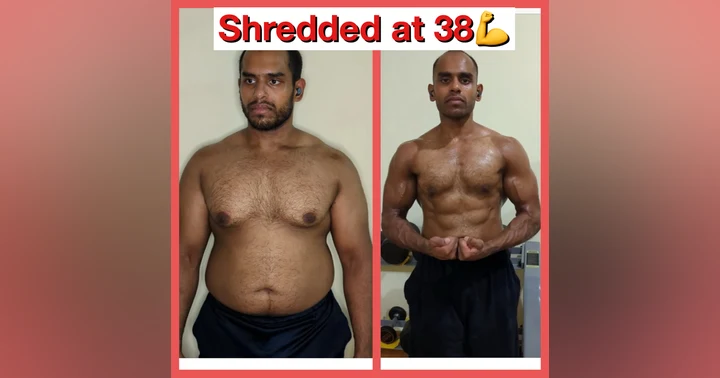
- This guy, he he would strength train still. He had a personal trainer and we upped his walking about another 3,000 steps a day. We had a simple protein goal for him. He liked eating protein. We'd eat about 200 grams a day. This guy went from 225 to 192. And I swear this guy looked like he was going to try out for men's health mo male model 50 and above on the the cover magazine because he was chiseled.
- If you look on my website the calltorise.com, you'll actually see him there. It was it was quite the transformation. uh his his metabolism didn't necessaril magically speed up, but we we were able to reboost his engine in a sense and get it firing on all cylinders. And he was able to drop what that 20 225 to 192.
- So it's 25 what almost 35 pounds or so. Now Jay's the other one. Jay came on at the same time. and he's about 50 and he started out 207. We got down to 172. This guy absolutely loved protein as well. We'd keep his above 200 because I couldn't get the guy to eat anything else, but he just loved it, which was fine.
- We do cover protein back in episode six on what your daily needs are, so you can listen in on that on your your macro needs. But with Jay, he also didn't move a lot. He loved working out in the gym, too, but a lot of stress. There's a lot of travel, lack of consistency around some of his meal times.
- And we were able to get him dialed in. Curtis could eat 2500 calories to 2,300 calories and lose fat and had to eat more like 18 to,700 calories because of one the body size, but also the muscle mass comparison. This is where we can change based on your body. If you have a a system, a process, a a coach to help guide you through this, then this is the magic that that I do with guys all the time in the call to rise program, the 100 day fat loss challenge.
- Now, we're moving on. So, we we went over muscle building. How about reverse dieting? It can work but it's not necessarily magic. Uh we have another trexler 2014 on reverse dieting becoming trendy but it shows that there isn't necessarily an increase in the calories and you don't necessarily need to increase them slowly and you can jump to maintenance immediately.
- Now, for me, I prefer to do more of a slow ramp up instead of just a jump to because the people I've been working with are working hard on losing fat and they don't want to see the scale jump two or three pounds in a sense because they just jump. Now, is it actually body fat? No, it's not. It's extra carbohydrates, muscle glycogen, water stored in the body because of the extra calories that they're eating.
- eat extra carbohydrates. Now again, you only need so many grams of protein and the extra calories then come from carbs and or fat in the reverse process. Now, I have seen some guys literally I had this one gentleman go from 2,000 calories when I met him. He was this was his name was John. John was about 54 55 years old.
- Years young years young, right? He had tracked. He wanted abs. He was six foot and 160, so he's not that heavy, but he had belly fat. I said, "John, we could do this two ways. We can cut calories out, but he already walked a lot and he worked out regularly and he was tracking his calories. I could have cut his calories down. He would have gotten abs, but he wanted to do it the right way.
- " So, we reverse dieted. We did four four months, so 16 weeks of adding calories back in. I got this guy to eat 2,000 calories all the way up to 3600 calories a day. Now, when we got about four months in, he said, "Hey, the scale just hits 160." Said, "Awesome, John. How about we just for the next three days skip a meal?" He said, "Really? I get to skip a meal? I don't have to eat so many calories?" Well, he was able to do that in three days, just skipping one meal.
- There was an average of say 700ish calories, something like that, 800 calories for one meal. So that would be about what, 24, 400 calories. He dropped 2 and a2 lbs, which then set him right back down to 157 and his starting weight was 155. This guy was an animal in the gym. He was a beast because he had so many calories and his ability to actually lift weights and build muscle was tremendous.
- And that was the boost that we needed to get him his six-pack abs. So, there's reverse dieting. I'll end up doing a whole episode on reverse dieting at some point here. It's it's on the list. If you guys comment below and you want it sooner, then cool. I'll do it sooner. Uh if not, I'll keep it organized as I'm going to jump around to it.
- And next up is meal frequency. I when I started out in this journey with exercise would do you were told you eat six meals a day and now it's there's a study in 2012 that they did it in a metabolic chamber where they actually measure every calorie that you eat and you just live in this thing and they measure the the amount of air you breathe and the waste that you have and all this eating three meals or 14 meals, it nothing mattered between those.
- Eat the number of meals that keeps you consistent and in control of your calories. Most guys are going to eat three or four meals in a day. That's including snacks. Next up is cardio. It sure works, but we burn calorie now when we do it and not across time. As far as muscle, we build burn calories across time as we go.
- All right. So, we want to make sure that we are can utilize cardio to facilitate a calorie deficit. And that can help us eat a little bit more calories while we're trying to burn, which is good because most people will agree to move more while eating a little bit more rather than moving less and eating less. And plus, I would much rather you move more and eat a little bit more to burn fat off, not just to try to lose fat.
- All right, next up is weighted vest. You It might work uh but it also isn't necessarily there's more weight on your body and that can control the amount of calories that you burn while you're working out, but it doesn't necessarily mean that you're going to burn exponentially more as you go. Okay, so that's important to to know and understand there.
- Moving on. Hopefully that was enlightening there. So, what actually moves the needle? Section six here. Highest impact to lowest impact. Let's go through this. Building muscle is number one. Increasing your needs. Your non-ex exercise activity thermogenesis. That's why I'm a fanatic about doing at least a 10k steps a day.
- I actually have a million step challenge if you want to join it. It is 100 days, 10k steps a day. You do it with a bunch of guys to help keep you accountable and consistent. and watch how your body changes. It's the millionstep challenge. If you're interested in joining that, then let me know. You could just email me brianbrienpa.
- com or comment below and I can reach out to you or hit me up on the Insta, coach Brian Piranha, and I can get you into that challenge. 100 days, 10K steps. It sounds easy. It's it is easy, but you end up doing a million steps if you commit to that. And the outcomes and changes happen are tremendous. All right, number three is slow, sustainable dieting.
- Right? Just eating in a calorie deficit over a long time. We're losing one, two, possibly three pounds a day. High protein intake because it costs a lot of energy to burn and digest protein. Think of a chicken in comparison to sugar, applesauce, or a piece of bread. Number five is cardio. Burning calories now a lot quickly works.
- Then we have weighted vest because we can add more resistance while we burn calories. Spicy foods, water, cold exposure, green tea, meal frequency, saunas, those are the ones that you don't need to pay attention to. But the most important thing is build or keep as much muscle in your body as you can. Move your body frequently through just fidgeting, moving, standing, walking.
- stay in a calorie deficit or stay in a calorie maintenance level, whatever your goals are, and maintain high protein. Let's break down total daily energy expenditure. What actually determines metabolism, and it's built on these four biggest pieces. Recapping, we have the biggest slice is going to be your basil metabolic rate.
- You sitting doing nothing costs 60 plus% of your energy for the day. neat nonex exercise activity thermogenesis. This is the most controllable. This is you standing, moving your arms, fidgeting your total and the thermic effect of food. This is your eating high amounts of protein and fibrous foods to help boost metabolism that way, but through digestion, but we're only getting maybe 10% calories there. And then exercise.
- We can burn 250 500 calories in an exercise session. And most guys are obsessed with exercising, but it's can have the least impact as opposed to say just walking all day long. And that's why walking 10k steps is a huge part of my call to rise program or any program I ever do with clients. All right, let's go through some weekly actions plans for you to boost your metabolism.
- These are pretty typical. You're going to hear me. I like you working out at least three times a week. Think of it like this. If you work out three days a week for the rest of your life, you're going to be more consistent than any human has been in history. Right? The mass majority of people, that's how consistent you be.
- Walk eight to 10,000 steps a day. Eat 40 grams of protein on average per meal. Lose 0.5 to one% of your body weight per week if you are dieting. And try not to go too much faster than that because you can have your metabolism metabolically adapt. Stand, walk, move, bend. Again, I've been standing. We're 40 minutes in. I've been standing this whole time, moving my arms and fidgeting.
- So hopefully that was a huge takeaway on what metabolism is and how it can help you burn more calories and have a happier, healthier body. Now, we're going to go into my fast five. I love this, the rapid fire question and answer. And question one is, does metabolism slow with age? And again, we went over this just to recap.
- It's starts to really slow at age 60. But if you have been, lack of better phrase, lazy or super busy with work or over consumed, overwhelmed with family or whatever other areas of life, then yeah, then it probably slowed down a lot more because you're not maintaining your muscle mass. Whereas say you lived a thousand years ago, you were digging in the field, moving, pulling, digging, pushing, and all sorts of different things to keep your body healthy.
- Question two, what is the most powerful metabolism booster? And that's going to be building muscle to build more calories to better manage insulin sensitivity to be able to lose fat faster. Number three, do metabolism boosters, fat boosters actually work? No. No, they don't. That I don't think it was on the list and it should have been on the list and that's why I'm throwing it in right now.
- It does not matter. Okay, those things don't work. You're wasting your money on it. Okay, number four. What matters more long term, cardio or neat? Well, neat by a mile. You can only do cardio for so long in the day before you get tired and you need to stop. But you can walk at various times throughout the day and you can burn one 2,000 calories a day if you're moving a lot, which could be helpful.
- Number five, what is the best thing for a man to do today? strength, train, get your sleep, walk more, and if you're not organized enough to be able to hold yourself accountable to those simple things, find someone to help you, either a workout buddy or yours truly, and that will help you quite a bit.
- As we start to wrap today, I hope that you found this entertaining and educational about metabolism, how to boost it. And if it helps you understand metabolism, throw down a like, a subscribe, share this episode with a friend that's constantly arguing with you about what metabolism does or doesn't work or this this thing or that thing.
- You can just share this one with them. We don't need hacks, magic foods, fix your metabolism programs or whatever. We need structure for working out, structure for activity in the day, time to do those things in your really busy schedule. By scheduling it and staying consistent so that we build muscle, you have movement in your everyday, and that it fits in your busy life, whether you're with family, with not, without, and just by yourself.
- Now, if you're ready to lose 20 to 30 pounds, rebuild a strong body, and become a younger version of yourself that you don't you haven't recognized in a long time, then check out my call to rise program. It's a 100 day fat loss challenge and I'll work with you guaranteed to lose 20 pounds or I'll keep working with you until you do lose it. All right.
- The guys, the last three guys who just graduated all lost 30 pounds each in 100 days doing it in the best way that works for them. And that's my job to help you figure that out. So that you can find out at www.thecalltorise.com. Check in the show notes. Hope you enjoyed the episode and off we go for episode 39 coming around the corner.
- Thanks.