
Just Got Diagnosed With Type 2 Diabetes, Now What

The Number That Changes Everything
You went in for a routine checkup. Maybe you had been feeling off for a while, more tired than usual, thirstier than made sense, waking up two or three times a night to use the bathroom. You figured it was stress, age, a busy schedule. Then the doctor walked in, looked at your chart, and said your A1C came back at 8.3. You have type 2 diabetes.
Everything after that goes a little underwater. You hear words. You nod. You leave with a pamphlet, a prescription, and a follow-up appointment scheduled three months out, and you sit in the parking lot not entirely sure what just happened.
I have worked with men in that exact moment for over twenty years. Both of my grandmothers had type 2 diabetes. One managed it reasonably well. The other got a late diagnosis, and over the next ten years she lost both legs below the knee, lost most of her sight, and spent her last decade in assisted living. She went from the matriarch of our family to someone who could not care for herself, and I watched that happen up close.
That is why I take this seriously, and that is why I wrote this article. A diagnosis at 8.3 is not the end of the road. But what you do in the next thirty days matters more than most men realize.
This article is for educational purposes only and does not constitute medical advice. Always consult your physician before making changes to your medication or treatment plan.
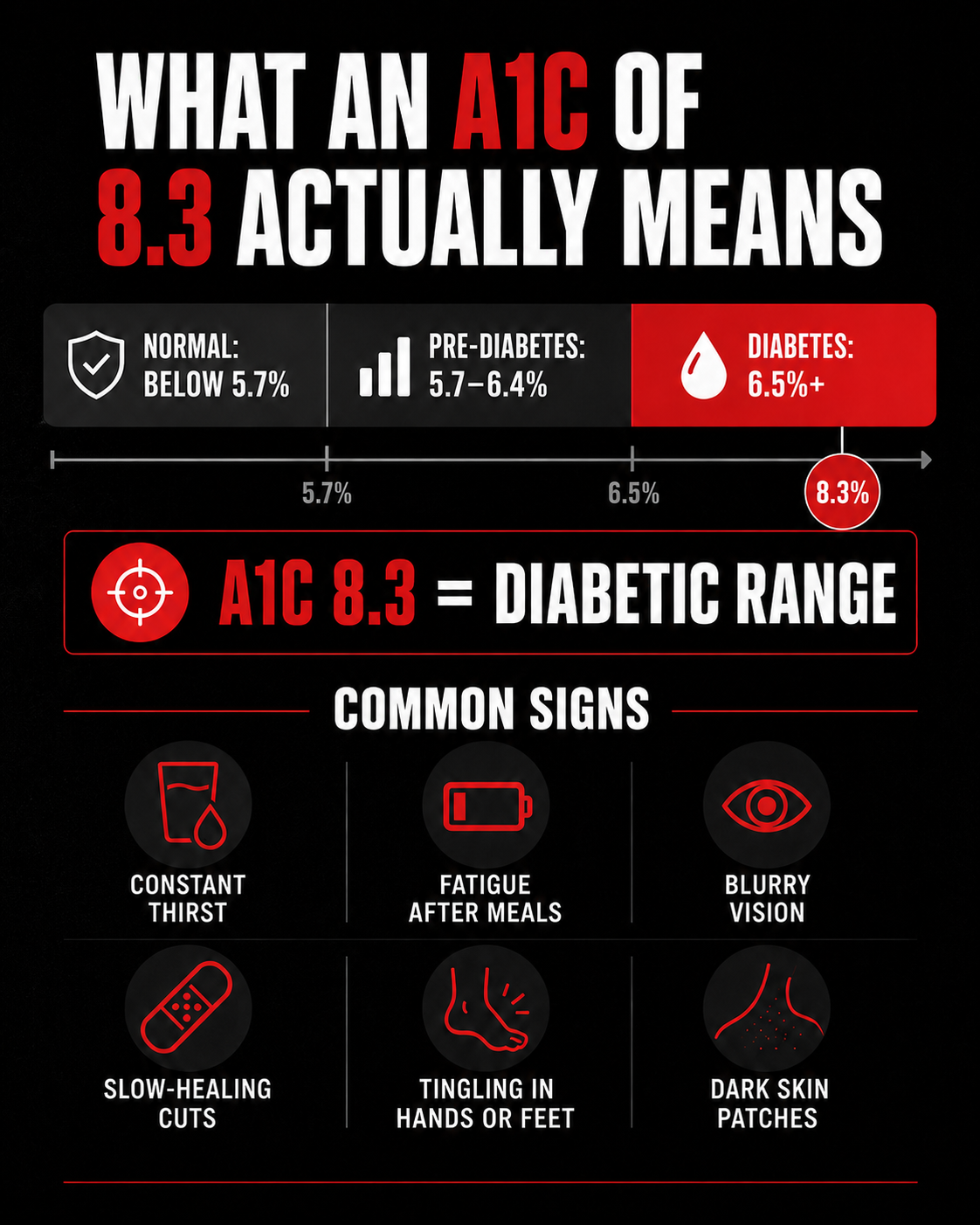
Your A1C is a reflection of your average blood glucose over the past two to three months. According to the American Diabetes Association, a result below 5.7 percent is considered normal. The pre-diabetic range runs from 5.7 to 6.4 percent. A reading of 6.5 percent or above meets the diagnostic threshold for type 2 diabetes. At 8.3, you are well into that range, and your doctor is right to take it seriously.
What most men do not realize is that the diagnosis did not happen overnight. For years before that appointment, the body had been struggling to manage blood sugar efficiently. Insulin, the hormone that pulls sugar out of your blood and into your cells, had been working harder and harder to keep up. The cells were becoming resistant to its signal. The liver was releasing excess sugar into the blood between meals. The whole system was under strain long before the number on the lab report became impossible to ignore.
The symptoms that felt unrelated were not unrelated. The constant thirst, the fatigue after meals, the blurry vision, the cuts that took weeks to heal, the tingling in the hands or feet, the darkening skin patches on the neck or under the arms. These are signs the body had been sending for a long time, and they are easy to explain away as stress or aging until the lab work makes them undeniable. Understanding how you got here matters because it shapes what you do next.
What the Research Actually Shows
Here is the part most men never hear in the doctor's office.
For some people, meaningful lifestyle change can move blood sugar back below the diabetic range. That is not a cure, and it does not mean the condition is gone permanently. What it means is that blood sugar can return to a non-diabetic level for a period of time, under medical supervision, when weight loss, nutrition, movement, and medication guidance are all part of the plan.
The DiRECT trial, published in The Lancet, put people with type 2 diabetes through a structured weight loss and lifestyle program. At twelve months, 46 percent of participants had blood sugar in a non-diabetic range without glucose-lowering medication. At five years, 81 percent of the people who maintained twenty or more pounds of weight loss were still in that range. The DiDEM trial, published in Lancet Diabetes and Endocrinology, found that 61 percent of participants were no longer meeting the diagnostic criteria for diabetes after twelve months of lifestyle intervention, with an average weight loss of around twenty-six pounds.
These were not elite athletes or nutrition scientists. They were regular people who changed how they ate, moved more consistently, and lost meaningful amounts of weight under medical supervision.
A structured walking program combined with basic nutrition guidance has been shown to reduce A1C by approximately half a point in ninety days. That number may sound modest, but at 8.3 it is the beginning of a trend that compounds significantly over six to twelve months with consistent effort. The men who see the most improvement are not the ones with the most motivation. They are the ones who build a clear structure and follow it long enough for the body to respond.

The pamphlet version of the first thirty days is clean and simple. Take your medication, check your blood sugar, eat better, get some exercise, come back in three months. The reality is a good deal messier, and knowing what to expect keeps you from getting discouraged when it does not go smoothly.
Your doctor will likely prescribe Metformin. It has been the first-line medication for type 2 diabetes for decades. It works by reducing how much sugar the liver releases into the blood between meals and by improving how sensitive your cells are to insulin. Generic Metformin is inexpensive, often less than ten dollars for a ninety-day supply at most pharmacies. If cost is a concern, ask your pharmacist directly about the generic version.
The most common side effects in the first weeks are nausea, stomach cramps, and digestive upset. These usually settle down within two to three weeks, especially if you take the medication with food. If they persist, an extended-release formulation dissolves more slowly and tends to be easier on the stomach. Ask your doctor about that option specifically if you are struggling with the standard version.
The first time you pick up the prescription, insurance may push back or require your doctor to resubmit documentation. That is normal, and it is aggravating. Get the direct number for your doctor's nursing or billing line before you need it. If you are using a continuous glucose monitor, the back-and-forth with insurance to get it covered can take time, but the real-time data it provides is genuinely useful. Seeing your blood sugar respond in real time to specific foods is one of the most effective ways to understand what your body is actually doing. You can eat a bowl of pasta, watch the reading climb to 230, and suddenly the abstract instruction to manage carbohydrates becomes something concrete and personal.
Your A1C is unlikely to move much in the first thirty days. That is expected. The number reflects a three-month average, so changes in behavior take time to register. What will respond faster is your daily fasting blood sugar. Check it at least three times a week. That number will tell you whether the changes you are making are working, even before the A1C reflects it.
The Nutrition Structure That Works
Eating better is not a useful instruction without a specific structure behind it. What follows is a framework I have used with clients for over twenty years, built around the same core principles that appear consistently in clinical research on blood sugar management.
Non-starchy vegetables take up half the plate.
Think broccoli, cauliflower, peppers, spinach, cucumber, tomatoes, and anything that typically goes on a salad. These are low in calories and high in fiber, and fiber is what slows the absorption of sugar into the bloodstream. Aim for three to four tennis ball-sized portions at each meal.
Lean protein takes up roughly a quarter of the plate.
Chicken, fish, turkey, eggs, Greek yogurt, or cottage cheese. One to one and a half tennis ball-sized portions. Protein does not raise blood sugar on its own, and paired with fiber-rich vegetables, it helps blunt the blood sugar response of the rest of the meal.
Starchy carbohydrates take up the remaining quarter. You do not need to eliminate carbs. Managing portions and choosing higher-fiber sources is the practical approach. One cup, roughly one tennis ball-sized portion, of rice, potato, beans, or quinoa is a reasonable amount at a single meal. Beans and lentils are particularly useful because they contain both protein and fiber, which means they raise blood sugar much more slowly than refined grains or processed foods.
Three specific changes will move your blood sugar in the right direction faster than most other adjustments.
First, remove liquid sugar completely.
Soda, juice, sweet tea, sports drinks, and flavored coffee drinks are among the most efficient ways to spike blood sugar levels. Replace them with water, sparkling water, or unsweetened coffee and tea. Eat fruit rather than drinking it. The fiber in whole fruit slows absorption in a way that juice does not.
Second, address the mindless evening eating.
Chips, crackers, cookies, and candy eaten after dinner are fast-acting carbohydrates with nothing to slow them down. If you are genuinely hungry in the evening, a small amount of protein and fat, Greek yogurt with blueberries, a handful of nuts, or some cheese, will address the hunger without driving blood sugar up sharply.
Third, eat protein first at every meal.
Starting with the protein portion before anything else on the plate makes it easier to manage overall portions, and it sets the blood sugar response of the entire meal in a more favorable direction.
On total daily calories: many men will need a controlled calorie deficit to lose the kind of weight the clinical evidence points to as the primary driver of A1C improvement. The exact target depends on your body size, activity level, medication, and what your physician recommends. This is worth discussing specifically at your next appointment rather than guessing.
The Movement Plan
You do not need to join a gym in the first month. The most consistently supported intervention for post-meal blood sugar control is also the simplest one: walk after you eat.
Ten to fifteen minutes of walking after a meal reduces the blood sugar spike that follows eating. Muscles take up glucose during movement, which means insulin has less work to do. This one habit, practiced after meals most days, produces measurable results within weeks and requires no equipment, no gym membership, and no particular fitness level.
Getting to ten thousand steps a day is a reasonable longer-term target. That level of daily movement appears consistently in research on metabolic health as a meaningful threshold. If ten thousand steps feels out of reach right now, start by walking five days a week after at least two meals and build from there.
As you move into months two and three, adding two to three basic strength training sessions per week compounds the benefit considerably. Muscle tissue is the primary site of glucose uptake in the body. More muscle means better insulin sensitivity around the clock, not just during exercise. Squats, lunges, and other large muscle group movements are particularly effective for this purpose. Two sessions a week of basic compound movements will make a meaningful difference over several months without requiring a complicated program.
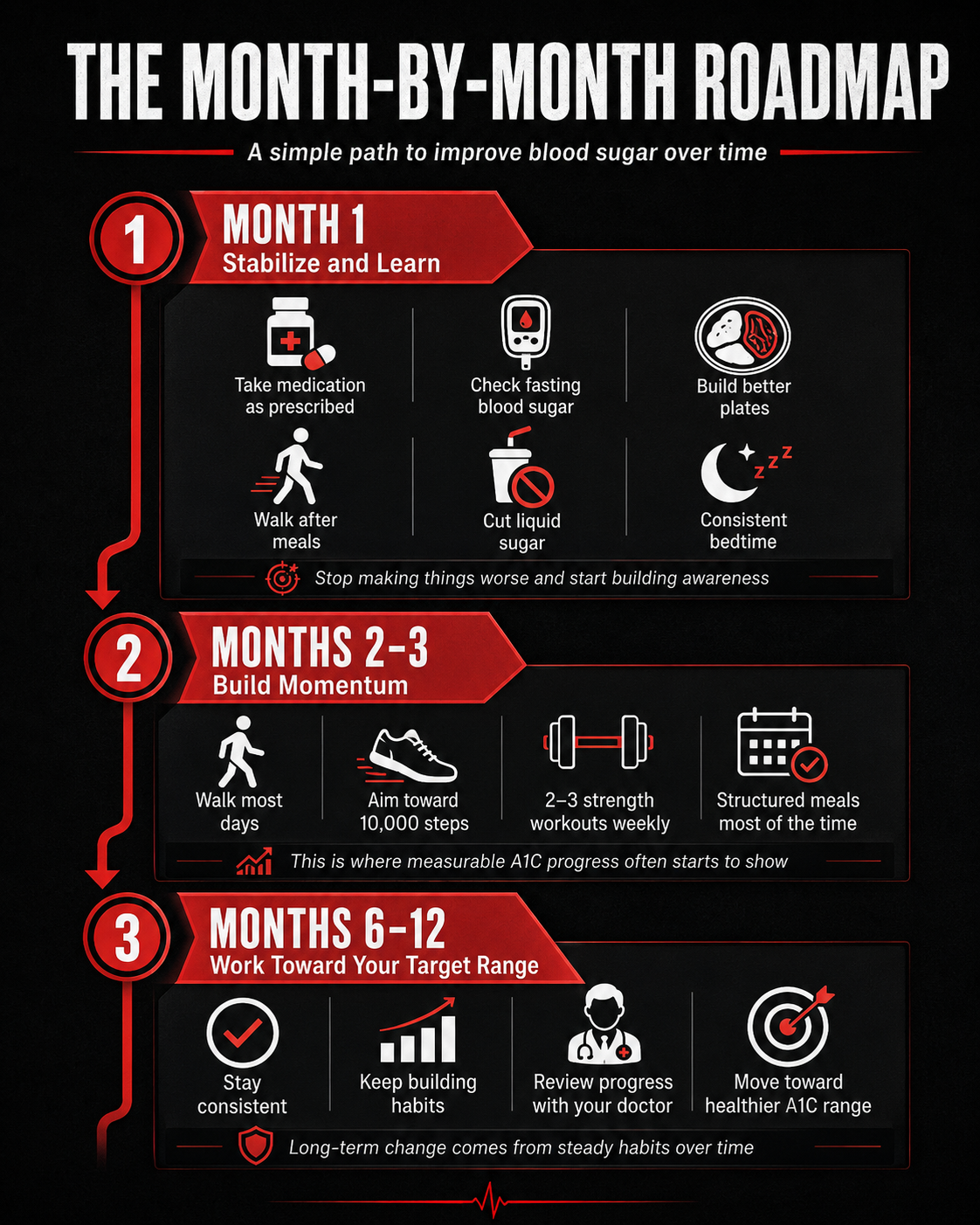
Month One: Stabilize and Learn
Your only job in the first thirty days is to stop making things worse and start paying attention to your patterns. Your A1C will not move much at this stage because it reflects a two to three month average. What will respond is your daily fasting blood sugar, and that number will tell you whether your habits are heading in the right direction.
Focus on these six things:
-
Take your medication as prescribed and work with your doctor on any side effect management
-
Check your fasting blood sugar at least three times a week
-
Build the plate correctly at most meals
-
Walk after eating, even ten minutes counts
-
Remove all liquid sugar starting today
-
Get to bed at a consistent time every night
That last one matters more than most people expect. Sleep deprivation alone raises blood sugar levels, and fixing your sleep schedule costs nothing.
Months Two and Three: Build Momentum
This is where the first measurable A1C improvement typically appears. Research consistently shows meaningful change around the ninety-day mark in people who make consistent lifestyle changes. A reduction of half a point to a full point in A1C at this stage is a strong indicator that the trend is moving in the right direction.
Keep building on what month one started:
-
Walking five days a week, aiming toward ten thousand steps daily
-
Two to three basic strength training sessions per week
-
Nutrition structured consistently at most meals, not just some of them
The habits you protected in month one start compounding here.
Months Six Through Twelve: Work Toward Your Target Range
This is where more significant improvement becomes realistic for people who stay consistent. The DiRECT trial found 46 percent of participants with blood sugar in the non-diabetic range at twelve months. The DiDEM trial found 61 percent no longer meeting the diagnostic criteria after twelve months of lifestyle intervention.
Working toward blood sugar in the 5.7 to 6.4 percent range, and eventually below 5.7, is a reasonable goal to discuss with your physician at the twelve-month mark. Your doctor will guide any decisions about medication based on how your numbers respond over time. Do not adjust medication on your own.
This plan requires a clear structure followed consistently over a long enough period for the body to respond.
What the Next Week Looks Like
Before you close this article, write down three things.
What are you eating at your next meal? Build the plate. Half non-starchy vegetables, a palm-sized portion of lean protein, one cup of a starchy carb. Start there.
Are you drinking liquid sugar in any form today? Remove it and replace it with water or unsweetened coffee or tea. That one change removes one of the fastest routes to blood sugar elevation from your daily routine.
Will you walk for ten minutes after dinner tonight? Do that. Just tonight. Then do it again tomorrow.
The A1C number that came back high did not get there overnight, and it will not come down overnight. But men who build a clear structure, follow their physician's guidance, and hold their habits consistently give their bodies a genuine opportunity to respond, and the clinical evidence supports that clearly.
Listen to the Related Episode
Listen to the related Driven For Health Podcast episode here:
https://podcast.brianparana.com/i-just-got-diagnosed-with-type-2-diabetes-now-what-89/
You can also download the Improve Your Blood Panels Scorecard here:
https://thecalltorise.com/improveyourbloodpanels
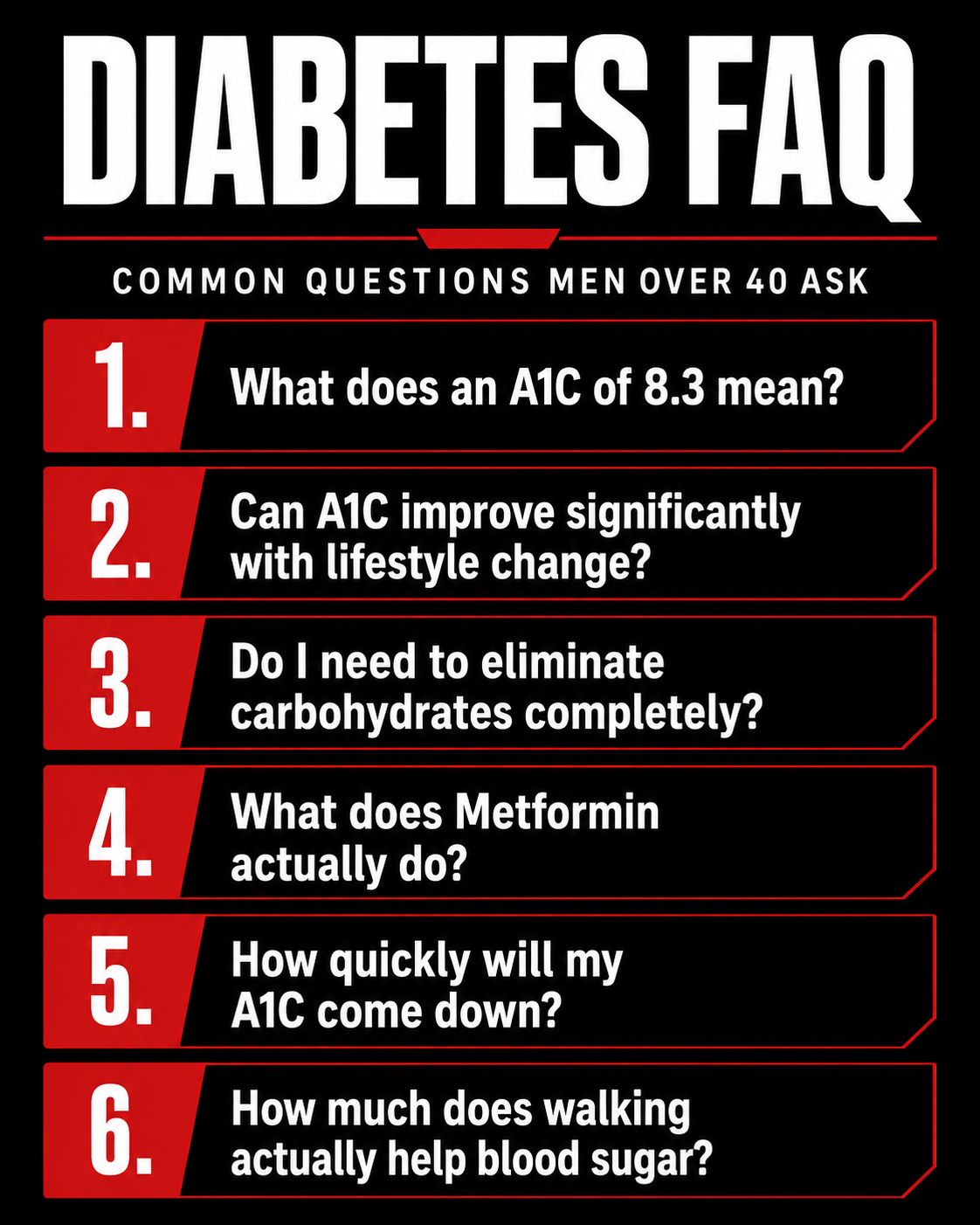
What does an A1C of 8.3 mean?
According to the American Diabetes Association, a normal A1C is below 5.7 percent. Pre-diabetes is 5.7 to 6.4 percent. A reading of 6.5 percent or above meets the diagnostic threshold for type 2 diabetes. At 8.3, you are well above that threshold and your doctor will likely recommend both medication and lifestyle changes.
Can A1C improve significantly with lifestyle change?
Clinical research shows it can for some people. The DiRECT trial found 46 percent of participants with blood sugar in a non-diabetic range at twelve months through structured weight loss and lifestyle change. The DiDEM trial found 61 percent no longer meeting the diagnostic criteria after twelve months. These outcomes are associated with sustained weight loss and consistent dietary and movement changes, all under medical supervision. Results vary by individual, and any changes to medication should be guided by your physician.
Do I need to eliminate carbohydrates completely?
No. Managing portions and choosing higher-fiber sources is the practical approach most people can sustain. Pairing carbohydrates with protein and non-starchy vegetables significantly reduces the blood sugar response. Always discuss specific dietary changes with your healthcare provider, particularly if you are on medication.
What does Metformin actually do?
Metformin reduces how much sugar the liver releases into the blood between meals and improves how sensitive cells are to insulin. It is inexpensive, well-studied, and has been the first-line medication for type 2 diabetes for decades. Common early side effects include nausea and digestive upset, which typically improve within two to three weeks when taken with food.
How quickly will my A1C come down?
A1C reflects a two to three month average of blood glucose, so meaningful changes take time to appear in the number. Walking studies show an average drop of approximately half a point at ninety days with consistent lifestyle changes. More comprehensive lifestyle intervention combined with weight loss has shown reductions of one to two points or more at six to twelve months in clinical trials. Individual results vary and are best monitored with your physician.
How much does walking actually help blood sugar?
Ten to fifteen minutes of walking after a meal consistently reduces post-meal blood sugar spikes. Muscles take up glucose during movement, which reduces the demand on insulin after eating. Getting to ten thousand steps a day reflects a level of daily activity that appears consistently in metabolic health research as a meaningful threshold.

CEO l Head Body Tranformer
Brian Parana is a men’s health coach with 23+ years of experience helping busy professionals improve their body, energy, and day-to-day habits while still leading at work and at home. His coaching is built around practical nutrition, training, sleep, and accountability, with a plan tailored to the person in front of him.
Over the years, Brian has helped thousands of clients through his work as a personal trainer, CrossFit gym owner, and online coach. He has also coached an Olympic silver medalist, a 2-time Olympian, and a CrossFit World Champion.
Brian is the host of the Driven For Health Podcast, where he shares real-world strategies for men who want to feel strong again and stay consistent without making health a second job.
He’s also the creator of The Call To Rise, a 100-day fat loss experience for driven men who want to drop 20–30 pounds, boost energy, and rebuild confidence through strength training, personalized nutrition, and high-accountability coaching. Many men join because their blood pressure, cholesterol, or blood sugar is heading the wrong direction, and they want a clear plan that fits real life.
Brian is married to his high school sweetheart, Amber, and they have four kids. Their family has traveled to all 50 states and 4 continents, with a goal to reach all seven.

What To Order At Dessert Restaurants For Fat Loss



 YouTube