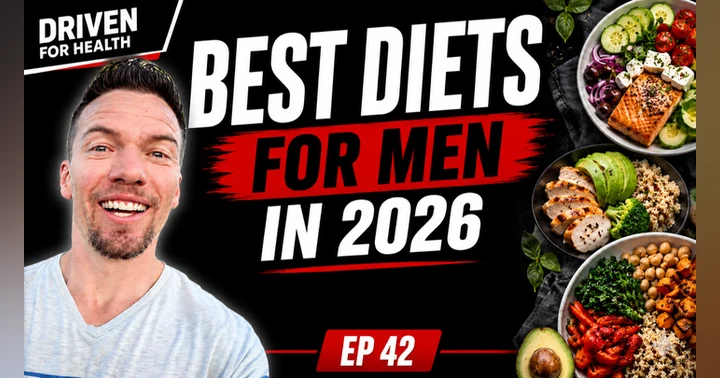
Best Diets For Men in 2026 - 42
Mediterranean and keto and plant based and paleo and intermittent fasting all have fans. Coach Brian ranks these five diets from real coaching experience. Each one is scored on fat loss and muscle gain and longevity and how long you can stay on it. You will learn how to judge any diet before you try it.


 YouTube
 Mediterranean, keto, plant-based, paleo, intermittent fasting. Most men who fail on one of these did not pick the wrong diet, they were never taught how to evaluate a diet in the first place.
(Do you keep switching diets and still ending up back where you started? Learn how to score any diet before you try it.)
Coach Brian ranks the five most popular diets based on real coaching experience, not trends or influencer hype. Each diet is scored on fat loss, muscle gain, longevity, and sustainability, so you can see which ones work short term and which hold up over years. He also covers the hardest diet to coach clients through and the one dietary change that helps most people lose 10 to 15 pounds without tracking a single calorie.
By the end you will know how to evaluate any diet for yourself instead of guessing which one to try next.
Main Topics:
- The five most popular diets ranked on fat loss and sustainability
- Why most people fail a diet, not because they picked the wrong one
- The hardest diet to coach clients through and why
- Whether you actually need to be on a diet to lose weight
- One simple change that drives 10 to 15 pounds of loss without tracking calories
- How to evaluate a diet for muscle retention and long-term health
The Call To Rise is a 100-day fat loss challenge for driven men ready to take their body back. It combines strength training, personalized nutrition and real accountability. Most men drop 20 to 30 pounds and rebuild the confidence that comes with it.
This program also works if you are dealing with high blood pressure, high cholesterol or Type 2 diabetes. It was built for those men too. Many men see those numbers move in the right direction alongside their weight loss.
Inside the program you also join a Brotherhood of men doing the same work. Together you build a body you're proud of and start leading like the man you already are at work.
This is your wake-up call to rise. Learn more and apply at www.thecalltorise.com
Want help applying this to your own health, weight, energy, or lab numbers?
Coach Brian Parana offers Health Hot Seat coaching segments for men who want a clear next step with nutrition, fitness, weight loss, blood pressure, cholesterol, A1C, or daily consistency.
Learn more about The Call To Rise, a 100-day coaching program for driven men over 40 who want to lose weight, improve their health, and rebuild confidence:
To connect with Coach Brian:
brian@brianparana.com
Disclaimer: This podcast is for education and coaching support only. It is not medical advice. Always work with your physician before changing medication, treatment, or medical care.
- Welcome guys. Coach Brian here. Welcome back to Driven for Health podcast episode 42. Best diets for men in 2026. Today I'm going to be talking about one of the most common things men and a lot of people are thinking about to start off their new year. And a lot of people are focused on weight loss, getting in shape, fixing chronic illness, things like high cholesterol, even diabetes, or worse.
- I have worked with people dealing with cancer even. I'm going to score each of these diets on fat loss, muscle gain, longevity, sustainability. So, what's the criteria? What's the thought process on how we're going to score this? Well, it's based on a lot of different ways that we can look at all these different diets. It has to include sustainability, right? That's the whole point is sustainability.
- One phrase I absolutely love saying and you'll hear it constantly and time again is can we what we do in two weeks, we do in two months, we do in two years, so on and so forth. That is so so important. Sustainability, meaning how easily or how well I estimate somebody would be able to stick to any of these diets.
- What I picked was I'm going to rank them, of course, and I'm going to break them down into a number of different of these categories. Again, fat loss, muscle gain, longevity, and sustainability. They'll get scored from one to 10. One being terrible and 10 being the best. Okay. And at the end, I'm going to pick my favorite of the five.
- For people who aren't familiar with Coach Brian here, I've coached thousands of clients over the last 23 years. Okay? It's been over two decades. Literally, I'm personal training for many years. I've owned two gyms, CrossFit gyms for about five and I've been doing online health, nutrition, fitness, lifestyle coaching for the last 11, it's almost a dozen.
- I've been working solely online and I have so much experience with so many different diets, so many different types of pe people, ethnic backgrounds, their culturals, their preferences, their personalities, all these things matter. And I do want to preface this by saying the best diet typically is individualized.
- I just going to throw that out there right now. There's such a wide variance in how people react to different types of foods, how their body responds, how there are different ways to eat, uh even food availability. Yes, there are food deserts where there's just not a lot of access to certain foods and that does challenge the situation or a quote diet.
- And I just want to frame what a diet is. Diet is the food that you eat. It's not a a protocol or something. That's just a phrase that have been around for a long time, diets, but I as a health coach, nutritionist, and a lifestyle advocate. Diet to me is the food that you eat and nutrition is the protocol which you use the strategies to implement and get the results that you're after.
- It's all combined around those. But again, very individualized. When you are considering how to change your diet, you can't just look at which one's the going all over the internet or which one your friends are talking about or which one has been the most marketed to you. You have to understand what's the best for your specific goals and are you going to stick with it? Time and again, that's the most important.
- Is this what I'm going to enjoy? Does this work with my personality? That kind of stuff is really important. And based off my experience and most of the experience was in again training lots of everyday people. I' I'd say about 95% were average and they just wanted to better themselves. They were typically looking for weight loss.
- Most importantly, even more importantly, it's fat loss. A lot of people say weight loss, but when we think about it, we want to actually lose fat, which is really important, not just weight. Because people can lose weight and still not be happy with the way they look or feel. But if we lose fat, they will be very happy with how they feel and look and can maintain that look, feel long after we're done. A and longevity, too.
- That's really important. That's what I'm basing all of this off of. I went to Google and I looked up a lot of searches, a lot of Google search, a lot of popular diets over the last many years, like 20 years, because there's a lot of popular diets that have been around for a while. Everyone is probably trying to get a New Year's resolution that's checking in here and wants to find out what that best diet is for them.
- What we are thinking is that this is timely. This is why I did it in the first place. Here's the list of what we're going to do first and then we'll go into each one. First one's Mediterranean diet. Number two, keto. Number three is paleo. The fourth one is plant-based diet. And the fifth is intermittent fasting.
- All right. And surprise if you stick around to toward the end, I'm going to do a sixth one. A sixth one. All right. A bonus diet that you may or may not think is good. All right. I think you might like it. I think it's worth sticking around for. Mediterranean diet. Here we go. This one's got quite a lot of media behind it.
- A lot of attention, medical attention, and it's notable for being very healthy. If you're in a live stream right now, would love to see you throw out a fire emoji if you've heard it before. Okay. I sure have. You've seen studies around it, lots of data around it, lots of different places in the world, say Italy with the olive oil and all.
- [snorts] On a lighter side, let's not we'll break down what they say it is and then I'll give you a little bit of my opinion on what the actual Mediterranean diet looks like because it's important that we have context to actual real life experience. Mediterranean, if you read up on it, it's going to focus on vegetables, fruits, nuts, seeds, whole grains, and a lot of olive oil.
- Then they'll tell you to moderate your limit intake of chicken, eggs, cheese, yogurt, red wine, of course, and then further limit red meat, processed meats, sugar. I think in general, if you limit sugar, you're off to a really good start. What's the origin of this? Well, it's obviously based in a lot of popular foods in the Mediterranean.
- Think of Italy. And therefore, we're going to make a diet around it. Like, how do we get the name Mediterranean? And blue zone. Think of that. We found this or we have the the blue zone diets where a lot of people live long lifestyles and this is where some of this comes. They can live to a hundred years old or so.
- And that ends up being why some of it is profound and why it's studied. Coming from places like Sicily, Rome, Naples, and other of that, we do think that there's a lot of oil, a lot of olive oil, a lot of whole grains, and a lot of pasta, right? It's pretty common. And yeah, there's certain white ricees in certain areas as well.
- When we think about Mediterranean, what we believe is that there's a huge emphasis on olive oil. But that's the thing is that under the impression that it is more fishbased and fish is a really good idea to have especially salmon in a sense or even white fish which is high in protein, low in fat. Salmon is higher in fat, but has omega-3s, and that's a really good omega-3 fatty acids for you to have.
- Uh, we have a little bit of poultry in there. We have a little bit of red meat, and it doesn't say you can't have any red meat. It just says minimal amounts of that mineral poultry, but mostly fish. Now under this impression the fish is the primary protein source but also they don't really spec specify exactly how much of fish or even protein comes in this diet because it's again listed as mostly vegetables, fruits, nuts, seeds, whole grains, olive oil and these are all going to be healthy.
- All right. Now there was a let's see there was a American physiologist anal keys proposed heart healthy diet hypothesis or the lipo heart hypothesis in the 1950s suggested that high intake of dietary saturated fats and cholesterol increases blood cholesterol leading to arterial sclerosis and heart disease. arteriocerosis is the blockage in your arteries.
- And he was advocating for a low-fat diet to reduce this risk. And his theory came from some of these studies around having a more Mediterranean diet. Okay. So, good old Mr. Keys has been one of the founders of the Mediterranean diet. Again with this diet, the medical community focuses a lot around it as well because of its heart healthy.
- Uh there's a large amount of studies around cardiovascular disease as well, brain health, all those type of things. And well, let's break it down now for say fat loss. for specifically fat loss. We're going to give it maybe a five or six. And some of the reasons around that is that there gives you food to eat, healthy foods to eat, but there's no quantities.
- Quantities are always going to be one of the main things that I personally go off of. If you go back to episode five, I talk about calories and what your calorie needs are for guys to lose fat effectively. As far as muscle gain, okay, it's going to be low for me as well, more like four or five.
- And it's because it limits meat. And in my opinion, there's always been a lot of studies the last 15, 20 years around getting adequate amounts of protein. For guys, it's going to be I always like having if you're completely vegetarian, 120 grams of protein. 140 to 150 is a minimum for most guys going all the way up to most guys around 175ish to maybe 200.
- After 200, you have to be a very big guy or very physically active. And in episode 6, I go over a lot of macro nutrients, protein, carbs, and fats, and diagnose a lot of that type of stuff so that you understand how much to do. Protein's not very high, and it's honestly, it's a big challenge for most people.
- When I'm coaching someone, I have two questions that I always want them to think about in their head. Where's the protein? Where's the fiber? When we think of these two questions first, when we go through picking our food choices, then we have a little bit more clarity and understanding of what we should be putting on our plate to help us prioritize the outcome that we want, which most people want to be lean, strong, and functional for their whole lives.
- If I put a client in a diet that tells you that you should probably limit a protein and that's already a challenge for you, that's going to already make it even more challenging for you. So, a diet that limits protein dense foods gets a lower number. All right, for context compared to these other ones, I can think that this one's lower for muscle building.
- Okay, and again, it's under five because when you read up on the Mediterranean diet, it's supposed to be that the even red meat sources and chicken and eggs are in moderation. So it's not going to be too much longevity. What do we think about longevity? It's it's higher. It's a it's going to be more like a 78 or to nine in this aspect because of the heart healthy fats, the nuts, the seeds, the oil, red wine can be part of that, the resveratl and all that.
- But again, you got to drink a lot of wine to get that type of benefit from that. We have to be careful with the calories from that as well. We have to be if we isolate out the alcohol regardless of where it comes from and take out that community aspect around alcohol then we don't have to worry about it conflicting with your overall goals and your longevity will be just fine with or without the alcohol. All right.
- So sustainability, I think it's sustainable and we're not eliminating a lot of food groups. It's very easy to get access to these types of food everywhere you go. You can enjoy these foods out in public in group settings by yourself and they are again focused on being heart healthy. So I am pretty good with that.
- All right, we scroll down and just want to bring a quick note. The episode is brought to you by the call to rise. If you're a man over your 40s and you're looking to lose 20 to 30 pounds and you don't really know what to do and and no matter what diet you try, you never maintain, then a structured program for 100 days to lose 20 plus pounds money back guaranteed might be for you. We do it in the five pillars.
- One is the what I call the call. That's your identity as a man, as a leader, as someone that sees themsself as a healthy individual. We have the forge, which is the exercise piece, the component, structured exercise and movement and chew every day to burn calories and build a better body. We have number three pillar, the fuel, which is around nutrition, proper sciencebacked nutrition, not diets that we use to build muscle, burn fat, and do it in a way that's sustainable.
- The fourth one is called the code. The fourth pillar being your mindset, the way you think. We're going to change the way you think. And I hope a lot of what I give you in these podcasts does exactly that. And the last one, most important one, which is community. And a huge thing that I'm focusing on in 2020 amount of community and coming together with other guys that are going to be in the trenches with you, doing the work, putting it together, and doing.
- So that's the calltorise.com. Check it out if that interests you. All right, back to the ketogenis the ketogenic diet. Let me grab a sip here. So thankful for my kids. My wife for giving me a wonderful Christmas gift as you see it in the video or in the live stream. A mug with my logo on it for the podcast. So cool. All right, keto.
- This one's been going on for a while. I honestly haven't heard it as much as I have in the past. Everyone was trying the keto diet and I don't hear it so much. All right. So, it is still popular, but it isn't isn't as mainstream as it used to become. We had the origins coming out around the 90s with Atkins when he came out with his book.
- And of course, everyone was in knows Atkins diet, right? Even they have Atkins bars and stuff. very popular and people had success with it. But again, I don't know of anyone that I ever worked with that that eats Atkins in a sense. So, we go back to ketogenic diet and it's been building a this is coming from the opposite of the 1980s, which was a very lowfat diet [snorts] and especially in the 80s, super low.
- And having too little fat actually does cause hormonal problems. men could affect your testosterone and a large number of other hormones and underlying health for you to just literally not feel great. And so the book comes out and says everyone should eat as much fat as they want and just don't eat carbs, right? Ketogenic diet Atkins against carbs.
- And so it was opposite of what people had done in the 80s. And so people got results because at the end of the day they had cut out calories. That's the most important here is to understand is it's a lower calorie diet which is how people lose weight. Go back to episode five and we talk about the structure of the nutrition pyramid.
- So, correct me if I'm wrong, but isn't keto almost exactly the same as Atkins, except Atkins would advocate higher protein and keto is more moderate? And yeah, well, they're both high in fat. And Atkins was also high in protein. So, it could be blurred about which one of these is actually a ketogenic versus not.
- And now we do want to know that the original ketogenic diet is for epilepsy. Okay, it's a neurological issue that advocates for minimal protein and this really helps the body epileptics actually function and not have go through cycles of epilepsy and be challenged that way. So, if you do have that, that'd be the very first thing if someone came to me with epilepsy, ketogenic diet, most definitely we're going to go high pro uh high fat, not a lot of protein, and not a lot of carbs because their body literally just functions and operates significantly
- better that way. They run off fat rather than most of us who run off carbs. our bodies. The KB cycle is a carbohydrate processing cycle in your body. All right. Now, how people do keto today? Well, they do moderate protein, high fat, and extremely low carbs. It depends on your definition. Are you actually peeing on pea strips for ketosis? Or are you doing dirty keto, which you're just trying to say do 50 carbs or less in that diet? So, you're basically just eating vegetables.
- I mean, you literally can't even have an apple at 25 carbs because that could kick you out of ketosis. That's probably the biggest reason why I never advocate for ketogenic diets because they I have four kids. Carbs are everywhere. I need to learn a better relationship with carbohydrates, not avoid them. And same thing with my clients.
- Any single person I've ever talked to loves carbs and they need to do it. I need to have that relationship with carbohydrates so it works out better for them in the long run. We're thinking about the types of food that he cuts. Meat, fish, whole eggs, whole fat dairy, whole fat cheeses, avocados, macadamia nuts, other nuts, oils, butter, very, very high in fat.
- Some protein, but not a lot because of the amount of fat that's going into it. And extremely low carbs. Again, under 50 carbs to even some under 20. And I honestly don't know how you could even do that cuz even say nuts have carbs in them and they would add up over time. All right. Now, as far as fat loss, it does drop people do drop bad on keto ketogenic diets. Okay.
- It can be effective in this outright. I just haven't experienced it personally or I haven't had any clients have long-term success with it. Oftent times I get people who have done keto, had success, gained the weight back and want to do it a different way or other clients who have had some success with keto but don't know how to cycle off of it.
- We also have to be conscious and careful about all these ketogenic food products that are in the market as well. All these net carbs and things, this processed amounts of food that is labeled keto friendly or has crazy amounts of fiber to do the net carb effect. The net carbs are just total carbs minus fiber equals net carbs. So, if something has 20 carbs in it, but has 15 grams of fiber, they're going to say it has a net carb of five, and it's only going to tell you to count five carbs.
- Well, if you go to any professional, any nutritionist, dietician, they're always going to focus on total carbs and total fiber. Trust me, I've I've looked up an extensive amount of blogs and forums about this. That's what professionals do. total carbs, total fiber, and then overall calories. Now, it can be pretty satiating having some of these higher fat foods, and they do satiate you. Fat does satiate you.
- One of the things that I'm interested in is making sure that I get people to fill up on high fiber that they are working on getting in a lot of vegetables, fruits to fill them up that way. And it's a lot of variety of vitamins and minerals. Now, it can be hard to eat too many calories when you have when you are satiated, but as far as fat loss goes, it it has been proven effective to lose fat.
- People have lost a lot of fat on keto muscle gain. This isn't really something that I would think quite bit. If you go to any studies, they all say that one carbohydrates are your muscle's fuel source. They are literally a gas tank for your gasoline. The carbohydrates are like gasoline in your muscles for your body to to fuel itself and to move.
- Think of runners. Runners run on carbohydrates. When they deplete by carbohydrates, they bunk. Okay? Now, there's there certainly some people might bring up studies that you can gain just as much muscle on keto, but in my experience, good luck. I think it's hard. You don't your pumps aren't great. There's not a lot of blood flow into the muscles because of the carbohydrates.
- The the training feels flat. It's hard to hit calories, hard to hit protein targets with that much fat because all the food is fatty and you just get an enormous amount of fat calories. Eating too much protein can throw you out of ketosis. Something so you have to know and pay attention to.
- If you're if it's a highfat diet, moderate protein at best, and it's easy to just not fuel your hardearned muscle gains in the gym. All right. And well, let's move on to the next part. Longevity. I [laughter] most of the time that off the top of my head when I think of keto, I think of a bacon over cheese over a fatty burger over bacon over cheese over fatty burger.
- And that's not screaming to me healthy. It's not streaming to me vitamins, minerals, lots of colors. That's these are things that humans bodies do really well with. Okay, we're not animals, but even animals say carnivores eat a high protein diet and it's different. I'm for longevity, I'm not going to give it a high score. Say three out of 10.
- When people go strict keto for too long, you can actually start developing insulin sensitivity issues as well. It's it's odd, but your body just doesn't operate the way that it should. Some keto advocates now may say and throw out that some carbs at least once a week could cause your body to almost that you don't have that issue when you react to carbs, but the insulin sensitivity can get worse. All right.
- Is just not what we want to focus on. Sustainability, I think, is a one or two. To be honest, you can't live in our modern-day world in a ketogenic lifestyle. It's very difficult, very hard, very lack of societal support. You're everyone brings carbs places and you're just going to end up eating by yourself a lot.
- Going out to restaurants is challenging as well. So, I'm not too worried wild about that one. And there are too many great foods that are carbohydrate based that you eliminate and it's just hard to eat healthy. You just keep making it harder for yourself with food selection. Eating out just sucks. I mean, just like I guess you go to McDonald's and get a cheeseburger without the bun, a couple of those.
- So, I guess steak, you could get a bunch of steak and that' be it. But if you're going to go get steak, you're going to be spending $20 for steak and nothing else. So, I I'm I'm going to go with just keto is not my favorite. All right, next up is plant-based diet. Okay, this is going to be vegans, vegetarians as well.
- Not really any animal products period. Not even pescatarian in a sense. Which means that the majority of your diet is literally going to be grown in the soil. All right? Which is is fine. If we go back certainly we had hunter gatherer societies, but we had earth plant-based societies as well. So thinking about fat loss, I I don't know on fat loss, this is if you lose, you can lose weight, but you're probably going to lose muscle along the way.
- There's a heavy amounts of studies that also always suggest that having pro adequate amounts of protein is muscle sparing in the process so that you do not lose muscle along the way. And so we're probably going to put it at four or five. clients might see some muscle loss and we're just not sure how much there's going to be. Protein is low.
- If I'm thinking about this for men, I'm thinking about 120 grams of protein. It's going to really push for that in plant-based protein sources, beans, lentils, nuts, seeds. Certainly, there's a lot of carbs, a lot of fat, and and some protein in this diet. You might if you're not very good at it then you might have issues with different vitamin deficiencies.
- Vitamin D levels are possibly low. Iron B vitamins possibly could be low. There's no creatine coming from your food source in your diet and it comes from red meat and variety of sources there. Now, you certainly can supplement with things like creatine, but if most people aren't going to do that. Now, vegans can get even bigger boosts from supplementing with creatine because they're most likely deficient, for sure.
- you know, for muscle gain, I don't think a plant-based protein, a plant-based diet is going to be the best one there as well. You really, really have to know what you're doing to get adequate amounts of protein in. Literally, it's a very challenging. And if you do like this, it's fine. We can follow some plant-based protein advocates online, but we also want to make sure that they're not doing anything else.
- There's a crazy amount of people taking peptides and different substances that help them appear to be more muscular than they might be in a natural state. The peptides are significantly up these days, a lot more than just steroids. say there's a lot more known benefits in a sense of peptides, but if you're looking at a guy that's shredded at 50 and he's all over YouTube without a shirt on and he's all vascular, there's a large chance he might be on peptides because humans bodies don't typically look like that unless they are in that upper like
- 10% of people where they just are naturally lean or they have just literally dialed everything And it's really hard to do. All right, keep moving forward. Longevity. Heck yeah. I think this is going to be a really big uh approach on plant-based as long as it's whole food. If you're trying to get by on a vegetarian diet, and I've seen a lot of people, they come to me, hey, I'm vegetarian.
- And then I start asking questions and all of a sudden you realize they're just carbores. They like pastas, wheats and breads and other processed box food cereal and stuff. A lot of wheat based products usually go in to eating that way. Now the average person's diet is already processed enough. Okay. So we just want to make sure that we are not adding to that fuel that fire in a sense.
- So if you are plant-based, we need to make sure that you are eating whole foods, not processed food because those will be nutrient deficient even if you are having them with fortified. Now there is some data that states that vegans can typically be at higher rates of nutrient deficiencies. And when we do that, lack of vitamins and minerals can cause or be likely to cause depression, anxiety, cognitive issues, all sorts of different things.
- Now, if you're doing it right and have plentiful of colors and eating adequate amounts of calories and you're moving your body, then I think we can definitely rank it high on longevity, sustainability. I think yeah like seven eight nine you can eat vegetarian everywhere. You do have to be a little craftier at some places and other places you're obviously going to avoid.
- But even say McDonald's, you could go in and get a salad and be okay and be able to make that work for [snorts] you, right? Many restaurants have you can even order allocart to get a lot of plant-based foods on your on your plate. Okay? And I'm sure, guess what? Any restaurant will be happy to serve you a vegetarian plate with the protein and still charge you the same because that's the most expensive piece is usually the protein.
- I think of say Olive Garden, their pasta dishes. It's like a quarter for the amount of money they're spending to put pasta on your plate, right? because it's so subsidized and so they they have it arranged where they can buy massive amounts of pasta noodles for a very low cost because they use it so much. Now, I think the average person, if you're not bought into a vegetarian or vegan lifestyle, then you're going to have a hard time maintaining it.
- But if you're someone say there's a lots of different reasons why people do this even moral reasons or animal cruelty reasons and then you'll be even more able to sustain it because there's even bigger reasons wise. One of the things that I love about a plant-based diet is the vegetables, the fiber, the multiple amounts of colors that you're going to get. And this is uh really good.
- All right. Now going into Paleo diet, I remember 2010, this was all the rage. My gym, the CrossFit gym that I owned, that was the very first diet that we did as a whole. To be honest, I couldn't figure out how to do it. Why? Because I had two kids that were two and one at the time, not even when we were doing it.
- You ever was just born and Levi was 15 months. It was a crazy time. and and we did for two or three years before I ended up leaving that gym. I I couldn't figure it out. I could not figure out how to omit grains, dairy, anything processed because it was just part of even I was eating healthy, but this was a part of a healthy diet, a healthy approach that I was taking without the further restrictions.
- No grains, no dairy, no soy. Really challenging to keep that up. So you eat meat, eggs, fish, fruit, nuts, seeds, vegetables, potatoes, like sweet potatoes are very popular there. And then anything that runs, swims, or walks, fruits, nuts, all those things. It is a very healthy diet for sure. Um, but I just couldn't figure it out.
- Now, for fat loss, it they it can definitely lose fat eating a clean diet. It comes back to calories. If you're eating a lot of clean foods that were on a paleo diet, you will lose weight and do it efficiently. You will build muscle because you still have adequate amounts of protein coming into you. You will live longer because you're eating whole foods and things that are a lot of micronutrient density.
- So, these are all going to score high. It's just that if if we look at the longevity or the sustainability piece of this is challenging. Now, being a CrossFit athlete at the time, they they found that they ultim they they a lot of people went to a paleo diet, but then they started pulling back because they realized that their endurance wasn't as great, that they needed carb sources, potatoes, rice, beans, pastas, all these things were part of a athletes diet.
- one that you can use the the energy from to fuel your body. Excellent. Now, also I I've to be honest thinking about this, I've never met anyone that has issues with white rice. White rice, billions of people are eating white rice today in the world and they don't have weight issues. As long as we're controlling it, we're not dumping a bunch of oil or butter in it and we have a reasonable portion, say a cup at a time, then you will be more than fine with that.
- All right. And the other thing is sustainability wise is carbs are cheap. beans, rice, potatoes, pastas. You can get a lot of those. Oatmeal, quinoa, all these things you can get for cheap and bee 40% of your diet. If I'm going to go macros again, episode six. But I'm a 40 3030 guy.
- 40% carbs, 30 fat, 30 protein, or 40% or say 35% carbs and protein and 30% fat. Those are excellent, excellent macronutrient ranges to start off of at whatever calorie amount you are. And and then we build out to a person's personality, to their overall lifestyle, their behaviors, their environments that they are in.
- All these things matter when it comes to making that sustainability there. All right. Now, let's see. So, we have intermittent fasting. The fifth one, it has a hard rule. There's a eating window. I Let's get rid of the word intermittent fasting. Let's just swap it out with food window. I love doing that swap for people. They think differently.
- It changes the perception or the lens at which they see and think about this. If I say, "Hey, we're going to eat in a food window. Okay, when in the day is okay for you to eat and when in the day is you shouldn't be eating." And people then naturally define a food timing in their day which then allows them to be able to stick to it.
- All right? If you don't eat after nine, it's not a problem anymore because that's just not when you eat. All right? So, going back to intermittent fasting, usually it's a 16 hours of no food and eight hours of eating food. Uh most people claim the 12 to 8 p.m. as their eating window. I I just I get hungry at about 13 to 14 hours. I'm getting pretty darn hungry.
- I can feel it in my body. My And I'm an active person, too. My body is dying for that. And and so that for me is tough. Now, if the smaller the window, some people advocate for even 20 hours and four hours of eating, 20 hours fasted. There's only so many calories you can eat in that time. But again, you can still eat a lot of that of your calories in a day, a huge bolus of food.
- And then also, it might cause you digestion challenges or just a slowdown in digestion because there's so much food coming in at one time, which then makes you tired. Because when you you're you have a large amount of food in your stomach, blood pulls into your gut and then causes you to get sleepy because there's no blood everywhere else. All right.
- Now, people do lose weight on on intermittent fasting because they control their calories. That's the major piece. It's not this autophagy or this magical fat burning whatever that your body does or doesn't and they just can control calories. Let's play this out. If you eat say three meals a day and now then you only eat two meals a day.
- You cut out breakfast and you eat 12 to eight. You have lunch and dinner. If breakfast was 500 calories and you had seven days of that 500 calories you did not eat, then that would be 3500 calories not eaten. That's a theoretical pound of fat. So therefore, you would lose weight just by doing that and not changing a single other thing.
- Now, if doing something like that is something that you can do and it works for you, then great. Cheers. I can't do it. And most people that I ever work with can't either. Plus, dealing with other uh food challenges around food relationships and and different things like that cause some challenge, right? So that's the biggest thing that there is a a calorie deficit that causes this to do this.
- Now it can also change your behaviors around food. If you're just snacking, putting food in your mouth, and not paying attention anything, then sure, you should not you you probably should put some guard rails up, put some boundaries and rules on where and why you're doing this so that you do not overdo it. All right. Now, is this something that you can do consistently and sustainably? Sure, you could.
- But for me, I'm not buying it. I I I like a 12-h hour eating window and a 12-h hour non-eing window at the b very least and then we could even go to say uh 14 and 10 where we have a 10-hour window or an 11 hour window. That makes [clears throat] sense for a lot of people. They can eat 8:00 a.m. to 8:00 p.m.
- or 9:00 a.m. to 900 p.m. or for me I eat 10 or 11 o'clock a.m. to 10 or 11:00 p.m. at a 12 hour window. That works for me. Occasionally I'll go farther, but then if I go too far, I get too hungry and I then therefore overeat calories and do bad food behaviors. Okay. [snorts] As far as fat loss, yes, that works. As far as muscle gain, I'm not necessarily buying it either.
- If you're not going to gain muscle on a 4hour food window, it's just not going to happen. uh things. Back in the day, there was this this one meal a day called the warrior diet. I remember that. And if if you don't have proper rules, people would just eat horrible food choices. Large pizzas, bowl cereal, and and they just would just not eat really well, and their blood markers may not do very well for them.
- Now, longevity, yes, eating less or eating lower is something that allows humans to live longer. And even in I I remember a lot of mice studies that if you feed mice less calories and have just a lower amount of calories that they actually do live longer. Now, sustainability, I I don't know. It is just one rule.
- You have a time where you eat and a time that you don't. So, sure that could work out, but I like a lot more flexibility in terms of what you eat. All right. So, there's the the four that we do. The five we had, what do we have? We did the Mediterranean, we had plant-based, we had paleo, we had ketogenic and intermittent fasting.
- And then there is one more that I would like to to go over. And let me find this. This one was the The flexible dieting. Okay, I came across this as if it fits your macros was the original iteration. I IFYM. So what's that? And oh, people get to eat whatever they want. As long as it fits your macros, then you are able to to be successful.
- A focus on calories mattering. most it counted on focused on using say My Fitness Bow or I'm a big fan of chronometer these days and it allowed you to tally your macros and eat whatever you want as long as you ate your macros and your calories then you would lose weight and people did and it was glorious but the problem is is that people humans they always do this but they made it worse it was a let's eat Pop-Tarts all the time or all this just protein supplement foods and all that and just doesn't quite work so well. And
- what evolved from this though even more importantly where I totally got hookline and zincer and this is my favorite approach which would I guess this would be the seventh diet here. I fym is fun but I don't think it's ideal because it does focus on potential for people given permission to eat junk food.
- And the the the main one is flexible dieting. calories matter the most and if you are in a calorie deficit you will lose weight and you can control the amount of protein and calories and and carbs and fats in there. Now, I just want to say this that there are lots of controlled studies out there showing that when calories are matched up for fat loss, meaning you eat the same amount of calories, whether you're in any one of these diets or if you eat in a restricted time frame or across the time. So, in a 6, 8, 10 hour window
- or a 2hour window, then you can lose weight. The American Journal of Clinical Nutrition showed that timerestricted eating compared to continuous calorie restriction is it when they were equal weight loss equal the same. Obesity reviews showed the same thing. Intermittent fasting did not necessarily outperform traditional calorie control diets when the calories are matched.
- Meal timing affects your preference and your billy's adherence to eating in a deficit. And that's something that I focus on tons with my clients is when in the day does it actually make sense to put food in your mouth. And when we establish those as really good rules, then tada, you can maintain it.
- you can be successful with with with having a diet that works for you in the times it makes sense for you to eat meals. Okay. Now going through this protein calories most important depending on muscle gain and muscle or weight maintenance or calorie deficit and fat loss. But if we want to prioritize protein as the next important thing, protein helps preserve muscle mass. It helps society.
- It helps control appetite. Studies in the Journal of Nutrition and American Journal of Clinical Nutrition show that better body composition outcomes came from during a calorie restriction where protein intake was higher. This has been proved for the last at least one to two decades. And it this holds true across low carbs, low fat, and mixed diets.
- Okay? But protein needs to be higher. I like a higher protein, a moderate carb, a lower fat. Now, the third thing that we want to focus on in this flexible dieting approach, I call it the simple six. Calories first, protein second. Eating enough fibrous foods. Food quality matters. It also helps you with fullness. It helps you with digestion.
- having adequate amounts of fiber, which would be having roughly uh tw it's 12 grams per,000 calories. 12 to 14 grams per thousand calories. So, if you have a 2,000 calorie diet, we need at least 25. I'm always going to encourage guys to eat 30 in a day. I think that creates a a higher fiber diet and makes you eat higher volumes of the healthier stuff to keep you full and keep you eating high volumes of food at lower calories.
- Then there's fat intake. Fat intake, we need to make sure that we're paying attention to fat because it's calorie dense. Nine calories per gram of fat, four calories per gram of protein and carbs. We do have to pay attention to those. People overeat fatty foods all the time. And if they are in this processed foods, then they are going to have lots of fat.
- If anything comes in a box, it's going to have fat in it and it's going to cause you to potentially gain more weight as a result. Fat tastes good. Hence why companies add it into food products so that it tastes better. Okay. Then we have carbohydrates. We want to be conscious of the carbs. I think that you should have carbohydrates in your daily life.
- We just have to control the carbs to the amount of energy that we are using. And we can even break macros up to protein being for building your muscles and staying strong and recovering your body. Carbs are for energy. So, we're moving and running and and doing that. Then we have fat is for hormonal balance generally speaking.
- And when we do this, we do need carbs because we are going to move our bodies and exercise and and walk 10k steps and take care of yourself that way. So they're need to be managed. You have to have a good relationship with them and you want to strategize, excuse me, strategize using carbohydrates around your energy efforts.
- And lastly, number six is simple sugars need to be eliminated. Eliminate simple sugars. Why? Because people overestimate how much they eat. They totally they end up they're addicted to them by purpose because food companies put them into the foods. They make colorful wrappers. They make the smell, the taste, the environment, the marketing, the the there's an addiction to sugar.
- So when we zoom out there are studies that show people cross all sorts of dietary patterns regardless of whatever the vegan through carnivore they will gain fat they will gain bad blood panels through eating high sugared processed foods. So flexible dieting when compared to a rigid diet. Think of the oldies chicken, broccoli and rice.
- The bodybuilding clean eating classic chicken, broccoli and ice. Studies support that there is no difference between flexible dieting and rigid dieting. I always think this too. I almost guarantee that if the the athletes, the bodybuilders of yester year walked around with my fitness poul in their hands, chronometer, my babe, walking around in their hands, do you think that they'd eat just chicken broth and rice on repeat? No, they wouldn't.
- they would have done it differently because they didn't understand the calories to macros game as much as we do now because science and strategy and those early pioneers laying down what built up muscle but they did it because it was easy to control. You would have things like, "Oh, I'm going to eat a/4 cup less of rice at every meal.
- " Because it was the same portion of rice every single meal. And if we cut it down, then we reduce our calories from carbohydrates, which can then allow you to lose weight. All right? Huge fan of flexible dieting. And I think that's the one that you should stick with. And we don't need to stick with labeling yourself as an a keto diet or Atkins or any of that stuff.
- I think that we need to find a diet or a the foods that you eat using a nutritional strategy that works for you. Whether it's tracking food, tracking calories, macros, taking pictures of it, writing it down, eating, cutting out food groups, cutting out times of omitting eating out, packing your food, your lunch and eating it, uh when you go to restaurants, eating ordering a protein and double vegetable.
- Uh managing all these things are the ultimate way that you are going to be successful long term. So, flexible dining for the win for me. I hope that this allows you to find a better way moving forward in 2026. And there's this is our 42nd episode, so there's a lot of other ones I've done on a lot of different strategies and sciencebacked information that will allow you to be successful here.
- If you wanted to take the one we need the best diet will create a calorie deficit for you to lose fat as the main goal and then prioritize enough protein so that you maintain muscle as you lose fat and provide yourself with enough energy and fibrous food to maintain a healthy digestion and lots of vitamins and minerals and you will be able to be functional, be fit, be healthy and happy.
- All right, that's it. As we almost round out an hour here, I'm super excited for you to join me on this live stream and in episode 42 as it launches on uh this is Sunday night the 4th. I'm going to post this on the podcast on Wednesday or whatever that day is. So, five, six, the 7th.
- So, it's going to go out on the 7th. So, appreciate you so much. Thanks for coming. And if all this information sounds great and you'd love to get started, you need a plan of action, then reach out. You hit me up, brianbrienpron.com, the calltorise.com. There's lots of ways you can direct me at coach Brian on Instagram, and I'd be more than happy to help you reach your health goals. Check the show notes.
- And if you enjoyed this swan and you want to tell a friend that one diet's better than another, then please share that with them. And it it'd be great to be able to to share this stuff that I'm giving to you. Over and out. Coach Brian, thank you. Have a wonderful wonderful day.